
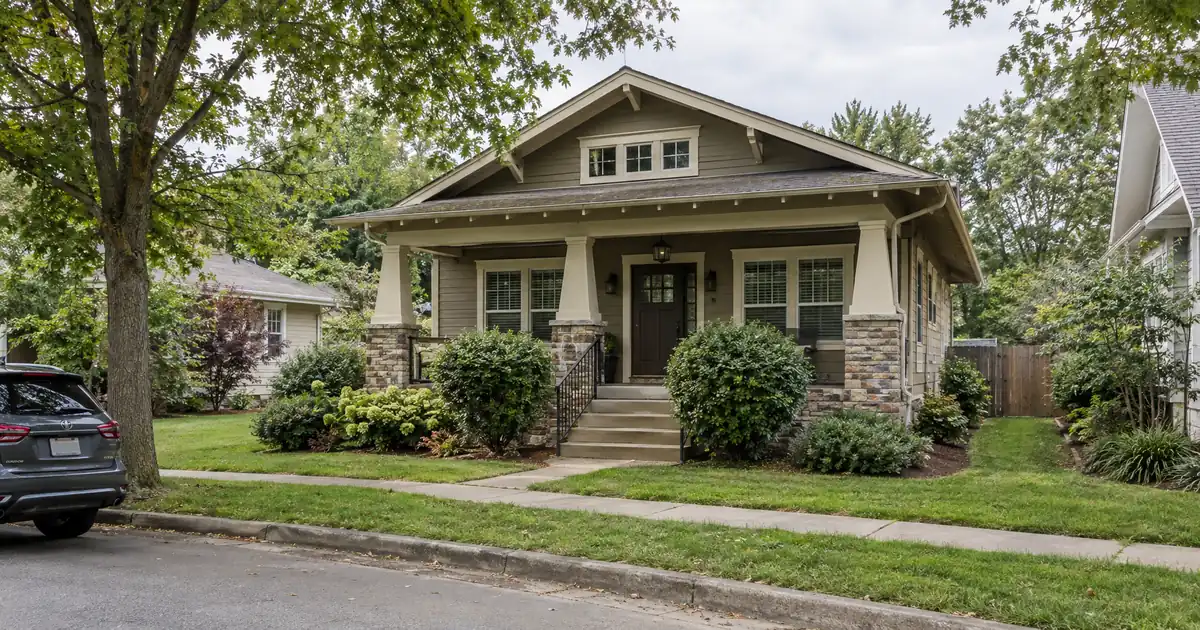
The Quick Read: A bank statement HELOC changes how an owner proves income, but it does not change what a state charges to record the lien, so the cost gap between states comes mainly from percentage-based mortgage taxes set on the credit limit, plus a lender-controlled layer of valuation and processing fees that varies far less. Owners who plan the line size before applying control the one lever that moves the bill.
- Deposit-based income documentation affects qualification only. Recording taxes are the same for every borrower in the same county.
- In the states that tax credit lines, the tax follows the recorded limit, not the amount drawn.
- Investment-property lines on this network cap at 70% CLTV, with a $500,000 maximum line and a 700 minimum credit score.
- At least 75% of the line is drawn at closing, so a plan to draw little against a big limit does not fit this structure.
What Makes a State High-Cost for a Bank Statement HELOC?
A state is high-cost for a HELOC when it taxes the secured amount as a percentage, rather than charging a flat recording fee. Lender fees are similar from state to state. Government charges are not, and no lender can waive them.
How large a line the equity supports.
An equity line is sized by combined loan-to-value, occupancy, and credit — not by rental coverage. Switch the occupancy or the credit band and the ceiling moves with it.
Investment-property lines require a 700 minimum credit score; second-home lines start at a 640 minimum and primary-residence lines at 600, and the combined-LTV ceiling steps down as the credit band drops on primary-residence and second-home lines and holds on investment-property lines; the line cap steps down on primary-residence lines and holds at every tier on investment-property and second-home lines.
A debt-to-income ratio above 45% requires 680+ credit. Profiles under 640 are limited to single-family homes. At least 75% of the approved line is drawn at closing. Ceilings, floors, and caps update from Lendmire’s centralized guideline source.
Line estimate
Illustrative estimate only — not a quote, Loan Estimate, approval, or commitment to lend. The rate is an editable assumption; equity-line pricing is variable through both the draw and repayment periods and never converts to fixed. Occupancy and credit drive the ceiling together: an investment property tops out at 70% combined LTV (minimum credit 700, line cap $500,000); a second home tops out at 90% combined LTV (minimum credit 640, line cap $500,000), with the ceiling stepping down as the credit band drops (the cap holds at every tier); a primary residence tops out at 90% combined LTV (minimum credit 600), and its $750,000 maximum line is available only at 75% combined LTV or below with a 700-or-better credit profile (720 on the longer-runway program) and a full appraisal. Lines above $500,000 require a full appraisal. Credit, debt-to-income, property type, and full underwriting review all affect the final line.
A bank statement HELOC is a standalone line secured by a home, in first or second lien position. The owner is reviewed on documented deposits instead of traditional personal-income documentation, under the applicable program and subject to lender guidelines. That helps self-employed owners whose write-offs shrink their taxable income. It has no effect on the county recorder.
National closing-cost rankings can mislead here. They measure purchase mortgages, which carry transfer taxes and are priced on the loan amount. A HELOC is a lien, so the taxes that matter are mortgage recording taxes, documentary stamp taxes on the note, and intangible taxes. A state that ranks high on a purchase list can be modest for a line, and the reverse can also be true.
How Does Underwriting Treat Bank Statement Income, Step by Step?
Underwriting runs in a fixed order, and only the first step is different from a standard line. Here is how files move across the select wholesale lenders Lendmire places them with.
1. Deposit review. The lender reads 12 or 24 months of statements, personal or business. Transfers between the borrower’s own accounts and other non-income credits are stripped out. Large unexplained deposits need sourcing. A CPA letter is optional on most files.
2. Income calculation. The lender averages the qualifying deposits over the chosen window. Averaging smooths seasonal income, which helps owners whose revenue swings.
3. Debt-to-income test. The maximum DTI is 50%, and it drops to 45% for credit profiles from 600 to 679. A ratio above 45% requires a 680 minimum. The test uses the interest-only payment on the maximum draw, not the amount actually drawn.
4. Credit review. The program floor is 600, but the minimum for second homes and investment properties varies by scenario. The report must be no more than 90 days old at closing, and rescores are not allowed.
5. Collateral review. Lines at or below $500,000 ordinarily use an automated valuation instead of a traditional appraisal. A higher CLTV may call for a secondary valuation. A full appraisal is required above $500,000, and a borrower can ask for one at any size.
Step 3 matters for cost. Because the DTI test runs on the maximum draw, a larger limit tightens qualification as well as raising the recorded tax. Sizing the line is both a cost decision and an eligibility decision.
Where Does the Money Go at Closing?
Closing costs on a line fall into three layers of ownership: government charges, third-party charges, and lender charges. Only the lender layer is open to negotiation, and even there the room is limited. The table shows who controls each item.
| Cost item | Layer | Calculated on | Negotiable? |
|---|---|---|---|
| Origination and processing | Lender | Lender schedule | Sometimes |
| Valuation | Third party | Property and line size | Rarely |
| Title and flood determination | Third party | Property | Little |
| Recording fee (flat) | Government | Document pages | No |
| Mortgage or stamp tax | Government | Recorded limit | No |
Some states also route closings through attorneys, which adds a professional fee. That fee varies and cannot be generalized across states.
The federal consumer booklet on home equity lines says the advertised cost of borrowing on a line reflects interest only and leaves out closing costs. It also says that if you draw only a small amount, the up-front charges raise the effective cost of the money substantially, according to the CFPB HELOC booklet. That warning applies with extra force where a percentage tax sits on the full limit. Rules written for consumer credit may also apply differently to a business-purpose investor line, so the lender’s itemized fee estimate carries more weight than any rule of thumb.
How Do New York, Florida, and Maryland Tax a Line?
These three states show the three main designs: a stacked state-and-local tax, a note tax plus an intangible tax, and a county-set recordation tax. Each one levies the charge on the secured amount, not the cash you draw.
New York stacks several components. The New York Department of Taxation and Finance lists a basic tax of 50 cents per $100, a special additional tax of 25 cents per $100, and an additional tax of 25 cents per $100 (30 cents inside the commuter transportation district). A city or county tax of 25 to 50 cents per $100 can sit on top. On one- and two-family homes, the first $10,000 of debt comes off the additional tax calculation. The tax is paid at recording. The state components alone run to roughly a dollar per $100, and local layers push the total higher in the New York City area than upstate. In a credit line mortgage, the tax attaches to the maximum principal stated in the mortgage.
Florida charges two taxes on a line secured by a Florida mortgage. Documentary stamp tax on the note runs 35 cents per $100, and the nonrecurring intangible tax is 2 mills on the secured amount, according to Starfield & Smith. Together that is a little over half a percent of the secured amount. Owners sometimes confuse this with the 70-cent deed rate, but a HELOC is a note and mortgage, not a deed, so the deed rate does not apply.
Maryland leaves the rate to each county. The Maryland Mortgage Bankers and Brokers Association publishes a chart of county recordation rates, quoted per $500 of the base and rounded up to the next $500. Montgomery County, for example, runs 0.89% on the first $500,000 and 1.35% from $500,000 to $600,000. The purchase-money exemption generally does not help a line drawn against a property you already own.
Other states, including Tennessee and Virginia, also levy mortgage or recordation taxes, and the rates differ. Some states charge only county recorder fees. Ask the title company for the exact figure for the county before you set the line size.
One availability note belongs here. This network’s equity-line program is offered in 16 full-service states: AL, CA, CO, FL, GA, IN, MI, MT, NM, NC, OH, PA, TN, TX, VA, and WA. New York and Maryland are not on that list. Their tax designs are worth understanding as examples, but an owner there will not find this program locally.
Why the Credit Limit, Not the Draw, Sets the Bill
In states that tax credit lines, the recorded maximum sets the tax, so a bigger line costs more even when the draw stays small. A line twice the size carries twice the percentage-based tax. Nothing you draw later will reduce what you paid at recording.
That fact creates a trap for owners who want a large limit for flexibility. The usual reasoning is to pay the tax once, keep the limit high, and draw only what a deal needs. That reasoning breaks down on this network, because at least 75% of the line is drawn at closing on every program. Interest starts on most of the limit immediately. Pricing floats and never converts to fixed. The interest-only draw runs five years on an investment line, followed by a 25-year repayment period.
So the line has to be sized for money the owner will actually deploy. If an owner needs funds for one down payment, the smaller limit is usually the cheaper choice and also the easier one to qualify for.
Either way, the line supplies cash, while a DSCR loan typically pays the seller. The two tools do different jobs on a rental deal, and each carries its own recording costs.
What Structures and Variations Exist?
Leverage depends on the occupancy of the property securing the line, so no single ceiling applies. Here is how the ceilings split.
- Investment property. The ceiling is 70% CLTV, the maximum line is $500,000, and the credit minimum is 700. There is no higher tier. The draw is five years interest-only, followed by 25 years of repayment.
- Second home. Leverage reaches 90% CLTV only at a 720-or-better credit profile. Lower scores step down to 75% CLTV at 640. The maximum line is $500,000.
- Primary residence. The program ceiling reaches 90% CLTV only at 720 or better, and only up to $500,000. A line above $500,000 is primary-residence only and carries a 75% CLTV cap and a full appraisal. A second draw structure with a three-year interest-only period and a 17-year repayment is available on primary residences and second homes.
Title is the sharpest structural limit for investors. The individual borrower or an inter vivos revocable living trust must hold title. An LLC, corporation, partnership, or irrevocable, blind, or land trust cannot, so a property already deeded to an entity needs a vesting change or a DSCR cash-out instead, subject to program terms. Eligible property types include single-family, 2–4 units, PUDs, townhomes, and condominiums, including non-warrantable condos. Manufactured homes, co-ops, condotels, log homes, and commercial or mixed-use properties are not offered.
A borrower is limited to three lines. A borrower with more than 15 financed properties is not eligible. Tennessee shortens both draw structures, to 3 years with 12 years of repayment, and to 5 years with 10 years of repayment.
Where Does the General Rule Break?
The rule that taxes follow the limit has several exceptions, and each one can change the bill. These are the main edge cases, and each deserves a call to the title company before signing.
- Owner-occupied versus rental in New York. New York’s treatment of readvances within the original limit is written for owner-occupied one-to-six-family property. For a rental, that relief may not apply. Because 75% of an investment line is drawn at closing, readvances matter less in practice.
- Raising the limit later. In New York, raising the maximum principal triggers additional tax. In Florida, once tax is paid on the full line, nothing more is due on later advances. The same move can be cheap in one state and expensive in another.
- Sale or transfer. A line generally has to be paid off when the home is sold. In New York, a credit line mortgage that survives a transfer can draw tax on the maximum debt, with an exception for transfers between related parties.
- Refinancing the line into a new mortgage. A consolidation agreement can limit New York tax to the new money in some cases. A new first lien is generally taxed on the full new amount, so the structure matters.
- Cross-state paperwork. A note signed outside Florida but secured by Florida real estate still owes Florida stamps and intangible tax at recording.
- No-closing-cost offers. The costs usually move into pricing or a clawback period, and early-termination fees can apply. A lender can absorb its own fees, but state taxes generally remain a pass-through. Treat that as a question to confirm in writing.
Across files like these, the surprises show up in three places: the recorded limit, the vesting of title, and a transfer or payoff before the owner expected one. Owners who compare the written fee estimate against the recorded limit usually catch the problem before signing.
When Is a DSCR Cash-Out the Better Tool?
A DSCR cash-out is usually the better tool when the property is held in an LLC, when the owner wants more than $500,000 against a rental, or when the goal is a long-term fixed structure instead of a floating line. A HELOC is usually the better tool when the owner needs a modest sum and the title is already personal.
DSCR loans qualify primarily on property-level rental income covering the payment, subject to lender guidelines. The complete DSCR loans guide walks through the full mechanics. In summary, these are the ranges across the wholesale network:
- Purchase leverage: most files land at 75%–80% LTV, and select programs reach 85% LTV at roughly a 700+ score.
- Cash-out refinance: most of the network tops out around 75% LTV, with about 6 months of seasoning as the common expectation.
- Coverage: 1.00 is where select programs start. A separate select-lender path takes coverage below 1.00 with leverage and terms adjusted. Stronger coverage opens better pricing and leverage.
- Credit: a 620 floor exists in parts of the network, most programs want about 660, and 700+ unlocks the strongest tiers.
- Reserves: these vary by lender, leverage, loan size, and transaction type, commonly around 6 months of PITIA.
Clearing 1.00 does not mean the property produces positive cash flow. DSCR compares rent to PITIA only, and repairs, vacancy, management, and capex sit outside the calculation.
A DSCR cash-out refinance also faces state mortgage taxes on the full new loan amount. A larger loan carries a larger tax. In a high-tax state, that cost belongs in the comparison. Where it matters, a smaller HELOC can still beat a large cash-out on recording cost alone, while the DSCR route wins on structure, entity title, and loan size. Owners weighing the two can also read Lendmire’s piece on whether a bank statement HELOC can work despite high closing costs.
Tax treatment can depend on how the funds are used and how the property is held; investors should keep clear records and speak with a qualified tax professional before relying on any deduction.
Key Terms Defined
Recording tax: A state or county charge, set by statute as a percentage of the secured amount, paid when the lien is recorded.
Credit limit (recorded maximum): The largest balance the line can reach, which is the figure that states with credit-line taxes apply their rate to.
CLTV: Combined loan-to-value, which adds the first lien and the new line together and divides by the property value.
Closing draw: The portion of the line funded at closing, which is at least 75% of the limit on this network.
Interest-only draw period: The early years of the line in which the borrower pays interest alone, before the fully amortizing repayment period begins.
Questions to Ask Before You Apply
Take it to the lender and the title company.
1. What is the exact recorded limit, and which tax rates in this county apply to it?
2. Which charges can be negotiated, and which are fixed by statute?
3. Will the valuation be automated, or is a full appraisal required at this size?
4. How does the closing draw interact with the limit I am requesting?
5. Does my title vesting meet program rules, or does it need a change first?
6. What happens to the tax if I raise the limit, sell, or refinance later?
Frequently Asked Questions
Does a bank statement HELOC cost more than a standard one?
Usually not at the government level. Recording taxes depend on the state and county, not on how income was documented. Any difference sits in lender-controlled items such as processing and valuation. A line of $500,000 or less ordinarily uses an automated valuation, which can reduce one cost.
If I never draw on the line, do I still pay the mortgage tax?
In states that tax credit lines, yes. The tax follows the recorded limit, so an undrawn balance does not reduce it. On this network at least 75% of the line is drawn at closing, so the question rarely arises in practice.
Can I negotiate recording taxes down?
No. Governments set recording taxes by statute, and no lender can waive them. Negotiation can reach lender fees such as origination, and a smaller requested limit directly lowers the tax base.
Can my LLC hold title to the property securing the line?
No. These lines require title held by the individual or an inter vivos revocable living trust. A property already deeded to an LLC needs a vesting change, or a DSCR cash-out refinance may fit better, subject to program terms.
Is the line available in every high-cost state?
No. The equity-line program on this network is offered in 16 full-service states, which is narrower than the DSCR footprint of 41 markets, including Washington, D.C. Eligibility also depends on credit, occupancy, and property type.
Next Step
If you are considering a home equity line and want to see how the numbers work, Lendmire can help you compare HELOC options based on the property, the equity available, credit profile, combined leverage, and your goals. Lendmire is a broker arranging financing through select lenders in its wholesale network, and every figure above is subject to lender guidelines and full file review. This is not a commitment to lend.
About Lendmire
Lendmire (NMLS# 2371349) is a mortgage broker. Home equity lines of credit — on a primary residence, a second home or an investment property — are arranged through wholesale lenders in Lendmire’s 16 full-service states, and every line is underwritten by the lender under its program guidelines. Scotsman Guide named Lendmire a Top Mortgage Workplace in both 2025 and 2026.
Get Started
Ready to find the right loan for you?
In about 30 seconds you can review financing options available for your home or investment property. No commitment required.
Informational only. Not a Loan Estimate, approval, or commitment to lend. Program availability and eligibility are subject to lender guidelines, credit approval, property review, and underwriting.
References
2. NY Dept. of Taxation and Finance – Mortgage recording tax
3. Starfield & Smith – Florida documentary stamp and nonrecurring intangible tax refresher
4. Maryland Mortgage Bankers and Brokers Association – recordation and transfer tax rates
This article is part of Lendmire’s bank statement HELOC program — full qualification details, guidelines, and scenarios live on the program page.
Related reading: How to Get Your First Bank Statement HELOC During a Pending Divorce · Bank Statement HELOC Credit Tiers for a First-Time Equity Borrower · How to Close a Bank Statement HELOC in a Trust as a Retiree
Brandon Miller
Founder & CEO, Mortgage Loan Originator, Lendmire LLC
- Mortgage Loan Originator · NMLS# 1129696 · Verify on NMLS Consumer Access
- North Carolina Real Estate Broker · License# 343312 · Verify on NCREC
- North Carolina Insurance Producer · License# 19053198 · Property, Casualty, Life, Health · Verify on NAIC SBS
- Lendmire LLC · Firm NMLS# 2371349 · Verify firm licensure
Disclosure information. Lendmire is a state-licensed mortgage brokerage under NMLS# 2371349. Lendmire is not a depository institution, direct lender, or financial advisor — all loans referenced are placed through wholesale lender partners and are subject to each lender's underwriting standards. This article is provided for general informational purposes and is not a commitment to lend, nor does it constitute financial, legal, or tax advice. Loan programs, terms, rates, and qualification standards change without notice and depend on borrower profile, property type, and the state in which the subject property is located. Equal Housing Opportunity provider. NMLS Consumer Access: nmlsconsumeraccess.org.