
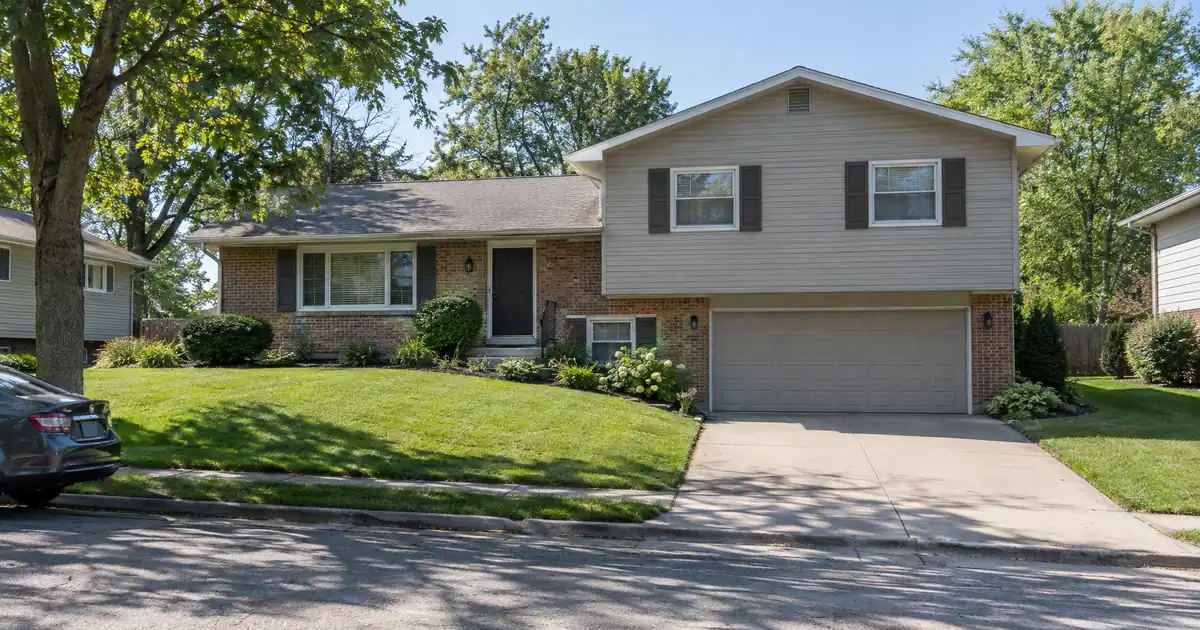
The Quick Read: Usually yes, if the home sits in a revocable living trust, the borrower is a trustee with the power to pledge it, and the retiree’s income shows up as recurring deposits or as verifiable liquid assets that a lender can document and review. Two separate tests decide the file: title and income. Passing one never fixes the other.
- Revocable trusts work. On Lendmire’s wholesale network, the home can be held by the individual or by a revocable living trust.
- Irrevocable, blind and land trusts do not. Neither do LLCs, corporations or partnerships.
- Retirees are documented differently. Bank-statement review was built for self-employed borrowers, so a pension or Social Security is usually proven with award letters instead.
- Leverage depends on occupancy. An investment property tops out at 70% CLTV, while a primary residence can reach 90% CLTV only at a 720 credit profile or better.
- Every figure is subject to lender guidelines. Each file is underwritten individually, and nothing here is a commitment to lend.
What Does a Bank Statement HELOC Actually Mean for a Retiree?
A bank statement HELOC is a home equity line of credit where the lender reads your deposits as income instead of leaning on traditional personal-income documentation and pay stubs. For a retiree, that only helps when real deposits exist, such as rental income, consulting fees or part-time business revenue.
How large a line the equity supports.
An equity line is sized by combined loan-to-value, occupancy, and credit — not by rental coverage. Switch the occupancy or the credit band and the ceiling moves with it.
Investment-property lines require a 700 minimum credit score; second-home lines start at a 640 minimum and primary-residence lines at 600, and the combined-LTV ceiling steps down as the credit band drops on primary-residence and second-home lines and holds on investment-property lines; the line cap steps down on primary-residence lines and holds at every tier on investment-property and second-home lines.
A debt-to-income ratio above 45% requires 680+ credit. Profiles under 640 are limited to single-family homes. At least 75% of the approved line is drawn at closing. Ceilings, floors, and caps update from Lendmire’s centralized guideline source.
Line estimate
Illustrative estimate only — not a quote, Loan Estimate, approval, or commitment to lend. The rate is an editable assumption; equity-line pricing is variable through both the draw and repayment periods and never converts to fixed. Occupancy and credit drive the ceiling together: an investment property tops out at 70% combined LTV (minimum credit 700, line cap $500,000); a second home tops out at 90% combined LTV (minimum credit 640, line cap $500,000), with the ceiling stepping down as the credit band drops (the cap holds at every tier); a primary residence tops out at 90% combined LTV (minimum credit 600), and its $750,000 maximum line is available only at 75% combined LTV or below with a 700-or-better credit profile (720 on the longer-runway program) and a full appraisal. Lines above $500,000 require a full appraisal. Credit, debt-to-income, property type, and full underwriting review all affect the final line.
A HELOC, short for home equity line of credit, is a revolving credit line secured by the home. You draw what you need during a set period. Lendmire brokers these lines through a wholesale network, and Lendmire is never the lender.
Lenders typically pull 12 to 24 months of statements and average the monthly deposits. That average becomes the income figure. Transfers between your own accounts and one-time windfalls generally do not count, because they do not repeat.
Here is the catch for retirees. A retiree living on a pension and Social Security often has steady income but not the kind of deposit pattern this product reads best. Those benefits are usually documented with award letters and benefit statements. A retiree who also collects rent or runs a small consulting practice may have both, and that mixed profile is where the bank-statement route earns its keep.
Why Does a Revocable Trust Not Block the Line?
A revocable trust does not block the line because the person who created it keeps control. NerdWallet’s estate-planning explainer notes that a revocable trust is also called a living trust, and that the grantor can change its terms or dissolve it. The grantor is the person who creates and funds the trust.
That retained control is why a lender can look through the trust to the individual. The person is still the borrower. The trust is the way the home is titled.
Think of two gates, because that is how files actually get reviewed.
| Gate | Question it answers | What fixes a failure |
|---|---|---|
| Title gate | Can this trust hold title, and can the trustee pledge the home? | Re-titling, or a different loan |
| Income gate | Do deposits or assets support the line? | Different documentation path |
Title is checked first, before the lender looks at credit or income. A perfect income file cannot rescue a home held in a trust type the program does not accept.
Which Trusts and Titles Work?
Across Lendmire’s network, only the individual borrower or an inter vivos revocable living trust can hold title on a HELOC. Inter vivos simply means the trust was created during the grantor’s lifetime. Every other vehicle fails the title gate.
| Title type | Eligible on the network? | Why |
|---|---|---|
| Individual borrower | Yes | Standard vesting |
| Revocable living trust | Yes | Grantor keeps control |
| Irrevocable trust | No | Grantor gave up ownership |
| Blind or land trust | No | Not accepted vesting |
| LLC, corporation, partnership | No | Entity cannot hold title on a HELOC |
Vesting is the name in which the deed holds title. A retiree who moved a home into an irrevocable trust for elder-law reasons is the most likely to hit this wall. ElderLawAnswers explains why: an irrevocable trust cannot be revoked, and the grantor permanently gives up claims to the assets. The trust has no income or credit of its own, and the retiree’s personal income does not change that.
The fix is rarely a quick one. It means a different loan or a re-titling decision, and that decision belongs with the trust attorney first.
An LLC-titled rental is a related case. A property already deeded to an LLC needs a vesting change before it can carry a HELOC on this network. The other route is a DSCR cash-out, which can close in an entity, subject to lender program eligibility. Lendmire’s how to close a bank statement HELOC on a home in a living trust walks through the vesting side in more detail.
What Does the Lender Review in the Trust?
The lender confirms the trust type, confirms the borrower is a trustee, and confirms the trustee can borrow against and lien the home. It does not need your whole estate plan to do that.
A certification of trust is the usual document. It is a short summary of the trust’s key facts, so the full trust instrument stays private. Here is the practical checklist.
1. Deed or title report showing the trust, or the individual, as owner.
2. Certification of trust naming the trustees and their powers.
3. Trustee identity confirmed as the borrower.
4. Every co-trustee available to sign, such as married co-trustees.
5. Signing capacity set correctly. Borrowers may be asked to sign both personally and as trustee.
Start the trust paperwork first. Most delays on these files come from trust documents, not from income review. A certification that omits borrowing powers, or a co-trustee who cannot be reached, stalls a file that is otherwise clean.
How Does Retiree Income Read as Deposits?
Retiree income reads well as deposits when it is recurring, traceable and sitting in the account the lender reviews. It reads poorly when it is a one-time transfer or a lump-sum withdrawal with no pattern behind it.
Here is a worked example with no dollar figures. Picture a retiree who owns a duplex and rents both units. She also takes a small consulting contract a few months a year. Her statements show rent landing monthly, consulting payments landing seasonally, and a pension deposit on a fixed date. The lender averages the qualifying deposits over the statement window, then applies its own treatment to that average.
Several things happen next.
- Rent and consulting deposits support the deposit-based average, because they repeat.
- Pension deposits may be documented separately with an award letter.
- A transfer from her savings account does not count as income. It is her own money moving.
- A one-time sale of stock does not count either, though the proceeds may matter as an asset.
Then comes the debt test. The network qualifies the borrower on the interest-only payment calculated at the maximum draw, and debt-to-income, or DTI, is capped at 50% on most files. DTI compares your monthly debts to your monthly income. Credit tiers matter too. A ratio above 45% requires at least a 680 credit profile.
Her credit profile matters as much as her deposits. The investment-property tier starts at a 700 credit profile. The primary-residence tiers start lower, though leverage rises with the score.
What Leverage Can a Trust Home Carry?
Leverage depends on how the home is used, not on the trust. The ceiling is set by occupancy.
| Occupancy | Credit profile | Max CLTV | Max line |
|---|---|---|---|
| Investment property | 700 or better | 70% | $500,000 |
| Primary residence | 720 or better | 90% | $500,000 |
| Primary residence | 700 or better | 85% | $500,000 |
| Primary residence | 700 or better | 75% | $750,000 |
CLTV, or combined loan-to-value, adds every loan on the home and divides by its value. The 90% figure exists only at a 720 credit profile or better, and only up to $500,000. Lines above $500,000 are primary-residence only and need a full appraisal. Investment lines never run above 70% CLTV or above $500,000.
For structure, investment-property lines run a 5-year interest-only draw followed by a 25-year repayment. Pricing floats across both phases. At least 75% of the line is drawn at closing. These lines suit staged rehab work or down-payment funding, because the line is revolving rather than a lump sum.
Properties must also be eligible. Single-family, 2-4 unit, PUD, townhome and condominium properties qualify, subject to lender guidelines. Manufactured homes, co-ops, condotels and log homes are not offered. Availability is also narrower than Lendmire’s DSCR footprint, so confirm that the HELOC is offered where the property sits.
Retiree Trust Scenarios
The retiree scenarios that stall files are mostly about people, not products. Here is how the common ones play out.
| Situation | What changes | What to do |
|---|---|---|
| Married co-trustees | Both usually must sign | Line up both signers early |
| A co-trustee is ill or deceased | Trust terms control who can act | Get the attorney’s guidance first |
| Successor trustee steps in | Authority must be documented | Update the certification of trust |
| Home recently moved into the trust | Title and paperwork must be clean | Record the deed before applying |
| Irrevocable trust for elder planning | Title gate fails | Ask counsel about other options |
A power of attorney does not automatically replace a trustee’s authority. Whether it can, and how, is a question for your estate attorney, not for the loan file.
Moving a home into a trust while a first mortgage exists raises its own question. Federal law protects certain transfers from due-on-sale acceleration. A law-firm explainer from LLK Law points to 12 U.S.C. §1701j-3(d)(8), which covers a transfer into an inter vivos trust where the borrower is and remains a beneficiary. The same discussion says it does not protect transfers into an LLC. Whether a rental, as opposed to a home the retiree occupies, fits that language is a legal question. Talk to counsel before you retitle.
When Does This Route Not Fit?
This route does not fit when the retiree has no recurring deposits, when the trust is irrevocable, or when the property sits in an LLC. Three alternatives cover most of those cases.
| Option | Best when | Main tradeoff |
|---|---|---|
| Asset-based HELOC | Large liquid balances, few deposits | Needs seasoned asset statements |
| DSCR cash-out refinance | Property is a rental, possibly in an LLC | Lump sum, rent-driven underwriting |
| Bank statement HELOC | Real recurring deposits exist | Variable draw structure |
Asset-based documentation uses verified liquid balances, and asset statements are typically seasoned 60 to 90 days. HousingWire’s non-QM guide describes asset depletion as converting liquid assets into qualifying income, aimed at retirees and high-net-worth borrowers. It lists bank-statement HELOCs as a separate product.
Now the investor angle. If the home is a rental, a DSCR loan may be the cleaner fit. DSCR, or debt service coverage ratio, divides the rent by the full monthly obligation of principal, interest, taxes, insurance and any association dues. DSCR loans qualify primarily on property-level rental income covering the payment, subject to lender guidelines, and they do not rely on the borrower’s personal bank account or job history. Lendmire’s complete DSCR loans guide covers the mechanics.
Here is what the network typically looks like on a standard rental cash-out. Leverage tops out around 75% LTV. Seasoning, the waiting period after you buy before you can refinance, is commonly about 6 months. A 1.00 coverage ratio is where select programs start, not a rule for every lender. A separate select-lender path takes coverage below 1.00, with leverage and terms adjusted. Credit floors begin at 620 in parts of the network, most programs want around 660, and 700 or better unlocks the strongest tiers. Loan sizes run up to $3,000,000 on standard programs (smaller balances available through select lenders).
One warning on coverage. Clearing 1.00 does not mean the property produces positive cash flow. Repairs, vacancy, management and utilities sit outside the calculation.
For a retiree who wants to keep an LLC wrapper, DSCR cash-out is usually the right tool. For one who holds the home in a revocable trust and has deposits or assets to document, the HELOC is workable.
Risks and Estate-Plan Cautions
A HELOC is debt secured by the home, and the draw period ends. Investment lines run interest-only for five years and then amortize over 25 years, so the payment steps up when repayment begins. Pricing floats and never converts to fixed. Retirees on fixed income should plan for that step-up before borrowing.
Borrowing can also affect an estate plan. A lien on a trust-held home passes to successors with the property. Ask your attorney what happens to the line at incapacity or death, and whether the trust’s terms limit borrowing.
On the regulatory side, the CFPB’s Ability-to-Repay and QM compliance guide says open-end credit plans such as HELOCs under 12 CFR 1026.40 sit outside the ability-to-repay rule, although a loan may not be structured as open-end credit to evade it. In plain terms, a bank statement HELOC is a lender-defined underwriting product, and lenders still document income carefully. Whether any rule applies to a given business-purpose line is a question for the lender’s counsel.
Tax treatment can depend on how the funds are used and how the property is held; investors should keep clear records and speak with a qualified tax professional before relying on any deduction.
Your Step-by-Step Checklist
1. Pull the deed and confirm how title is held. 2. Confirm the trust is revocable and that you are a trustee. 3. Ask the trust attorney for a certification of trust with borrowing powers. 4. Gather 12 to 24 months of statements, or seasoned asset statements. 5. Check the credit profile against the occupancy tier you need. 6. Decide whether a HELOC, an asset-based line or a DSCR cash-out fits the goal.
If you want to see how the numbers work, Lendmire can help you compare home equity line options based on the property, the equity available, credit profile, combined leverage and your goals.
This article is educational and is not legal or tax advice. Trust, title and estate questions depend on your documents and your situation, so consult a qualified attorney or CPA before acting.
Key Terms Defined
- Revocable living trust: a trust the creator can change or cancel at any time, which keeps the creator in control of the home.
- Certification of trust: a short document that summarizes the trust’s key facts without exposing the full trust instrument.
- Vesting: the name in which the deed holds title to the property.
- Trustee: the person with legal authority to manage trust property and sign for the trust.
- CLTV: combined loan-to-value, the total of all loans on the home divided by its value.
- DTI: debt-to-income ratio, which compares monthly debts to monthly income.
Frequently Asked Questions
Do I have to take the home out of the trust first?
Not on this network, as long as the trust is a revocable living trust and you are a trustee with power to borrow. The lender reviews the trust paperwork and may ask you to sign both personally and as trustee. An irrevocable trust is different. It fails the title gate, so a re-titling decision with your attorney comes first.
Does the lender need to see the whole trust?
Usually no. A certification of trust is the common route, because it summarizes the trustees, their powers and the trust’s key facts. The full instrument stays private. If the certification leaves out borrowing authority, expect the lender to ask for more.
Does retirement itself disqualify me?
No. The question is how your income is documented, not whether you have retired. Pension and Social Security are usually proven with award letters and benefit statements. Rental, consulting or business deposits can be read through bank statements, and liquid assets can be documented through an asset-based path.
What if my deposits are thin?
Move to asset-based documentation or a different product. If the property is a rental, a DSCR cash-out qualifies primarily on the property’s rental income covering the payment, subject to lender guidelines, so your personal deposits matter less.
Can a co-trustee’s absence stop the loan?
It can. If the trust requires all trustees to sign, an unavailable or deceased co-trustee has to be handled under the trust’s terms before closing. A successor trustee needs documented authority. Ask your estate attorney how the trust handles it, then update the certification.
About Lendmire
Lendmire (NMLS# 2371349) is a mortgage broker. Home equity lines of credit — on a primary residence, a second home or an investment property — are arranged through wholesale lenders in Lendmire’s 16 full-service states, and every line is underwritten by the lender under its program guidelines. Scotsman Guide named Lendmire a Top Mortgage Workplace in both 2025 and 2026.
Get Started
Ready to find the right loan for you?
In about 30 seconds you can review financing options available for your home or investment property. No commitment required.
Informational only. Not a Loan Estimate, approval, or commitment to lend. Program availability and eligibility are subject to lender guidelines, credit approval, property review, and underwriting.
References
1. NerdWallet: Revocable vs. Irrevocable Trust
2. ElderLawAnswers: Living Trust vs. Irrevocable Trust
3. LLK Law: Garn-St Germain Act and Estate Planning
4. HousingWire: Non-QM Loans Guide
5. CFPB: ATR/QM Small Entity Compliance Guide
This article is part of Lendmire’s bank statement HELOC program — full qualification details, guidelines, and scenarios live on the program page.
Related reading: Bank Statement HELOC Checklist for a First-Time Equity Borrower · Bank Statement HELOC Subordination for an Owner With an Existing HELOC · Can a Super Jumbo Cash-Out Pay Off a Securities-Backed Line and Cards?
Brandon Miller
Founder & CEO, Mortgage Loan Originator, Lendmire LLC
- Mortgage Loan Originator · NMLS# 1129696 · Verify on NMLS Consumer Access
- North Carolina Real Estate Broker · License# 343312 · Verify on NCREC
- North Carolina Insurance Producer · License# 19053198 · Property, Casualty, Life, Health · Verify on NAIC SBS
- Lendmire LLC · Firm NMLS# 2371349 · Verify firm licensure
Important disclosures. Lendmire (NMLS# 2371349) is a licensed mortgage brokerage. Lendmire is not a direct lender, depository institution, or financial advisor. All loan inquiries are subject to lender underwriting; this article does not constitute a commitment to lend. Rates, terms, and program guidelines are subject to change without notice and vary by borrower profile, property type, and state. Information in this article is general in nature and is not financial, legal, or tax advice. Equal Housing Opportunity. NMLS Consumer Access: nmlsconsumeraccess.org.