
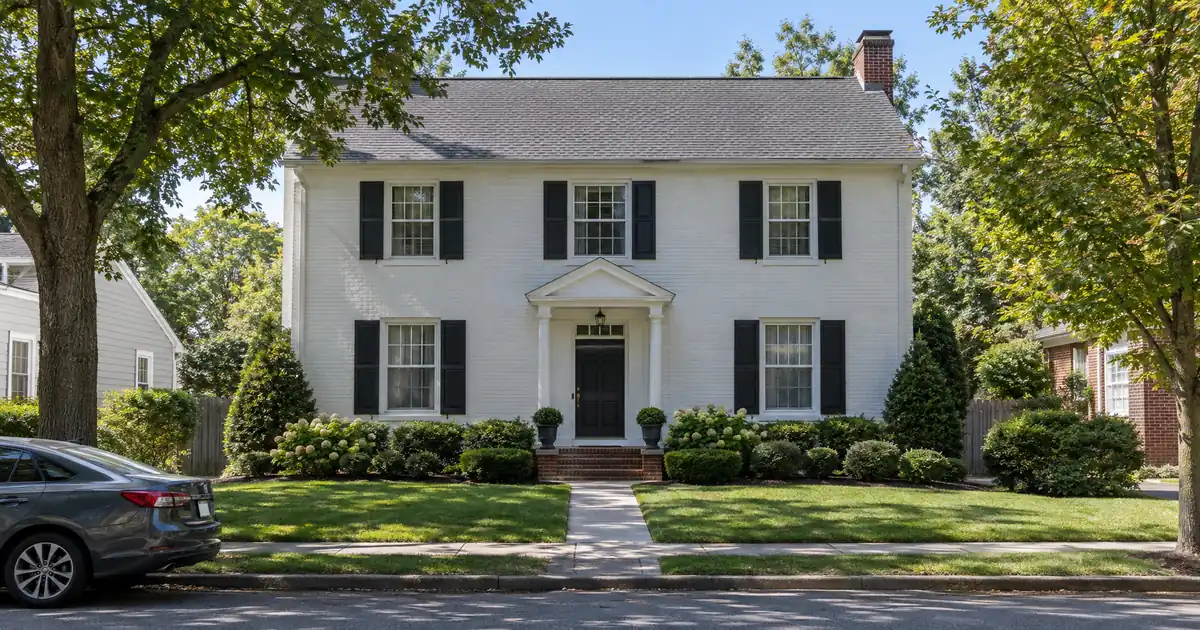
The Quick Read: A bank statement HELOC (home equity line of credit) lends against your house and is reviewed around documented deposits. A small-business loan lends against your company and qualifies the business on its financials. On a paid-off home, the choice comes down to whose strength carries the file and which asset you are willing to put at risk.
- A bank statement HELOC fits self-employed owners whose traditional personal-income documentation understates real cash flow and who hold the home in their own name.
- A small-business loan fits owners with an established operating company, real financials, and a specific business use for the money.
- A paid-off home makes either option easier to approve, and it raises the stakes of both.
- A home held in an LLC usually cannot back a HELOC on our network, which sends many investors toward other structures.
- If the property is a rental rather than your residence, a DSCR cash-out may beat both.
This is a referee’s comparison, not a sales pitch. Both products work, and both can cost you the house if you misuse them.
How large a line the equity supports.
An equity line is sized by combined loan-to-value, occupancy, and credit — not by rental coverage. Switch the occupancy or the credit band and the ceiling moves with it.
Investment-property lines require a 700 minimum credit score; second-home lines start at a 640 minimum and primary-residence lines at 600, and the combined-LTV ceiling steps down as the credit band drops on primary-residence and second-home lines and holds on investment-property lines; the line cap steps down on primary-residence lines and holds at every tier on investment-property and second-home lines.
A debt-to-income ratio above 45% requires 680+ credit. Profiles under 640 are limited to single-family homes. At least 75% of the approved line is drawn at closing. Ceilings, floors, and caps update from Lendmire’s centralized guideline source.
Line estimate
Illustrative estimate only — not a quote, Loan Estimate, approval, or commitment to lend. The rate is an editable assumption; equity-line pricing is variable through both the draw and repayment periods and never converts to fixed. Occupancy and credit drive the ceiling together: an investment property tops out at 70% combined LTV (minimum credit 700, line cap $500,000); a second home tops out at 90% combined LTV (minimum credit 640, line cap $500,000), with the ceiling stepping down as the credit band drops (the cap holds at every tier); a primary residence tops out at 90% combined LTV (minimum credit 600), and its $750,000 maximum line is available only at 75% combined LTV or below with a 700-or-better credit profile (720 on the longer-runway program) and a full appraisal. Lines above $500,000 require a full appraisal. Credit, debt-to-income, property type, and full underwriting review all affect the final line.
Side-by-Side
Here is how the two compare on structure. The HELOC column reflects the programs we place files with across our wholesale network. The business-loan column describes published industry norms, which vary by lender and loan type.
| Factor | Bank Statement HELOC | Small-Business Loan |
|---|---|---|
| Review basis | You: deposits, credit, equity | The business: cash flow, financials |
| Documentation | Bank statements plus credit and property review | Business financials, projections, ownership papers |
| Collateral | The home, in first or second lien | Business assets first; often owner real estate |
| Personal exposure | The pledged home | Owners of 20%+ typically sign a guarantee |
| Property types | 1-4 unit, PUD, townhome, condo | Not property-driven; real estate is a side issue |
| Entity vesting | Individual or revocable living trust only | Operating company borrows; owners guarantee |
| Structure | Variable line; draw period, then repayment | Term loan or line; set by lender |
| Timeline | Often fewer third-party steps | Typically more steps and third-party review |
| Reserves | Reviewed by the lender case by case | Liquidity reviewed alongside cash flow |
Two rows matter most. Review basis tells you whose strength gets measured. Entity vesting tells you whether your house is even eligible.
Key Terms Defined
CLTV (combined loan-to-value): All loans secured by the home, added together, divided by its value. On a paid-off home, the new line is the only loan, so CLTV equals the line itself.
Open-end line: Credit you can draw on, repay, and draw on again during a set draw period.
Personal guarantee: Your signed promise to repay a business debt from your own assets if the company cannot.
Bank statement qualification: Underwriting that reads your deposits over a stretch of months instead of leaning on traditional personal-income documentation. The lender screens the deposits and applies an expense factor to estimate usable income.
How a Bank Statement HELOC Actually Works
A bank statement HELOC is a line secured by your home. You qualify on documented income under the applicable program, subject to lender guidelines. The lender reads your statements, separates true income from transfers and one-time deposits, and then discounts what is left for business expenses.
That discount surprises people. Deposits are never counted dollar for dollar. A self-employed owner with strong gross deposits can still land with modest qualifying income after the expense factor.
Bank statements do not replace the rest of the file. The lender still reviews credit, debts, the property, and combined leverage. Expect to supply more than statements, such as a business license or a letter from your accountant.
Here is what our network’s HELOC programs generally look like:
- Investment property: up to 70% CLTV, lines to $500,000, and a 700 minimum credit score.
- Primary residence: CLTV tiers rise with credit. The ceiling is 90% CLTV, and it applies only at 720 or better with lines up to $500,000.
- Larger primary-residence lines: up to $750,000, capped at 75% CLTV, with a full appraisal.
- Second home: a 90% ceiling again requires 720 or better, with a 640 minimum.
- Line size: $25,000 to $750,000 overall, with up to three lines per borrower.
- Debt-to-income: 50% maximum, and a ratio above 45% requires a 680 score.
On a paid-off home, sizing is simple. Multiply the value by the allowed CLTV, and nothing comes off for an existing mortgage. A paid-off investment property at 70% CLTV supports a line of up to 70% of its value, subject to the $500,000 cap. Lines at or below $500,000 ordinarily use an automated valuation instead of a traditional appraisal.
Two structural details trip up borrowers. First, at least 75% of the line is drawn at closing, so this is not a dormant safety net. You start paying on most of it right away. Second, the line is variable and never converts to a fixed structure.
Draws usually run on interest-only terms. Investment lines use a 5-year draw followed by 25 years of full repayment. Primary residences and second homes also have a 3-year draw with 17 years of repayment. When the draw ends, payments step up because principal begins.
Program details change, and every file is underwritten individually. Nothing here is a commitment to lend.
How a Small-Business Loan Actually Works
“Small-business loan” is a family of products, and the best-known is the federally backed 7(a) loan. Under the Small Business Administration’s 7(a) program, every owner of 20% or more gives an unlimited personal guarantee. If no one owns 20%, at least one owner must still guarantee.
The lender looks at the company first. It wants a for-profit business that can show cash flow to repay the loan. Business assets get pledged first. Nav’s explainer on 7(a) loans says that when business assets fall short, lenders must take available equity in the personal real estate of owners with 20% or more ownership. A spouse who is not an owner may have to sign when jointly held collateral is pledged.
A paid-off home is the cleanest collateral a business lender can ask for. Pioneer Capital Advisory describes a 25% equity test under the agency’s operating manual: a lender need not take real estate when your equity is under 25% of its value, counted after every existing lien. A free-and-clear home sits far above that line. A HELOC drawn earlier would reduce your equity count, so the two products affect each other.
Business loans carry a second limit for real estate investors. Nav lists passive businesses, such as landlords who do not occupy the property, as a restricted category. A rental-only LLC is generally a poor fit for this kind of loan. An operating company with employees, inventory, and customers is the intended borrower.
These are published industry norms. Individual lenders set their own overlays, and your lender may handle collateral differently.
When a Bank Statement HELOC Is the Better Fit
A bank statement HELOC is the better fit when your personal deposits tell a stronger story than your traditional personal-income documentation. Many self-employed owners write off enough expenses that their returns look thin next to their actual cash flow. A deposit-based review can capture what the returns hide.
It also fits when you need a business-lender-free path. Perhaps your company is young, has no clean financials, or does not meet a lender’s size or eligibility rules. A HELOC asks about you and the property, not the company’s track record.
Four situations point toward the HELOC:
1. You hold the home personally. Title sits in your name or a revocable living trust. Our network’s HELOC programs cannot lend against a home vested in an LLC, corporation, partnership, or an irrevocable, blind, or land trust.
2. Your credit is solid. Higher credit scores unlock higher CLTV tiers, and the best tiers need 720 or better.
3. The need is flexible. You may want draws for inventory, a build-out, or a bridge. Just remember that most of the line funds at closing.
4. You want one pledged asset and no guarantee on the company. Your exposure is the home, and it stays visible.
The real downside is that the home is the collateral. The CFPB’s page on home equity lines says plainly that you could lose the home if you cannot repay. A paid-off house is your largest cushion, and a HELOC converts part of it into debt.
Lines can also change underneath you. The CFPB’s HELOC booklet notes that lenders may freeze or reduce a line if the home’s value falls or your finances worsen. If you plan to use the line as a reserve, that matters, because the cash may not be there in the downturn you built it for.
Lendmire’s piece Bank Statement HELOC vs Stated HELOC on a Paid-Off Home covers the documentation question in more depth.
When a Small-Business Loan Is the Better Fit
A small-business loan is the better fit when the money builds the company and the company can carry the debt. Buying equipment, funding an acquisition, or financing a second location are the classic uses. The business, not your house, is the borrower, and its cash flow is meant to repay the loan.
That structure has real advantages:
- Larger needs: Business loans can fit much bigger requests than a HELOC allows. Our network’s investment lines stop at $500,000, and the highest primary-residence lines stop at $750,000.
- Entity-held assets: If your home or other property sits in an LLC, a HELOC may be off the table. A business loan does not care about vesting in the same way.
- Business history: An established company with clean financials can often borrow without touching the house at all, particularly if business assets cover the loan.
- Separation of purpose: The loan lives on the company’s books and is used for the company’s needs.
The tradeoff is the guarantee. Even when the house is not pledged, a personal guarantee reaches your personal assets, and a paid-off home is among the first things a creditor would look at. Business collateral falling short can also bring the home into the deal after all.
You also face more paperwork. Expect financial statements, ownership documentation, and a process with more third parties involved than a HELOC typically has.
For owners weighing a business loan against a line for expansion, Lendmire’s article Bank Statement HELOC vs Small-Business Loan for a Second Location goes deeper on that specific use.
Two Stress Tests
Run both options through a bad stretch before choosing.
Revenue drops for two quarters on a HELOC. The line is variable, and the draw-period payment is interest-only. When the draw ends, the payment steps up because principal starts. If revenue has not recovered, you carry a bigger obligation against a pledged home. A lender could also freeze or reduce undrawn credit just when you want it.
Revenue drops for two quarters on a business loan. The payment schedule is set by the loan terms, and the lender watches business performance. A missed payment can trigger the guarantee and collateral claims. The company may fail, but your liability does not end there.
Neither is gentler. The HELOC puts a specific asset at risk. The guarantee spreads the risk across everything you own.
Can You Use Both?
You can, and some owners do. A HELOC can bridge a young business until it has the history a business lender wants. A business loan can later replace the HELOC balance and release the home.
The cost of carrying both is real. A HELOC balance reduces the equity a business lender counts under the 25% test, and the guarantee still reaches personal assets. Stack them only if you have a clear exit from the more dangerous one.
What If the Paid-Off Property Is a Rental?
Everything above assumes the home is something you can pledge freely. If the paid-off property is an investment rental, the picture shifts.
Many lenders will not write a HELOC on a rental at all. On our network, investment-property lines cap at 70% CLTV and $500,000, with a 700 minimum score. A rental held in an LLC cannot qualify. Business-loan lenders, for their part, often restrict passive real estate businesses.
That is where a DSCR cash-out refinance enters. DSCR (debt service coverage ratio) compares a property’s rent to its full monthly obligation of principal, interest, taxes, insurance, and any association dues. It qualifies primarily on property-level rental income covering the payment, subject to lender guidelines. DSCR loans are designed for non-owner-occupied investment properties. Because they are business-purpose investor loans, they are reviewed differently from a standard owner-occupied mortgage.
Typical ranges across our network look like this:
- Cash-out refinance: tops out around 75% LTV on a standard rental, with about 6 months of seasoning commonly expected.
- Short-term rentals: cash-out is typically around 70% LTV on short-term-rental collateral, with about 12 months of hosting history.
- Credit: a 620 floor exists in parts of the network, most programs want around 660, and 700 or higher unlocks the strongest tiers.
- Coverage: 1.00 is where select programs start. A separate select-lender path goes below 1.00, with leverage and terms adjusted.
- Reserves: commonly about 6 months of PITIA (principal, interest, taxes, insurance, and association dues), though they vary by lender, leverage, and loan size.
- Vesting: an LLC can hold title, depending on program guidelines.
One caution matters here. Clearing 1.00 does not mean positive cash flow. DSCR measures rent against the payment only, while repairs, vacancy, management, and capital expenses sit outside the calculation.
If you own your rental free and clear, our guide to the DSCR cash-out refinance on an investment property is the next stop. For the full framework, see the complete DSCR loans guide.
Your own primary residence is a different story. A DSCR loan does not fit owner-occupied property, so a HELOC or business loan remains your choice there.
Properties and Titles That Do Not Fit
Some limits catch borrowers late, so check them first.
- HELOC property types: single-family, 2-4 unit, PUD, townhome, and condominium (including non-warrantable) are eligible. Manufactured homes, co-ops, condotels, log homes, and commercial, mixed-use, or agricultural zoning are not.
- HELOC borrower limits: a borrower with more than 15 financed properties is not eligible, and combined exposure across lines is capped.
- Geography: the HELOC programs are available in a narrower set of states than the DSCR programs, which cover 41 markets, including Washington, D.C.
- DSCR property types: manufactured homes, log homes, and barndominiums are not offered.
A property already deeded to an LLC needs a vesting change before a HELOC is possible, or a DSCR cash-out instead.
Tax treatment can depend on how the funds are used and how the property is held. Keep clear records and speak with a qualified tax professional before relying on any deduction.
The Verdict
Choose the bank statement HELOC when you own the home personally, your deposits outrun your traditional income documentation, your credit is strong, and you want a straightforward secured line. Accept that the home is the collateral and that the line can change.
Choose the small-business loan when an operating company has real financials, the use of funds is clearly business growth, and you want the debt to sit with the entity. Accept that your personal guarantee reaches everything you own.
Choose neither when the paid-off property is a rental, because a DSCR cash-out may fit better. And when the real answer is a mix, plan the exit from the riskier piece before you sign.
If you are considering a home equity line and want to see how the numbers work, Lendmire can help you compare HELOC options based on the property, the equity available, credit profile, combined leverage, and your goals. Reach the team at 828-256-2183, or use the quote link on lendmire.com.
Frequently Asked Questions
Can I get a bank statement HELOC on a home with no mortgage?
Yes, and a free-and-clear home is often the easiest file. With no first lien, the new line is the only debt, so CLTV equals the line size. The lender still reviews credit, deposits, debts, and the property, so approval remains subject to lender guidelines.
Does a small-business loan put my paid-off home at risk?
Yes, it can. Lenders typically ask for business collateral first. If that falls short, owner real estate with enough equity may be required. A personal guarantee from owners of 20% or more also reaches personal assets.
Does a small-business loan put my paid-off home at risk?
Yes, it can.
Can an LLC-owned house get a HELOC?
Not on our network’s HELOC programs. Title must sit with the individual borrower or a revocable living trust. A property already in an LLC needs a vesting change, or a DSCR cash-out instead, subject to program terms.
Is a bank statement HELOC the same as no documentation?
No. It is reviewed on documented income under the applicable program, subject to lender guidelines. Deposits are screened and discounted, and credit, debts, equity, and property type are still reviewed.
Which is riskier for a paid-off home?
Both can cost you the house. A HELOC pledges the home directly, and a business loan guarantee can reach it even if it was never offered as collateral. The better choice depends on your business, your credit, and how you would handle a slow stretch.
About Lendmire
Lendmire — NMLS# 2371349 — is a mortgage broker that arranges home equity lines of credit in its 16 full-service states through wholesale lenders, on primary residences, second homes and investment properties. Every line is subject to the lender’s guidelines and full underwriting. Scotsman Guide named Lendmire a Top Mortgage Workplace in both 2025 and 2026.
Get Started
Ready to find the right loan for you?
In about 30 seconds you can review financing options available for your home or investment property. No commitment required.
Informational only. Not a Loan Estimate, approval, or commitment to lend. Program availability and eligibility are subject to lender guidelines, credit approval, property review, and underwriting.
References
2. Pioneer Capital Advisory: the SBA 25% rule and home equity
3. CFPB: What is a home equity line of credit?
This article is part of Lendmire’s bank statement HELOC program — full qualification details, guidelines, and scenarios live on the program page.
Related reading: Bank Statement HELOC Requirements on a Primary Home vs. a Rental · DSCR Purchase vs Bank Statement HELOC vs Cash-Out for a Rental · How Much a Bank Statement HELOC Covers on a DSCR Rental Purchase
Brandon Miller
Founder & CEO, Mortgage Loan Originator, Lendmire LLC
- Mortgage Loan Originator · NMLS# 1129696 · Verify on NMLS Consumer Access
- North Carolina Real Estate Broker · License# 343312 · Verify on NCREC
- North Carolina Insurance Producer · License# 19053198 · Property, Casualty, Life, Health · Verify on NAIC SBS
- Lendmire LLC · Firm NMLS# 2371349 · Verify firm licensure
Disclosure information. Lendmire is a state-licensed mortgage brokerage under NMLS# 2371349. Lendmire is not a depository institution, direct lender, or financial advisor — all loans referenced are placed through wholesale lender partners and are subject to each lender's underwriting standards. This article is provided for general informational purposes and is not a commitment to lend, nor does it constitute financial, legal, or tax advice. Loan programs, terms, rates, and qualification standards change without notice and depend on borrower profile, property type, and the state in which the subject property is located. Equal Housing Opportunity provider. NMLS Consumer Access: nmlsconsumeraccess.org.