
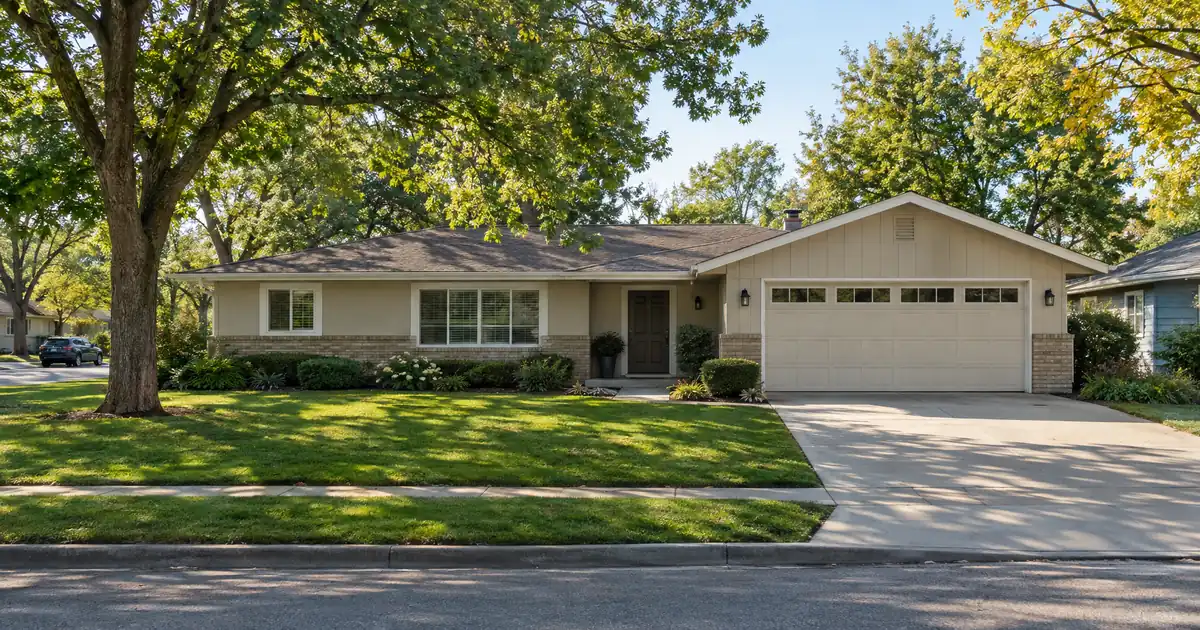
The Quick Read: Yes. Having both spouses on the first mortgage does not block a bank statement HELOC, and it does not force both spouses onto the new line’s note. The HELOC is underwritten as its own loan, so the spouse whose documented deposits qualify can borrow alone, while a spouse who is on title usually still signs the lien.
- The first mortgage and the HELOC do not need matching borrower lists.
- Title decides who signs the lien. Documented income decides who qualifies.
- Only the applicant’s deposits count unless the other spouse joins as a co-borrower.
- The existing first mortgage still counts in debt-to-income and combined loan-to-value.
- On an investment property, the network ceiling is 70% CLTV with a 700 minimum credit score, subject to lender guidelines.
Does the Borrower List Have to Match the First Mortgage?
No. A first mortgage and a home equity line are separate loans, each with its own application. Across the wholesale network Lendmire brokers through, a line can sit in first or second lien position as a standalone product. Nothing in the process says the people on loan one must be the people on loan two.
How large a line the equity supports.
An equity line is sized by combined loan-to-value, occupancy, and credit — not by rental coverage. Switch the occupancy or the credit band and the ceiling moves with it.
Investment-property lines require a 700 minimum credit score; second-home lines start at a 640 minimum and primary-residence lines at 600, and the combined-LTV ceiling steps down as the credit band drops on primary-residence and second-home lines and holds on investment-property lines; the line cap steps down on primary-residence lines and holds at every tier on investment-property and second-home lines.
A debt-to-income ratio above 45% requires 680+ credit. Profiles under 640 are limited to single-family homes. At least 75% of the approved line is drawn at closing. Ceilings, floors, and caps update from Lendmire’s centralized guideline source.
Line estimate
Illustrative estimate only — not a quote, Loan Estimate, approval, or commitment to lend. The rate is an editable assumption; equity-line pricing is variable through both the draw and repayment periods and never converts to fixed. Occupancy and credit drive the ceiling together: an investment property tops out at 70% combined LTV (minimum credit 700, line cap $500,000); a second home tops out at 90% combined LTV (minimum credit 640, line cap $500,000), with the ceiling stepping down as the credit band drops (the cap holds at every tier); a primary residence tops out at 90% combined LTV (minimum credit 600), and its $750,000 maximum line is available only at 75% combined LTV or below with a 700-or-better credit profile (720 on the longer-runway program) and a full appraisal. Lines above $500,000 require a full appraisal. Credit, debt-to-income, property type, and full underwriting review all affect the final line.
Federal law backs this up. Regulation B says a creditor may not require the signature of a spouse who is not a joint applicant on the credit instrument when the applicant qualifies alone. The same text appears in the eCFR codification of 12 CFR Part 1002. Sharing a first mortgage does not change that.
Two questions get blurred here, so keep them apart:
- Who is the borrower? Whoever applies and qualifies.
- Who must sign the lien? Whoever owns the property.
Who Signs and Who Is Liable?
Signing a lien and owing the debt are different things. A spouse can sign the deed of trust or mortgage without becoming a borrower on the note. Regulation B allows a lender to ask for that signature when it is needed to reach the collateral on default, and NAFCU’s compliance guidance explains the same point, including in community property states.
Because both spouses are on the first mortgage, both are almost certainly on title. That means both will normally sign the HELOC lien. The table shows how the roles split.
| Structure | Signs the lien | Liable on the note | Income counted |
|---|---|---|---|
| One spouse borrows, other on title | Both | Borrower only | Borrower’s deposits |
| Both spouses borrow | Both | Both | Both, if documented |
| Neither on title | Not applicable | Not applicable | Not eligible |
The pattern holds in most files we see: one qualified borrower, one title-holding spouse who signs. The signing spouse is not on the note, though state law and title form can change what the lien reaches. A Justia attorney answer describes how a one-signature lien behaves differently under tenancy in common versus tenancy by the entirety. That is one state’s illustration, not a universal rule. Lenders typically want every owner to sign for that reason.
Whose Bank Statements Count?
Only the applicant’s. Bank statement underwriting reads deposits instead of tax-return income, which helps self-employed owners whose write-offs shrink their taxable number. The lender typically asks for 12 to 24 months of personal or business statements, removes transfers between the borrower’s own accounts, loan proceeds and one-time deposits, applies an expense factor, and averages the result. Scotsman Guide’s non-QM overview describes this approach and gives a 50% expense factor as an example. The lender sets its own factor, so treat that number as illustration only.
Three cases come up most often:
- Self-employed spouse borrows alone. Their deposits qualify the file. The W-2 spouse stays on the first mortgage and title and signs the lien.
- W-2 spouse borrows alone. A bank statement line is the wrong tool, and a standard documentation path likely fits better.
- Both borrow. Both incomes and both sets of debts and credit enter the file.
Joint accounts need care. If the couple shares one account, the lender has to separate deposits that belong to the borrower’s business from the other spouse’s pay or personal transfers. Clean, separate business accounts make this far easier.
“Bank statement” does not mean undocumented. Non-QM lenders still have to confirm ability to repay, per the same Scotsman Guide piece. The file is reviewed on documented income under the applicable program, subject to lender guidelines.
How the Existing First Mortgage Affects the Line
It counts twice. The first mortgage payment goes into the debt-to-income test whether one or both spouses are on it. Its balance also sits in the combined loan-to-value calculation, so a larger first mortgage directly shrinks the line a property can support.
Here are the network’s figures, which vary by occupancy and credit tier:
- Primary residence: up to 90% CLTV, but only at a 720 or better credit profile and up to $500,000. Lines above $500,000 are primary-residence only, need 700 or better (720 on the longer-runway structure), cap at 75% CLTV and require a full appraisal.
- Second home: up to 90% CLTV at 720 or better, with a 640 minimum and a $500,000 maximum line.
- Investment property: 70% CLTV, a 700 minimum credit score and a $500,000 maximum line. No tier sits above that.
Debt-to-income tops out at 50% in the network, with 45% for credit profiles between 600 and 679, and the line is qualified on the interest-only payment at the maximum draw. Lines at or below $500,000 ordinarily run automated valuation rather than a full appraisal. Every figure is subject to lender guidelines and full file review. Availability is limited to Lendmire’s 16 full-service states, narrower than its DSCR footprint of 41 markets, including Washington, D.C.
One wrinkle for investors: a HELOC’s terms may restrict rental use of the home. The CFPB’s HELOC brochure warns about this, so occupancy has to match the line you apply for.
Should You Add the Other Spouse or Keep One Borrower?
It depends on whose profile helps the file. Adding a spouse brings income and credit, and also brings debts and every late payment. The network uses a single-bureau score keyed to the primary wage earner, so who that is matters.
| Factor | One borrower | Both borrowers |
|---|---|---|
| Qualifying income | One spouse’s deposits | Combined, if both documented |
| Debts in DTI | One spouse’s | Both spouses’ |
| Credit profile | One score drives tiers | Weaker profile can pull terms down |
| Lien signature | Both still sign | Both sign |
Keep one borrower if that spouse’s deposits clear the debt-to-income test alone and the other spouse carries heavy debt or thinner credit. Add the second spouse if the first borrower falls short on income. A lender cannot require that the cosigner be the spouse, per the Regulation B commentary, but joining voluntarily is allowed.
This is a genuine toss-up for many couples. A bigger combined income may raise approval odds but it also exposes both credit files. Running both versions before applying costs little.
Where the Answer Changes
Community property and homestead states. The spouse’s lien signature is typically required whatever the note says. Title form and state law set the details, so a title company or attorney should confirm the specifics.
Texas primary residences. A primary residence there is a homestead and caps at 80% combined loan-to-value, with a waiting period and one-lien-at-a-time rule. Texas second homes and investment properties are treated as non-homestead transactions.
Title held in an LLC. Title must sit with an individual or an inter vivos revocable living trust. LLCs, corporations and irrevocable or land trusts cannot hold title. A property already in an LLC needs a vesting change, or a DSCR cash-out refinance may be the better route. Lendmire’s complete DSCR loans guide covers that alternative.
Divorce or separation. Both spouses on the first mortgage means both stay exposed on that loan no matter who borrows on the line. Anyone worried about a hidden one-signature lien should order a title search.
What Investors Should Weigh
For an investor with a low first mortgage, a line touches only the new money, while a cash-out refinance replaces the whole balance. Lendmire’s piece Can a Bank Statement HELOC Tap Equity and Keep Your First Mortgage? walks through that tradeoff.
If the property is a pure rental owned by an entity, or your coverage ratio is stronger than your personal income, a DSCR loan is reviewed primarily on property-level rental income covering the payment, subject to lender guidelines. Neither path suits every file.
Tax treatment can depend on how the funds are used and how the property is held; investors should keep clear records and speak with a qualified tax professional before relying on any deduction.
Key Terms Defined
- Bank statement HELOC: a home equity line that qualifies the borrower on deposits in 12 to 24 months of statements rather than traditional personal-income documentation.
- CLTV: combined loan-to-value, the first mortgage plus the line, divided by the property value.
- Lien: the security instrument that lets a lender reach the property if the loan defaults.
- Title holder: a person who owns the property, whether or not they are on the note.
- Co-borrower: a second applicant whose income, debts and credit join the file.
Frequently Asked Questions
Does my spouse have to be on the HELOC if we are both on the first mortgage?
No. The loans are underwritten separately, and a creditor cannot require a spouse’s signature on the note when the applicant qualifies alone. The spouse will usually still sign the lien because they are on title.
Can a self-employed spouse qualify alone with a W-2 spouse on title?
Yes, if the self-employed spouse’s documented deposits clear the debt-to-income and combined-leverage tests. The W-2 spouse’s pay is not counted unless they join as a co-borrower. Qualification remains subject to lender guidelines and credit approval.
Does the first mortgage hurt my chances of getting a line?
It can limit the size of the line but it does not block it. The payment counts in debt-to-income and the balance counts in CLTV, so lower leverage on the first loan leaves more room.
Can the line sit in first lien position?
Yes. The network’s lines can be first or second lien. If the existing mortgage stays in place, the line typically is a second lien behind it.
What if only one spouse is on title?
Then that spouse is the one who borrows and signs, though state law may still give the other spouse an interest that the lender wants addressed. Title and vesting should be confirmed before applying.
If you are considering a home equity line and want to see how the numbers work, Lendmire can help you compare HELOC options based on the property, the equity available, credit profile, combined leverage, and your goals. Reach the team at 828-256-2183 or request a quote.
About Lendmire
Lendmire, NMLS# 2371349, is a mortgage brokerage that arranges home equity lines of credit through wholesale lending partners in its 16 full-service states. Lines on primary residences, second homes and investment properties are each reviewed individually by the lender under the program’s occupancy, credit and combined-loan-to-value guidelines. Scotsman Guide named Lendmire a Top Mortgage Workplace in both 2025 and 2026.
Get Started
Ready to find the right loan for you?
In about 30 seconds you can review financing options available for your home or investment property. No commitment required.
Informational only. Not a Loan Estimate, approval, or commitment to lend. Program availability and eligibility are subject to lender guidelines, credit approval, property review, and underwriting.
References
1. CFPB — Regulation B §1002.7
3. NAFCU — Regulation B and Extending Credit to Spouses
5. Scotsman Guide — Rev Up the Engine for Non-QM Lending
6. Cornell LII — Regulation B Supplement I
This article is part of Lendmire’s bank statement HELOC program — full qualification details, guidelines, and scenarios live on the program page.
Related reading: Bank Statement HELOC Requirements on a Primary Home vs. a Rental · DSCR Purchase vs Bank Statement HELOC vs Cash-Out for a Rental · How Much a Bank Statement HELOC Covers on a DSCR Rental Purchase
Brandon Miller
Founder & CEO, Mortgage Loan Originator, Lendmire LLC
- Mortgage Loan Originator · NMLS# 1129696 · Verify on NMLS Consumer Access
- North Carolina Real Estate Broker · License# 343312 · Verify on NCREC
- North Carolina Insurance Producer · License# 19053198 · Property, Casualty, Life, Health · Verify on NAIC SBS
- Lendmire LLC · Firm NMLS# 2371349 · Verify firm licensure
Compliance and disclosures. Lendmire (NMLS# 2371349) is a licensed mortgage broker and is not a direct lender, depository institution, financial advisor, or tax professional. Content in this article is general market analysis and educational information — not financial, legal, or tax advice for any specific situation. Lendmire does not guarantee loan approval; every transaction is subject to underwriting by the funding lender. Mortgage pricing and loan program guidelines are subject to change at any time without notice and vary by borrower characteristics, property type, and state regulations. Lendmire complies with Equal Housing Opportunity. Licensure verification: NMLS Consumer Access.