
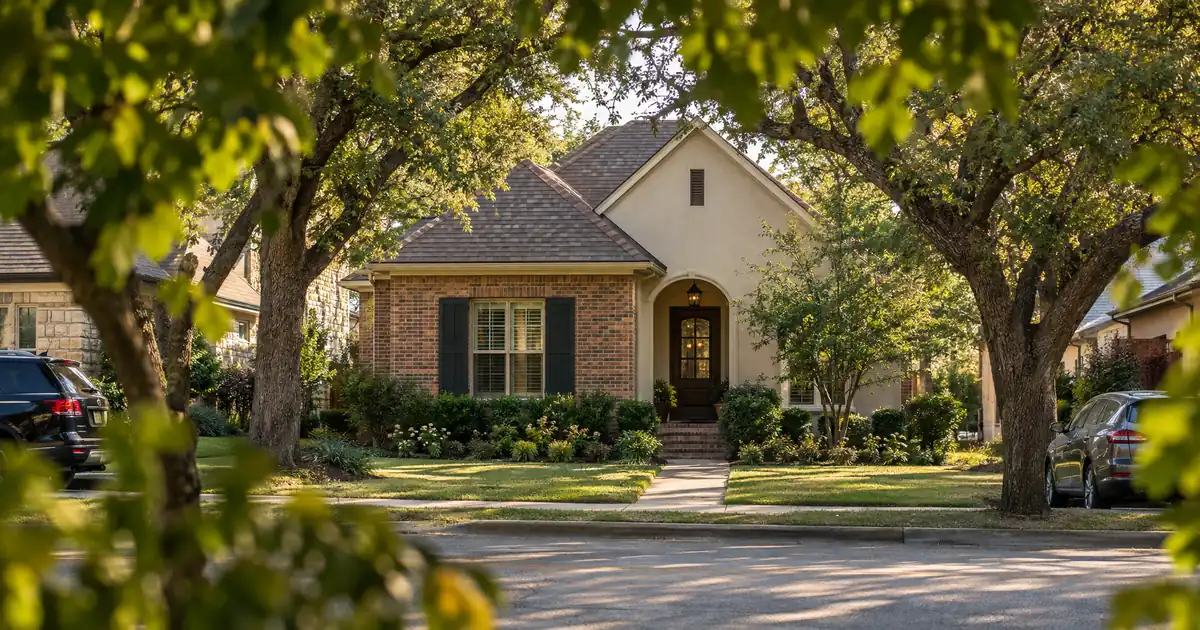
The Quick Read: Yes, a Texas second home can usually carry a bank statement HELOC, a cash-out refinance, or both, because Texas’ special home-equity limits apply to homesteads only; what caps you is combined leverage, credit, and property eligibility under each program’s guidelines.
- A true second home is not a homestead, so the homestead-only rules do not attach to it.
- Across Lendmire’s wholesale network, second-home lines run up to a $500,000 maximum, with the top leverage tier reserved for 720+ credit.
- A line and a cash-out loan can sit on the same property only if the combined loan-to-value fits under one ceiling.
- Occupancy is a fact, not a label. If you live in the property, it is a homestead and the stricter rules apply.
Most online answers say Texas bans home equity on second homes. That is a misreading, and it costs investors real options. Here is how the rules actually work and how the two loans fit together.
How large a line the equity supports in Texas.
An equity line is sized by combined loan-to-value, occupancy, and credit — not by rental coverage. Switch the occupancy or the credit band and the ceiling moves with it.
Investment-property lines require a 700 minimum credit score; second-home lines start at a 640 minimum and primary-residence lines at 600, and the combined-LTV ceiling steps down as the credit band drops on primary-residence and second-home lines and holds on investment-property lines; the line cap steps down on primary-residence lines and holds at every tier on investment-property and second-home lines.
A debt-to-income ratio above 45% requires 680+ credit. Profiles under 640 are limited to single-family homes. At least 75% of the approved line is drawn at closing. Ceilings, floors, and caps update from Lendmire’s centralized guideline source.
Line estimate
Illustrative estimate only — not a quote, Loan Estimate, approval, or commitment to lend. The rate is an editable assumption; equity-line pricing is variable through both the draw and repayment periods and never converts to fixed. Occupancy and credit drive the ceiling together: an investment property tops out at 70% combined LTV (minimum credit 700, line cap $500,000); a second home tops out at 90% combined LTV (minimum credit 640, line cap $500,000), with the ceiling stepping down as the credit band drops (the cap holds at every tier); a primary residence tops out at 80% combined LTV (minimum credit 600), and its $750,000 maximum line is available only at 75% combined LTV or below with a 700-or-better credit profile (720 on the longer-runway program) and a full appraisal. Lines above $500,000 require a full appraisal. Credit, debt-to-income, property type, and full underwriting review all affect the final line.
Why “Texas Doesn’t Allow It” Is Incomplete
Texas’ strict equity rules protect a family’s homestead. They do not govern every property a Texan owns. The Texas A&M Real Estate Research Center explains that the special Section 50 home equity loan cannot be taken out on a secondary residence or on a rental or investment property. Read that sentence carefully. It says the special product is limited to homesteads. It does not say lenders may never lend against a second home.
A loan on a non-homestead Texas property is an ordinary mortgage transaction. The constitutional rules for the special homestead product are the 80% combined-leverage cap, the one-equity-loan-at-a-time limit, the 12-day waiting period, and a fee cap. None of them follow you to a second home.
The Texas Attorney General describes the “Texas Cash Out” as a home equity loan under that same homestead provision, in Opinion KP-0183. The opinion also confirms that the homestead is shielded from forced sale for debts the constitution does not list. The protection is built around the homestead, which is why the answer turns on one question: is this property your homestead?
Is It Really a Second Home?
Underwriting and title decide the classification before anything else. According to Texas Legal Guide, homestead status arises from owning the property, living in it, and intending it as your home. A lake house you use on weekends fails the occupancy and intent tests. A house where you sleep most nights does not.
That matters because you cannot hold two homesteads. If the Texas property is where you actually live or claim the exemption, the primary-residence rules apply. In Lendmire’s network, a Texas primary residence caps at 80% combined loan-to-value. The 12-day waiting period, the one-lien-at-a-time rule, and 12-month seasoning also bind primary residences only.
| Rule | Texas homestead | Second home or rental |
|---|---|---|
| 80% combined-leverage cap | Applies | Program sets leverage |
| One equity lien at a time | Applies | Does not apply |
| 12-day waiting period | Applies | Does not apply |
| 12-month seasoning | Applies | Does not apply |
| Eligible for network lines | Yes | Yes, as non-homestead |
Two traps sit at the edges. A former homestead that now serves as a second home needs a title check for any old equity lien before a new lien goes on. And borrowing against your Texas primary home to fund the second home puts that primary home under the homestead rules. Drawing against the second home itself avoids that.
What Bank Statements Change (and What They Don’t)
Bank statements change how income is proven. They do not change the collateral rules. HousingWire’s non-QM guide describes the bank statement HELOC as a revolving second lien qualified on 12 to 24 months of personal or business deposits. Non-QM means the loan sits outside standard agency mortgage rules. Business accounts get an expense factor applied before deposits count as income.
The practical fit is a self-employed owner whose traditional personal-income documentation shows heavy deductions. Legal write-offs shrink taxable income on paper, while deposits show the cash that actually moves. The file is reviewed on documented income under the applicable program, subject to lender guidelines.
Bank statements are not a shortcut around underwriting. You still need credit, a debt-to-income ratio within limits, and an eligible property. On our network the debt-to-income ceiling is 50%, and anything above 45% needs a 680 score or better. The lender reviews your file on the interest-only payment calculated on the maximum draw, so the line is tested against its heaviest early payment.
Bank statements also do not turn a personal second home into a DSCR file. DSCR, the debt service coverage ratio, divides a property’s rent by its full monthly obligation (principal, interest, taxes, insurance, and any HOA dues). A second home you use yourself has no rent to count, so borrower income carries the file. If you do rent the property, the complete DSCR loans guide explains that path. A ratio of 1.00 is where many select programs start, and a separate select-lender path goes below 1.00 with leverage and terms adjusted. Clearing 1.00 still does not mean positive cash flow, because repairs, vacancy, and management sit outside the ratio.
What a Second-Home Line Looks Like in Our Network
Lendmire is a broker. It places these lines through select wholesale partners and is never the lender. Every figure below is subject to lender guidelines and full file review.
Maximum combined loan-to-value (CLTV) on a second-home line depends on your credit score:
| Credit score | Max CLTV, second home |
|---|---|
| 720+ | 90% |
| 700+ | 85% |
| 680+ | 85% |
| 660+ | 80% |
| 640+ | 75% |
The minimum score is 640, and the line tops out at $500,000. The 90% tier exists only at 720 or better. An investment-property line, by contrast, tops out at 70% CLTV with no higher tier, so be clear about which occupancy you are discussing. Market surveys report some bank statement HELOCs at 85% CLTV or higher. That describes the broader market, and on our network the figures above govern.
Two draw structures exist on second homes. One offers a 3-year interest-only draw followed by a 17-year repayment period. The other offers a 5-year draw followed by a 25-year repayment period. Pricing on both floats and never converts to fixed, and at least 75% of the line is drawn at closing. That minimum initial draw surprises borrowers who expect a dormant line. You are paying on most of it from day one.
Most lines at or below $500,000 use an automated valuation instead of a full appraisal, though higher leverage may require a second valuation. A line may sit in first or second lien position. Title must be held by you personally or by a revocable living trust. LLCs cannot hold title on these lines, which is a sharp difference from a DSCR loan, and a property already deeded to an LLC needs a vesting change first. Texas properties are limited to 10 acres, and a property listed for sale, or listed within the past 60 days, is ineligible. Manufactured homes, log homes, and condotels are not offered.
Can One Second Home Hold Both a Line and a Cash-Out Loan?
Yes, if the combined leverage fits. A cash-out refinance replaces your first mortgage with a larger new loan. A HELOC is a revolving line that either sits behind the first mortgage or stands alone in first position. Putting both on one property means a first lien plus a second lien, and Texas law is not the constraint. Combined loan-to-value is.
Consider a second home worth a round number, where a new cash-out first lien lands at 70% of value. A borrower at 640 credit has a 75% CLTV ceiling on the line, leaving about five points of room. A borrower at 720 or better has a 90% ceiling and far more. The same cash-out loan produces very different line capacity depending on your score. Across our network, cash-out refinances generally top out around 75% LTV, and about six months of ownership is the common seasoning expectation. For timing details, see Lendmire’s piece How to Time a Second-Home Bank Statement Cash-Out After Purchase.
Sequencing is the other question. You can do the cash-out first and add the line behind it, or keep a good first mortgage and add the line behind that. Each program sets its own rules on lien order and subordination, so confirm before you commit to either route.
| Factor | Bank statement HELOC | Cash-out refinance |
|---|---|---|
| Lien position | First or second | Replaces the first |
| Your current first mortgage | Can stay in place | Paid off |
| How funds arrive | At least 75% drawn at closing | Lump sum |
| Payment behavior | Floats, interest-only draw | Per chosen structure |
| Best fit | Keep a low-cost first | Reset the whole loan |
Three Owners, Three Answers
The lake-house owner with a good first mortgage. She is self-employed and her returns show heavy deductions. Her first mortgage is worth keeping, so she adds a line behind it, qualified on deposits. She needs 640 credit at minimum, and her CLTV ceiling rises with her score.
The owner who wants to reset the loan. He wants to pull equity and replace a first mortgage that no longer suits him. A cash-out refinance does that. If the property is rented, a DSCR cash-out may fit better, and it can be held in an LLC subject to lender program eligibility.
The owner whose second home is really home. He splits time but sleeps in the Texas house most nights. It is a homestead whatever he calls it, so the 80% cap, one-lien rule, and waiting period apply. The label never decides. Occupancy does.
Edge Cases That Stall Files
Across the programs we place files with, the problems are usually mundane: a stale credit report (it must be no more than 90 days old at closing), a large unexplained deposit in the statement window, or business and personal funds mixed in one account. A property listed for sale within the past 60 days stops a Texas file outright. So does a vesting problem, because a line cannot close with the property sitting in an LLC.
Occasional renting of a second home does not by itself change its character, but regular rental changes how the property is classified and which program fits. Spell out how you use the property at the start. Exposure limits apply too. A borrower is limited to three lines, and anyone owning more than 15 financed properties is not eligible. Lendmire’s DSCR investor programs span 41 markets, including Washington, D.C. The equity-line programs described here run in 16 full-service states, Texas among them.
Homestead owners comparing options can read Lendmire’s separate piece Can a Texas Homestead Hold a Bank Statement HELOC and a Cash-Out Lien?.
Key Terms Defined
Homestead: the home you own, live in, and intend as your primary residence, which receives special protection under Texas law.
Second home: a property you own and use personally that is not your primary residence.
HELOC: a home equity line of credit, a revolving loan secured by property equity.
Cash-out refinance: a new, larger mortgage that pays off the old one and hands you the difference.
CLTV: combined loan-to-value, all liens on the property added together and divided by its value.
Non-QM: a loan that sits outside standard agency mortgage rules, often because income is documented differently.
Seasoning: the waiting period a lender wants between buying a property and refinancing it.
Tax treatment can depend on how the funds are used and how the property is held; investors should keep clear records and speak with a qualified tax professional before relying on any deduction.
Frequently Asked Questions
Does Texas allow a HELOC on a second home?
Yes, when the property is a true second home and not your homestead. The special Texas home-equity rules cover homesteads only. A non-homestead line follows the lender program’s own guidelines, which on our network means a 640 minimum score, a $500,000 maximum line, and CLTV tiers up to 90% at 720 or better.
Do the 80% and one-loan-at-a-time rules apply to my second home?
No. Both rules attach to a Texas primary residence. Leverage on a second home comes from the program, and nothing in Texas law stops a line and a cash-out loan from coexisting there. The total loan-to-value still has to fit under the program ceiling for your credit tier.
Can I use bank statements instead of traditional personal-income documentation?
Often, yes. The lender reviews 12 to 24 months of deposits and applies an expense factor to business accounts. You still need credit, an acceptable debt-to-income ratio, and an eligible property. Eligibility review depends on documented income under the applicable program, subject to lender guidelines.
What if I rent the second home part of the year?
Tell the lender up front. A property rented regularly may fit a DSCR program, which qualifies primarily on property-level rental income covering the payment, subject to lender guidelines. A personal-use second home relies on your income instead.
Can an LLC own the property?
Not for these equity lines. Title must be held by you or by a revocable living trust. If the property sits in an LLC, a DSCR cash-out is usually the cleaner route, subject to program terms.
For how equity extraction works on an investment property, see Lendmire’s guide to cash-out refinance on an investment property.
About Lendmire
As a mortgage broker (NMLS# 2371349), Lendmire helps homeowners and real estate investors in its 16 full-service states open home equity lines of credit arranged through wholesale lenders. Lendmire is never the lender; line amounts, ceilings and terms are set by the lender under its guidelines. Scotsman Guide named Lendmire a Top Mortgage Workplace in both 2025 and 2026.
Get Started
Ready to find the right loan for you?
In about 30 seconds you can review financing options available for your home or investment property. No commitment required.
Informational only. Not a Loan Estimate, approval, or commitment to lend. Program availability and eligibility are subject to lender guidelines, credit approval, property review, and underwriting.
References
1. Texas A&M Real Estate Research Center, What to Know About Home Equity Loans in Texas
2. Texas Attorney General Opinion KP-0183
3. Texas Legal Guide, Homestead Protections
4. HousingWire, Non-QM Loans Guide
This article is part of Lendmire’s bank statement HELOC program — full qualification details, guidelines, and scenarios live on the program page.
Related reading: Bank Statement HELOC Requirements on a Primary Home vs. a Rental · DSCR Purchase vs Bank Statement HELOC vs Cash-Out for a Rental · How Much a Bank Statement HELOC Covers on a DSCR Rental Purchase
Guides: Bank Statement HELOC in Texas
Brandon Miller
Founder & CEO, Mortgage Loan Originator, Lendmire LLC
- Mortgage Loan Originator · NMLS# 1129696 · Verify on NMLS Consumer Access
- North Carolina Real Estate Broker · License# 343312 · Verify on NCREC
- North Carolina Insurance Producer · License# 19053198 · Property, Casualty, Life, Health · Verify on NAIC SBS
- Lendmire LLC · Firm NMLS# 2371349 · Verify firm licensure
Disclosures. The information presented in this article is general market commentary, not financial, legal, or tax advice. Lendmire is a mortgage brokerage (NMLS# 2371349) — not a direct lender or depository institution — and loan placement is subject to lender underwriting. Nothing in this content represents a commitment to lend. Loan terms, pricing, and program availability vary based on borrower qualifications, property characteristics, and state of subject property, and are subject to change at any time. Lendmire complies with Equal Housing Opportunity requirements. Consumer access: nmlsconsumeraccess.org.