
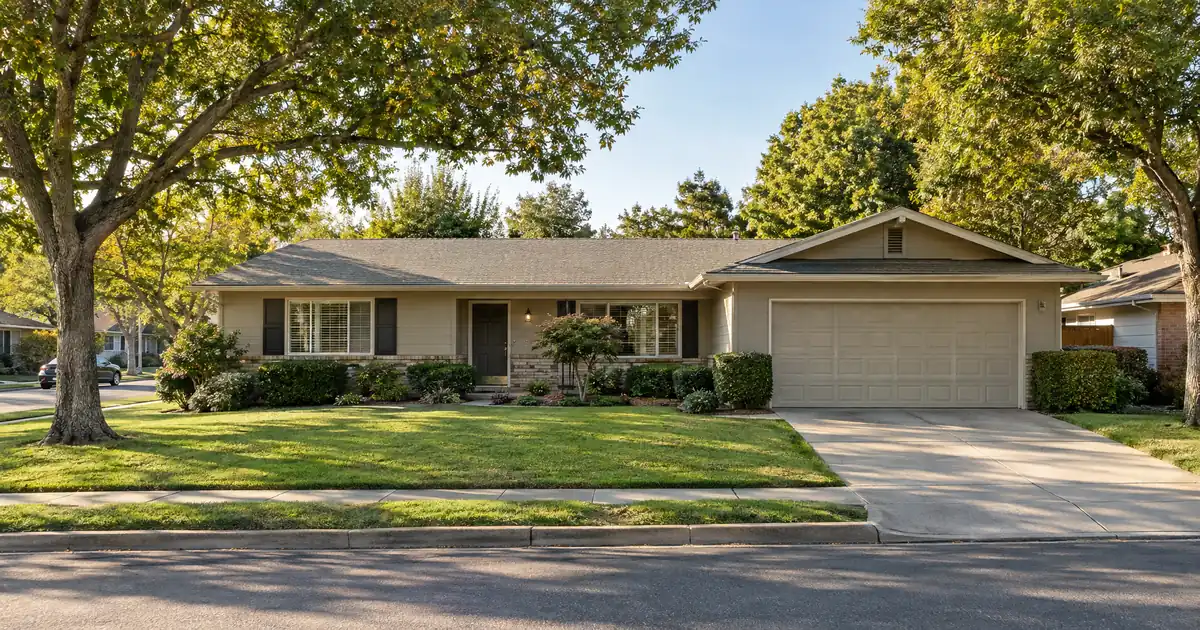
The Quick Read: A bank statement cash-out refinance qualifies a borrower on documented income under the applicable program, subject to lender guidelines, using 12 months of personal or business deposits in place of traditional personal-income documentation. Leverage depends on occupancy, since the cash-out ceiling sits well below the purchase ceiling on every program Lendmire places files with.
- Owner-occupied cash-out (primary residence or second home) typically tops out near 80% LTV, with a fixed expense ratio of 75% when an accountant prepares it.
- Investment-property cash-out typically tops out near 75% LTV.
- The 90% LTV figure applies to primary-residence purchase and rate-and-term only, never to cash-out.
- Loan sizes generally run from $125,000 to $3,500,000, with reserves commonly around 6 months of the housing payment.
- Occupancy decides the disclosure regime, so the property type matters before the documents do.
Self-employed owners often show low taxable income because legal deductions shrink it. Bank statements give a lender another way to see what the business actually produces. This guide walks through the documents, the income math, the leverage by program, and the points where the general rule breaks.
What Is a Bank Statement Cash-Out Refinance?
It is a refinance that replaces your current mortgage with a larger one and pays you the difference, with qualifying income drawn from bank deposits rather than traditional personal-income documentation. Scotsman Guide’s non-QM overview describes the standard setup: a self-employed borrower without a W-2 supplies statements, and the lender derives income from them using an expense factor or a third-party prepared profit-and-loss statement.
This is alternative documentation. It is not no documentation. Across the wholesale network, every file still gets a full review of credit, reserves, the appraisal, and the borrower’s ability to repay.
How Does Underwriting Treat the Statements, Step by Step?
Underwriting turns raw deposits into a monthly income figure in five steps. The documentation method changes, but the repayment test does not.
1. Pick the account type. Business statements, personal statements, or a mix, depending on where the income actually lands. The program sets the window, and 12 months is the common baseline.
2. Screen the deposits. Transfers between your own accounts, loan proceeds, refunds, and one-time items come out. What remains are deposits that look like real, repeatable revenue.
3. Apply the expense factor. On business accounts, the lender counts only part of each deposit as income, because some of it went to costs. Factors are lender-specific, so no figure here should be treated as a promise. On owner-occupied cash-out, the fixed ratio runs lower, at 75%, when an accountant prepares it.
4. Adjust for ownership and average. If you own part of the business, only your share counts. The result is averaged across the months reviewed.
5. Run the full file. The new payment plus your other debts must fit inside that derived income. Credit score, reserves, and the LTV cap for the property type then set the ceiling.
Most programs we place files with work this way, though the details vary by lender. Some are stricter on large deposits, and others are more flexible on mixed personal-and-business accounts.
What Documents Does the File Need?
Expect statements plus the usual supporting paper. The table below shows what typically goes in the file.
| Document | Why it is requested | Applies to |
|---|---|---|
| 12 months of statements | Source of deposit income | All borrowers |
| Business proof (license, entity papers) | Shows the business exists | Business-account files |
| Accountant-prepared expense ratio | Can replace the flat factor | Optional, helps if true costs are low |
| Current mortgage statement | Confirms the payoff | All refinances |
| Tax and insurance records | Completes the housing payment | All borrowers |
| Appraisal | Sets value, and so the cash-out ceiling | All borrowers |
| Letters of explanation | Sources unusual deposits | Files with large or irregular credits |
A CPA-prepared ratio only helps when your real cost ratio is below the default. If your business runs heavy expenses, the flat factor may be the better path. That is a genuine flip point, so compare both before ordering the letter.
LTV by Program: Where the Ceilings Sit
Cash-out leverage is lower than purchase leverage on every program, and borrowers often overlook that gap.
| Transaction | Occupancy | Typical maximum LTV |
|---|---|---|
| Purchase or rate-and-term | Primary residence | Up to 90% |
| Cash-out | Primary residence or second home | Up to 80% |
| Cash-out | Investment property | Up to 75% |
| Asset-depletion alternative | Primary residence | Up to about 80% |
These are ceilings, not entitlements. The top of each range goes to stronger files, meaning higher credit scores, moderate loan sizes, and solid reserves. Larger balances and thinner credit typically pull the ceiling down. Short-term rental collateral usually sits lower than a standard long-term rental. Investment purchase leverage on bank statement documentation varies by lender, so it is not quoted here. Investors buying rentals usually find the leverage guidance on the DSCR side more useful.
Market surveys describe some non-QM programs reaching 90% LTV with no mortgage insurance, per Scotsman Guide. On Lendmire’s network that figure applies only to primary-residence purchase and rate-and-term. Do not carry it into a cash-out conversation. Leverage, reserves, and pricing vary by lender and program; the final terms follow the full file review.
Run a quick mental check on a primary home. Say the appraisal comes in at a round $1,000,000. At the 80% cash-out ceiling, the new loan is capped at 80% of value, and the existing payoff comes out of that first. Whatever remains, after costs, is your proceeds. Anything above that cap needs a different structure.
Key Terms Defined
LTV (loan-to-value): The new loan balance divided by the appraised value of the property.
Expense factor: The share of business deposits a lender treats as operating costs rather than income.
Cash-out refinance: A refinance where the new loan exceeds the payoff and you receive the difference.
Deposit averaging: Totaling eligible deposits and dividing by the number of months reviewed.
Non-QM: A mortgage that does not follow standard qualified-mortgage documentation, while still requiring a repayment determination.
Reserves: Liquid funds, often counted in months of housing payment, that the borrower holds after the transaction.
Where the General Rule Breaks
Occupancy comes first. An owner-occupied file, meaning a primary residence or second home, is a consumer mortgage, and the consumer disclosure rules apply. A bank statement loan on a non-owner-occupied rental, including a short-term rental, is business-purpose and exempt from those disclosure rules. Know which regime your property falls under before you gather paper. Lendmire’s piece on whether a second home can qualify for a bank statement cash-out covers one of the grayer cases.
Other edge cases that move the outcome:
- Irregular deposits. Customer-funded job money or one-time sale proceeds are typically sourced and excluded. A strong year built on one windfall will not average the way it looks.
- Credit and title. Statements solve an income-documentation problem only. They do not repair credit, title defects, or property eligibility.
- Vesting. Bank statement files are usually individual or trust vesting, while DSCR files often allow an LLC, subject to program terms.
- Term structure. Alt-doc terms follow each lender’s program sheet. Forty-year and interest-only structures are DSCR-side offerings, so do not assume them here.
Bank Statement or DSCR: Which Fits the Rental?
For a pure rental, occupancy settles most of the question first. DSCR is investment-only and qualifies primarily on property-level rental income covering the payment, subject to lender guidelines. A bank statement loan ties qualifying to your personal deposits, so every additional loan adds to your debt load.
| Factor | Bank statement | DSCR |
|---|---|---|
| Reviewed on | Documented deposit income | Property rental income |
| Property types | Primary, second home, investment | Investment only |
| Portfolio growth | Each loan adds to your DTI | Property-by-property |
| Best fit | Strong deposits, thin rent | Rent covers its own payment |
If a rental’s rent comfortably covers its own obligation, DSCR often skips the income file entirely. Bank statements win when personal deposits are strong and rent is thin, or when the property is your home. The same logic runs through Lendmire’s complete DSCR loans guide. Industry data cited by Scotsman Guide’s coverage is dated, so treat market-share figures as directional only.
The Regulatory Frame, Briefly
Consumer-purpose, dwelling-secured loans fall under the CFPB’s ability-to-repay rule, which requires a reasonable, good-faith repayment determination. The same rule does not cover credit extended primarily for a business purpose. The rule also sets no comprehensive underwriting standards, so the 12-month window and the expense factor are program choices rather than regulatory mandates. The agency’s small entity compliance guide adds that creditors must verify what they rely on using reasonably reliable third-party records, which is why bank statements work as the record.
Tax treatment can depend on how the funds are used and how the property is held; investors should keep clear records and speak with a qualified tax professional before relying on any deduction.
Common Reasons Files Stall
- Large deposits with no paper trail.
- Business and personal accounts mixed without a clear story.
- A cash-out request above the ceiling for that occupancy.
- Reserves short of the program’s expectation.
- Assuming the purchase ceiling applies to a cash-out.
Fixing these before submission matters more than any single pricing detail.
Frequently Asked Questions
How many months of statements does a cash-out refinance need?
Twelve months is the common baseline on the programs Lendmire works with, in either personal or business accounts. Some lenders in the wholesale network will review longer windows, and a few ask for more when deposits are uneven.
Can I pull out more than 80% of my home’s value?
Not on a cash-out. The 80% figure is the owner-occupied cash-out ceiling, and investment properties generally top out near 75%. The 90% figure belongs to purchase and rate-and-term on a primary residence, subject to lender guidelines and credit.
Does an accountant’s letter raise my qualifying income?
It can, but only if your true expense ratio is lower than the flat default. On owner-occupied cash-out, an accountant-prepared ratio lets the program use 75% instead of the standard fixed ratio. Run both versions before paying for the letter.
Do all my deposits count as income?
No. Transfers between your own accounts, loan proceeds, refunds, and one-time items are removed, and business deposits take an expense factor. Only repeatable revenue feeds the average.
Which is better for a rental, bank statement or DSCR?
It depends on the rent and your personal deposits. If rent covers the payment, DSCR usually avoids the income file. If personal deposits are strong and rent is thin, bank statements may fit better. Eligibility is subject to lender guidelines and credit approval.
Reach the team at 828-256-2183, or request a quote. Consumer bank statement lending is available in 16 states.
For the mechanics of pulling equity out of a rental property, see Lendmire’s guide to cash-out refinance on an investment property.
About Lendmire
Lendmire is a DSCR-focused mortgage brokerage, NMLS# 2371349, placing investor loans across 41 markets, including Washington, D.C. DSCR eligibility is generally reviewed by the lender around a property’s rental income rather than personal income documentation, which fits LLC-held rentals, self-employed investors, and portfolios scaling past conventional financed-property limits. Scotsman Guide named Lendmire a Top Mortgage Workplace in both 2025 and 2026.
Get Started
Ready to find the right loan for you?
In about 30 seconds you can review financing options available for your home or investment property. No commitment required.
Informational only. Not a Loan Estimate, approval, or commitment to lend. Program availability and eligibility are subject to lender guidelines, credit approval, property review, and underwriting.
References
1. Scotsman Guide – Rev Up the Engine for Non-QM Lending
2. CFPB – Regulation Z § 1026.43
3. CFPB – ATR/QM Small Entity Compliance Guide
This article is part of Lendmire’s bank statement loan program — full qualification details, guidelines, and scenarios live on the program page.
Related reading: How Much Debt a Bank Statement Cash-Out Can Clear on a Texas Rental · How to Document Personal or Business Statements for a Bank Statement HELOC · Bank Statement HELOC vs Stated HELOC on a Rental Property
Brandon Miller
Founder & CEO, Mortgage Loan Originator, Lendmire LLC
- Mortgage Loan Originator · NMLS# 1129696 · Verify on NMLS Consumer Access
- North Carolina Real Estate Broker · License# 343312 · Verify on NCREC
- North Carolina Insurance Producer · License# 19053198 · Property, Casualty, Life, Health · Verify on NAIC SBS
- Lendmire LLC · Firm NMLS# 2371349 · Verify firm licensure
Required disclosures. Lendmire (NMLS# 2371349) operates as a licensed mortgage broker, not a direct lender or depository. The discussion in this article is general in nature and should not be relied upon as financial, legal, or tax advice — every investment scenario is unique and should be reviewed by a qualified professional. Any loan inquiry is subject to lender underwriting, and this article is not a commitment to lend or a guarantee of approval. Mortgage rates, loan terms, and program guidelines vary by borrower, property, and state, and may change without notice. Equal Housing Opportunity. Verify licensure at NMLS Consumer Access.