
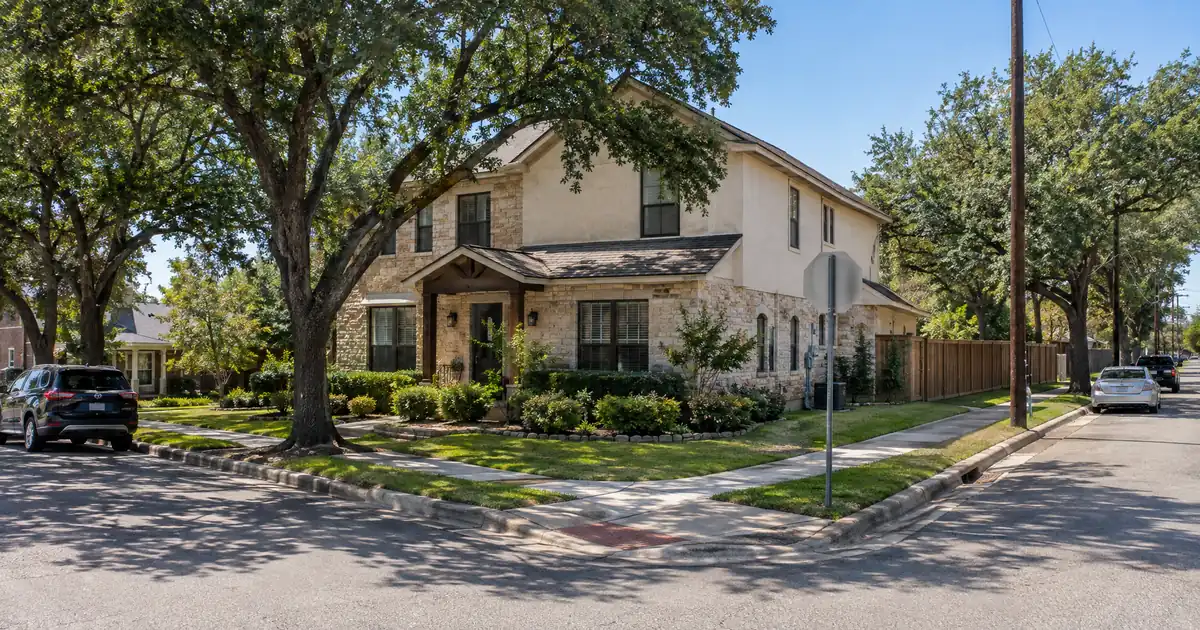
The Quick Read: A Texas HELOC secured by a primary residence follows constitutional homestead rules, including an 80% combined loan-to-value cap, a 12-day waiting period, and a one-lien-at-a-time limit. A rental property is not a homestead, so a line on a rental or second home follows ordinary investor guidelines instead. Qualification stays subject to lender guidelines and full file review.
- The cap is 80% on a Texas primary residence. Higher tiers in the wider market never apply to a Texas homestead.
- One slot. Only one homestead equity loan can sit on the home at a time, so a HELOC and a cash-out refinance compete.
- Rentals sit outside the regime. An investment line on a Texas rental is a non-homestead transaction, with a 70% CLTV ceiling and a $500,000 maximum line.
- Title matters. Individuals and revocable living trusts can hold title; LLCs cannot.
- Texas lines carry a $4,000 minimum subsequent draw after closing.
Why Texas Treats Home Equity Differently
Texas writes its home equity rules into the state constitution, not into ordinary lending policy. Texas A&M’s Real Estate Research Center explains that many of these rules sit in Article XVI, Section 50(a)(6). It also notes that home equity lending was prohibited for most of the state’s history, and that the homestead is protected from forced sale for most debts.
How large a line the equity supports in Texas.
An equity line is sized by combined loan-to-value, occupancy, and credit — not by rental coverage. Switch the occupancy or the credit band and the ceiling moves with it.
Investment-property lines require a 700 minimum credit score; second-home lines start at a 640 minimum and primary-residence lines at 600, and the combined-LTV ceiling steps down as the credit band drops on primary-residence and second-home lines and holds on investment-property lines; the line cap steps down on primary-residence lines and holds at every tier on investment-property and second-home lines.
A debt-to-income ratio above 45% requires 680+ credit. Profiles under 640 are limited to single-family homes. At least 75% of the approved line is drawn at closing. Ceilings, floors, and caps update from Lendmire’s centralized guideline source.
Line estimate
Illustrative estimate only — not a quote, Loan Estimate, approval, or commitment to lend. The rate is an editable assumption; equity-line pricing is variable through both the draw and repayment periods and never converts to fixed. Occupancy and credit drive the ceiling together: an investment property tops out at 70% combined LTV (minimum credit 700, line cap $500,000); a second home tops out at 90% combined LTV (minimum credit 640, line cap $500,000), with the ceiling stepping down as the credit band drops (the cap holds at every tier); a primary residence tops out at 80% combined LTV (minimum credit 600), and its $750,000 maximum line is available only at 75% combined LTV or below with a 700-or-better credit profile (720 on the longer-runway program) and a full appraisal. Lines above $500,000 require a full appraisal. Credit, debt-to-income, property type, and full underwriting review all affect the final line.
That history explains why the rules feel rigid. Lenders cannot waive a constitutional limit the way they can relax a credit overlay. A great credit score does not override the 80% cap, and a lender cannot shorten the waiting period.
The practical result: Texas homeowners can get a HELOC, but the structure is narrower than in most states. Investors who hold both a homestead and rental properties need to know which rules attach to which property.
Key Terms Defined
- Homestead: The home a Texas owner lives in as a primary residence, which the constitution protects from forced sale for most debts.
- Section 50(a)(6) loan: Any equity loan, including a HELOC or a “Texas Cash Out” refinance, secured by a homestead.
- Combined loan-to-value (CLTV): All debt secured by the property divided by its appraised value.
- Non-homestead transaction: A loan on a rental or second home, which falls outside the homestead rules.
- DSCR: Debt service coverage ratio, which compares rental income to the full monthly obligation (principal, interest, taxes, insurance).
What the Rules Require, Step by Step
HELOCs fall under the same constitutional section as closed-end equity loans. Underwriting walks through the same sequence on nearly every file.
1. Collateral test. The property must be the borrower’s Texas primary residence. Lenders also confirm acreage stays within the limit; across the network, Texas properties are capped at 10 acres.
2. Notice at application. The lender delivers the constitutional Notice Concerning Extensions of Credit. The waiting period of 12 days runs from the later of the application date or the date each owner signs the notice.
3. Valuation and the 80% test. All debt secured by the home cannot exceed 80% of fair market value. On lines at or below $500,000, ordinarily an automated valuation is used, though a borrower can request a full appraisal and a higher CLTV may call for a second valuation.
4. Fee limits. Origination fees are capped by the constitution, with third-party costs such as appraisal and title treated separately.
5. Closing requirements. Closing happens at a permitted location, and every owner and each owner’s spouse must consent in writing. A federal court order in Craig v. Carrington quotes this spousal-consent requirement from Section 50(a)(6)(A).
6. Non-recourse structure. A lender may foreclose only on a court order, and the loan carries no personal recourse.
7. Cancellation. The borrower gets a short right to cancel after closing.
8. After closing. The Texas minimum on any subsequent draw is $4,000.
What Network Programs Look Like for a Texas Primary Residence
Across the wholesale network, a primary-residence line is a standalone first- or second-lien product. Lendmire brokers it through select wholesale partners and is never the lender. Two draw structures exist. One runs a 3-year interest-only draw followed by a 17-year amortizing repayment. The other, a longer-runway structure, runs a 5-year draw followed by a 25-year repayment. At least 75% of the line is drawn at closing, and pricing floats rather than converting to fixed.
Outside Texas, primary-residence tiers climb as high as 90% CLTV, but only at a 720-or-better credit profile. In Texas the 80% constitutional cap controls, so those higher tiers never apply to a homestead.
Typical credit tiers for the network’s primary-residence lines include:
| Credit profile | Typical max CLTV (before the Texas 80% cap) |
|---|---|
| 720+ | Up to 90% (Texas: 80%) |
| 680+ | 85% (Texas: 80%) |
| 640+ | 80% |
| 620+ | 70% |
| 600+ | 60% |
The minimum credit score is 600, and maximum DTI is 50%, with 45% for scores from 600 to 679. Qualification uses the interest-only payment calculated on the maximum draw. All figures are subject to lender guidelines and full file review.
Eligible properties include single-family homes, 2-4 units (with a 640 minimum on the longer-runway structure), PUDs, townhomes, and condominiums. Manufactured homes, co-ops, log homes, and agricultural or mixed-use zoning are not eligible. A property listed for sale, or listed within the past 60 days, is also ineligible in Texas.
Where the General Rule Breaks
Several edge cases catch borrowers who assume one rule fits every Texas property.
An existing equity lien. Texas Attorney General Opinion KP-0183 treats a “Texas Cash Out” as a Section 50(a)(6) home equity loan. The constitutional notice says only one such loan may be secured by the home at any time. FindLaw’s reproduction of the notice states this directly. A homestead HELOC and a cash-out refinance cannot coexist. Check whether your current first mortgage was itself an equity loan before applying.
Seasoning. The network applies 12-month seasoning to Texas primary residences, alongside the one-lien rule. Lendmire’s piece Texas Rental HELOC vs Homestead Equity Rules That Apply covers the seasoning question for investors.
Noncompliance. Texas Attorney General Opinion GA-0279 quotes the rule that no lien on a homestead is valid unless it secures a debt described in Section 50. That is why lenders treat these requirements as non-negotiable.
Entity ownership. Only individuals or revocable living trusts can hold title on these lines. LLCs, corporations, partnerships, and irrevocable, blind, or land trusts cannot. A property deeded to an LLC needs a vesting change or a DSCR cash-out instead.
Self-employed borrowers. Income documentation can be more flexible, but the constitutional limits never are. Lendmire’s guide to a bank statement HELOC under Texas homestead rules walks through that path.
Where the Homestead Rules Stop: Rentals and Second Homes
Texas does not block equity borrowing on rentals. The homestead rules follow the collateral, not the purpose of the funds. A Texas investor can borrow against a homestead to fund rental purchases, and the homestead rules govern that loan. A line secured by a rental or second home is a non-homestead transaction.
On the network, a second-home line reaches 80% CLTV only at a 720+ profile, with a $500,000 maximum line and a 640 minimum score. An investment-property line is limited to 70% CLTV at 700+, up to $500,000, and uses the 5-year draw and 25-year repayment structure only. The investment line has no tier above that.
The 12-day waiting period, the one-lien rule, and the 12-month seasoning bind primary residences only. A Texas rental or second home is eligible as a non-homestead transaction.
HELOC or DSCR Cash-Out: How the Decision Looks
The two products solve different problems, and the right choice depends on which property holds the equity.
| Factor | Homestead HELOC | Investment-property HELOC | DSCR cash-out refinance |
|---|---|---|---|
| Collateral | Primary residence | Rental property | Rental property |
| Texas cap | 80% CLTV | 70% CLTV | Around 75% LTV |
| Sizing basis | Personal DTI | Personal DTI | Rental coverage |
| Title | Individual or revocable trust | Individual or revocable trust | LLC allowed, subject to program terms |
| Seasoning | 12 months | Per program | About 6 months common |
If the equity sits in a homestead, the constitutional route is the only HELOC option, and it carries the slower timeline and tighter cap. If the equity sits in a rental held by an LLC, a DSCR cash-out refinance is usually the practical path. It qualifies primarily on property-level rental income covering the payment, subject to lender guidelines. Lendmire’s complete DSCR loans guide covers those programs, which typically begin at 1.00 coverage on select programs. A separate select-lender path takes coverage below 1.00 with leverage and terms adjusted.
Clearing 1.00 is not the same as positive cash flow. Repairs, vacancy, management, and capex sit outside the calculation.
The strongest files clear both tests: enough equity and enough rental coverage. Borrowers owning more than 15 financed properties are not eligible for these HELOC lines, and a borrower is limited to three lines in total.
Common Mistakes and Myths
- Myth: Texas bans equity loans on rentals. It does not. The homestead rules do not govern rentals.
- Myth: 80% and 12 days apply to every Texas cash-out. They apply to homestead equity loans only.
- Myth: strong credit overrides the cap. The 80% limit is constitutional, not a lender preference.
- Myth: a HELOC and a cash-out can be stacked on one homestead. Only one equity loan is allowed.
- Mistake: planning the HELOC and a refinance separately. They compete for the same single slot.
Tax treatment can depend on how the funds are used and how the property is held; investors should keep clear records and speak with a qualified tax professional before relying on any deduction.
Frequently Asked Questions
Can I get a HELOC on my Texas rental property?
Yes, through select lenders in the network, as a non-homestead transaction. An investment line carries a 70% CLTV ceiling, a 700 minimum score, and a $500,000 maximum line. Title must be held by an individual or revocable trust, not an LLC.
What is the maximum CLTV on a Texas homestead HELOC?
It is 80% combined loan-to-value. Higher tiers listed for primary residences elsewhere, up to 90% at a 720+ profile, never apply to a Texas primary. Total debt secured by the home counts toward the cap.
Can I have a HELOC and a cash-out refinance on the same home?
No. Only one Section 50(a)(6) equity loan can be secured by the homestead at a time. A homestead HELOC and a Texas cash-out refinance compete for that one slot.
How large can a Texas HELOC line be?
Lines run from $25,000 to $750,000 across the network. A line above $500,000 is primary-residence only, needs a 700 or better credit profile (720 on the longer-runway structure), caps at 75% CLTV, and requires a full appraisal.
What property types are not eligible?
Manufactured homes, co-ops, condotels, log homes, commercial, mixed-use, and agricultural-zoned properties are not eligible. Texas properties are also limited to 10 acres.
If you are considering a home equity line and want to see how the numbers work, Lendmire can help you compare HELOC options based on the property, the equity available, credit profile, combined leverage, and your goals.
About Lendmire
As a mortgage broker (NMLS# 2371349), Lendmire helps homeowners and real estate investors in its 16 full-service states open home equity lines of credit arranged through wholesale lenders. Lendmire is never the lender; line amounts, ceilings and terms are set by the lender under its guidelines. Scotsman Guide named Lendmire a Top Mortgage Workplace in both 2025 and 2026.
Get Started
Ready to find the right loan for you?
In about 30 seconds you can review financing options available for your home or investment property. No commitment required.
Informational only. Not a Loan Estimate, approval, or commitment to lend. Program availability and eligibility are subject to lender guidelines, credit approval, property review, and underwriting.
References
1. Texas A&M Real Estate Research Center, What to Know About Home Equity Loans in Texas
2. U.S. District Court for the Southern District of Texas, Craig v. Carrington order
3. Texas Attorney General Opinion KP-0183
4. FindLaw, Texas Constitution Art. 16 §50
This article is part of Lendmire’s home equity line of credit program — full qualification details, guidelines, and scenarios live on the program page.
Related reading: How to Use a CEMA on a Rental HELOC With a City Surcharge · HELOC Program Questions to Ask as a First-Time Equity Borrower · How to Use a HELOC to Buy Before You Sell Your Home
Brandon Miller
Founder & CEO, Mortgage Loan Originator, Lendmire LLC
- Mortgage Loan Originator · NMLS# 1129696 · Verify on NMLS Consumer Access
- North Carolina Real Estate Broker · License# 343312 · Verify on NCREC
- North Carolina Insurance Producer · License# 19053198 · Property, Casualty, Life, Health · Verify on NAIC SBS
- Lendmire LLC · Firm NMLS# 2371349 · Verify firm licensure
Compliance and disclosures. Lendmire (NMLS# 2371349) is a licensed mortgage broker and is not a direct lender, depository institution, financial advisor, or tax professional. Content in this article is general market analysis and educational information — not financial, legal, or tax advice for any specific situation. Lendmire does not guarantee loan approval; every transaction is subject to underwriting by the funding lender. Mortgage pricing and loan program guidelines are subject to change at any time without notice and vary by borrower characteristics, property type, and state regulations. Lendmire complies with Equal Housing Opportunity. Licensure verification: NMLS Consumer Access.