
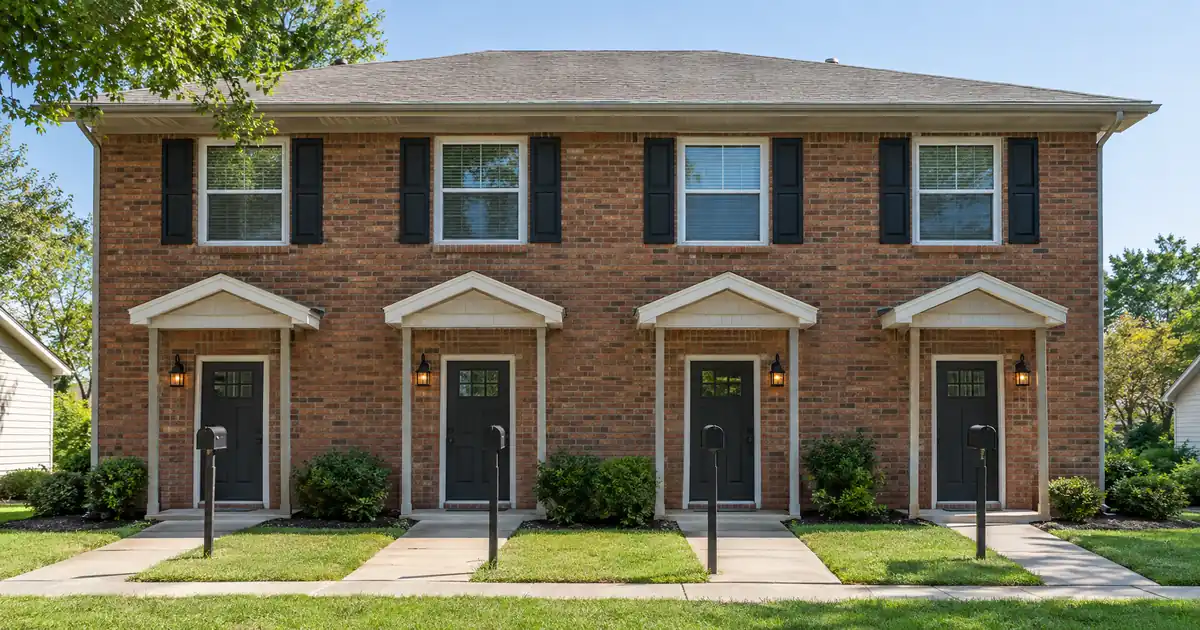
The Quick Read: Preparation comes down to three things: a building the appraiser can enter, working systems in every unit, and paperwork that matches what the appraiser will see. The FHA cash-out reaches 80% loan-to-value on a home you have owned and lived in for 12 months before the case number. The appraisal sets that ceiling, so a failed access visit or an open safety item can cost you cash or stall the file. Everything below is subject to lender guidelines and full file review, and nothing here is a commitment to lend.
Key Takeaways
- The appraiser values the building and checks it against FHA’s safety and soundness standard, unit by unit, including the one you live in.
- Maximum financing on a cash-out is 80% of the appraised value, so a low value cuts the cash directly.
- Every unit needs a working kitchen, a full bathroom, heat, hot water, electricity and its own utility shut-offs.
- Duplexes and 3-4 unit buildings are treated differently on rent. The larger buildings face an extra rent test and reserve review.
- You have a right to a copy of the appraisal. Read it for errors.
What Makes This Appraisal Different?
A 2-4 unit appraisal is not a single-family appraisal with extra rooms. HUD’s Mortgagee Letter 2023-17 addresses how rental income has to be documented. The appraisal report carries rent comparables and an operating income statement next to the usual sales comparisons.
So the appraiser answers two questions. What would this building sell for? And what would each unit rent for? Your leases are evidence. They are not the answer. The appraiser forms a market rent opinion, and for the larger buildings that opinion can matter more than what tenants actually pay.
Across the wholesale programs Lendmire places FHA files with, the failure points on these appraisals are rarely about value. They are about access, utilities and open repair items. Those are things you can control.
If you want the program overview first, Lendmire’s FHA cash-out refinance program page covers who it fits and how the equity limit works.
Do You Qualify Before You Prepare?
Check eligibility before spending money on repairs. FHA standard cash-out is for owner-occupied principal residences. At least one borrower must have owned and lived in the property for the 12 months before the case number is assigned. Someone who bought less than a year ago generally cannot use it yet.
Plan to show that occupancy. Twelve months of utility bills and records showing your address at the property are the usual evidence. Gather them now, not after the lender asks.
A home with no mortgage still counts. Borrowing against a free-and-clear home is a cash-out refinance under HUD’s archived Refinance Reference Guide.
An inherited home can be an exception to the 12-month rule, but other conditions apply. Ask the loan officer for specifics.
How the Loan Amount Is Set
The ceiling is 80% of Adjusted Value. HUD Mortgagee Letter 2019-11 lowered the limit from the prior higher cap, so any source citing the older, higher figure is out of date. At least 20% equity has to stay in the building.
That makes the appraisal the lever. A low value does not just feel bad. It shrinks the cash directly. Every unit condition issue that drags the value down, or forces a repair before closing, works against the loan amount.
Taking cash out also raises your balance and your payment. Run that against your budget before you start, not after.
The maximum loan also has to sit under the FHA county loan limit. County limits apply and change every year, so your loan officer confirms the figure for your county.
Duplex or 3-4 Units: What Changes
The building size changes the paperwork more than the physical prep.
| Item | Duplex | 3-4 units |
|---|---|---|
| Appraisal form | Small income property report | Small income property report |
| Rent opinion | Appraiser’s market rent | Appraiser’s market rent, tested against the payment |
| Self-sufficiency test | Generally described as exempt | Applies on cash-out per HUD’s archived guide |
| Reserves after closing | Lender-specific | Archived guide cites three months |
| Physical prep | Same checklist | Same checklist, more doors |
The self-sufficiency test asks whether the building’s rent, after a vacancy reduction, covers the full housing payment. For 3-4 units the appraiser’s market rent counts, including the unit you occupy. Your actual leases do not drive it.
The archived HUD guide is dated. The current treatment of the test and the reserve requirement should be confirmed with your loan officer before you plan around either one. Do not assume a figure from an online blog. Each figure is subject to lender guidelines and a complete review of property type, leverage, and credit.
The practical point: for a triplex or fourplex, rents that sit well under market can hurt. Gather your leases and rent roll early so you can see the gap before the appraiser does.
Confirm Your Legal Unit Count First
Start with the unit count on record. A converted basement, a garage apartment or an attic space may not count as a legal unit. If the appraiser reports a different count than your application, the loan can be re-sized or the file can stall.
Pull together:
- Permits for any unit conversions or major work.
- Receipts and contractor invoices for completed repairs.
- The unit count shown in your tax and insurance records.
- Leases and a current rent roll.
An accessory dwelling unit is a separate case. HUD’s glossary defines it as a habitable unit with separate entry and exit, subordinate to a one-unit primary home. Handbook treatment of ADUs has its own limits. Ask your loan officer how it applies before you assume an ADU counts.
If your building has a mix of residential and commercial space, some lenders set a minimum residential share. That is a lender overlay, not a HUD rule. Ask early.
A Preparation Timeline
Work backward from the appraisal visit.
1. Weeks out: fix the safety and utility items. Walk every unit with the checklist below. Order repairs that need a contractor now, since they take longest.
2. A few weeks out: build the paper packet. Leases, rent roll, utility bills, permits, repair receipts. Make sure the leases and the rent roll tell the same story.
3. About two weeks out: give tenants written notice. Say who is coming, when, and that the appraiser must see every unit.
4. A few days out: confirm access. Check that attics, mechanical rooms and utility closets are reachable. Turn on every utility.
5. The day of: be present or have someone present. Have the packet ready. Point out recent work and show receipts.
The Inspection Checklist
HUD’s standard is Minimum Property Requirements. The glossary describes them as general requirements that FHA-insured homes be “safe, sound, and secure.” The appraiser is not a home inspector. HUD notes the observation is limited to readily observable conditions. Still, what the appraiser sees can become a required repair.
| Area | What to check | Why it matters |
|---|---|---|
| Every unit | Kitchen with a sink, running water and a stove hookup | Missing kitchen facilities are a deficiency |
| Every unit | Full bathroom: toilet, sink, tub or shower | Basic habitability item |
| Every unit | Heat, hot water, working electric | Core MPR items |
| Every unit | Safe water and sewage method | Safety and soundness |
| Building | Separate shut-offs for each unit’s utilities | Missing shut-offs are flagged in 2-4 unit buildings |
| Building | Roof, foundation, visible leaks | Soundness items |
| Exterior and stairs | Handrails, broken steps, peeling paint | Safety hazards |
| Your unit | Same standard as the tenant units | The appraiser sees it too |
Shut-offs deserve special attention. In a 2-4 unit building under one mortgage, HUD’s knowledge-base guidance has the appraiser flag a deficiency when units lack independent shut-offs. Common services like shared laundry, storage or heating are excepted. A single meter serving several units does not fix it.
Built-in cabinets and appliances that count as real property must be present and working. Cosmetic work does not fix any of this. MPR is about safety and soundness, not decor.
Working With Tenants
Tenant access is a common reason these appraisals stall. The appraiser has to see each unit. A locked door or an unwilling tenant can stop the visit.
Give written notice early. Tell tenants the visit is part of a loan on the building, that it is a short walkthrough, and that clutter should be cleared from walkways, utility closets and access panels. Keep the message plain and polite. Check your lease and local landlord rules on notice requirements, since they vary.
If a tenant cannot be home, ask whether you can have someone present to open the door. Do not promise tenants anything about rent or the lease. The appraisal does not change their terms.
Build a Rent Evidence Packet
For any 2-4 unit cash-out, HUD requires rent documentation. Where rental history is limited, the appraisal showing market rent on Form 1025 or Form 72 does the work, plus prospective leases if you have them.
Your packet should include:
- Signed leases for every rented unit.
- A rent roll with unit, tenant, rent and lease dates.
- Proof the rents are being paid.
- Any notes explaining a rent well above or below market.
The appraiser decides the market rent. You decide how clearly you document what is actually happening. If the two differ, a clean packet gives the appraiser a reason to explain rather than guess.
Why These Appraisals Stall
- An inaccessible unit. The tenant is away, the door is locked, or a utility room is blocked.
- A dead utility. Power or gas is off in a vacant unit.
- A missing shut-off. The building was wired or plumbed as one system.
- An unfinished repair. Work started, not completed, and not documented.
- A unit-count mismatch. The appraiser reports a different count than the application.
- Stale or inconsistent rent paperwork. Leases and the rent roll disagree.
Most of these are fixable before the visit. None of them are fixable on the day.
After the Report
Read the appraisal when you receive it. Under the CFPB’s valuations rule, the lender must tell you in writing, shortly after application, that you can get a copy. The copy is due promptly on completion or ahead of closing, with exact timing varying by file and lender. The CFPB factsheet lays this out.
Check the unit count, square footage, rent comparables and condition notes. Errors can be raised with your loan officer.
If the report lists repair conditions, you complete the work and show proof, and the lender decides what verification it needs. If the value comes in low, you have a few paths. You can request an appraisal reconsideration with recent sales and documented improvements. You can take a smaller cash-out. Or you can wait and keep your current loan. A low value is not a reason to rush a repair that does not add value.
Repairs made after the appraisal do not change that value. The report reflects as-is condition at the visit, subject to the lender’s repair requirements.
Common Misconceptions
- “FHA cash-out goes to 85%.” That limit is old. HUD cut it to 80% in 2019.
- “The appraiser is a home inspector.” The observation is limited to what is readily visible. An appraisal does not replace an inspection.
- “FHA cash-out is for investors.” It is for owner-occupants only.
- “Cosmetic upgrades fix repair items.” They do not. Safety items need real repairs.
- “I can’t see my appraisal.” You can. You have a right to a copy.
Key Terms Defined
Adjusted Value: The appraised value as FHA adjusts it, used to set the maximum loan amount. Leverage, reserves, and pricing vary by lender and program; the final terms follow the full file review.
Minimum Property Requirements (MPR): HUD’s baseline that a home be safe, sound and secure.
Rent roll: A list of each unit, its tenant, its rent and its lease dates.
Self-sufficiency test: A 3-4 unit check that the building’s rent, after a vacancy reduction, covers the full housing payment.
Seasoning: The time you have owned and lived in the home before the case number. For FHA cash-out it is 12 months.
Reconsideration of value: A written request asking the appraiser to review the value with new evidence.
Frequently Asked Questions
Does the appraiser inspect the unit I live in?
Yes. Your unit is held to the same standard as the tenant units. Kitchen, bath, heat, hot water and electric all count. Give it the same walkthrough you give the rest of the building.
What if a tenant will not let the appraiser in?
The visit can stall, and the file can stall with it. Give written notice early, explain the reason, and offer to have someone present to open the door. Check your lease and local rules on entry notice.
Do cosmetic repairs help the appraisal?
Not for the safety standard. MPR covers safety, soundness and security, so paint and fixtures do not clear a deficiency. Visible condition can still affect value, but fix required items first.
Does a duplex face the same rent test as a fourplex?
Generally no. Duplexes are described as exempt from the self-sufficiency test, while 3-4 unit buildings face it on a cash-out. Confirm current treatment and reserve requirements with your loan officer, since the HUD guide that describes this is archived.
What happens if the value comes in low?
The cash available shrinks, since the cap is 80% of the appraised value. You can request reconsideration with recent comparable sales, take a smaller cash-out, or keep the current loan. Program figures are subject to lender guidelines and full file review.
If you are weighing a cash-out refinance against keeping the loan you have, Lendmire can help you compare the programs and the equity each one reaches. A 2-4 unit building gives you more to prepare than a single-family home, and every item above is something you can finish before the appraiser arrives.
For your own numbers, request a scenario review with Lendmire.
For current guidelines and terms, see Lendmire’s FHA loan programs page.
About Lendmire
Lendmire, NMLS# 2371349, is a mortgage brokerage with consumer lending licenses in 16 states. FHA, VA, conventional and jumbo purchase and refinance loans are arranged through wholesale lending partners, and each application is reviewed individually by the lender. Scotsman Guide named Lendmire a Top Mortgage Workplace in both 2025 and 2026.
Get Started
Ready to find the right loan for you?
In about 30 seconds you can review financing options available for your home or investment property. No commitment required.
Informational only. Not a Loan Estimate, approval, or commitment to lend. Program availability and eligibility are subject to lender guidelines, credit approval, property review, and underwriting.
References
1. HUD Mortgagee Letter 2023-17
3. HUD Mortgagee Letter 2019-11
4. HUD Handbook 4000.1 glossary
5. CFPB ECOA valuations delivery factsheet
This article is part of Lendmire’s FHA Loan series — every loan program’s qualification details, guidelines, and scenarios live on the loan options page.
Related reading: FHA vs Conventional Cash-Out When You Live in a 2-4 Unit Primary Home · FHA Cash-Out LTV Limit on a 2-4 Unit Primary Home · FHA Cash-Out Appraisal Rules for a Condo Unit
Brandon Miller
Founder & CEO, Mortgage Loan Originator, Lendmire LLC
- Mortgage Loan Originator · NMLS# 1129696 · Verify on NMLS Consumer Access
- North Carolina Real Estate Broker · License# 343312 · Verify on NCREC
- North Carolina Insurance Producer · License# 19053198 · Property, Casualty, Life, Health · Verify on NAIC SBS
- Lendmire LLC · Firm NMLS# 2371349 · Verify firm licensure
Disclosure information. Lendmire is a state-licensed mortgage brokerage under NMLS# 2371349. Lendmire is not a depository institution, direct lender, or financial advisor — all loans referenced are placed through wholesale lender partners and are subject to each lender's underwriting standards. This article is provided for general informational purposes and is not a commitment to lend, nor does it constitute financial, legal, or tax advice. Loan programs, terms, rates, and qualification standards change without notice and depend on borrower profile, property type, and the state in which the subject property is located. Equal Housing Opportunity provider. NMLS Consumer Access: nmlsconsumeraccess.org.