
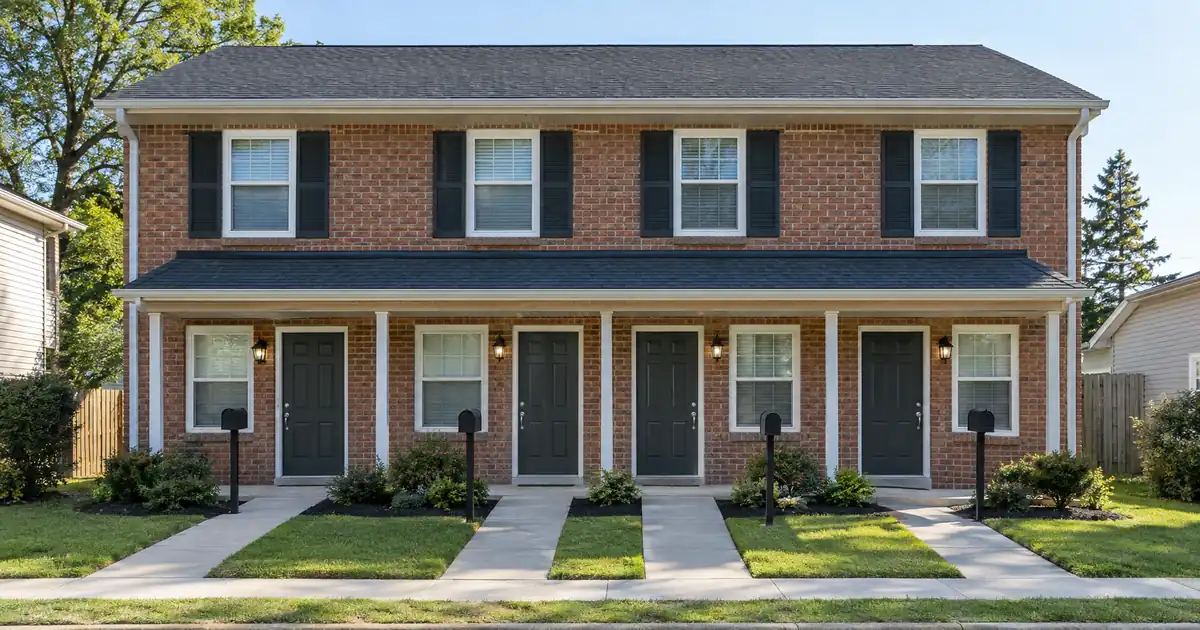
The Quick Read: A VA cash-out refinance on a 2-4 unit home you live in requires a full VA appraisal, and that appraisal does two jobs. It sets the “reasonable value” that caps your new loan, and it checks that the property meets VA’s minimum property requirements. The financed funding fee counts toward that cap. Whatever the appraiser concludes decides how much cash the building can release.
Key Takeaways
- An appraisal is mandatory on a VA cash-out. The VA streamline refinance is the exception.
- The new loan, funding fee included, cannot exceed 100% of the appraised reasonable value.
- You must live in one of the units. That occupancy rule is what makes a duplex, triplex or fourplex eligible.
- The appraiser inspects the whole building, not only your unit.
- A low value shrinks your cash directly, and a reconsideration request is the main remedy.
VA cash-out estimate
Seeded with an example value, a typical balance, and a round cash request at the first-use fee; change any field.
Editable benchmark: 7.40% as of October 15, 2026 · Freddie Mac 30-year average via FRED®. A conventional market reference, not a VA cash-out refinance quote.
Illustrative starting assumptions: a $350,000 home value, a $193,000 current balance, the full-value VA cap with the first-use funding fee financed, a thirty-year term at the current Freddie Mac benchmark, and property taxes and insurance estimated at typical national rates. Every field is editable.
Illustrative estimate only — not a Loan Estimate, approval, quote, or commitment to lend. The rate field carries the weekly Freddie Mac thirty-year conventional benchmark, a market reference and not a VA cash-out refinance quote; a VA loan is priced by the lender at lock. The total loan, funding fee included, is capped at the program leverage on the reasonable value; the fee follows the tier chosen. The cash available is what the cap allows less the balances paid off and the fee, before closing costs, which are not included. The HELOC line is the line program’s combined loan-to-value ceiling applied to the same value and balance. Taxes and insurance are editable estimates. The debt-to-income figure is a guideline; residual income decides a VA file. Licensed in sixteen states for consumer mortgages.
Why Does the Appraisal Matter So Much on a Cash-Out?
Because equity is the product. On a cash-out, you borrow against the value of the building, and the appraiser’s opinion of that value sets the ceiling. No other number in the file carries as much weight.
VA’s own guidance is plain: VA’s Buyer’s Guide states that all VA purchase and cash-out refinance loans require an appraisal, performed by a VA-approved appraiser who determines reasonable value. The regulation behind it, 38 CFR 36.4306, says the new loan must not exceed 100 percent of reasonable value.
Across the wholesale programs Lendmire places VA files with, the cash-out reaches 100% of the appraised value, including the financed fee, and it refinances any loan type into VA. Lendmire’s VA cash-out refinance program page covers the program basics. That is the ceiling. Your actual number can land lower, and this article explains why.
The contrast with the VA streamline refinance matters here. A VA streamline refinance refinances an existing VA loan to a lower rate or from adjustable to fixed, with no VA appraisal. If you hold a non-VA loan, or you want cash in hand, you are on the cash-out path and the appraisal comes with it.
What Is the 2-4 Unit Occupancy Rule?
You must live in the home you are refinancing. VA’s cash-out loan page says you will live in the home the loan refinances, and that you must meet VA’s and the lender’s credit and income standards.
For a multi-unit building, that means you occupy one unit and the others are rented or available to rent. VA financing covers up to four units. Anything larger is not a VA product.
Here is the part people mix up. The VA streamline refinance lets you certify that you currently live in the home or used to. The cash-out does not offer that flexibility. If you moved out of the building and kept it as a rental, the cash-out path is closed, and a different kind of financing would be needed. This article stays on the owner-occupied side.
You also need a Certificate of Eligibility (COE). VA decides eligibility, and the service requirements are VA’s rules, not the lender’s.
How Does the Appraisal Process Work, Step by Step?
The lender orders the appraisal through VA, not you. You typically pay the appraisal fee up front, before closing. VA warns that closing costs on a cash-out can add up to thousands of dollars, so plan for that cash outlay early.
1. Eligibility check. Your COE, credit, income and occupancy are reviewed.
2. Appraisal ordered. A VA-approved appraiser is assigned.
3. Inspection. The appraiser visits the property, gives an opinion of reasonable value and checks minimum property requirements.
4. Notice of Value. VA generates the Notice of Value (NOV) from the appraisal. It sets the denominator for your loan-to-value math.
5. Loan sizing. The lender divides your total loan, including the financed funding fee, by the reasonable value. The result must be 100% or less.
6. Net tangible benefit and disclosures. The file must show the refinance helps you, and the required cash-out disclosures must be in place before VA will guarantee the loan.
7. Full underwriting. A cash-out gets full credit, income and property review. Residual income is the controlling test.
Underwriting on the VA side leans on residual income, the money left each month after major obligations and living costs. The 41% debt-to-income figure is a guideline, not a cap. A ratio above it needs residual income well above the table.
What Does the Appraiser Check in a 2-4 Unit Building?
Everything. On a multi-unit property the appraiser looks at every unit, plus the shared parts of the building and the site. The table below shows how appraisals of these buildings typically run, not a quoted VA rule, since a separate appraisal checklist just for 2-4 unit cash-outs is not something VA publishes on a single page.
| Area | Typically reviewed | What can go wrong |
|---|---|---|
| Your unit | Condition, safety, working systems | Deferred repairs |
| Other units | Habitability, access, systems | Tenant access, vacant-unit defects |
| Building and site | Roof, structure, shared systems | Items needing repair first |
| Unit count | Legal count and layout | Unpermitted unit |
| Rent picture | Market rent opinion | Thin lease evidence |
The minimum property requirements aim to make sure the home is safe, sound and livable. The VA Lenders Handbook (Pamphlet 26-7) organizes this across Chapter 6, Chapter 10, Chapter 11 and Chapter 12. If you want the primary source for what an appraiser must look for, those are the chapters.
Practical point: a unit another household occupies is a unit you do not fully control. Tell tenants an appraiser is coming and when. A blocked door on inspection day can cost you time and, in some cases, a repeat visit.
How Is the Loan Amount Tied to the Appraised Value?
The new loan, including any financed VA funding fee, cannot exceed the reasonable value. VA Circular 26-19-05 gives the math: divide the total loan amount, funding fee included, by the reasonable value. A financed fee cannot push the loan above that value.
If the fee would push you over 100%, the regulation says that portion must be paid in cash at closing. So a low appraisal does not just trim your cash-out. It can also make you bring money to the table.
The funding fee on a cash-out is 2.15% for first use and 3.3% for subsequent use. It is reviewable, and it is waived for veterans receiving compensation for a service-connected disability and the other exempt groups. Those figures reflect the programs Lendmire works with and are subject to lender guidelines and full file review.
Run it as a scenario with no dollar figures. Say a fourplex you live in appraises at your expected value. You want the maximum cash. The financed fee sits inside the 100% test, so your cash-out is the reasonable value, less your payoff, less the fee. Now say the appraisal lands 5% under expectation. The ceiling drops by that same 5%, the fee still has to fit under it, and your cash shrinks by far more than 5% of the loan, because the payoff and fee stay fixed. That is the lever worth understanding before you order.
Many lenders also set a lower limit than VA’s 100%, with 90% a common overlay in the market. Overlays differ by lender. Describe your goal to a broker early so the file lands with a wholesale lender whose limits fit it.
What About Rental Income From the Other Units?
This is where the general rule gets murky, and honesty matters more than a confident answer.
VA’s multi-unit rental income rules were written with purchases in mind. In that context, a lender typically counts only a discounted share of documented rent, and prospective rent may need documented landlord experience and cash reserves. A VA training deck from VA’s lender training materials lists reserves of at least six months of mortgage payments and prior rental-management experience for that situation. That deck is dated, and it covers a multi-unit property securing a purchase loan.
The same reserve and discount rules may not apply to a refinance. On a refinance with tenants already in place, the lender decides how leases and rent are documented. Bring signed leases, and ask your loan officer how the specific wholesale lender treats rent for qualifying. The answer can swing your debt-to-income picture either way.
One related point: the appraiser may still produce a rent opinion even when rent is not carrying your qualification. Do not assume rent is off the table just because you are not leaning on it.
When the General Rule Breaks: Edge Cases
Value comes in low. You can ask for a reconsideration of value with supporting sales data. VA’s Buyer’s Guide says VA staff will review the appraisal report, the added data and market data. Bring comparable sales that the appraiser did not use, ideally similar multi-unit buildings.
A unit fails a property requirement. The usual path is repair, then re-inspection. Who pays and who arranges the work is worth settling before the appraisal, especially when the failing unit is tenant-occupied.
Unit count is unclear. An accessory unit, a converted space or an unpermitted unit can change how the property is treated. Check your legal unit count before you order, not after.
State rules. Some states restrict cash-out lending on homesteads. Texas is one example, with its own limits. Lendmire arranges consumer loans in 16 states, and state law can narrow what any lender will offer.
Seasoning and benefit. The VA cash-out carries seasoning of the later of 210 days from the first payment and the sixth payment, plus a net tangible benefit. The benefit tests under 38 CFR 36.4306 include eliminating mortgage insurance, a shorter term, a lower payment, higher monthly residual income and a loan amount at or below 90% of reasonable value, among others. A cash-out that raises your balance must still pass one of them.
Timing of the NOV. The Notice of Value is time-limited. A stale value can mean a fresh appraisal, so avoid a long gap between appraisal and closing.
Key Terms Defined
Reasonable value: the value VA’s appraiser determines, which caps the loan at 100%.
Notice of Value (NOV): the VA document generated from the appraisal that states that value.
Minimum property requirements: VA’s standards for safety, soundness and livability.
Net tangible benefit: a test showing the refinance is in the borrower’s financial interest.
Residual income: monthly income left after major obligations and estimated living costs, the controlling VA underwriting test.
Certificate of Eligibility (COE): the VA document that confirms you are eligible.
What Does Your Decision Look Like in Practice?
Weigh three things. First, how much equity you truly need. Second, whether the appraisal could reasonably come in under your expectation, and what that does to the fee and the 100% test. Third, whether you hold a VA loan already. If you do and you only want to change the term of that loan, an IRRRL avoids the appraisal entirely.
A cash-out makes sense when you need real equity and the building’s likely value supports it. It is harder to justify when the cash is small, because costs and the fee eat into it.
If you are weighing a cash-out refinance against keeping the loan you have, Lendmire can help you compare the programs and the equity each one reaches.
Frequently Asked Questions
Is an appraisal required for a VA cash-out on a duplex I live in?
Yes. VA requires an appraisal on every cash-out, performed by a VA-approved appraiser. The IRRRL is the only common VA refinance that skips it, and that product cannot put cash in your hand.
Can a VA cash-out go above 100% of the appraised value?
No. The new loan, including the financed funding fee, must stay at or under 100% of reasonable value. Any amount over that must be paid in cash at closing. Individual lenders may set lower limits than VA does.
Does every unit in a triplex have to be inspected?
Typically yes. The appraiser reviews the whole building, and tenant access should be arranged ahead of time. Treat the multi-unit specifics as common appraisal practice rather than a quoted VA rule, and confirm details with your loan officer.
What if the appraisal comes in lower than I expected?
You can request a reconsideration of value and submit comparable sales the appraiser did not use. VA staff review the report, your added data and market data. If the value stands, your maximum loan and cash drop with it.
Does the other units’ rent count toward qualifying?
It depends on the lender. VA’s rental income rules were written around purchases, and how a refinance treats existing leases is the lender’s call. Bring signed leases and ask how the wholesale lender counts them.
For your own numbers, request a scenario review with Lendmire.
About Lendmire
As a mortgage broker (NMLS# 2371349), Lendmire helps homeowners and home buyers in 16 states with FHA, VA, conventional and jumbo purchase and refinance loans arranged through wholesale lenders. Lendmire is never the lender; program terms are set by the lender and the agency guidelines. Scotsman Guide named Lendmire a Top Mortgage Workplace in both 2025 and 2026.
Get Started
Ready to find the right loan for you?
In about 30 seconds you can review financing options available for your home or investment property. No commitment required.
Informational only. Not a Loan Estimate, approval, or commitment to lend. Program availability and eligibility are subject to lender guidelines, credit approval, property review, and underwriting.
References
1. VA Home Loan Guaranty Buyer’s Guide
3. VA cash-out refinance loan page
4. VA Lenders Handbook (Pamphlet 26-7)
6. VA’s lender training materials
This article is part of Lendmire’s VA Loans series — every loan program’s qualification details, guidelines, and scenarios live on the loan options page.
Related reading: Can a VA Cash-Out on a 2-4 Unit Primary Home Skip the Appraisal? · How to Refinance Into a VA Cash-Out on a 2-4 Unit Primary Home · VA Cash-Out Occupancy Rules for a 2-4 Unit Primary Home
Brandon Miller
Founder & CEO, Mortgage Loan Originator, Lendmire LLC
- Mortgage Loan Originator · NMLS# 1129696 · Verify on NMLS Consumer Access
- North Carolina Real Estate Broker · License# 343312 · Verify on NCREC
- North Carolina Insurance Producer · License# 19053198 · Property, Casualty, Life, Health · Verify on NAIC SBS
- Lendmire LLC · Firm NMLS# 2371349 · Verify firm licensure
Required disclosures. Lendmire (NMLS# 2371349) operates as a licensed mortgage broker, not a direct lender or depository. The discussion in this article is general in nature and should not be relied upon as financial, legal, or tax advice — every investment scenario is unique and should be reviewed by a qualified professional. Any loan inquiry is subject to lender underwriting, and this article is not a commitment to lend or a guarantee of approval. Mortgage rates, loan terms, and program guidelines vary by borrower, property, and state, and may change without notice. Equal Housing Opportunity. Verify licensure at NMLS Consumer Access.