
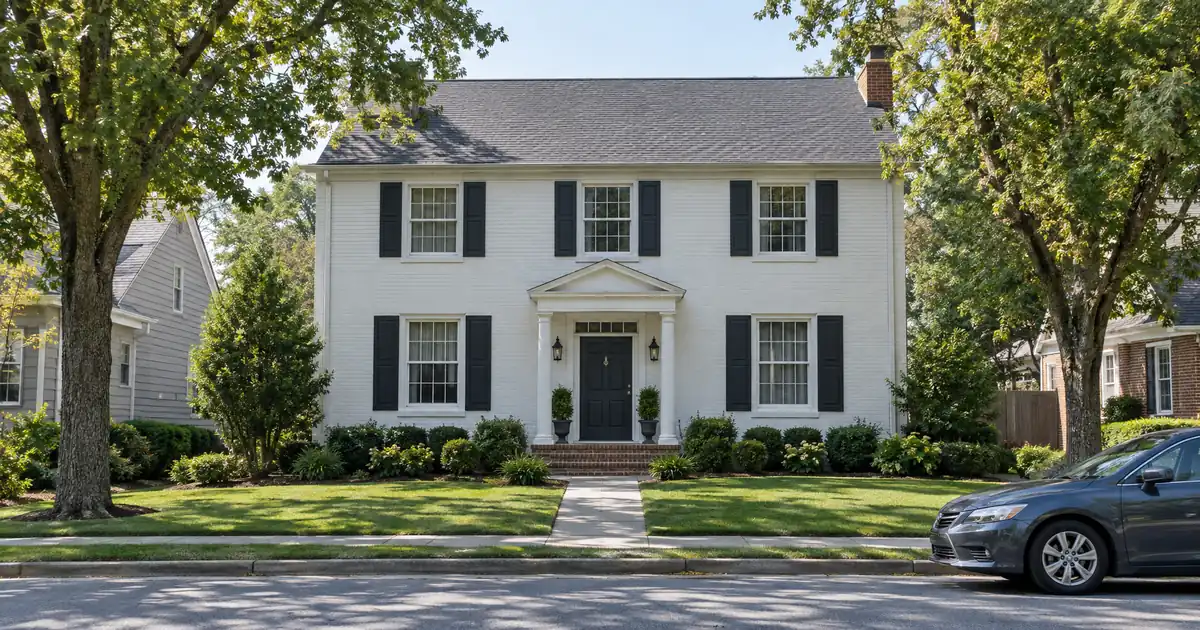
The Quick Read: You retire a private second mortgage by refinancing your primary home into a new FHA first mortgage large enough to pay off the existing first, the private second, and closing costs. That only works when you live in the property, have a clean payment history on both liens, and the appraised value supports the combined payoffs. Rentals are a different story, because FHA financing of this kind is not available on a property you do not live in.
- The new FHA loan becomes the only lien. The private second must be paid off and released from title.
- Paying off a second that did not fund the home purchase usually makes the loan a cash-out, even if you get no cash back.
- A private lender’s payoff figure often includes accrued interest, default interest, and exit fees, so request it in writing early.
- Payment history on the private note must be documented, even though it never touched your credit report.
- For a rental, the comparable route is a DSCR cash-out refinance, which qualifies primarily on property-level rental income covering the payment, subject to lender guidelines.
How Does an FHA Cash-Out Retire a Second Lien?
A new FHA loan replaces your first mortgage with a larger balance and uses part of that balance to pay off everything else secured by the home. That includes a private second. The new loan must end up in first position, so every older lien is paid off and released at closing.
How large a line the equity supports.
An equity line is sized by combined loan-to-value, occupancy, and credit — not by rental coverage. Switch the occupancy or the credit band and the ceiling moves with it.
Investment-property lines require a 700 minimum credit score; second-home lines start at a 640 minimum and primary-residence lines at 600, and the combined-LTV ceiling steps down as the credit band drops on primary-residence and second-home lines and holds on investment-property lines; the line cap steps down on primary-residence lines and holds at every tier on investment-property and second-home lines.
A debt-to-income ratio above 45% requires 680+ credit. Profiles under 640 are limited to single-family homes. At least 75% of the approved line is drawn at closing. Ceilings, floors, and caps update from Lendmire’s centralized guideline source.
Line estimate
Illustrative estimate only — not a quote, Loan Estimate, approval, or commitment to lend. The rate is an editable assumption; equity-line pricing is variable through both the draw and repayment periods and never converts to fixed. Occupancy and credit drive the ceiling together: an investment property tops out at 70% combined LTV (minimum credit 700, line cap $500,000); a second home tops out at 90% combined LTV (minimum credit 640, line cap $500,000), with the ceiling stepping down as the credit band drops (the cap holds at every tier); a primary residence tops out at 90% combined LTV (minimum credit 600), and its $750,000 maximum line is available only at 75% combined LTV or below with a 700-or-better credit profile (720 on the longer-runway program) and a full appraisal. Lines above $500,000 require a full appraisal. Credit, debt-to-income, property type, and full underwriting review all affect the final line.
This surprises people who think of this kind of refinance as a second mortgage. It is not one. It sits in first position and wipes out the loans that came before it.
Picture a homeowner who borrowed from a private individual to fund a rehab. The note carries a high payment and a balloon date that is getting close. The homeowner lives in the house, has made every payment, and has built equity. An FHA refinance can fold the old first mortgage and that private note into one loan with one payment.
The tradeoff is real. You give up the old first mortgage’s terms, you take on FHA mortgage insurance, and you accept FHA’s occupancy rules going forward. Weigh those costs against the price of the private debt.
Why Paying Off a Private Second Still Counts as Cash-Out
FHA treats a refinance as an equity withdrawal when its proceeds go beyond paying off existing mortgage debt and transaction costs. A refinance that pays off only the first lien and costs is a rate-and-term refinance, which is a refinance with no cash-out purpose. Whether a second lien can be folded into a rate-and-term depends on how that second was created.
FHA has traditionally treated two kinds of junior debt more kindly: a second that was used to buy the home, and a second that has been in place for a seasoned stretch of time. A private second taken for a rehab, a business, or other debt generally does not fit either one.
Seasoning thresholds for second liens depend on FHA’s current refinance rules, and the classification of your file turns on them. Your lender should tell you in writing which bucket yours falls into before you order an appraisal.
Here is the misconception to drop: no cash back means no cash-out. You can walk away from closing with a check for zero dollars and still have a cash-out. The label follows the purpose of the old debt, not the size of your check.
That label matters because these files are held to a lower leverage cap than rate-and-term files. FHA sets that cap below full value, so you keep meaningful equity in the home, as a summary of the FHA handbook explains. Older cap figures still circulate on archived pages, so ask the lender for the current one.
Is Your Private Second Eligible to Be Paid Off?
The second lien itself is rarely the problem. The home and the borrower are what get tested. Run this checklist before you spend money on an appraisal.
- You live there. FHA cash-out is for a principal residence. HUD’s archived refinance guide lists owner occupancy as a requirement and permits one to four units. Lenders commonly want roughly a year of ownership and occupancy before they will order the appraisal.
- You hold title. Nonprofits and government entities are not eligible, and the borrower must have legal title.
- Every lien is current. Payments on all mortgages secured by the home must be current going into closing, and the current loan should carry at least six months of payments.
- You can document the private note. When a mortgage is not on your credit report, the lender documents the prior 12 months with a verification of mortgage from the note holder, bank statements, or cancelled checks.
- The numbers fit. The first mortgage payoff, the private second payoff, and the closing costs must fit under the cap against the appraised value.
- You qualify personally. FHA underwrites you on your income and credit. It does not look at the property’s rent.
A free-and-clear home can also be refinanced this way, so you do not need an existing first mortgage. Having only a private second is a workable setup.
Keep, Pay Off, or Subordinate?
You have three paths when a private second sits behind a first mortgage you want to replace.
| Path | What happens | Private-lender friction |
|---|---|---|
| Pay off | New FHA first pays the second in full | Payoff letter, fees, lien release |
| Subordinate | Second stays, agrees to rank behind new first | Holder must sign; often refuses |
| Keep, no refinance | Leave both loans alone | None, but the high-cost debt stays |
Subordination means the second lienholder agrees to stay in second position behind your new first. Banks do it routinely. Private individuals and small funds often will not, because it increases their risk for no gain. FHA files also have to meet combined-leverage limits, which a kept second can push past.
That is why this article assumes payoff. If the holder will not subordinate, paying off the second through the refinance is the usual exit.
How the Payoff Money Flows
The new loan pays creditors in a fixed order, and your cash comes last. Here is the order the closing agent follows.
| Order | Who gets paid | Notes |
|---|---|---|
| 1 | Old first mortgage | Balance plus per-diem interest |
| 2 | Private second | Balance, accrued interest, any fees |
| 3 | Closing costs and FHA insurance premium | Often financed into the loan |
| 4 | You | Whatever remains, which may be nothing |
Think of it as a waterfall. The total of lines one through three, measured against the appraised value, has to stay under the cap. If the private lender’s payoff comes back higher than you expected, line four shrinks first. If it shrinks below zero, the deal does not fit.
Value comes from a full FHA appraisal. If you bought the home within roughly the past year, FHA may limit the value it uses to the purchase price plus documented improvements, even if the home would appraise higher, per HUD’s handbook glossary. That adjustment catches recent buyers who financed a rehab with a private second.
The Closing Sequence, Step by Step
1. Request the payoff statement from the private holder, in writing. Ask for principal, accrued interest, default interest if any, prepayment or exit fees, and the per-diem amount.
2. Gather payment proof. Collect the verification of mortgage or the cancelled checks and bank statements covering the required history.
3. Apply and order the appraisal. The lender underwrites your income and credit and tests the loan against appraised value.
4. Run title. Title work confirms the private second is recorded and finds any other liens.
5. Refresh the payoff letter. Payoff figures expire, and per-diem interest keeps accruing, so the number on the day of funding can differ from the one you first received.
6. Sign and let the cooling-off period run. Because this is your principal residence, you generally get a short federal window to cancel after signing. The clock starts only after you sign the note and receive the required disclosures and notices. Funds do not move until it ends.
7. Disburse and record. The closing agent pays the old first and the private second from proceeds and records the lien releases.
Payoff Letter and Lien Release Problems With Private Holders
Private lenders are not servicers. That one fact causes most of the friction.
Missing or slow payoff letters. An individual lender may not have a payoff template, a servicing system, or a ready answer. Get the request in early and make it specific. A vague number invites a closing-day dispute.
Fees nobody mentioned. Notes written between individuals sometimes carry exit fees, extension fees, or default interest. The note controls. Read it before you ask for the number, so you can spot anything that looks off.
Unrecorded or poorly documented liens. A handshake loan with no recorded lien will not show up in a title search, but it can still be a real debt. A recorded lien with a missing release is the reverse problem. Either one needs resolving before closing, and the title company will tell you which you have.
Delinquent or maturing notes. If the private second is late, the file has a payment-history problem. If it is about to mature with a balloon payment, you are on a clock. Tell your loan officer on day one so they can sequence the file.
A late payment you thought did not count. The credit report will not show a missed payment to a private holder. The documentation will. Underwriters read the bank statements, and one late month can sink the file.
A low appraisal. If value comes in short, the payoffs may no longer fit under the cap. Your options are bringing cash to closing or negotiating a partial discount with the private holder. A smaller cash-out amount does not help here, because the payoffs are fixed.
Where the Rule Breaks
Several edge cases bend the general picture.
- Non-occupant co-borrower. A relative who does not live in the home cannot add income to qualify you for a cash-out. Rental income from an accessory dwelling unit on a one-unit property also cannot count as qualifying income.
- Inherited homes. Occupancy waivers for inherited property exist only when you have not treated the home as an investment. Renting it out after inheriting can start the occupancy clock.
- Three- and four-unit homes. These can face extra tests, such as a self-sufficiency test and reserves. Confirm the current version with your lender, because archived guidance on this is dated.
- Streamline refinances. An FHA streamline is built for an existing FHA loan and generally does not pay off outside liens, so it is not a workaround for a private second.
- Recent purchases. The value adjustment above can shrink your usable equity right after a purchase and rehab.
What About a Rental?
If the private second is on a rental, FHA cash-out is off the table, because the property is not your principal residence. The practical route is a DSCR cash-out refinance. DSCR stands for debt service coverage ratio: the property’s monthly rent divided by its full monthly payment of principal, interest, taxes, insurance, and any association dues (together called PITIA).
DSCR loans are designed for non-owner-occupied investment properties. Because they are business-purpose investor loans, they are reviewed differently from a standard owner-occupied mortgage. The loan is reviewed primarily on property-level rental income covering the payment, subject to lender guidelines, instead of your personal income. Lendmire’s complete DSCR loans guide walks through the whole product.
Across the wholesale network Lendmire works with, here is what a rental cash-out typically looks like:
- Leverage: cash-out tops out around 75% LTV on standard rentals across most of the network. On short-term-rental collateral, the cash-out ceiling is 70% LTV.
- Seasoning: about six months on title is the common expectation. Seasoning is the waiting period between buying a property and refinancing it, and it varies by lender.
- Coverage: 1.00 is where many select programs start. A separate select-lender path takes coverage below 1.00, with leverage and terms adjusted. Stronger ratios open better pricing and leverage.
- Credit: a 620 floor exists in parts of the network, most programs want around 660, and 700 or better unlocks the strongest leverage tiers.
- Reserves: commonly around 6 months of PITIA, though they shift with lender, leverage, loan size, and transaction type.
Two cautions. Clearing 1.00 does not mean positive cash flow. DSCR compares rent to PITIA only, and repairs, vacancy, management, utilities, and capital expenses sit outside the calculation. Also, test coverage on the new, larger loan. Rolling a private second into a bigger balance can raise or lower the payment depending on the new terms, and the ratio moves with it.
The exit math works differently, too. A DSCR cash-out does not ask about your income or occupancy, but it does ask for equity and seasoning. A recently rehabbed rental financed with a short-term private note is often sitting right at the seasoning line, so timing the refinance matters.
When It Does Not Make Sense
Retiring a private second with an FHA cash-out is not automatically the right move. Skip it, or look hard at alternatives, in these cases.
- Your first mortgage terms are better than anything you can get now. Replacing that first to reach the second means giving up a good loan for a worse one.
- You plan to move into a new primary residence soon. FHA occupancy rules and the year-long ownership expectation can complicate your next purchase.
- The payoffs will not fit under the cap. Equity is the gate, and no amount of paperwork opens it.
- The home is not your primary residence. Move to the DSCR route above.
There is one more option. A standalone home equity line can sit in second position behind an existing first mortgage. On Lendmire’s wholesale network, primary-residence lines reach 90% CLTV only at a 720-or-better credit profile, and investment-property lines cap at 70% CLTV with a $500,000 maximum line. CLTV means combined loan-to-value, which counts every lien against the home’s value. These lines are only available in the 16 states where Lendmire offers full-service lending, and a home held in an LLC cannot use one, so that case points to a DSCR cash-out instead, subject to program terms.
For a deeper look at that comparison, see Lendmire’s piece on FHA cash-out versus a second lien for an adjustable first mortgage.
Tax treatment can depend on how the funds are used and how the property is held; investors should keep clear records and speak with a qualified tax professional before relying on any deduction.
Key Terms Defined
Private second mortgage: a loan from an individual or small fund, secured by your home and ranking behind the first mortgage.
Cash-out refinance: a refinance whose proceeds are not limited to paying off existing debt and costs.
Rate-and-term refinance: a refinance that pays off existing liens and closing costs only, with no cash-out purpose.
Subordination: an agreement by a lienholder to stay in a lower position behind a new loan.
Payoff statement: a written figure from the lender showing what is owed on a given day, including interest and fees.
Lien release: the recorded document that clears a paid-off loan from the property’s title.
Per diem: the daily interest that keeps accruing until the payoff is received.
DSCR: monthly rent divided by the property’s full monthly payment, used to qualify rental loans.
Frequently Asked Questions
Can an FHA cash-out pay off a private second mortgage?
Yes, when the home is your primary residence and the file meets FHA’s underwriting rules. The new FHA loan pays off the existing first, the private second, and costs from proceeds, and the private lien is released from title. Expect the lender to classify the transaction as cash-out unless the second was used to buy the home.
Does paying off a second mortgage make my refinance a cash-out?
Usually, if the second did not fund the purchase of the home. A cash-out is defined by whether proceeds go beyond paying existing debt and costs. A second taken for rehab, a business, or debt typically lands on the cash-out side, even when you receive no cash back.
What if my private lender will not subordinate?
Plan on paying the second off instead. Subordination requires the holder to sign, and private lenders often decline. The payoff route removes the lien entirely, so no signature on a subordination agreement is needed.
Will a late payment to a private lender hurt my application?
Yes, it can. A private note usually does not report to the credit bureaus, but the lender still documents your payment history with a verification of mortgage, bank statements, or cancelled checks. A late payment found there can sink the file even though your credit report looks clean.
Can I use this on a rental property?
No, FHA cash-out requires your primary residence. For a rental, a DSCR cash-out refinance is the comparable route. It typically allows around 75% LTV on standard rentals, with about six months of seasoning common, subject to lender guidelines and credit approval.
Next Step
If you are weighing an FHA cash-out against a DSCR cash-out and want to see how the numbers work, Lendmire can help you compare options based on the property, the equity available, your credit profile, combined leverage, and your goals. Lendmire is a broker and arranges these loans through select lenders in its wholesale network across 41 markets, including Washington, D.C. Programs and guidelines change, every file is underwritten individually, and nothing here is a commitment to lend.
For current guidelines and terms, see Lendmire’s DSCR loan programs page.
About Lendmire
Lendmire (NMLS# 2371349) is a mortgage brokerage that arranges DSCR investor loans and other home financing through wholesale lending channels. Lendmire brokers each file, and the lender reviews and underwrites it under that lender’s guidelines. Scotsman Guide named Lendmire a Top Mortgage Workplace in both 2025 and 2026.
For the mechanics of pulling equity out of a rental property, see Lendmire’s guide to cash-out refinance on an investment property.
Get Started
Ready to find the right loan for you?
In about 30 seconds you can review financing options available for your home or investment property. No commitment required.
Informational only. Not a Loan Estimate, approval, or commitment to lend. Program availability and eligibility are subject to lender guidelines, credit approval, property review, and underwriting.
References
1. LegalClarity: HUD Handbook 4000.1 summary
2. HUD Reference Guide, Refinances (archive)
This article is part of Lendmire’s home equity line of credit program — full qualification details, guidelines, and scenarios live on the program page.
Related reading: DSCR Cash Out Refinance Lenders · How to Cash Out an Airbnb With Under a Year of Booking History · Cash-Out Refinance vs HELOC on a Rental for a Scaling Investor
Brandon Miller
Founder & CEO, Mortgage Loan Originator, Lendmire LLC
- Mortgage Loan Originator · NMLS# 1129696 · Verify on NMLS Consumer Access
- North Carolina Real Estate Broker · License# 343312 · Verify on NCREC
- North Carolina Insurance Producer · License# 19053198 · Property, Casualty, Life, Health · Verify on NAIC SBS
- Lendmire LLC · Firm NMLS# 2371349 · Verify firm licensure
Disclosure information. Lendmire is a state-licensed mortgage brokerage under NMLS# 2371349. Lendmire is not a depository institution, direct lender, or financial advisor — all loans referenced are placed through wholesale lender partners and are subject to each lender's underwriting standards. This article is provided for general informational purposes and is not a commitment to lend, nor does it constitute financial, legal, or tax advice. Loan programs, terms, rates, and qualification standards change without notice and depend on borrower profile, property type, and the state in which the subject property is located. Equal Housing Opportunity provider. NMLS Consumer Access: nmlsconsumeraccess.org.