
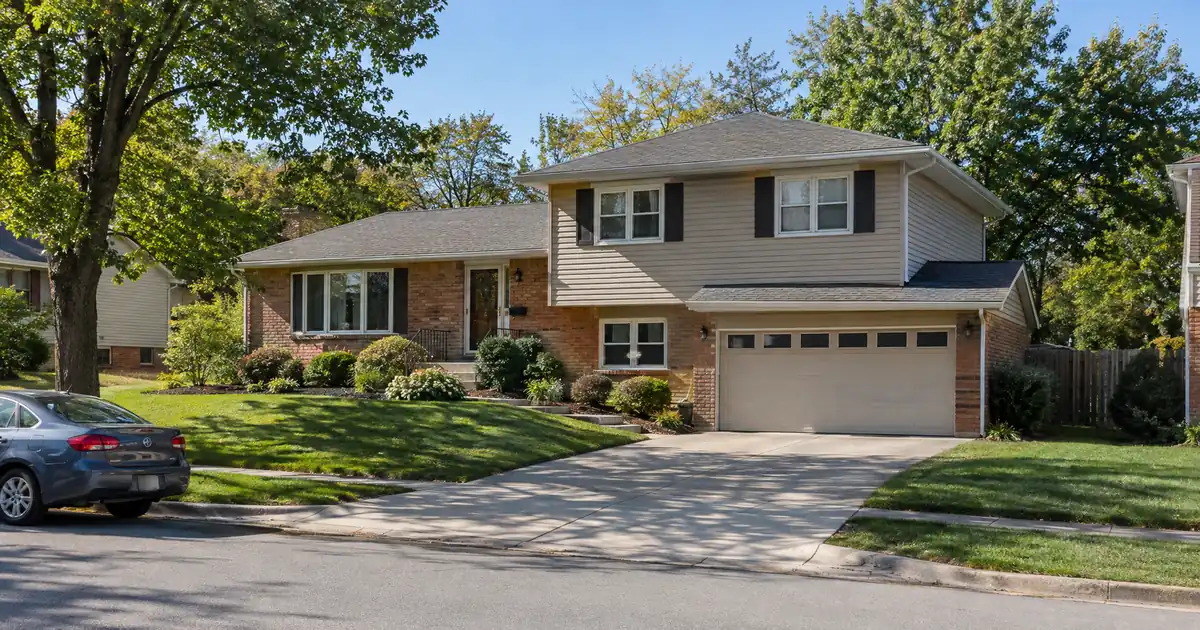
The Quick Read: A cash-out refinance turns rental equity into cash with a larger loan, while a better-terms refinance (also called rate-and-term) swaps your loan for a new structure and returns no cash. For a 1099 earner, the file then runs on either rent coverage or twelve months of bank statements.
- Cash-out suits an investor who wants to recycle equity into the next down payment, a rehab, or reserves.
- Better-terms suits an investor who wants a different structure, such as a longer term, an interest-only period, or a replacement for a maturing short-term note.
- Neither one is underwritten on your 1099 forms by default. The documentation track you choose decides that.
- On an investment property, bank-statement cash-out tops out around 75% LTV through select lenders in Lendmire’s wholesale network.
- Occupancy matters as much as income type, because an owner-occupied file and a pure rental file are handled differently. Final terms depend on the lender’s guidelines, the property type, and the borrower’s complete credit picture.
Here is the honest answer on who each option is for. Cash-out is for the investor who has equity and a use for it. Better-terms is for the investor who has a loan problem, not a cash problem. If your balance is fine and the structure is what bothers you, the second one is usually the cleaner tool. If your next deal needs money, the first one is. Many 1099 investors want both at different points, and that is normal.
DSCR Cash-Out Calculator
Run the cash-out numbers in your market
Rate source: Freddie Mac 30-yr average via FRED® — Federal Reserve Bank of St. Louis · effective Oct 8, 2026
Prefilled with starting assumptions — enter your property’s value, balance, taxes, and insurance for a more accurate picture.
Program parameters update from Lendmire’s centralized guideline source. Taxes and insurance are editable estimates.
As of Oct 8, 2026 · General Freddie Mac market benchmark, not a Lendmire loan offer. Property value, balance, taxes, and insurance are editable estimates. Maximum loan-to-value varies by lender, program, property type, and seasoning. Not a Loan Estimate, approval, or commitment to lend. Program availability and eligibility are subject to lender guidelines, credit approval, property review, and underwriting.
Side-by-Side
This table compares the two refinance types as published industry norms describe them. Lendmire’s wholesale network places both, and the exact terms on any file follow the individual lender’s program sheet.
| Factor | Cash-Out Refinance | Better-Terms (Rate-and-Term) |
|---|---|---|
| Cash back at closing | Yes, above payoff and costs | None |
| Review basis | Rent coverage or documented income | Same two tracks |
| Documentation | Lease or rent schedule, bank statements, appraisal | Similar, often a lighter value test |
| Property types | Rentals, with lower ceilings on short-term rentals | Same range of rental types |
| Entity vesting | Personal or LLC, per program terms | Same |
| Seasoning and value basis | Usually tested most strictly | Often more flexible |
| Reserves | Commonly around 6 months on bank-statement files | Commonly similar |
| Effect on coverage | Larger loan lowers the ratio | Balance stays near current |
Read the table as a map, not a promise. Lender guidelines, credit, the property, and the file’s overall strength move every row.
Which Income Gets Tested? (The 1099 Question)
Neither refinance type is underwritten on 1099 income by default. A DSCR refinance replaces your existing rental loan with one qualified on the property’s rent against its payment. DSCR stands for debt service coverage ratio. You calculate it by dividing monthly rent by the full monthly obligation: principal, interest, taxes, insurance, and any HOA dues. That full obligation is called PITIA. The ratio lands above or below 1.00, and a higher number means more cushion.
That means a 1099 investor’s tax deductions do not change the DSCR math. A DSCR file qualifies primarily on property-level rental income covering the payment, subject to lender guidelines. Credit, assets, and the appraisal still get reviewed. Personal income and debt-to-income ratios do not. DSCR loans are designed for non-owner-occupied investment properties. Because they are business-purpose investor loans, they are reviewed differently from a standard owner-occupied mortgage.
The 1099 track is a different animal. Bank-statement programs look at twelve months of business or personal deposits. The lender averages those deposits and applies its own expense factor to estimate usable income. No two lenders use the same factor, so nobody can promise yours in advance.
So when do you pick which? A pure rental, held for rent, usually points to DSCR. A property you live in, or a second home, usually points to bank statements. A rental where the rent is thin but your deposits are strong can go either direction, and that is where a broker comparing several programs earns the fee. For the full mechanics of the rent-based track, see Lendmire’s complete DSCR loans guide.
When Cash-Out Is the Better Fit
Cash-out wins when equity is sitting idle and you have a specific use for it. The classic move is buying, seasoning (the waiting period a lender wants between buying and refinancing), then pulling equity to fund the next down payment. The same proceeds can help cover reserves on the new deal. Lender treatment varies, so ask before counting on it.
Three situations make cash-out the stronger choice.
You are scaling. Each rental can feed the next one. A 1099 investor with variable income often prefers this because the equity does the work that a lender would otherwise ask your traditional personal-income documentation to prove.
You are funding a rehab or a repair. Cash-out money can cover work on the same property, and a well-done improvement may support a higher appraised value, depending on comps and underwriter review.
You are tapping a property that rents well. Coverage has to survive the bigger loan. A property can hold plenty of value and still lack the rent to carry a larger balance. Stop there.
Now the leverage picture. On an investment-property cash-out, bank-statement programs top out around 75% LTV through select lenders in the network. LTV is loan-to-value, the loan balance divided by the property’s value. If the rental is owner-occupied, as a primary residence or second home, a bank-statement cash-out can reach up to 80% LTV, depending on loan size and credit. That higher figure is for owner-occupied cash-out only. It does not apply to a pure rental. Each figure is subject to lender guidelines and a complete review of property type, leverage, and credit.
Short-term rental collateral generally gets a lower cash-out ceiling than a standard long-term rental. Short-term rental rules can vary by city, county, HOA, and property type, so investors should confirm local rules before relying on projected rental income.
One catch. Tax treatment can depend on how the funds are used and how the property is held; investors should keep clear records and speak with a qualified tax professional before relying on any deduction. Put cash-out proceeds in their own account from day one. Your accountant will thank you.
When Better-Terms Is the Better Fit
Better-terms wins when the problem is the loan itself. A better-terms refinance pays off the old debt and closing costs and puts no cash in your pocket. It can change the structure of what you owe without growing it.
Common reasons investors reach for it:
- Replacing a hard-money or bridge note that is about to mature
- Moving to a longer term so the monthly obligation fits the rent better
- Adding an interest-only period on a property with a planned exit
- Dropping a co-borrower or restructuring ownership
Extended terms and interest-only structures sit mostly on the DSCR side. Alt-doc terms follow each lender’s own program sheet, so describe a bank-statement term only after the lender has confirmed it. Do not assume a 40-year bank-statement loan exists.
The other advantage is coverage. Because the balance stays near where it is, the rent-to-payment ratio rarely gets worse, and it can improve with a longer term. That matters on a rental sitting close to 1.00. Programs that review files below 1.00 coverage do exist through select lenders in the network, but leverage and terms adjust, so a thin file usually pays for it somewhere. A better-terms refinance gives a thin file the least amount of new risk.
For owner-occupied files, rate-and-term can reach up to 90% LTV on a primary residence through select lenders, and stronger files earn the top of that range. That figure is for primary-residence purchase and rate-and-term only. It is not a cash-out ceiling, and it does not describe an investment property.
Investor-side leverage on a better-terms refinance depends on the lender and the file, so treat any specific number you read elsewhere as a starting point for a conversation, not a quote.
Where the Line Falls Between Them
The line between the two is whether cash comes back after payoff and closing costs. That sounds simple until a file sits close to it.
A payoff-only exit from hard money counts as better-terms when nothing comes back to you. A refinance sized on purchase price plus documented rehab can sometimes be framed as better-terms, even though it feels like cash-out to the investor. Treatment varies by lender. Ask before you assume.
Cash buyers have their own option. Delayed financing lets a recent cash purchase be refinanced without the usual waiting period. It waives the clock but not the other tests.
Entity changes deserve a flag. Moving a property into an LLC can trigger extra title review and may reset seasoning at some lenders. LLC vesting is available depending on program guidelines, so decide the ownership structure before you start the refinance, not halfway through.
Seasoning is lender policy, not law. The clock typically starts at the recorded deed, and inside the window a lender may size the loan on the lower of cost or appraised value. Cash-out files feel this most. Better-terms files often feel it less. That is one reason a recent purchase sometimes qualifies for one and not the other.
One Property, Two Outcomes
Consider a modeled example, not a market fact. Say a 1099 consultant owns a long-term rental duplex that covers its full monthly obligation at roughly 1.35x on the current loan.
A better-terms refinance keeps the balance close to where it is, so coverage stays near that level. A longer term can improve it. The file reads cleanly because nothing about the loan grew.
Now run a cash-out on the same property at 75% LTV. The bigger balance means a bigger payment, and the coverage ratio might slip toward 1.10x. Still above 1.00, so it can work. But the cushion is thinner, and one soft rent month feels different. Leverage, reserves, and pricing vary by lender and program; the final terms follow the full file review.
The lesson is plain. Cash-out buys you capital and costs you coverage. Better-terms keeps your coverage and gives you structure. Which one wins depends on what you need the money for.
For appraisal support on rentals, appraisers use standard forms. Fannie Mae’s published appraisal forms name Form 1007, the single-family comparable rent schedule, and Form 1025, the small residential income property report for 2-4 unit buildings. Those are form names only. DSCR loans are not agency products, and each lender decides which documents it needs.
Break-Even: Is the Refinance Worth It?
Any refinance carries closing costs. The break-even check is simple: divide your total closing costs by the monthly savings. The answer is the number of months before the refinance pays for itself.
Alt-doc files can carry higher costs than standard ones, which pushes the break-even later. That is worth running before you commit. A refinance that wins in year four but loses in year one only makes sense if you plan to hold.
Cash-out has a second test: does the return on the money you pull out exceed the added cost of the larger loan? If the money sits idle, the answer is usually no.
An illustrative calculator on the site can help you compare scenarios, but treat it as an estimate and not a quote.
Paperwork, Entities, and Business Purpose
Occupancy decides the paperwork regime. An owner-occupied file, meaning a primary residence or second home, is a consumer mortgage, and consumer mortgage rules apply. A bank-statement loan on a non-owner-occupied rental, including a short-term rental, is a business-purpose loan and falls outside those rules.
Business purpose is a legal classification, not a label you pick. The CFPB’s Regulation Z, section 1026.3 exempts credit extended primarily for a business purpose, and it requires the creditor to make that call case by case. Cash-out is where this deserves care. If the proceeds are going toward personal spending, the business-purpose classification becomes a real question. Discuss fund use with your attorney before closing.
Keep the paperwork consistent. If you are closing in an LLC, make sure the documents match the borrower on the file.
The Verdict
Neither option is better in the abstract. Pick by purpose.
Choose cash-out if you have equity, a use for it, and rent that still covers the larger loan. On an investment property, expect a ceiling around 75% LTV on bank-statement files, with lower ceilings for short-term rentals. Terms vary by lender guidelines, property type, leverage, credit profile, and full file review.
Choose better-terms if the loan structure is the problem, your coverage is tight, or you are replacing a maturing note. You keep the balance steady and change the shape of the debt.
Choose the documentation track separately. Rent coverage fits a pure rental. Twelve months of bank statements fit owner-occupied files or investors whose deposits tell a stronger story than the rent. A 1099 income stream does not force either choice, and your tax deductions do not hurt a rent-based file.
For a related decision, Lendmire’s article Better Terms Refinance vs Cash-Out for a Homeowner Paying Too Much covers the owner-occupied side.
This article is general information, not legal or tax advice. Consult a qualified attorney or CPA about your own situation.
Frequently Asked Questions
Can I refinance a rental if my income is mostly 1099?
Yes, through either track. A rent-based DSCR refinance looks at the property’s coverage, and your traditional personal-income documentation does not enter the file. A bank-statement program averages twelve months of deposits instead. Eligibility depends on lender guidelines, credit, reserves, and the property.
Does a small amount of cash back turn my refinance into a cash-out?
It can. The classification turns on whether cash returns after payoff and closing costs, and lenders set their own thresholds. If you only need a little cash, ask the lender before you assume better-terms treatment.
What are the typical reserve expectations?
Many bank-statement programs ask for around 6 months of the housing payment, subject to the lender and the file. On a cash-out, some lenders may let the proceeds count toward reserves. Ask before relying on that.
Do I need an LLC to refinance a rental?
No, though many investors prefer one. Vesting in an LLC is available depending on program guidelines, and personal vesting is common. Decide before you start, since a title transfer can add review and may reset seasoning at some lenders.
What loan sizes do bank-statement programs cover?
Loan amounts typically run from $125,000 to $3,500,000 through select lenders in Lendmire’s wholesale network, subject to lender guidelines and credit approval. This is not a commitment to lend.
Next Step
Owner-occupied consumer lending is available in 16 states, and Lendmire arranges the loan through select lenders as a broker.
Investors weighing their equity options can start with Lendmire’s guide to cash-out refinance on an investment property.
About Lendmire
Lendmire (NMLS# 2371349) is a mortgage brokerage focused on DSCR investor financing, helping arrange programs through wholesale and investor-lending channels in 41 markets, including Washington, D.C. DSCR loans are evaluated by the lender on property cash flow rather than personal income, subject to lender guidelines, supporting LLC closings and accommodating investors with four or more financed properties. Scotsman Guide Top Mortgage Workplace in both 2025 and 2026.
Get Started
Ready to find the right loan for you?
In about 30 seconds you can review financing options available for your home or investment property. No commitment required.
Informational only. Not a Loan Estimate, approval, or commitment to lend. Program availability and eligibility are subject to lender guidelines, credit approval, property review, and underwriting.
References
2. CFPB Regulation Z, section 1026.3
This article is part of Lendmire’s self-employed mortgage guides — full qualification details, guidelines, and scenarios live on the program page.
Related reading: How to Verify Self-Employed Income Online for a Conventional Cash-Out · How to Apply for an FHA Cash-Out Refinance When Self-Employed · Can a Retiree Use Bank Statements for a Conventional Cash-Out Refinance?
Brandon Miller
Founder & CEO, Mortgage Loan Originator, Lendmire LLC
- Mortgage Loan Originator · NMLS# 1129696 · Verify on NMLS Consumer Access
- North Carolina Real Estate Broker · License# 343312 · Verify on NCREC
- North Carolina Insurance Producer · License# 19053198 · Property, Casualty, Life, Health · Verify on NAIC SBS
- Lendmire LLC · Firm NMLS# 2371349 · Verify firm licensure
Legal disclosures. Lendmire (NMLS# 2371349) is a state-licensed mortgage brokerage that arranges financing through wholesale lender relationships. Lendmire is not a direct lender, depository institution, or registered financial advisor. The discussion above is general informational content about real estate financing — it is not financial, legal, or tax advice, and readers should consult licensed professionals for guidance on their individual circumstances. Loan inquiries are subject to lender underwriting; this article does not represent a commitment to lend. Loan terms, rates, and qualification standards vary by borrower, property, and state, and are subject to change at any time. Equal Housing Opportunity. NMLS Consumer Access: nmlsconsumeraccess.org.