
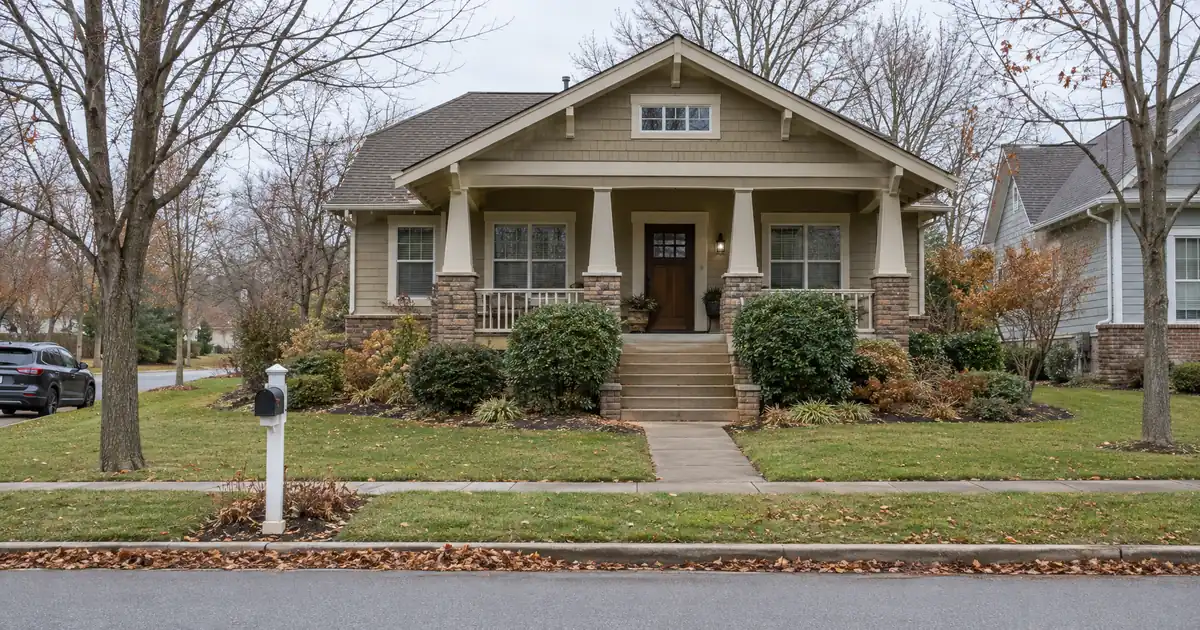
The Quick Read: For a self-employed buyer who will live in one unit of a small multi-unit building with little down, the real choice is between FHA and a bank statement loan, and DSCR is off the table for the home you occupy. FHA fits when your traditional personal-income documentation shows solid net income and you want the smallest down payment. A bank statement loan fits when your deposits tell a stronger story than your returns. DSCR belongs to the next rental you will not live in.
- Occupancy decides first. If you will live there, you are choosing between FHA and a bank statement loan. If you will not, DSCR enters the picture.
- Income type decides second. FHA reads your traditional personal-income documentation. A bank statement loan reads your deposits.
- Smallest down payment: FHA typically allows the lowest down payment for stronger credit, though the exact minimum varies by scenario. Bank statement purchases on a primary residence go up to 90% LTV through select lenders.
- Rent from the other units is treated differently by each program, and none of them lets you count the unit you occupy.
- A common path is FHA or bank statement for the home you live in, then DSCR for the rentals that follow. These specifics are subject to lender guidelines and a full review of property, leverage, and credit.
Here is the honest answer on who each option is really for. FHA is for the self-employed buyer whose returns already show enough income and who wants the least cash down. A bank statement loan is for the buyer whose business is healthy but whose tax write-offs shrink the income on paper. DSCR is for the investor buying a property to rent out whole, where the building’s rent drives lender review.
What your deposits qualify you for.
Alt-doc programs read 12 months of business or personal bank deposits instead of tax returns. Enter your average monthly deposits and see the income a lender would credit you.
The expense factor is set by the lender from your business type and profit-and-loss statement; it is not a number you choose. This widget quotes no rate and no payment.
Program parameters shown update from Lendmire’s centralized guideline source.
Estimate
Illustrative estimate only — not a quote, Loan Estimate, approval, or commitment to lend. Deposit average, expense factor, and housing ratio are editable assumptions; the expense factor a lender applies is set from your business type and documentation. No interest rate or monthly payment is quoted here. Purchase capacity is a simplified illustration and does not account for taxes, insurance, HOA dues, or other debts. Alt-doc income documentation is available on consumer mortgages in the states where Lendmire is licensed for consumer lending; actual terms vary by lender, borrower, and property.
Key Terms Defined
House-hack: buying a small multi-unit property, living in one unit, and renting the others to help carry the cost.
LTV (loan-to-value): the loan amount as a percentage of the property’s value. A 90% LTV means 10% down. Terms depend on the lender’s guidelines, the property type, the leverage, and a full review of the credit profile.
Bank statement loan: a mortgage that is reviewed around deposits in your business or personal bank accounts instead of traditional personal-income documentation.
Non-QM: a loan that falls outside the standard “qualified mortgage” box. It is still fully underwritten, just with different documentation.
Expense factor: the percentage of business deposits a lender treats as operating costs when it turns deposits into income. It is set by the lender, not promised in advance.
DSCR (debt service coverage ratio): monthly rent divided by the property’s full monthly obligation (principal, interest, taxes, insurance and any HOA dues). A loan that qualifies this way looks primarily at property-level rental income, subject to lender guidelines.
Self-sufficiency test: an FHA check on three- and four-unit buildings. It asks whether the property’s net rent can cover the whole payment.
Side-by-Side
The FHA column shows published industry norms. The bank statement and DSCR columns reflect typical guidelines from select lenders in Lendmire’s wholesale network. Every file is underwritten individually, so treat each cell as a typical range.
| Factor | FHA | Bank Statement | DSCR |
|---|---|---|---|
| Review basis | Net income on traditional income documentation | Averaged bank deposits | Property rent vs. its costs |
| Documentation | Two years of returns, plus business records | 12 months of statements | Lease or rent estimate, appraisal |
| Live in the property? | Required | Yes, primary residence allowed | No, non-owner-occupied only |
| Property types | One to four units | Varies by lender program | Rentals; unit limits vary |
| Rent from other units | Partial credit, appraiser-driven | Varies by lender | The core of the test |
| Personal DTI applies? | Yes | Yes | Not the basis of the test |
| Entity vesting | Individual borrower | Usually individual, owner-occupied | LLC possible, per program terms |
| Reserves | More on three to four units | Commonly around 6 months | Varies by lender and leverage |
| Loan type | Consumer mortgage | Consumer mortgage when owner-occupied | Business-purpose investor loan |
Notice that the DSCR column says “no” to living there. That single row removes it from the house-hack you plan to occupy.
When FHA Is the Better Fit
FHA is the better fit when your returns show strong, stable net income and your priority is the lowest cash to close. It is the program built for owner-occupants buying one to four units with a small down payment. HUD’s FHA Single Family Housing Policy Handbook is the governing document, and the numbers below follow its published norms.
The occupancy rule is real. At least one borrower must move in as a principal residence within 60 days of signing and intend to stay at least one year, as HUD’s text is summarized by an FHA education site. That is a promise about your intent, so make it only if it is true.
The down payment is where FHA wins. A credit score of 580 or higher qualifies for maximum financing, which is 3.5% down. Scores of 500 to 579 need 10% down. Gift funds can cover the down payment. The exact numbers vary by lender and program and follow a full review of property, leverage, and credit.
Self-employment adds paperwork, not different credit rules. The handbook generally wants two years of self-employment history. One to two years can work if you held the same or related work before. Expect two years of personal returns with all schedules, and business returns in many cases. The lender averages your net income across those years, so deductions that cut your tax bill also cut your qualifying income. Falling income is a red flag.
The rent credit is modest. Rent from the other units can count, but only at 75%. The unit you live in contributes nothing as an offset. On three- and four-unit buildings, the self-sufficiency test uses the appraiser’s market rent on all units, including yours. It subtracts a vacancy and maintenance allowance (the greater of the appraiser’s estimate or 25%). The remainder has to cover the full payment. Duplexes are exempt from that test.
FHA fits best in three situations:
- Your returns are clean and growing.
- You want the smallest down payment possible.
- You are comfortable living in the building for at least a year.
It fits poorly if you take heavy write-offs, because FHA averages your net income and punishes those deductions.
If you later want to pull equity from the home, Lendmire’s piece FHA Cash-Out vs Bank Statement Cash-Out for a Self-Employed Owner covers that decision.
When a Bank Statement Loan Is the Better Fit
A bank statement loan is the better fit when your deposits show more income than your returns do. Across the wholesale network, the typical program looks at 12 months of business or personal statements. It totals eligible deposits and removes transfers and other non-income credits. On business accounts it applies an expense factor, then divides by the number of months. Some programs look back longer. The lender sets the factor from your business type and, often, a profit-and-loss statement. Nobody can promise yours in advance.
Leverage on a primary residence reaches up to 90% LTV on a purchase through select lenders, and stronger files earn the top of that range. That means a bank statement house-hack can need roughly 10% down at best. FHA’s published floor sits lower at 3.5%. Be honest with yourself about that gap. If every dollar of cash matters, FHA wins on down payment alone, provided your returns qualify you.
Where bank statement underwriting pulls ahead is income. A self-employed owner who writes off heavily may show modest taxable income yet deposit a great deal. Bank statement underwriting reads cash flow instead of taxable income. For a related look at the same documentation question, see Lendmire’s piece FHA vs Bank Statement vs DSCR for a 2-4 Unit House-Hack.
It is not a shortcut. This is non-QM, which means fully underwritten. Personal debt-to-income still applies. Lenders screen deposits for large one-time transfers, apply limits on overdrafts and returned items, and look for declining income. Seasonal or lumpy deposits are generally smoothed across the lookback period. Reserves commonly run around 6 months of the housing payment, and loan amounts run roughly $125,000 to $3,500,000.
Rent from the other units varies by lender program on an owner-occupied multi-unit. Some lenders count a portion, and some count none, so ask before you fall in love with a building. Unit-count eligibility also varies by lender program sheet.
A related option: if you hold substantial liquid assets, an asset-depletion alternative is reviewed against those assets instead, up to 80% LTV on a primary residence. Final terms depend on the lender’s guidelines, the property type, and the borrower’s complete credit picture.
One more point for the self-employed reader. Occupancy sets the disclosure treatment, not the loan type. A bank statement loan on a home you live in is generally handled as a consumer mortgage, though a purchase of a three- or four-unit owner-occupied building can carry a different regulatory label, covered in the next section.
Where DSCR Fits (and Where It Does Not)
DSCR fits the properties you will not live in. It qualifies primarily on property-level rental income covering the payment, subject to lender guidelines, so your personal income paperwork is largely out of the picture. That is also why it cannot serve your own house-hack.
DSCR loans are designed for non-owner-occupied investment properties. Because they are business-purpose investor loans, they are reviewed differently from a standard owner-occupied mortgage. The CFPB’s Regulation Z commentary deems credit to acquire a non-owner-occupied rental to be business purpose. The same commentary says that if you expect to occupy the property more than 14 days in the coming year, it cannot be treated as non-owner-occupied.
There is a trap in that framework. A compliance consultancy’s summary notes that a purchase of an owner-occupied building can be business purpose under that regulation once it has more than two units. So a three- or four-unit owner-occupied purchase may carry a business-purpose label under the regulation, even though a one- or two-unit owner-occupied purchase is treated as a consumer mortgage. Do not read that as permission for DSCR house-hacking. It is a regulatory classification only. Whether a DSCR program accepts an owner-occupant is set by lender and investor guidelines, and the programs built for investors do not.
At closing you sign an occupancy or business-purpose certification. If your plans conflict with it, you create fraud exposure. A duplex, a basement or a spare bedroom does not create an exception, and neither does holding title in an LLC. (An LLC can hold a DSCR rental, subject to lender program eligibility. It does not change who lives there.)
DSCR business-purpose loans are exempt from the consumer disclosure rules that apply to owner-occupied mortgages. That is one more sign the two products live in different worlds.
Lendmire’s complete DSCR loans guide walks through how the ratio works for rentals you will not occupy.
DSCR vs. conventional financing
There are two common ways to finance an investment property, and they qualify you differently — here’s how investors weigh them.
Why investors choose it
- Qualifies on the property’s rental income — no personal tax returns, W-2s, or pay stubs needed to document income.
- No personal debt-to-income ceiling to clear, so existing mortgages and obligations don’t cap your borrowing the same way.
- Can be closed in an LLC, keeping the property inside a business entity.
- Built for scaling — not held to the limit on number of financed properties that conventional financing applies.
- Underwriting centers on the deal: generally qualifies when the rent covers the payment, a 1.00x coverage ratio being a common baseline (confirmed in underwriting).
- Designed specifically for investment property, including long-term and, where the program allows, short-term rentals.
Where it’s strong
- Often the lowest ongoing financing cost for a buyer who fully qualifies on personal income — a fit for a first property or a cost-first purchase.
Trade-offs for investors
- Requires full personal income documentation and must fit within a debt-to-income limit — salary, existing debts, and other mortgages all count.
- Typically held in your personal name rather than a business entity.
- Caps how many financed properties you can carry, which can become a ceiling as a portfolio grows.
- Evaluates you as a borrower as much as the property, which usually means more paperwork.
How investors usually choose: a first or single property often optimizes for the lowest financing cost; portfolio builders often optimize for leverage, vesting in an LLC, and scaling past conventional caps. The right answer depends on your goals, the property, and current guidelines — both paths run through select lenders in Lendmire’s wholesale network, with eligibility and terms confirmed in underwriting.
Three Self-Employed Profiles
Picture three buyers, each looking at a small multi-unit building and each wanting to live in one unit with as little down as possible.
Profile one: the returns tell the truth. A contractor with two years of steady, rising net income and few write-offs. FHA is the natural fit. The averaged net income supports the loan, the 3.5% down payment is the lowest available, and the building’s rent adds partial credit. If it is a triplex or fourplex, the building also needs to pass the self-sufficiency test. Each figure is subject to lender guidelines and a complete review of property type, leverage, and credit.
Profile two: the returns understate the business. A consultant who runs most expenses through the business and shows modest taxable income, but whose deposits are strong and consistent. FHA would average that thin net income and likely come up short. A bank statement loan reads the deposits, applies the lender’s expense factor, and may qualify the file at up to 90% LTV on a purchase of a primary residence. The tradeoff is a larger down payment than FHA’s floor and a reserve expectation around six months. Leverage, reserves, and pricing vary by lender and program; the final terms follow the full file review.
Profile three: a strong building, light personal income. An investor with irregular personal income who finds a fourplex they do not intend to occupy. Neither FHA nor an owner-occupied bank statement loan applies, because both depend on living there. A DSCR loan can apply here, since it looks primarily at whether the rent covers the full monthly obligation. Rent that clears the payment with a coverage ratio comfortably above 1.0x is the profile lenders like. Programs below 1.00 coverage are available through select lenders in the network, though leverage and terms adjust when coverage runs thin.
Notice that the answer changed with occupancy and income type, never with the property alone.
Prepare Your Documents Before You Shop
Self-employed files stall on paperwork, not on credit. A few habits help on every path:
- Separate business and personal accounts. Mixed accounts make deposit analysis harder.
- Explain large one-time deposits before the lender asks. Transfers between your own accounts are removed, so a clear paper trail helps.
- For FHA, gather two years of returns with all schedules and expect to document business income.
- For bank statements, assemble 12 consecutive months, and have a profit-and-loss statement ready if the business is operating.
- For DSCR, line up the lease or a market rent estimate, the property’s expense details and your reserves.
Tax treatment can depend on how the funds are used and how the property is held; investors should keep clear records and speak with a qualified tax professional before relying on any deduction.
The Sequencing Play
Many investors do not pick one product. They stack them. They buy the first house-hack with FHA or an owner-occupied bank statement loan, live there for the occupancy period they committed to, and then move out and keep the unit as a rental. The next purchase, a property they will not live in, is a DSCR candidate. This works because each loan matches how you actually use the property at the time.
The failure mode is misrepresenting intent. FHA’s one-year occupancy expectation is a real commitment. A buyer who signs it with no plan to move in is not sequencing. They are creating a problem.
Some practitioners also suggest a live-in manager at a DSCR property. Treat that idea with caution, because it blurs occupancy and tenant-relationship questions that a lender will read closely.
The Verdict
This is not a three-way tie. For the home you will live in, FHA and a bank statement loan are the real contenders. Choose FHA if your returns show strong net income and you need the smallest down payment. Choose a bank statement loan if deposits show more than returns do and you can bring more down. Keep DSCR for rentals you will not occupy, where the property’s rent is the story.
If your numbers sit between the options, the honest next step is to run both documentation paths side by side before you commit to a building. The calculator on this page gives an illustrative estimate to start with.
Frequently Asked Questions
Can I use a DSCR loan on a duplex I plan to live in?
Generally not. DSCR programs are built for non-owner-occupied investment properties, and you sign a business-purpose or occupancy certification at closing. Living in one unit conflicts with that. Owner-occupied options such as FHA or a bank statement loan are the ones that fit.
Is FHA still worth considering if I am self-employed?
Yes, when your conventional personal-income paperwork shows solid, stable or rising net income. The credit and down payment rules are the same as for other borrowers, and only the documentation differs. It struggles when heavy write-offs lower your averaged net income.
How much down does a bank statement house-hack need?
On a primary residence purchase, select lenders go up to 90% LTV, so the best files may put 10% down. Stronger files earn the top of that range. Credit profile, loan size and the lender’s program sheet all move the number.
Does the rent from the other units count toward qualifying?
It depends on the program. FHA gives partial credit, at 75% of the appraiser’s market rent on the other units, and the unit you live in is not counted as an offset. Bank statement lenders vary, with some counting a portion and some none. DSCR is built around the property’s rent, but only for properties you will not occupy.
Can I move out later and rent the whole building?
Yes, after you have honored the occupancy commitment you made at closing. For FHA, that means intending to stay at least one year. Then you can keep the property as a rental and use DSCR on your next non-occupied purchase.
Next Step
Lendmire is a mortgage broker that arranges financing through select lenders in its wholesale network. Its consumer mortgage licensing covers 16 states. Qualification is on documented income under the applicable program, subject to lender guidelines. This is not a commitment to lend.
Whichever loan you choose, buy the building the occupancy plan can actually support.
About Lendmire
A non-QM mortgage broker (NMLS# 2371349), Lendmire arranges DSCR financing for real estate investors in 41 markets — 40 states plus Washington, D.C. Because deals are underwritten primarily on property cash flow rather than personal income documentation, the structure suits self-employed buyers and entity-owned portfolios. Lendmire places loans through wholesale investor lenders; it is not a direct lender. Scotsman Guide named Lendmire a Top Mortgage Workplace in both 2025 and 2026.
Get Started
Ready to find the right loan for you?
In about 30 seconds you can review financing options available for your home or investment property. No commitment required.
Informational only. Not a Loan Estimate, approval, or commitment to lend. Program availability and eligibility are subject to lender guidelines, credit approval, property review, and underwriting.
References
1. HUD Housing Handbooks (FHA Single Family Housing Policy Handbook 4000.1)
2. FHA.com, HUD 4000.1 occupancy requirements
3. CFPB Regulation Z, Section 1026.3
4. Compliance Alliance, Regulation Z and “Investment” Properties
This article is part of Lendmire’s bank statement loan program — full qualification details, guidelines, and scenarios live on the program page.
Related reading: How a Self-Employed Airbnb Host Picks DSCR or Bank Statement per Property · How Bank Statement Loans Work for Self-Employed Investors Buying Rentals · FHA vs Bank Statement vs DSCR Loan for a Self-Employed House-Hacker
Brandon Miller
Founder & CEO, Mortgage Loan Originator, Lendmire LLC
- Mortgage Loan Originator · NMLS# 1129696 · Verify on NMLS Consumer Access
- North Carolina Real Estate Broker · License# 343312 · Verify on NCREC
- North Carolina Insurance Producer · License# 19053198 · Property, Casualty, Life, Health · Verify on NAIC SBS
- Lendmire LLC · Firm NMLS# 2371349 · Verify firm licensure
Compliance and disclosures. Lendmire (NMLS# 2371349) is a licensed mortgage broker and is not a direct lender, depository institution, financial advisor, or tax professional. Content in this article is general market analysis and educational information — not financial, legal, or tax advice for any specific situation. Lendmire does not guarantee loan approval; every transaction is subject to underwriting by the funding lender. Mortgage pricing and loan program guidelines are subject to change at any time without notice and vary by borrower characteristics, property type, and state regulations. Lendmire complies with Equal Housing Opportunity. Licensure verification: NMLS Consumer Access.