
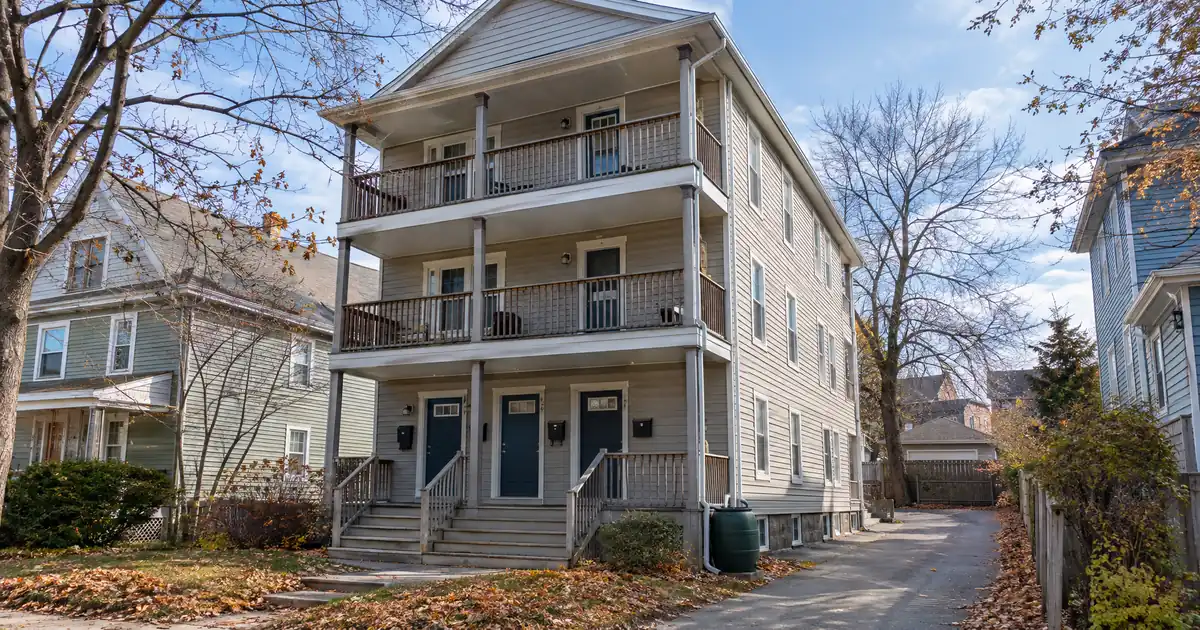
The Quick Read: The deciding question for a 2-4 unit house-hack is whether you will live in the property: FHA and bank statement loans can both fund an owner-occupied purchase, while a DSCR loan is built for non-owner-occupied rentals, so the right choice follows your occupancy plan first and your income documentation second.
- FHA fits a borrower with W-2 or tax-return income who wants to live in one unit and has limited cash to bring.
- Bank statement fits a self-employed borrower whose traditional personal-income documentation understates real cash flow and who still wants to live in the building.
- DSCR fits the stage after the house-hack, when the property is a true rental or you are buying the next one.
- Mixing them in sequence is common: owner-occupied financing first, a rental loan later.
Side-by-Side
The table compares the three programs on structure, not price. The FHA and DSCR columns reflect published industry norms, so treat them as typical patterns. The bank statement column reflects what select lenders in Lendmire’s wholesale network typically allow, subject to lender guidelines.
What your deposits qualify you for.
Alt-doc programs read 12 months of business or personal bank deposits instead of tax returns. Enter your average monthly deposits and see the income a lender would credit you.
The expense factor is set by the lender from your business type and profit-and-loss statement; it is not a number you choose. This widget quotes no rate and no payment.
Program parameters shown update from Lendmire’s centralized guideline source.
Estimate
Illustrative estimate only — not a quote, Loan Estimate, approval, or commitment to lend. Deposit average, expense factor, and housing ratio are editable assumptions; the expense factor a lender applies is set from your business type and documentation. No interest rate or monthly payment is quoted here. Purchase capacity is a simplified illustration and does not account for taxes, insurance, HOA dues, or other debts. Alt-doc income documentation is available on consumer mortgages in the states where Lendmire is licensed for consumer lending; actual terms vary by lender, borrower, and property.
| Factor | FHA (published norms) | Bank Statement | DSCR (typical norms) |
|---|---|---|---|
| Review basis | Personal income and debt load | Documented deposits | Property rent vs. payment |
| Documentation | W-2s and traditional personal-income documentation | 12 months of statements | Lease or appraisal rent schedule |
| Can you live there? | Yes, required | Yes, on owner-occupied files | No, non-owner-occupied only |
| Property types | Principal residence, 1-4 units | Varies by program and occupancy | Rentals, including multi-unit |
| Entity vesting | Individual borrower | Generally individual on owner-occupied | LLC often allowed, per program terms |
| Rent from other units | Counted at a discount | Often added at a discount | The core of the qualification |
| Reserves | Modest, rises with unit count | Around 6 months | Commonly required, varies |
| Disclosure regime | Consumer mortgage | Consumer if owner-occupied | Business-purpose |
Two cells deserve a note. Bank statement leverage runs up to 90% LTV on a primary-residence purchase or rate-term refinance through select lenders, with stronger files earning the top of that range. Investment-property purchase leverage on bank statement documentation varies by lender, so investors usually look to the DSCR side for it.
When FHA Is the Better Fit
FHA is the better fit when your income shows cleanly on traditional personal-income documentation and you want the lowest cash commitment to enter a 2-4 unit building. Its structure rewards the traditional borrower, because documentation is familiar and the program was built for owner-occupants.
Picture a W-2 employee buying a fourplex to live in one unit. Personal income and debt load drive the approval, and rent from the other units helps at a discount. The appraiser’s market rent schedule supports that rent. Because FHA only works for a principal residence, the borrower commits to move in and stay.
The catch comes with three- and four-unit buildings. On those, lenders typically test whether the property itself can carry its payment using a discounted share of market rent. High-priced markets often fail that test. A duplex generally avoids it.
FHA is an individual-borrower program. An LLC is not the borrower. If you want the property titled in an entity from day one, FHA is the wrong tool.
The flip point: if your traditional income documentation shows low income because of business write-offs, FHA’s personal-income math can work against you. That is where the next option comes in.
When a Bank Statement Loan Is the Better Fit
A bank statement loan is the better fit when you are self-employed and your deposits tell a stronger story than your conventional personal-income paperwork. It is reviewed on documented income under the applicable program, subject to lender guidelines. It is fully underwritten, not a shortcut.
Across the wholesale network, the process runs like this. The underwriter reviews 12 months of business or personal statements. It screens out transfers and other credits that are not income, then applies an expense factor to the remaining deposits. The lender sets that factor from the type of business. The borrower does not choose it, and no one should promise a specific factor in advance.
The self-employed house-hacker is the gap most comparisons skip. Say a contractor shows modest taxable income but steady deposits. FHA may not stretch far enough for the building. A bank statement file on an owner-occupied primary residence can run up to 90% LTV on a purchase, with loan sizes from roughly $125,000 to $3,500,000 and reserves commonly around six months of the housing payment.
Unit-count limits, and how rent from the other units counts, vary by lender program. Many programs add that rent at a discount instead of testing it at the property level the way DSCR does. Ask this early, because it changes how much house the file supports.
Occupancy also decides the disclosure regime. An owner-occupied bank statement loan is a consumer mortgage, so consumer disclosure rules apply. A bank statement loan on a non-owner-occupied rental, including a short-term rental, is business-purpose and exempt from those disclosure rules. The property’s occupancy tells you which one you are in.
The flip point: if you have traditional employment income that supports the building, FHA’s documentation is simpler and cash needs are typically lower. Bank statement documentation earns its place when tax-return income is the obstacle.
When DSCR Is the Better Fit
DSCR is the better fit once you will not live in the property. It qualifies primarily on property-level rental income covering the payment, subject to lender guidelines. It does not use your personal income documents, so it suits a portfolio investor, an LLC buyer, or anyone whose personal debt load blocks other programs.
DSCR loans are designed for non-owner-occupied investment properties. Because they are business-purpose investor loans, they are reviewed differently from a standard owner-occupied mortgage. DSCR programs run across 41 markets, including Washington, D.C.
The occupancy rule has no multi-unit exception. You cannot live in one unit of a DSCR duplex. Borrowers sign a business-purpose and occupancy certification, and the rule runs for the life of the loan. Lendmire’s explanation of whether you can live in a home bought with a DSCR loan covers the details.
The 14-day idea trips people up. CFPB commentary on Regulation Z says an owner who expects to use a property more than 14 days in the coming year cannot treat it as non-owner-occupied under the special rule. The practical lesson is that a plan to “stay there sometimes” is not a non-owner-occupied plan.
The flip point: if you intend to live in the building at all, DSCR is off the table. Its value shows up when the house-hack ends, or when you are buying the next building purely as an investment. For the full mechanics, see the complete DSCR loans guide.
Can You Sequence All Three?
Yes, and the sequence is how many house-hackers scale. The typical path is owner-occupied financing first, then a rental loan after you move out.
1. Buy the 2-4 unit with owner-occupied financing. Options include FHA or a bank statement loan, depending on how your income documents.
2. Occupy it as promised. HUD describes its 203(b) program as insurance for buying or refinancing a principal residence on a one- to four-unit property, so the occupancy commitment is the point of the loan.
3. Move out and let the building become a rental. Once the property is a true rental, it can be refinanced into a DSCR loan. Lendmire’s piece FHA vs Conventional Cash-Out When You Live in a 2-4 Unit Primary Home covers the owner-occupied side of that equity decision.
4. Repeat. The next building starts the cycle over, or goes straight to DSCR if you will not live there.
Three cautions apply. Owner-occupied lenders commonly limit how many such loans you can hold at once, so check program rules before planning a second house-hack. A refinance has its own cost, seasoning, and prepayment terms, which vary by lender. And tax treatment varies; consult a qualified professional before relying on any deduction.
DSCR vs. conventional financing
There are two common ways to finance an investment property, and they qualify you differently — here’s how investors weigh them.
Why investors choose it
- Qualifies on the property’s rental income — no personal tax returns, W-2s, or pay stubs needed to document income.
- No personal debt-to-income ceiling to clear, so existing mortgages and obligations don’t cap your borrowing the same way.
- Can be closed in an LLC, keeping the property inside a business entity.
- Built for scaling — not held to the limit on number of financed properties that conventional financing applies.
- Underwriting centers on the deal: generally qualifies when the rent covers the payment, a 1.00x coverage ratio being a common baseline (confirmed in underwriting).
- Designed specifically for investment property, including long-term and, where the program allows, short-term rentals.
Where it’s strong
- Often the lowest ongoing financing cost for a buyer who fully qualifies on personal income — a fit for a first property or a cost-first purchase.
Trade-offs for investors
- Requires full personal income documentation and must fit within a debt-to-income limit — salary, existing debts, and other mortgages all count.
- Typically held in your personal name rather than a business entity.
- Caps how many financed properties you can carry, which can become a ceiling as a portfolio grows.
- Evaluates you as a borrower as much as the property, which usually means more paperwork.
How investors usually choose: a first or single property often optimizes for the lowest financing cost; portfolio builders often optimize for leverage, vesting in an LLC, and scaling past conventional caps. The right answer depends on your goals, the property, and current guidelines — both paths run through select lenders in Lendmire’s wholesale network, with eligibility and terms confirmed in underwriting.
What Derails Each File
FHA files commonly stall on the property test for three- and four-unit buildings, on thin occupancy intent, and on income that standard personal-income documentation does not fully show.
Bank statement files commonly stall on commingled personal and business deposits, large transfers that cannot be sourced, and rent from other units that is not documented. Strong files keep clean, consistent statements.
DSCR files commonly stall on occupancy. A checked business-purpose box with no supporting facts is weak evidence, and a borrower who plans to live in the unit is in the wrong program. They also stall when the rent schedule does not cover the payment. In that case, select lenders in the network may review lower-coverage scenarios, but leverage and terms adjust, so the borrower should expect trade-offs.
Key Terms Defined
House-hack: buying a small multi-unit property, living in one unit, and renting the others.
FHA loan: a government-insured mortgage for a principal residence, available on one- to four-unit properties.
Bank statement loan: a non-QM mortgage that is reviewed on documented income drawn from deposit averages.
DSCR (debt service coverage ratio): monthly rent divided by the full monthly housing obligation, used to qualify a rental.
Business-purpose loan: credit used to buy or hold an investment property, reviewed differently from a standard owner-occupied mortgage.
Owner-occupied: a property where the borrower lives, which triggers consumer mortgage treatment.
The Verdict
No single program wins here, because they solve different problems.
- Live in it, W-2 or clean conventional income documentation: FHA is usually the natural starting point, especially if cash is tight. It works best on duplexes, or on larger buildings in markets where rents carry the payment.
- Live in it, self-employed with understated tax income: a bank statement loan is the likelier fit, and the file stands or falls on clean deposits.
- Not living in it, or moving out: DSCR is the right lane, with the property’s rent doing the qualifying.
- Unsure about your occupancy plan: decide that first. It determines the program, and a misstated occupancy plan is the most damaging error in any of the three.
Eligibility review depends on lender guidelines and is not a commitment to lend.
Frequently Asked Questions
Can I use a DSCR loan if I live in one unit?
No. DSCR programs require non-owner-occupied property, and there is no exception for multi-unit buildings. If you plan to live in one unit, owner-occupied financing such as FHA or a bank statement loan is the right category.
Can a self-employed buyer house-hack a 2-4 unit?
Yes, through a bank statement loan on an owner-occupied file. Leverage can reach up to 90% LTV on a primary-residence purchase. Whether a particular program accepts a 2-4 unit and how it counts the other units’ rent varies by lender.
Does rent from the other units count the same way under each loan?
No. FHA counts a discounted share of market rent, and on three- and four-unit buildings the property must also carry its payment. Bank statement programs often add the other units’ rent at a discount on top of deposit income. DSCR makes rent the main qualifying input.
What happens when I move out of an owner-occupied house-hack?
The occupancy commitment from the owner-occupied loan usually runs for about a year, then you can move out, rent every unit, and consider a refinance into a DSCR loan. Check your loan’s occupancy terms first, and plan for refinance costs and any seasoning the new lender requires.
Do I need traditional income documentation for each of these?
FHA relies on them. A bank statement loan replaces them with 12 months of statements. DSCR does not use personal income documents, because the property’s rent carries the qualification.
About Lendmire
Lendmire (NMLS# 2371349), a non-QM mortgage broker serving investors in 41 markets including Washington, D.C., helps structure DSCR scenarios commonly evaluated around a property’s rental income rather than personal income paperwork, subject to lender guidelines. A Scotsman Guide Top Mortgage Workplace in 2025 and 2026, Lendmire places loans through wholesale investor lenders and is not a direct lender.
Get Started
Ready to find the right loan for you?
In about 30 seconds you can review financing options available for your home or investment property. No commitment required.
Informational only. Not a Loan Estimate, approval, or commitment to lend. Program availability and eligibility are subject to lender guidelines, credit approval, property review, and underwriting.
References
1. CFPB Regulation Z, Section 1026.3
2. HUD Section 203(b) program page
This article is part of Lendmire’s bank statement loan program — full qualification details, guidelines, and scenarios live on the program page.
Related reading: In an LLC: 40-Year DSCR Loan vs. 24-Month Bank Statement Loan · How to Get a Bank Statement Loan on a Townhouse · Bank Statement Loan vs Portfolio Loan From a Local Bank
Brandon Miller
Founder & CEO, Mortgage Loan Originator, Lendmire LLC
- Mortgage Loan Originator · NMLS# 1129696 · Verify on NMLS Consumer Access
- North Carolina Real Estate Broker · License# 343312 · Verify on NCREC
- North Carolina Insurance Producer · License# 19053198 · Property, Casualty, Life, Health · Verify on NAIC SBS
- Lendmire LLC · Firm NMLS# 2371349 · Verify firm licensure
Disclosure information. Lendmire is a state-licensed mortgage brokerage under NMLS# 2371349. Lendmire is not a depository institution, direct lender, or financial advisor — all loans referenced are placed through wholesale lender partners and are subject to each lender's underwriting standards. This article is provided for general informational purposes and is not a commitment to lend, nor does it constitute financial, legal, or tax advice. Loan programs, terms, rates, and qualification standards change without notice and depend on borrower profile, property type, and the state in which the subject property is located. Equal Housing Opportunity provider. NMLS Consumer Access: nmlsconsumeraccess.org.