
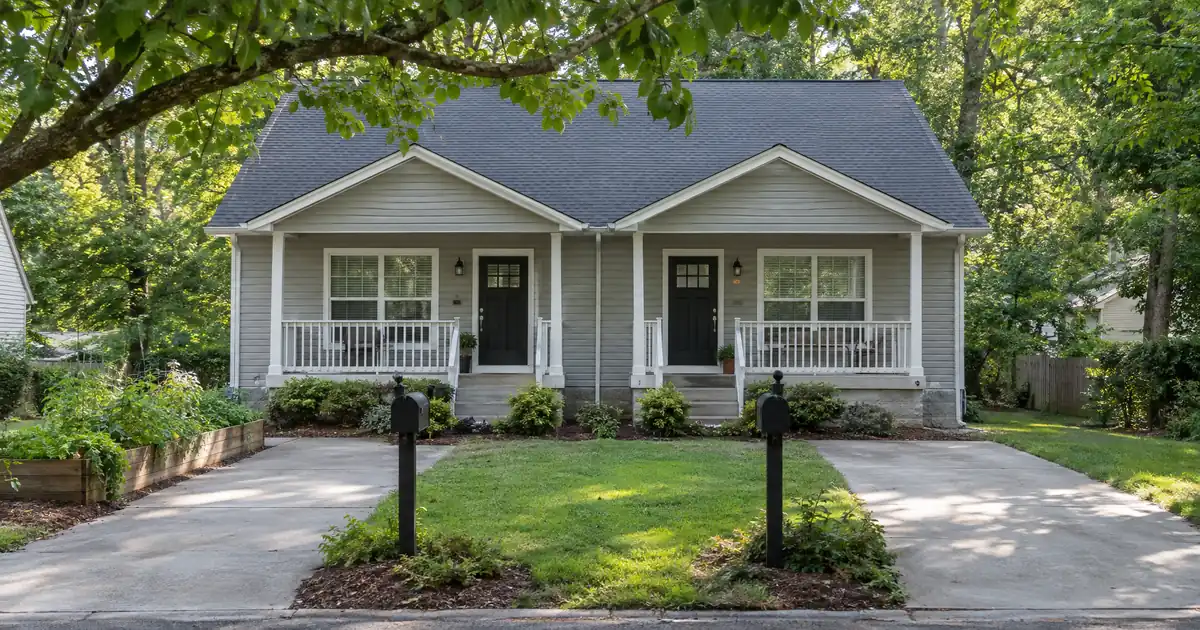
The Quick Read: Yes, you can get a bank statement loan on a 2-4 unit home you live in, because select non-QM lenders accept owner-occupied duplexes, triplexes, and fourplexes and the loan is reviewed on documented income under the applicable program, subject to lender guidelines, as long as you actually occupy one unit. The loan is underwritten on your deposits, not on the building’s rent. That is the main difference from a DSCR loan.
- Documentation: 12 months of business or personal bank statements, with income taken from deposit averages.
- Leverage: Up to 90% LTV on a primary-residence purchase or rate-term refinance through select lenders. Stronger files earn the top of the range.
- Cash-out: Up to 80% LTV on an owner-occupied primary residence, never the purchase ceiling.
- Loan size and reserves: Roughly $125,000 to $3,500,000, with reserves commonly around 6 months of the housing payment.
- The catch: You must live there. A live-in building is not a DSCR file.
Why a Live-In 2-4 Unit Needs a Different Loan Than a Rental
A building you live in is financed on you, not on the building. That one fact decides which loan family fits.
What your deposits qualify you for.
Alt-doc programs read 12 months of business or personal bank deposits instead of tax returns. Enter your average monthly deposits and see the income a lender would credit you.
The expense factor is set by the lender from your business type and profit-and-loss statement; it is not a number you choose. This widget quotes no rate and no payment.
Program parameters shown update from Lendmire’s centralized guideline source.
Estimate
Illustrative estimate only — not a quote, Loan Estimate, approval, or commitment to lend. Deposit average, expense factor, and housing ratio are editable assumptions; the expense factor a lender applies is set from your business type and documentation. No interest rate or monthly payment is quoted here. Purchase capacity is a simplified illustration and does not account for taxes, insurance, HOA dues, or other debts. Alt-doc income documentation is available on consumer mortgages in the states where Lendmire is licensed for consumer lending; actual terms vary by lender, borrower, and property.
DSCR loans are built for non-owner-occupied investment property. They qualify primarily on property-level rental income covering the payment, subject to lender guidelines. Once you sleep in one of the units, that logic no longer applies. The lender wants to know what you earn, because you are the borrower and the resident.
That is where the bank statement program fits. It is an alternative-documentation (alt-doc) product for borrowers whose traditional personal-income documentation understates real cash flow. Self-employed owners, contractors, and business owners with heavy write-offs are the usual fit. Their adjusted gross income looks small on paper while the deposits tell a different story.
For a W-2 borrower with clean pay stubs, the answer often flips. Conventional or government-backed owner-occupied financing may carry lower costs. The bank statement lane earns its place when standard documentation undercounts income. If your returns support the loan you want, you probably do not need it.
How Income Is Proven When You Live in the Building
Qualifying income comes from your deposits, averaged over 12 months of statements. Across the wholesale network, the lender totals eligible deposits and divides by the number of months. Then it applies an expense factor if the statements are business accounts.
Here is how the pieces usually work:
- Personal statements: Many programs credit eligible deposits with little or no expense factor. That suits owners who pay themselves from the business.
- Business statements: The lender applies an expense factor. It is set by the lender, usually based on the type of business or a supporting document such as an accountant-prepared ratio. You do not pick it, and no one can promise a number before a file is reviewed.
- Excluded deposits: Transfers between your own accounts, gifts, loan proceeds, and refunds are typically stripped out.
That last point matters for a multi-unit owner. If tenants pay rent into the same account as your business income, a lender will want to see what each deposit is. Clean separation helps. A dedicated account for the rent from the other units makes the file easier to read.
After income is set, the lender runs debt-to-income. Your qualifying income goes against the full housing payment plus your other monthly debts. This is personal-income underwriting. It is the opposite of the DSCR test.
What Leverage and Terms Look Like
Leverage depends on the transaction and the occupancy, so the ceilings below are labeled that way. They are typical ranges from select lenders in the network, subject to lender guidelines, credit, and property review.
| Transaction | Typical ceiling |
|---|---|
| Primary residence purchase or rate-term | Up to 90% LTV |
| Primary residence, asset-depletion option | Up to 80% LTV |
| Owner-occupied cash-out (primary or second home) | Up to 80% LTV |
| Cash-out with accountant-prepared ratio | Up to 75% LTV |
| Investment-property cash-out | Around 75% LTV |
Two notes sit behind the table. First, a 2-4 unit often sits below the single-family ceiling, because lenders price the extra units into risk. Treat 90% as the best case for the strongest file, not the default. Second, the 90% figure is a purchase and rate-term number. A cash-out on the same building tops out near 80%.
Loan sizes run roughly $125,000 to $3,500,000. Reserves commonly land around 6 months of the housing payment, and credit profile moves both leverage and pricing. Term length follows each lender’s program sheet, so describe it as program-specific. Do not assume a 40-year or interest-only option exists on a bank statement loan.
Owner-occupied terms are generally more favorable than investor terms, with lower down payments and better pricing, according to Lofty’s house-hacking guide. That gap is the whole appeal of living in the building.
How Rent From the Other Units Fits In
Treatment of the other units’ rent varies by program, and this is the most misunderstood part of the file.
Some owner-occupied programs credit a reduced share of market rent from the non-occupied units. Others credit none and qualify you on personal income alone. A third group lets you add the rent only if it is documented a certain way. Across the wholesale network, you will see all three.
Do not assume a rent credit. The familiar 75%-of-rent idea comes from FHA and agency-style loans. It is not a bank statement rule. A deposit-based file may count the rent through your statements, through an appraiser’s rent schedule, or not at all.
The appraisal gives the lender its view of the building. For a 2-4 unit, the standard report is Form 1025, the small residential income property appraisal with an operating income statement. Form 1007 is the single-family rent schedule. Whether and how that rent figure counts is set by each lender’s own guidelines.
Duplex, Triplex, or Fourplex: What Changes
The program rules do not change by unit count. Lender appetite does. More units means more property risk and more documentation questions.
| Factor | Duplex | Triplex or fourplex |
|---|---|---|
| Residential status | Residential 1-4 unit | Residential 1-4 unit |
| Rent credit from other units | Varies by program | Varies by program |
| Lender appetite | Broadest | Narrower, file-dependent |
| Leverage | Often highest of the three | May sit lower |
A building with five or more units is outside this framework. It falls into commercial lending, which uses different underwriting. Mixed-use buildings with a storefront also need a lender to confirm the property still counts as a 2-4 unit residential building.
A Worked Example: The Self-Employed Fourplex Buyer
Picture a self-employed contractor who wants a fourplex and will live in one unit. Taxable income on the returns is low because of equipment write-offs and business deductions. Twelve months of business deposits show steady, strong revenue.
On a conventional file, the underwriter would use the tax-return figure. That income may not support the purchase. On a bank statement file, the lender averages the deposits, applies an expense factor for the business, and runs debt-to-income on the result.
The borrower then needs a few more things to line up:
- Credit that fits the program, with stronger scores earning more leverage.
- Reserves commonly around 6 months of the housing payment.
- A down payment sized to the lender’s LTV for a 2-4 unit purchase, which may be below the 90% single-family ceiling.
- An appraisal that supports the value and, depending on the program, the rents on the other three units.
- An occupancy story that is true and easy to verify.
No dollar figure appears here because the numbers depend on the deposits, the expense factor, and the lender. The outcome turns on the file. The same borrower with commingled accounts and thin reserves could land in a very different place.
Bank Statement vs. Agency-Style vs. DSCR
| Factor | Bank statement | Agency-style owner-occupied | DSCR |
|---|---|---|---|
| Best fit | Self-employed, write-off-heavy | Borrowers with clean traditional personal-income documentation | Rental investors |
| What is tested | Deposits and DTI | Tax-return income and DTI | Rent vs. payment |
| Must you live there? | Yes (for this use) | Yes | No |
| Treatment of other units’ rent | Varies by program | Often a reduced rent share | Core of the test |
The decision usually comes down to two questions. Will you live in the building? And can your traditional personal-income documentation show the income you really earn? If you will live there and your returns understate income, bank statements fit. If you will not live there and the rent covers the payment, a DSCR loan fits. For the investor-side comparison, see how DSCR and bank statement loans compare for investors.
Occupancy Rules and Why They Decide the Loan
Occupancy is the line between a consumer mortgage and a business-purpose loan. The loan paper you sign follows from which side you are on.
An owner-occupied bank statement loan is a consumer mortgage. TRID disclosures apply, and the lender must verify your ability to repay. These loans are non-QM, but they are not no-doc. Full verification still happens, using deposits instead of traditional income documentation. The CFPB’s ability-to-repay compliance guide says the rule covers closed-end consumer credit secured by one-to-four-unit dwellings and is not limited to primary residences or first liens.
A bank statement loan on a non-owner-occupied rental, including a short-term rental, is a different product. It is business-purpose and exempt from TRID. Do not mix the two regimes on one file.
The federal 14-day threshold shows how firm the line is. Under the CFPB’s official commentary on exempt transactions, an owner who expects to occupy a property more than 14 days in the coming year cannot treat it as non-owner-occupied. A live-in 2-4 unit cannot be run as a DSCR loan.
Unit count adds a wrinkle for owner-occupied purchases. Commentary on acquisition credit, summarized by Compliance Alliance, treats an owner-occupied acquisition of more than 2 units as business purpose. Whether a lender then handles a triplex or fourplex that way is the lender’s compliance call. Refinances and cash-outs are judged on purpose factors instead. The practical point is simple: let the lender tell you which paper applies.
What happens if you move out later?
Most owner-occupied loan documents expect move-in soon after the purchase and a period of occupancy. Exact terms vary by program, so read the occupancy clause before you sign. After you truly stop living in the building and it becomes a rental, a DSCR refinance is the typical exit. Whether and when you can move out depends on the note.
Prepayment penalties can also differ. The same compliance guide notes that the consumer rules limit most prepayment penalties on these loans. Investor loans commonly carry them. A live-in loan and a later investor loan can differ here.
What about occupancy misrepresentation?
Don’t do it. Claiming a primary residence to get better terms and then renting out the whole building is occupancy fraud. It carries federal criminal exposure and can unravel a file. If your plan might change, say so and ask which program fits.
Edge Cases Worth Knowing
- Second homes. A 2-4 unit as a second home is uncommon in this lane. Confirm against current program parameters before building a plan around it.
- Short-term rental in one unit. Living in one unit and running another as a short-term rental is a program-by-program question. Short-term rental rules can vary by city, county, HOA, and property type, so investors should confirm local rules before relying on projected rental income.
- State overlays. Some states narrow eligibility on certain owner-occupied loan types, including limits on unit count.
- Consumer footprint. Owner-occupied bank statement lending runs through Lendmire’s consumer mortgage platform in 16 states. The investor DSCR side has a broader footprint, covered in the complete DSCR loans guide.
- Cash-out on a live-in building. Pulling equity from an owner-occupied 2-4 unit tops out near 80% LTV, with 75% where an accountant-prepared ratio is used. Each figure is subject to lender guidelines and a complete review of property type, leverage, and credit.
What to Gather Before You Apply
A multi-unit owner-occupant should prepare:
1. Twelve months of statements for every account used to qualify, personal or business.
2. A short explanation of any large or unusual deposits.
3. Separation of tenant rent deposits from business revenue, where possible.
4. Leases for the non-occupied units, if they exist.
5. Proof of reserves, with about 6 months of the housing payment as a working target.
6. Business documentation, including an accountant-prepared expense ratio if you have one.
7. A clear plan for which unit you will occupy and when.
Tax treatment can depend on how the funds are used and how the property is held; investors should keep clear records and speak with a qualified tax professional before relying on any deduction.
Key Terms Defined
Bank statement loan: A non-QM mortgage that qualifies a borrower on average monthly deposits from 12 months of statements instead of conventional personal-income paperwork.
Owner-occupied: A property where the borrower lives in at least one unit as a primary residence.
Expense factor: The share of business deposits a lender subtracts for costs before counting the rest as income.
Non-QM: A mortgage that falls outside the standard qualified-mortgage box but still requires the lender to verify ability to repay.
Asset depletion: A way to qualify using liquid assets instead of monthly income, available on a primary residence up to about 80% LTV. Leverage, reserves, and pricing vary by lender and program; the final terms follow the full file review.
DSCR loan: An investor loan for non-owner-occupied property, qualified primarily on rental income covering the payment, subject to lender guidelines.
Frequently Asked Questions
Can I use a bank statement loan to refinance a duplex I already live in?
Yes. Rate-term refinances on a primary residence can reach up to 90% LTV through select lenders, subject to lender guidelines. A cash-out refinance on an owner-occupied building tops out near 80% LTV, or 75% with an accountant-prepared expense ratio. The same deposit-based documentation applies.
Will rent from my tenants count as income?
It depends on the program. Some credit a reduced share of market rent from the other units, and some qualify you on personal income only. Rent that lands in your accounts may also show up as deposits. Ask the lender how your program treats it before you assume a credit.
Can I use business statements if I own only part of the business?
Often yes, but ownership share and documentation requirements vary by lender. Expect to show your ownership and that the deposits reflect your share. A file with clean, separated accounts moves through review more smoothly.
Is a first-time buyer eligible?
Often yes, because the program tests deposits, credit, reserves, and the property. Being self-employed matters more than buying history. First-time buyers with clean standard personal-income documentation may do better with conventional or government-backed options, so compare both lanes.
Can I use a DSCR loan for the fourplex I plan to live in?
No. A DSCR loan is built for non-owner-occupied investment property. Once you occupy a unit, the file belongs in an owner-occupied program such as a bank statement loan. After you move out and the building is truly a rental, a DSCR refinance may become the right tool.
Next Step
For a broader view of how these programs work, see how bank statement loans work. You can also reach the team at 828-256-2183. Lendmire is a mortgage broker that arranges financing through select lenders in its wholesale network, and every file is underwritten individually, subject to lender guidelines. This is not a commitment to lend.
A live-in fourplex is one of the few purchases where the loan you pick can set the pace for your first rental portfolio, so match the program to the occupancy before you match it to the price.
About Lendmire
As a non-QM mortgage broker (NMLS# 2371349), Lendmire facilitates DSCR investor loans across 41 markets, including Washington, D.C. DSCR eligibility is generally reviewed around property-level rental income instead of personal income documentation, subject to lender guidelines, serving LLC-structured portfolios and self-employed borrowers who don’t fit conventional boxes. A two-time Scotsman Guide Top Mortgage Workplace (2025, 2026).
Get Started
Ready to find the right loan for you?
In about 30 seconds you can review financing options available for your home or investment property. No commitment required.
Informational only. Not a Loan Estimate, approval, or commitment to lend. Program availability and eligibility are subject to lender guidelines, credit approval, property review, and underwriting.
References
1. Lofty – House Hacking Guide
2. CFPB – Ability-to-Repay and Qualified Mortgage Rule Compliance Guide
3. CFPB – Regulation Z Commentary on Exempt Transactions (1026.3)
4. Compliance Alliance – Regulation Z and “Investment” Properties
This article is part of Lendmire’s bank statement loan program — full qualification details, guidelines, and scenarios live on the program page.
Related reading: How to Add a W-2 Co-Borrower to a Bank Statement Loan · How to Get a Bank Statement Loan on a Townhouse · In an LLC DSCR Loan vs Bank Statement Loan
Brandon Miller
Founder & CEO, Mortgage Loan Originator, Lendmire LLC
- Mortgage Loan Originator · NMLS# 1129696 · Verify on NMLS Consumer Access
- North Carolina Real Estate Broker · License# 343312 · Verify on NCREC
- North Carolina Insurance Producer · License# 19053198 · Property, Casualty, Life, Health · Verify on NAIC SBS
- Lendmire LLC · Firm NMLS# 2371349 · Verify firm licensure
Compliance and disclosures. Lendmire (NMLS# 2371349) is a licensed mortgage broker and is not a direct lender, depository institution, financial advisor, or tax professional. Content in this article is general market analysis and educational information — not financial, legal, or tax advice for any specific situation. Lendmire does not guarantee loan approval; every transaction is subject to underwriting by the funding lender. Mortgage pricing and loan program guidelines are subject to change at any time without notice and vary by borrower characteristics, property type, and state regulations. Lendmire complies with Equal Housing Opportunity. Licensure verification: NMLS Consumer Access.