
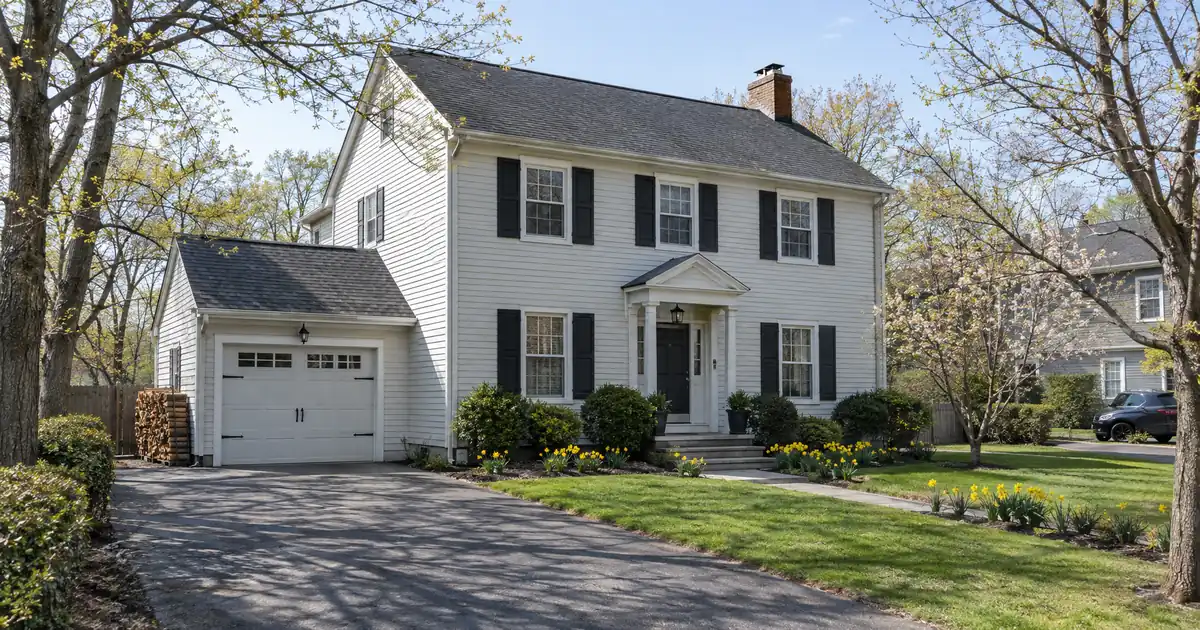
The Quick Read: Yes, usually, when the loan is for a home you will live in, because a lender can read twelve months of the practice’s deposits, remove transfers and one-time items, apply an expense factor, and count your ownership share as qualifying income, subject to lender guidelines. A DSCR loan works differently. It ignores the practice’s statements and qualifies primarily on property-level rental income covering the payment, subject to lender guidelines. Which product fits depends mostly on what you are buying and whether you will live in it.
- Business statements are read after an expense haircut, and personal statements are read closer to face value.
- Only your ownership share of the practice counts, and you must be able to prove it.
- Transfers between your own accounts, loan proceeds, gifts and refunds come out of the deposit total.
- Owner-occupied cash-out tops out around 80% LTV, and investment cash-out around 75% LTV.
- A pure rental purchase often fits a DSCR loan better, because the practice’s income stops mattering.
Dentists, physicians, attorneys, veterinarians and consultants often run into the same problem when they apply for a mortgage: the tax return says one thing and the bank account says another. This guide shows how the bank statement route bridges that gap and where it stops working.
What your deposits qualify you for.
Alt-doc programs read 12 months of business or personal bank deposits instead of tax returns. Enter your average monthly deposits and see the income a lender would credit you.
The expense factor is set by the lender from your business type and profit-and-loss statement; it is not a number you choose. This widget quotes no rate and no payment.
Program parameters shown update from Lendmire’s centralized guideline source.
Estimate
Illustrative estimate only — not a quote, Loan Estimate, approval, or commitment to lend. Deposit average, expense factor, and housing ratio are editable assumptions; the expense factor a lender applies is set from your business type and documentation. No interest rate or monthly payment is quoted here. Purchase capacity is a simplified illustration and does not account for taxes, insurance, HOA dues, or other debts. Alt-doc income documentation is available on consumer mortgages in the states where Lendmire is licensed for consumer lending; actual terms vary by lender, borrower, and property.
Two Loans People Mix Up
A practice owner can use business bank statements for a bank statement loan, but not for a DSCR loan. The two products answer different questions. One asks how much you earn. The other asks whether the property pays for itself.
A bank statement loan judges you. It applies to a primary residence, a second home, or an investment property qualified on your personal income. The lender averages deposits, trims them, and arrives at a monthly income figure.
A DSCR loan judges the property. The debt service coverage ratio is the monthly rent divided by the monthly payment, which covers principal, interest, taxes, insurance and any HOA dues. Your practice’s deposits never enter that math. If you want the full picture of how those loans work, Lendmire’s complete DSCR loans guide covers it.
| Factor | Bank Statement Loan | DSCR Loan |
|---|---|---|
| What is judged | Your documented income | Property rent vs. payment |
| Practice statements used | Yes, with an expense factor | No |
| Typical property | Home you occupy, or rental on personal income | Non-owner-occupied rental |
| Typical vesting | Often the individual | Often an LLC, per program terms |
| Paperwork load | Heavy on income | Lighter on income |
Occupancy decides which lane you are in. An owner-occupied file is a consumer mortgage. A non-owner-occupied rental, including a short-term rental, is a business-purpose loan. Your own residence will never be treated as a business-purpose loan just because the practice pays for it.
Key Terms Defined
Bank statement loan: A non-QM mortgage that is reviewed around documented deposits instead of traditional personal-income documentation. Non-QM means the loan sits outside the standard agency-style box.
Expense factor: The share of business deposits a lender assumes goes to running the practice, such as payroll, rent and supplies.
Eligible deposits: The deposits left after the lender removes transfers, loan proceeds, gifts, refunds and other non-income items.
Ownership share: Your percentage of the practice. Only that share of the income can count.
LTV: Loan-to-value. It is the loan amount divided by the property’s value or price.
Reserves: Liquid savings left after closing, usually measured in months of the housing payment.
Why the Tax Return Understates a Practice Owner
Practice owners often look poorer on paper than they are. Equipment purchases, depreciation, retirement contributions and pass-through structures all shrink taxable income. That is legal and smart, but it also hands a conventional underwriter a low number.
Bank statement programs exist for exactly this gap. They look at cash that actually moved through the account. A practice that collects steadily and pays its owner regularly shows that in the deposits, even when the return shows little.
Non-QM does not mean no checking. A lender still has to verify the income it relies on. The CFPB’s ability-to-repay small entity compliance guide says a creditor must use reasonably reliable third-party records for that income, and it lists self-employment among the employment types a creditor may consider. The method differs. The standard does not disappear.
Business Statements or Personal Statements?
The right choice depends on how you pay yourself. If you move your take-home pay from the practice into a personal account on a regular schedule, personal statements are often cleaner. If the practice’s account is where the money really lives, business statements are the path.
Across the wholesale network, most programs read personal deposits at close to face value, since they already represent your net pay. Business deposits take a haircut for expenses. The trade-off is simple. Personal statements need a clean, regular transfer pattern. Business statements need ownership proof and an expense factor.
| How you pay yourself | Statements that fit | What the lender adjusts |
|---|---|---|
| Steady transfers to a personal account | Personal | Little, but transfers must be traceable |
| Money stays in practice account | Business | Expense factor and ownership share |
| Mixed, irregular draws | Either, case by case | Often both are reviewed |
Many practice owners run money through more than one account. Scotsman Guide notes that a medical practice may have several accounts and that an underwriter should review activity in all of them. A file that shows only one account can stall.
How Deposits Become Qualifying Income
Lenders turn deposits into income in a fixed order: choose the window, prove ownership, strip non-income deposits, apply the expense factor, apply your share, then average. Here is how that runs on a business account.
1. Pick the window. Most programs we place files with use 12 months of statements. Market sources describe 12 or 24 months as the typical range, per Scotsman Guide.
2. Prove ownership. An operating agreement, a K-1 or a CPA letter usually does it. A K-1 here proves your stake. It is not the source of the income.
3. Screen the deposits. Transfers, loan proceeds, gifts, refunds and one-time items come out.
4. Apply the expense factor. Scotsman Guide uses 50% as a common illustration. Each lender sets its own factor, so treat 50% as an example and not a promise.
5. Apply your ownership share. A 60% owner counts 60% of the result.
6. Average over the months. The total divided by the number of months is your monthly qualifying income.
A neutral illustration shows the effect. Say eligible deposits average 100 units a month. A 50% factor counts 50 units. A documented 30% factor counts 70 units. Then your ownership percentage applies to that number.
That gap is why the expense factor drives the outcome more than almost anything else. Some programs let a third-party tax professional prepare an expense ratio, and the lender decides whether to accept it. You cannot self-certify one. On owner-occupied cash-out, a program with a fixed expense ratio runs up to 80% LTV, and one using an accountant-prepared ratio runs up to 75% LTV. The stronger documentation path does not always buy the higher leverage, so ask which structure the lender uses. Final terms depend on the lender’s guidelines, the property type, and the borrower’s complete credit picture.
Staffing matters too. A solo practitioner with few employees and a multi-provider group carry very different overhead. The lender’s factor tries to reflect that, and Scotsman Guide points out that one-size-fits-all treatment can penalize some businesses unfairly.
Deposits That Do Not Count
Anything that is not your earned income gets removed before the math starts. This surprises practice owners more than the expense factor does. Common exclusions include:
- Transfers between your own accounts, including sweeps from the practice account to savings and back.
- Loan proceeds, such as a practice line of credit draw or equipment financing.
- Gifts and family deposits.
- Refunds and reversed charges.
- Owner capital injections.
- Large one-time deposits that you cannot tie to normal collections.
The principle comes from the same compliance guide. When a creditor relies on funds deposited into a consumer’s account, those funds must be the consumer’s personal income. A lender who sees a large unexplained deposit will either remove it or ask for a paper trail.
Commingling is the usual culprit when files stall. If personal and practice money flow through the same account, deposits are hard to classify. The classification decides whether an expense factor applies, so a messy account can cost real qualifying income.
Ownership, Entities and Partners
Only the share of the practice you own counts, and the lender will want proof of it. A sole owner has the simplest file. An S-corp owner or partner needs documents showing the percentage.
Most business-statement programs set a minimum ownership stake. A small minority interest may close the business-account route entirely, with no partial credit below the floor. The exact minimum varies by lender, so a partner with a modest stake should ask early.
A partner in a group practice may have a better route through personal statements, if the practice pays out regular distributions into a personal account. Lendmire’s piece How an S-Corp Owner Qualifies on K-1s or Business Bank Statements walks through that entity structure in more detail.
Vesting also matters. DSCR deals can often close in an LLC, depending on program terms. Bank statement loans on a primary residence usually vest in the individual.
What Leverage to Expect
Leverage depends on the property and your occupancy, not on the practice. Select lenders in the wholesale network typically offer these ranges, subject to lender guidelines, credit and loan size.
- Primary residence purchase or rate-term refinance: up to 90% LTV, with stronger files earning the top of the range.
- Owner-occupied cash-out (primary residence or second home): up to 80% LTV with a fixed expense ratio, and 75% LTV with an accountant-prepared ratio.
- Investment property cash-out: up to 75% LTV.
- Investment property purchase on bank statement documentation: varies by lender, so there is no single number to quote.
- Asset-depletion alternative: qualifying from liquid assets runs to about 80% LTV on a primary residence.
Loan sizes generally run from $125,000 to $3,500,000, and reserves commonly run around six months of the housing payment. Term length follows each lender’s program sheet, so do not assume extended or interest-only structures. Those are mostly DSCR-side features.
When the Rental Does Not Need Your Income at All
If you are buying a pure rental, the practice’s statements usually never come up. That is the practical case for DSCR. The loan is reviewed primarily on property-level rental income covering the payment, subject to lender guidelines. A weak year at the practice or a heavily written-down return does not enter the picture.
DSCR loans are designed for non-owner-occupied investment properties. Because they are business-purpose loans, they are reviewed differently from a standard owner-occupied mortgage. The CFPB’s regulation page on business-purpose credit says credit to acquire, improve or maintain non-owner-occupied rental property is deemed business purpose. The label “investment” alone does not settle it, because the loan’s actual purpose and occupancy are what count.
Suppose the rent does not cover the full payment. Select lenders in the network offer programs below 1.00 coverage, but leverage and terms adjust. A bank statement loan can instead be reviewed against personal cash flow, which means the practice’s deposits are read with the expense haircut.
There is also a scaling angle. Heavy depreciation and pass-through structures can hold taxable income down year after year. Repeat DSCR purchases do not stack up debt-to-income pressure, since income is not the test. A bank statement loan is a good fit for your own home. DSCR is often the better tool for the portfolio.
Newer Owners and Where This Breaks
The route works best when the practice has a steady, documented history. It breaks down in a few predictable places.
- A new or just-acquired practice. Thin history means thin deposits. A shorter window may help, and a CPA letter or profit-and-loss statement can support the file when the program allows it.
- A declining trend. Lenders look for consistent monthly deposits and a stable or rising line. A recent dip is hard to explain away.
- Large one-time deposits. A big insurance settlement or a practice sale payment gets removed, not averaged in.
- Mixed accounts. Gross receipts landing in a personal account can look like commingling.
- Buying the practice’s own building. That is a commercial property purchase, and it follows a different product with different rules.
Bank statement files carry more paperwork than DSCR files. Expect every page of every month, plus ownership proof. A bank statement loan does not skip underwriting. Credit, reserves, the property and the practice are all reviewed with the income.
How to Prepare Before You Apply
Clean statements make a faster, simpler review. Start with the account you plan to use.
1. Pull every month in the window, every page, from every account involved.
2. Mark transfers, loan draws and one-time deposits so you can explain each one.
3. Gather ownership proof: the operating agreement, K-1 or a CPA letter.
4. Stop mixing personal and practice spending in the same account if you can.
5. Ask your tax professional whether they can prepare an expense ratio if your program allows one.
Tax treatment can depend on how the funds are used and how the property is held; investors should keep clear records and speak with a qualified tax professional before relying on any deduction.
Frequently Asked Questions
Can a dentist, physician or attorney all use the same program?
Yes, in most cases. The lender cares about deposit patterns, ownership and the expense factor, not the profession. A practice with more staff and equipment may see a different expense treatment than a solo operator, but the process is the same.
Does a bank statement loan mean no documents?
No. It replaces traditional personal-income documentation with deposit records, but you still document ownership, credit, reserves and the property. The loan is reviewed on documented income under the applicable program, subject to lender guidelines.
Can I choose my own expense ratio?
No. The lender sets it. A tax professional’s third-party expense statement can sometimes replace the flat factor, but only if the lender accepts it.
What if I own a small piece of a group practice?
Business-account programs usually require a minimum ownership stake, and the number varies by lender. If your stake is small, personal statements showing regular distributions may work better. A DSCR loan avoids the question for a rental purchase.
Should I use bank statements or DSCR for a rental?
Use DSCR when the property’s rent can carry the payment, since your income is not part of the test. Use a bank statement loan when you are buying or refinancing your own home, or when a rental will not cover its payment on its own.
Next Step
Owner-occupied bank statement lending covers 16 states, and every file is underwritten individually by the lender. You can call 828-256-2183 or request a quote to start the conversation.
About Lendmire
As a non-QM mortgage broker (NMLS# 2371349), Lendmire facilitates DSCR investor loans across 41 markets, including Washington, D.C. DSCR eligibility is generally reviewed around property-level rental income instead of personal income documentation, subject to lender guidelines, serving LLC-structured portfolios and self-employed borrowers who don’t fit conventional boxes. A two-time Scotsman Guide Top Mortgage Workplace (2025, 2026).
Get Started
Ready to find the right loan for you?
In about 30 seconds you can review financing options available for your home or investment property. No commitment required.
Informational only. Not a Loan Estimate, approval, or commitment to lend. Program availability and eligibility are subject to lender guidelines, credit approval, property review, and underwriting.
References
1. CFPB – ATR/QM Small Entity Compliance Guide
2. Scotsman Guide – Don’t Shut the Door on Quality Borrowers
3. CFPB – Regulation Z §1026.3, exempt transactions
This article is part of Lendmire’s bank statement loan program — full qualification details, guidelines, and scenarios live on the program page.
Related reading: How to Use a CPA P&L Alongside 12 to 24 Months of Bank Statements · How to Qualify for a Multifamily 5+ Bank Statement Loan · How to Qualify for a Multifamily 5+ 24-Month Bank Statement Loan
Brandon Miller
Founder & CEO, Mortgage Loan Originator, Lendmire LLC
- Mortgage Loan Originator · NMLS# 1129696 · Verify on NMLS Consumer Access
- North Carolina Real Estate Broker · License# 343312 · Verify on NCREC
- North Carolina Insurance Producer · License# 19053198 · Property, Casualty, Life, Health · Verify on NAIC SBS
- Lendmire LLC · Firm NMLS# 2371349 · Verify firm licensure
Legal disclosures. Lendmire (NMLS# 2371349) is a state-licensed mortgage brokerage that arranges financing through wholesale lender relationships. Lendmire is not a direct lender, depository institution, or registered financial advisor. The discussion above is general informational content about real estate financing — it is not financial, legal, or tax advice, and readers should consult licensed professionals for guidance on their individual circumstances. Loan inquiries are subject to lender underwriting; this article does not represent a commitment to lend. Loan terms, rates, and qualification standards vary by borrower, property, and state, and are subject to change at any time. Equal Housing Opportunity. NMLS Consumer Access: nmlsconsumeraccess.org.