
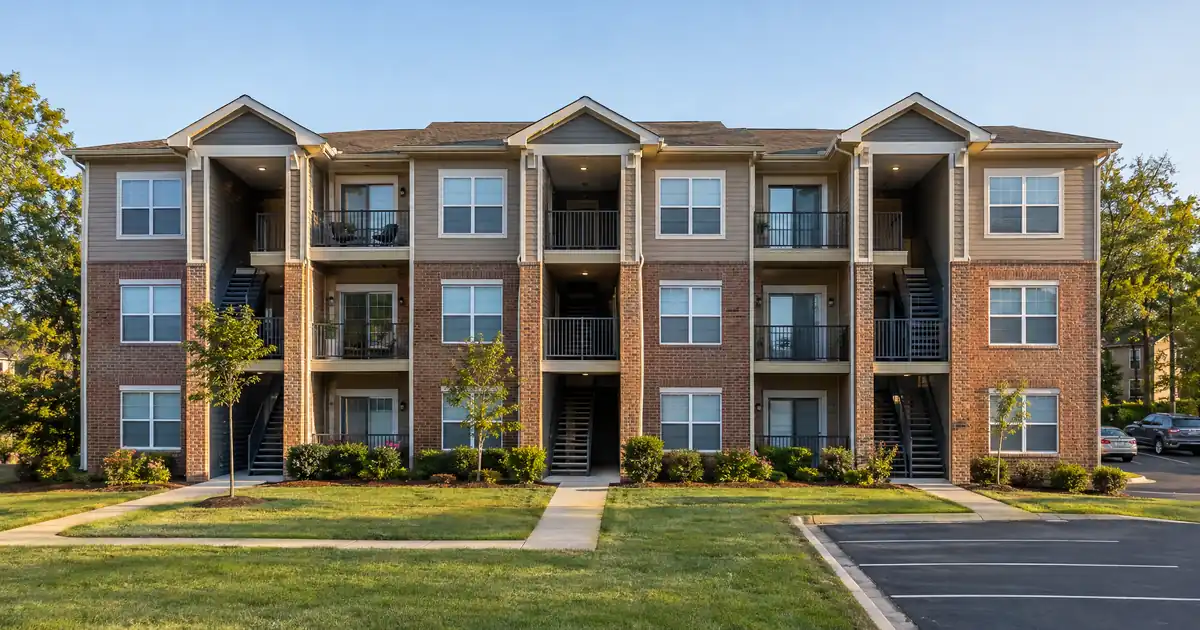
The Quick Read: A 5+ unit file with 24 months of bank statements is a deal-by-deal structure, not a standard product. The lender uses your deposits to document what you earn, and it uses the building’s net operating income to decide whether the property can carry the debt. Both pieces have to hold up, and each can offset some weakness in the other.
- Most bank statement programs cover 1-4 units. Five or more units usually move to commercial-style underwriting.
- Deposits show the sponsor’s income. The rent roll and operating statements show the property’s income.
- Clean, explainable deposits matter more than a big average.
- Entity paperwork, reserves and landlord experience decide a lot of 5+ files.
- Every file is underwritten individually. Nothing here is a commitment to lend.
What Is a 24-Month Bank Statement Loan on a 5+ Unit Property?
It is a loan where the borrower documents income with two years of personal or business bank statements instead of traditional personal-income documentation, applied to an apartment building of five or more units. The deposits cover the sponsor. The property still has to pass on its own cash flow.
What your deposits qualify you for.
Alt-doc programs read 12 months of business or personal bank deposits instead of tax returns. Enter your average monthly deposits and see the income a lender would credit you.
The expense factor is set by the lender from your business type and profit-and-loss statement; it is not a number you choose. This widget quotes no rate and no payment.
Program parameters shown update from Lendmire’s centralized guideline source.
Estimate
Illustrative estimate only — not a quote, Loan Estimate, approval, or commitment to lend. Deposit average, expense factor, and housing ratio are editable assumptions; the expense factor a lender applies is set from your business type and documentation. No interest rate or monthly payment is quoted here. Purchase capacity is a simplified illustration and does not account for taxes, insurance, HOA dues, or other debts. Alt-doc income documentation is available on consumer mortgages in the states where Lendmire is licensed for consumer lending; actual terms vary by lender, borrower, and property.
NerdWallet classes bank statement lending as a non-QM option where the lender averages 12 to 24 months of deposits rather than leaning on traditional personal-income documentation. Bankrate adds that borrowers can submit statements going back as far as two years, covering personal and business accounts. Both describe a product built for people whose deductions make their returns look smaller than their real earnings.
Here is the boundary that trips people up. Across the wholesale network, the standard bank statement lanes are built around 1-4 unit properties. At five units the property is treated as commercial multifamily. So a 5+ file is not a box you check. A lender looks at the sponsor, the entity and the building, and decides whether deposit-based income plays a role.
Whether it does depends on the lender. Some will use statements to support the guarantor’s income and liquidity on a mid-size building. Others want only property NOI and sponsor financials. The pool is thin, especially on smaller buildings.
For the broader picture on how these loan types fit together, Lendmire’s complete DSCR loans guide covers the investor side.
Why Do 5+ Units Get Underwritten Differently Than 1-4?
At five units, the lender stops asking mainly “what does the borrower earn?” and starts asking “what does the building earn?” The unit count is the first fork in every file, and it changes the appraisal, the lender pool and the paperwork.
| Factor | 1-4 units | 5+ units |
|---|---|---|
| Main question | Can the borrower repay? | Can the property cover its debt? |
| Appraisal | Residential forms, rent schedule | Commercial narrative, income approach |
| Income test | Deposits or rent coverage | Property NOI, plus sponsor strength |
| Borrower | Often an individual | Often an LLC with guarantors |
| Lender pool | Wide | Narrower, esp. 5-8 units |
Small 5-8 unit buildings sit in an awkward spot. They are often too small for institutional commercial lenders and too big for 1-4 unit programs. Expect fewer options and more custom review.
How Do 24 Months of Deposits Become Qualifying Income?
The lender totals eligible deposits over the statement window, removes the ones that are not income, applies an expense factor, and adjusts for your ownership share. What is left, averaged monthly, is the income figure the file uses.
1. Pick the account type. Business statements, personal statements, or a blend. Business accounts get an expense factor because deposits are revenue, not profit.
2. Total the deposits for all 24 months. The lender reads every page of every statement, not just the summary.
3. Strip out non-income deposits. Transfers between your own accounts, loan proceeds, refunds, and one-time items without a paper trail come out.
4. Apply the expense factor. Programs differ. Some use a flat factor and some accept an accountant-prepared ratio. The factor changes the income figure a great deal, and no universal formula exists.
5. Adjust for ownership. If you own a share of the business, only that share counts.
6. Average across the window. Twenty-four months smooths out a hot quarter or a dead one.
An accurate, documented expense ratio can materially change the income used. That is one reason a self-employed borrower with a good accountant often does better than one who guesses.
A Worked Example With Placeholder Numbers
This is a hypothetical borrower, shown as index values, not real dollars. Say the 24-month deposit total averages out to an index of 100 per month.
| Step | Effect on the index |
|---|---|
| Raw monthly deposit average | 100 |
| Remove transfers and one-offs | Drops below 100 |
| Apply the lender’s expense factor | Drops again, often by a lot |
| Adjust for ownership share | Drops again if under 100% |
| Result | The qualifying income figure |
Deposits of 100 never become income of 100. Borrowers who budget around the gross deposit total are the ones who get surprised.
Personal, Business or Commingled Accounts?
Business statements are the cleaner choice when the business really runs through its own account. Personal statements work when the income lands in a personal account. Commingled accounts are the hardest to read.
| Account type | Best when | Main friction |
|---|---|---|
| Business | Business has its own account | Expense factor applies |
| Personal | Income deposits personally | Must separate non-income items |
| Commingled | Personal and business mixed | Lender must untangle every deposit |
The deposits also have to fit the story. A lender wants to see deposits that plausibly match the type of business you describe. A landscaping company with steady weekly deposits reads well. A sudden jump with no explanation does not.
For a real estate borrower, one more trap: rent deposits from your other properties. If those rents flow through your account, the lender has to decide what counts as operating income, what is tenant security money, and what would be double-counted against the property’s own NOI. Keep tenant deposits and owner income in separate accounts where you can.
Which Deposits Raise Flags?
Large unexplained deposits, transfers between accounts, commingling and overdraft activity cause most of the friction. Each can be fixed with paper, if you gather it before the file goes in.
| Flag | How to address it |
|---|---|
| Large one-time deposit | Written explanation plus source document |
| Transfers between own accounts | Show both sides of the transfer |
| Commingled personal and business | Separate by account; label rent vs. income |
| Overdrafts or returned items | Short letter on cause; show it stopped |
| Cash deposits | Tie to a receipt, invoice or business record |
| Security deposits held for tenants | Show they are held apart from income |
Underwriters read statements line by line. A deposit that is easy to explain costs you a paragraph. One that is hard to explain costs you income, and sometimes the file.
How Does Property Income Interact With Your Income?
On a 5+ file, property income does the heavy lifting and deposits play a supporting role. The building has to carry its own debt. Your statements show you can stand behind it.
The property is judged on net operating income compared with debt service. Net operating income is rent and other income less operating costs such as taxes, insurance, utilities and maintenance, before debt service and income taxes. The coverage ratio is that NOI divided by annual debt service. Adventures in CRE walks through the same formula. A ratio of 1.00 means NOI exactly equals the debt, with nothing left over. Commercial multifamily lenders usually want a cushion above that.
What helps the property side:
- A current rent roll and signed leases
- Trailing operating statements that match the rent roll
- Stable occupancy
- Expenses that look real, not trimmed to flatter the number
What helps the sponsor side:
- Consistent deposits over the full window
- Liquid assets and reserves
- Prior experience running multifamily
- Clean credit
Strength on one side can cover some softness on the other. A building with thin coverage might be reviewed with more cash down or more reserves. A first-time owner of a larger building might face tougher questions even if the numbers pencil. Select lenders also review below-1.00 coverage on some structures, but leverage and terms adjust, and that is a lender decision.
Should You Use 12 Months or 24 Months?
Use 24 months when your income has been steady or rising and you want a longer, smoother record. Use 12 months when the recent year is clearly stronger than the one before it.
The longer window averages out a lumpy year and may read as more stable to a lender. The shorter window can produce a higher income figure when business has grown. The catch with 24 months is that a weak first year drags the average down, and the file needs a longer clean history. The network’s baseline program documents 12 months of statements. A 24-month option follows individual lender sheets, so confirm which one applies before you plan around it.
For this exact property type, see Lendmire’s multifamily 5+ 24-month bank statement loan complete guide.
What Leverage, Reserves and Loan Sizes Apply?
Leverage depends on occupancy and transaction type, and on a 5+ building it depends heavily on the individual lender. The figures below come from select lenders in Lendmire’s wholesale network and are typical, not promised.
- Loan amounts commonly run from $125,000 to $3,500,000.
- Reserves commonly run around six months of the housing payment on bank statement files. A 5+ commercial structure may set its own reserve test.
- Investment-property cash-out tops out around 75% LTV on most files.
- Investment purchase leverage on bank statement documentation varies by lender. Treat any single number as unreliable until a lender confirms it for your property.
- Owner-occupied primary residence programs reach up to 90% LTV on a purchase or rate-term refinance. That ceiling belongs to owner-occupied 1-4 unit files, not an apartment building bought as an investment.
Commercial lending generally carries shorter terms and refinance risk at maturity. Term length on any alt-doc loan follows the lender’s own program sheet, so ask early rather than assuming.
What Edge Cases Change the Rules?
The general rule is “deposits for the sponsor, NOI for the building.” These situations bend it.
Mixed-use buildings. Commercial space is treated separately from the residential units. The retail or office portion has its own leases, its own risk and its own appraisal treatment.
Borrowing through an entity. Many 5+ buyers close in an LLC, subject to lender program eligibility. The entity’s statements may differ from the guarantor’s personal statements, and the lender may want both. Entity documents, operating agreement and ownership percentages need to be complete and consistent.
Owner-occupied 5+. If you plan to live in one unit, the loan’s purpose and occupancy change how it is classified. Tell the broker up front.
Occupancy and disclosure. Occupancy decides the regime. Owner-occupied files are consumer mortgages, and TRID disclosures apply. A loan on a non-owner-occupied rental is business-purpose and exempt from TRID. Never mix the two on one file.
Limited experience. Newer operators on bigger buildings often need stronger reserves, a property manager, or a lower loan amount.
DSCR loans are designed for non-owner-occupied investment properties. Because they are business-purpose investor loans, they are reviewed differently from a standard owner-occupied mortgage. The same logic applies to the property label itself: Regulation Z’s business-purpose exemption looks at the purpose of the credit, not the words “investment property.” Its commentary addresses owner-occupied rentals, and the treatment depends on the number of units in the property, with credit to improve or maintain an owner-occupied rental of more than two units generally treated as business-purpose. Have your loan officer confirm which side of that line your purpose falls on.
Is This the Right Path? A Decision Table
Not every self-employed investor needs bank statements on a 5+ building. Sometimes the property carries the whole file.
| Your situation | Often a better fit |
|---|---|
| Building has strong, documented NOI | Property-cash-flow commercial loan |
| Traditional personal-income documentation understates your income | 24-month statements as sponsor support |
| 1-4 unit rental, rent covers the payment | A DSCR loan |
| Recent income jump | 12-month statements |
| Thin liquidity, large building | Smaller loan, more cash down |
From the brokerage side, many 5+ files need neither a personal income test nor bank statements. NOI and sponsor financials are enough. Bank statements earn their place when the sponsor’s traditional income documentation would otherwise raise questions. If you are weighing bank statements against property-rent-based lender review on a smaller 1-4 unit rental, the DSCR route in the complete guide linked above is the closer match, since that comparison sits outside the 5+ range.
What Documents Should You Gather First?
Gather the documents before the file goes in. Incomplete files get paused, and every request for a missing page adds friction.
- Twenty-four months of statements, every page, every account used
- Written explanations for large or unusual deposits
- Current rent roll and signed leases
- Trailing operating statements
- Entity documents: operating agreement, formation papers, ownership split
- Schedule of real estate owned
- Asset and reserve statements
- Commercial appraisal access and property details
- ID and credit authorization
Why Do Files Get Declined or Repriced?
The usual causes are predictable. The fixes are mostly paperwork.
- Thin property coverage. Rework the expense side with real numbers, or put more cash in.
- Unexplained deposits. Document them or exclude them before the lender does.
- Weak reserves. Show more liquid assets or reduce the loan amount.
- Entity mismatch. Make sure names and ownership match across statements, title and the application.
- Statements that do not match the story. Align the business description with what the deposits show.
- Experience gaps. Add a manager or reduce size.
Tax treatment can depend on how the funds are used and how the property is held. Keep clear records and speak with a qualified tax professional before relying on any deduction.
Key Terms Defined
Bank statement loan: A non-QM loan that uses deposit history instead of conventional personal-income paperwork to document income.
Expense factor: The percentage a lender removes from business deposits to estimate income after costs.
Net operating income (NOI): Property income minus operating expenses, before debt service and income taxes.
Debt service coverage ratio: NOI divided by annual debt service; it shows how well the property covers its loan.
Commingling: Mixing personal and business funds in one account, which makes deposits harder to verify.
Guarantor: The individual who backs a loan made to an entity.
Rent roll: A unit-by-unit list of tenants, rents and lease dates.
Frequently Asked Questions
Can I really use bank statements on a building with five or more units?
Sometimes, and only through select lenders. The standard bank statement programs stop at four units. On 5+ properties a lender may use statements to support your income and liquidity, while the building is judged on NOI. Treat it as a custom review, and ask what role the statements will play before you commit to the path.
Is 24 months better than 12 months?
Not always. Twenty-four months shows a longer record and smooths out one strong or weak stretch. Twelve months can produce a higher figure if your business has grown. The network’s baseline documents 12 months, so 24-month terms depend on the individual lender.
Does the building’s income or mine matter more?
The building’s, on most 5+ files. Net operating income against debt service is the main test, and your deposits support it. Strong sponsor liquidity can offset thin property coverage, and strong NOI can offset a modest income figure. Both are reviewed together, subject to lender guidelines.
Will rent deposits from my other properties count as my income?
Not automatically. Lenders separate rent that is operating income from tenant security funds and from money already counted in a property’s own NOI. Keeping those flows in separate accounts makes the review cleaner and avoids double-counting.
What reserves and loan sizes are typical?
Reserves commonly run around six months of the housing payment on bank statement files, and loan amounts commonly span $125,000 to $3,500,000. A 5+ commercial structure can set its own reserve test. Confirm the figures for your specific property.
Next Step
Lendmire is a mortgage broker that arranges financing through select lenders in its wholesale network, and every file is underwritten individually. Call 828-256-2183 or request a quote.
For current guidelines and terms, see Lendmire’s bank statement loan programs page.
About Lendmire
Lendmire, NMLS# 2371349, is a non-QM mortgage broker serving real estate investors in 41 markets, including Washington, D.C., through DSCR investor loan programs. Qualification is generally reviewed around the subject property’s rental income, not the borrower’s W-2 history, a practical fit for LLC-titled portfolios and self-employed investors. All scenarios remain subject to lender review and program guidelines. Two consecutive Scotsman Guide Top Mortgage Workplace recognitions (2025, 2026).
Get Started
Ready to find the right loan for you?
In about 30 seconds you can review financing options available for your home or investment property. No commitment required.
Informational only. Not a Loan Estimate, approval, or commitment to lend. Program availability and eligibility are subject to lender guidelines, credit approval, property review, and underwriting.
References
1. NerdWallet: Requirements for Self-Employed Mortgage Borrowers
2. Bankrate: What Is a Bank Statement Loan?
3. Adventures in CRE: Debt Service Coverage Ratio
4. CFPB: Regulation Z, Section 1026.3 Exemptions
This article is part of Lendmire’s bank statement loan program — full qualification details, guidelines, and scenarios live on the program page.
Related reading: How to Qualify for a Bank Statement Loan in Tennessee · How to Qualify for a Bank Statement Loan in Montana · How to Qualify for a 24-Month Bank Statement Loan in an LLC
Brandon Miller
Founder & CEO, Mortgage Loan Originator, Lendmire LLC
- Mortgage Loan Originator · NMLS# 1129696 · Verify on NMLS Consumer Access
- North Carolina Real Estate Broker · License# 343312 · Verify on NCREC
- North Carolina Insurance Producer · License# 19053198 · Property, Casualty, Life, Health · Verify on NAIC SBS
- Lendmire LLC · Firm NMLS# 2371349 · Verify firm licensure
Important disclosures. Lendmire (NMLS# 2371349) is a licensed mortgage brokerage. Lendmire is not a direct lender, depository institution, or financial advisor. All loan inquiries are subject to lender underwriting; this article does not constitute a commitment to lend. Rates, terms, and program guidelines are subject to change without notice and vary by borrower profile, property type, and state. Information in this article is general in nature and is not financial, legal, or tax advice. Equal Housing Opportunity. NMLS Consumer Access: nmlsconsumeraccess.org.