
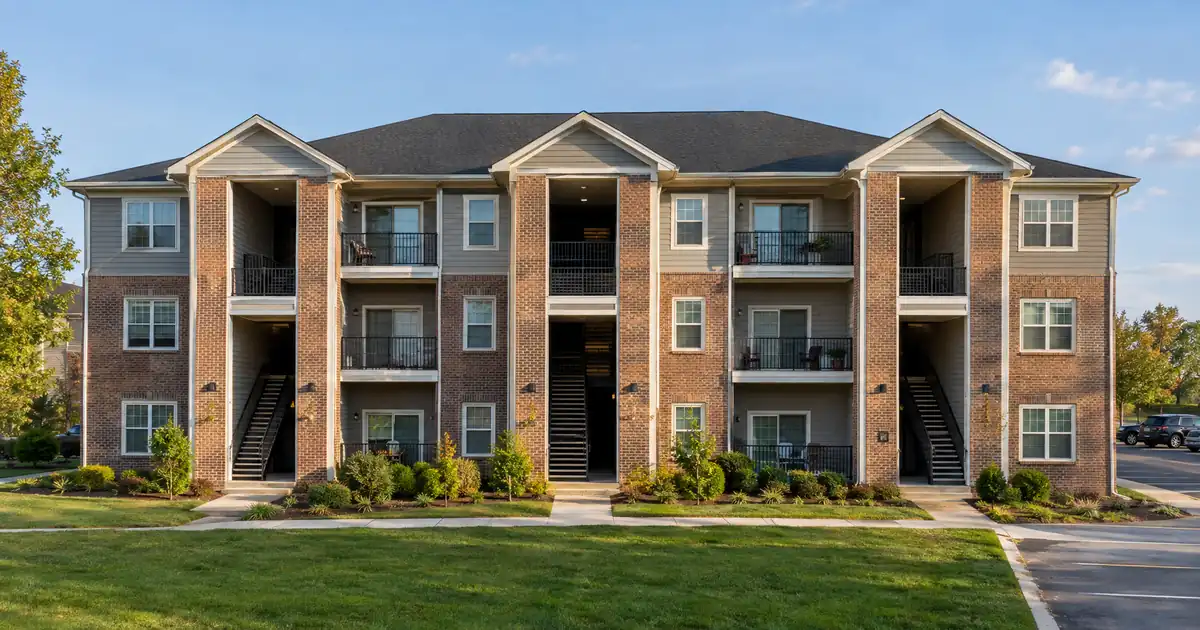
24-Month Bank Statement Loans for Multifamily 5+ Properties — The Quick Read: This product name actually bundles two separate things. Most investors mix them up. So do plenty of loan officers. The first thing is the five-unit threshold. That’s the line where a property switches from residential to commercial multifamily. The second thing is a 24-month bank-statement method. Some lenders use it to document a borrower’s own income instead of traditional pay stubs or tax returns. Once a property hits five or more units, the building’s own cash flow drives the underwriting. A bank-statement review of the sponsor’s account usually gets added on top as support — not as the main way to finance the whole deal.
Key Takeaways
- Five units is a hard line, not a gray zone. Cross it, and standard residential loan programs stop applying entirely.
- A 24-month bank-statement analysis documents a person’s or entity’s cash flow. It does not replace the property-level income analysis a commercial multifamily deal requires.
- Consumer-purpose bank-statement mortgages are built for 1-4 unit and condo properties. A 5+ unit acquisition moves into DSCR or commercial multifamily financing instead.
- The two mechanics most often intersect when a seller’s rent roll and operating statement don’t reconcile cleanly — bank statements become a compensating factor, not the whole file.
- Whether a lender averages 12 months or 24 months of deposits can swing qualifying income by a meaningful amount, independent of the property itself.
Key Terms Defined
- 5+ unit / commercial multifamily threshold: the point where a residential property (1-4 units) becomes a commercial asset for lending and appraisal purposes once a fifth unit exists.
- T12: a trailing 12-month, month-by-month operating statement showing a property’s actual income and expenses — the document underwriters use to build a net operating income baseline.
- Rent roll: a current list of every unit, tenant, and lease term, checked against the T12 for consistency.
- NOI (net operating income): effective gross income minus operating expenses — the figure a commercial appraiser capitalizes into value.
- 24-month bank-statement analysis: a documentation method where a lender averages a borrower’s actual bank deposits over 24 months instead of relying on traditional personal-income documentation.
- Expense ratio (expense factor): the percentage of gross deposits a lender assumes covers business overhead, subtracted before arriving at usable income.
- DSCR (debt service coverage ratio): rent divided by the monthly obligation on a property — the metric behind most investment-property multifamily financing, covered in full in Lendmire’s complete DSCR loans guide.
Where the Five-Unit Line Actually Sits
Five units is the dividing line. There’s no soft version of it. For 1-4 unit residential properties, an appraiser can use a small-income form and a gross-rent-multiplier technique. That means comparing the property to similar small rentals that sold nearby. Cross into five units, and that whole toolkit disappears. Now the appraiser builds value from the building’s own income instead. He starts with gross potential rent. He subtracts vacancy and credit loss. He subtracts operating expenses. Then he capitalizes what’s left at a market rate — he doesn’t compare it to recent sales anymore.
What your deposits qualify you for in your market.
Alt-doc programs read 12 months of business or personal bank deposits instead of tax returns. Enter your average monthly deposits and see the income a lender would credit you.
The expense factor is set by the lender from your business type and profit-and-loss statement; it is not a number you choose. This widget quotes no rate and no payment.
Program parameters shown update from Lendmire’s centralized guideline source.
Estimate
Illustrative estimate only — not a quote, Loan Estimate, approval, or commitment to lend. Deposit average, expense factor, and housing ratio are editable assumptions; the expense factor a lender applies is set from your business type and documentation. No interest rate or monthly payment is quoted here. Purchase capacity is a simplified illustration and does not account for taxes, insurance, HOA dues, or other debts. Alt-doc income documentation is available on consumer mortgages in the states where Lendmire is licensed for consumer lending; actual terms vary by lender, borrower, and property.
This matters if you’re scaling from a duplex or fourplex into something bigger. The financing conversation doesn’t just get harder at five units. It becomes a different conversation entirely. Agency-backed residential loan programs stop at four units by design. That’s exactly why the non-QM and commercial multifamily marketplace — not a standard residential lender — is the market you need for anything larger.
How the Appraisal Becomes the Real Underwriting Battle
Once value comes from a capitalized income stream instead of comparable sales, the appraised number can land far from the seller’s asking price. That asking price was likely built on residential-comp thinking. Investors underwriting a 5+ unit acquisition should expect the appraiser’s number — not the listing price — to set the real loan basis.
The documents driving that number change too. A commercial multifamily file runs on a rent roll, a trailing operating statement, a current tax bill, utility bills, and insurance declarations. The rent roll’s scheduled rent should roughly match the operating statement’s gross potential rent. When those two numbers diverge a lot, something is off with one or both documents. That gap is often the exact moment a lender reaches for the borrower’s own bank statements as a second data point.
What a 24-Month Bank Statement Actually Documents
A bank-statement loan looks at actual cash moving through a borrower’s account, not a tax return. Lenders reviewing this documentation type average 12 to 24 months of income deposits from a personal or business account. They use that average — instead of a Schedule C or K-1 — to figure out ability to repay, according to Scotsman Guide’s coverage of non-QM lending trends.
This isn’t the same tool as a property-level coverage ratio. A DSCR loan prices off the property’s own rent against its payment obligation. A bank-statement loan prices off the person’s — or the operating entity’s — actual deposit history. On a business account, the lender doesn’t treat every deposited dollar as usable income. An expense factor gets applied based on the type of business, its staffing, and how it’s structured. Mixing up this borrower-cash-flow tool with a property-cash-flow tool is the single most common mistake investors make shopping this loan type. Lendmire’s comparison of DSCR loans vs. bank statement loans for investors walks through the distinction in more detail.
The Expense Ratio: How Deposits Become Qualifying Income
The math behind turning deposits into income isn’t guesswork. Securitization-trust underwriting criteria filed with the SEC lay out two accepted paths. The default path applies a flat 50 percent expense ratio against eligible deposits, then adjusts for ownership percentage and divides by 12 to reach a monthly qualifying figure, per underwriting criteria filed by Vista Point Assets LLC. The second path lets a licensed CPA or tax professional certify a lower expense ratio, based on the business’s most recent tax return. That same filing sets a floor of 10 percent for a CPA-certified ratio — meaningfully higher qualifying income than the flat default for a genuinely low-overhead operation.
That 50 percent default isn’t a formality lenders skip past casually. A separate quality-control exhibit filed by EFMT Depositor LLC shows a file flagged as a documentation defect specifically because a lower, undocumented ratio had been used instead of the required 50 percent. Here’s the takeaway for an investor: a CPA letter can genuinely move the needle on qualifying income. But it has to be documented correctly, or the file gets kicked back.
Where the Two Mechanics Actually Meet on a 5+ Unit Deal
This is the part most explainers skip. It’s also the whole reason this product name exists in the first place. On its own, a standalone bank-statement mortgage is a 1-4 unit and condo product across the wholesale lenders Lendmire places files with. It goes up to roughly 85 percent LTV on a primary-residence purchase or rate-term file. It goes up to around 80 percent for an asset-depletion alternative on a primary residence. And it tops out near 75 percent LTV on an investment-property cash-out, subject to lender guidelines. Investment-property purchase leverage on straight bank-statement documentation varies a lot by lender and file strength. That’s the point where most investor-focused deals shift toward property-level DSCR underwriting instead.
None of those numbers apply to a genuine 5+ unit acquisition, because the property itself is no longer a residential asset class. On a real 5+ unit deal, the property gets financed on a commercial multifamily or DSCR basis. The 24-month bank-statement analysis becomes a supporting document for the sponsor. It proves personal or entity-level liquidity and cash flow. It layers alongside the property’s own NOI — it doesn’t replace it. This shows up most often exactly where documentation gets thin: a seller who can’t produce a clean, reconcilable trailing operating statement, or a rent roll that doesn’t match the T12 line for line. In that gap, a lender may lean on 24 months of the sponsor’s or the ownership LLC’s bank deposits as compensating evidence. That beats trusting an unverifiable property-level number outright.
Files in markets with heavy value-add or off-market acquisition activity tend to show this pattern more than stabilized institutional deals do. A seller who self-managed a building for a decade rarely kept books clean enough for a lender to trust at face value. So the sponsor’s own financial picture ends up doing more of the underwriting work than it would on a well-documented, professionally managed asset.
Twelve Months or Twenty-Four: Which Window Actually Wins
Shorter windows favor a business with a recent, genuine upswing. Longer windows show durability, but they blend in older, weaker months too. Neither one is universally better. It’s a modeling decision specific to each borrower’s deposit history, and a broker should run both before committing to a documentation path. A self-employed sponsor coming off a strong recent year might qualify for meaningfully more income on a 12-month look-back than a 24-month average would show. Meanwhile, a sponsor with a longer, steadier deposit history often benefits from the extra months smoothing out one weak stretch. Lendmire’s separate guide to the 12-month bank-statement version of this same 5+ unit product walks through that shorter window in detail. It’s worth comparing both side by side before deciding which look-back fits your file.
Where the General Rule Breaks: Named Edge Cases
Five named situations routinely knock this process off its clean, linear path.
An unpermitted or converted fifth unit. A fourplex with a converted garage, basement, or accessory structure functioning as a fifth unit can force a full commercial appraisal — even when the property looks like a residential fourplex to a buyer. Once that fifth unit exists — permitted or not — the small-income appraisal toolkit stops applying.
Mixed commercial and residential space. A 5+ unit building with ground-floor retail or office space alongside residential units almost always means the income approach dominates the valuation. Lenders and appraisers treat these as fully commercial, narrative-style appraisals rather than any residential form variant, since a standard residential adjustment grid doesn’t work across mixed uses.
A T12 and rent roll that don’t reconcile. When scheduled rent on the rent roll differs a lot from gross potential rent on the operating statement, the file stalls. It stays stalled until someone explains why — or the lender pivots to sponsor-level bank-statement income as a workaround.
Choosing the wrong look-back window for the borrower’s story. A 24-month average applied to a business with a recent, dramatic income jump can understate true current capacity. The opposite problem shows up when a shorter window gets used on a business coming off an unusually strong but non-repeatable year.
Assuming agency financing is ever an option. It isn’t, once a property hits five units. That’s not a gap in the market. It’s a structural feature of how residential and commercial lending are separated. It’s exactly why the non-QM and DSCR market exists as its own lane rather than an overflow of conventional lending.
Leverage, Loan Size, and Reserves on a Typical File
Program parameters shift depending on which side of the five-unit line the property sits on. So it pays to know which set applies before shopping the deal.
| Scenario | Typical Leverage |
|---|---|
| Primary-residence purchase/rate-term (bank statement) | Up to roughly 85% LTV |
| Asset-depletion alternative, primary residence | Up to roughly 80% LTV |
| Investment-property cash-out (bank statement) | Up to roughly 75% LTV |
| Investment-property purchase (bank statement) | Varies by lender; property-level DSCR often fits better |
Loan sizes across the bank-statement shelf generally run from around $125,000 to $3,500,000. Reserves commonly land near six months of the housing payment, subject to lender guidelines and file strength. None of this applies wholesale to a 5+ unit acquisition. There, leverage, reserve requirements, and loan sizing run through the commercial multifamily or DSCR side of the business instead — a separate conversation with a different set of typical ranges.
As a broker, Lendmire arranges this bank-statement documentation path for consumer mortgages across a 16-state licensed footprint. Lendmire works each file individually with select wholesale lenders. Every scenario is subject to lender guidelines, credit approval, and property review, and qualification runs on documented income under the applicable program — not on a guaranteed outcome.
The Investor Decision: Bank Statement, DSCR, or Both
For a self-employed investor buying a duplex, triplex, or fourplex, a straight bank-statement mortgage can be the cleanest path. There’s no tax-return reconstruction needed — just documented deposits. Once the target property hits five units, that path changes entirely. The acquisition itself needs commercial multifamily or DSCR-style financing. And the sponsor’s bank statements shift from being the qualifying tool to being a supporting one. Investors buying into a portfolio that spans both sizes — a fourplex here, a ten-unit building there — often end up running two different documentation conversations in parallel. Knowing which applies to which property before submitting a file saves real underwriting friction.
Tax treatment can depend on how loan proceeds are used and how the property is held. Investors should keep clear records and speak with a qualified tax professional before relying on any deduction. The same discipline applies to condo and short-term-rental purchases documented the same way — Lendmire’s guides to the 24-month bank-statement path for short-term rentals and 24-month bank-statement financing for condos cover those property types in more depth.
If a real acquisition is on the table, call Lendmire at 828-256-2183, or request a quote through Lendmire’s quote form. That can sort out which side of the five-unit line a deal falls on before it goes to underwriting.
Frequently Asked Questions
Can a bank-statement loan actually finance a five-unit apartment building?
Not directly as a stand-alone consumer mortgage — bank-statement programs across Lendmire’s wholesale network are built for 1-4 unit and condo properties. A genuine 5+ unit acquisition moves to commercial multifamily or DSCR financing, where the sponsor’s bank statements can still play a supporting role documenting personal or entity cash flow.
What’s the real difference between a 12-month and 24-month look-back?
The math applied to the deposits stays the same either way — only the number of months averaged changes. A 12-month window can capture a recent income upswing more accurately, while a 24-month average smooths out volatility but blends in older, weaker months.
Can a CPA letter actually lower my expense ratio below the standard 50 percent?
Yes. In documented cases, a licensed CPA or tax professional can certify a lower ratio based on the business’s most recent tax return, with a documented floor around 10 percent under the underwriting criteria some non-QM programs use. That lower ratio has to be properly supported, or the file can get flagged as a documentation defect.
Does Fannie Mae or Freddie Mac ever finance a 5+ unit property?
No — agency programs are built around 1-4 unit residential income analysis and stop there by design. Anything with five or more units sits entirely in the commercial and non-QM/DSCR marketplace.
What happens if the seller’s rent roll doesn’t match their operating statement?
The file typically stalls until someone explains the discrepancy, or the lender leans more heavily on the sponsor’s own bank-statement income as compensating documentation. A rent roll and T12 that don’t reconcile is one of the most common reasons a 5+ unit file picks up extra underwriting conditions.
For current guidelines and terms, see Lendmire’s bank statement loan programs page.
About Lendmire
Lendmire — NMLS# 2371349 — is a mortgage brokerage specializing in DSCR investor loans. Lendmire helps arrange financing across 40 markets, including Washington, D.C., through wholesale and investor-lending channels. The model centers on property-level rental income reviewed by the lender rather than W-2 documentation, subject to lender guidelines, which suits entity-owned and multi-property investors. Lendmire holds Scotsman Guide Top Mortgage Workplace recognition for 2025 and 2026.
Lendmire’s Top Mortgage Workplace recognition is documented by Scotsman Guide 2025 Top Mortgage Workplace and Scotsman Guide 2026 Top Mortgage Workplace.
Get Started
Ready to find the right loan for you?
In about 30 seconds you can review financing options available for your home or investment property. No commitment required.
Informational only. Not a Loan Estimate, approval, or commitment to lend. Program availability and eligibility are subject to lender guidelines, credit approval, property review, and underwriting.
References
1. Scotsman Guide — Which Groups Are Driving Non-QM Lending?
2. SEC EDGAR — Vista Point Assets LLC ABS-15G Exhibit
3. SEC EDGAR — EFMT Depositor LLC ABS-15G Exhibit
Brandon Miller
Founder & CEO, Mortgage Loan Originator, Lendmire LLC
- Mortgage Loan Originator · NMLS# 1129696 · Verify on NMLS Consumer Access
- North Carolina Real Estate Broker · License# 343312 · Verify on NCREC
- North Carolina Insurance Producer · License# 19053198 · Property, Casualty, Life, Health · Verify on NAIC SBS
- Lendmire LLC · Firm NMLS# 2371349 · Verify firm licensure
Important disclosures. Lendmire (NMLS# 2371349) is a licensed mortgage brokerage. Lendmire is not a direct lender, depository institution, or financial advisor. All loan inquiries are subject to lender underwriting; this article does not constitute a commitment to lend. Rates, terms, and program guidelines are subject to change without notice and vary by borrower profile, property type, and state. Information in this article is general in nature and is not financial, legal, or tax advice. Equal Housing Opportunity. NMLS Consumer Access: nmlsconsumeraccess.org.


