
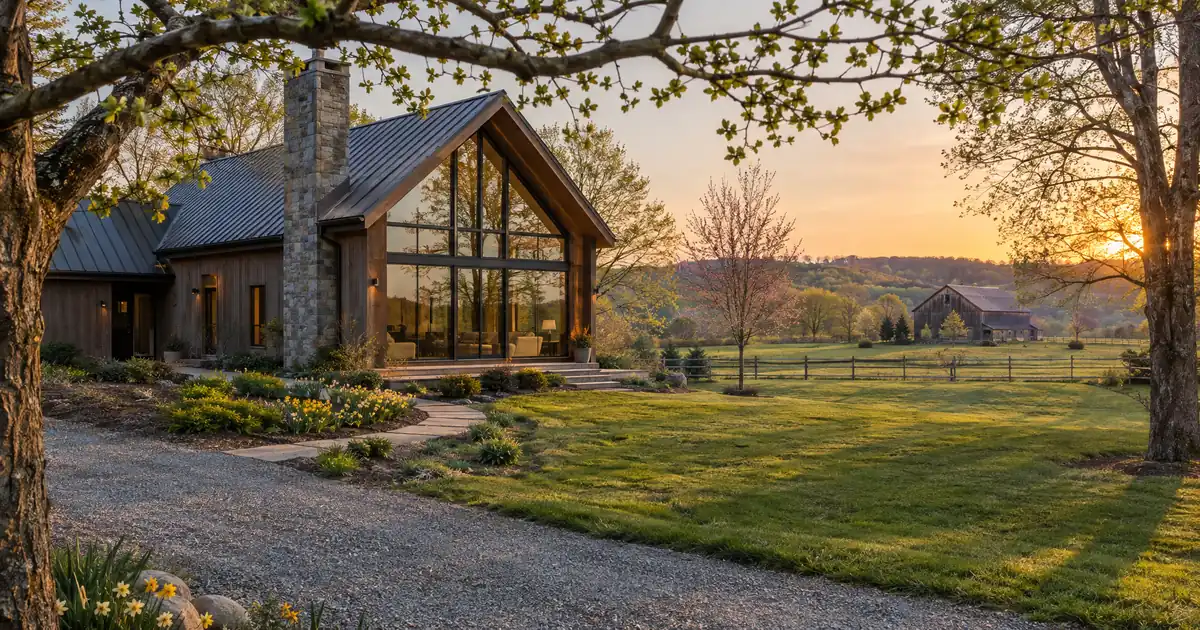
The Quick Read: An $8M file on land is possible only when the collateral fits the overlays: ten acres or fewer, not classed as rural, and reviewed case by case through select wholesale programs. Deposits prove the income, but the appraised value of the home and its site sets the loan size.
- Size: A portfolio non-QM program reaches $6M. At $8M, the file sits on a bank portfolio program, whose size ladder begins above $4M and runs to $30M.
- Leverage at this size, case by case: On a primary-residence purchase, the ceiling is 60% LTV. On a second-home or investment-property purchase, it is 55%. Every figure is through select wholesale programs, subject to full underwriting.
- Income: The bank program uses twelve consecutive months of statements. Qualifying income is eligible deposits divided by the months, after an expense ratio.
- Land: Above the super-jumbo line, overlays rule out rural property and cap the parcel at ten acres.
- Credit and reserves: Expect a 700 credit floor and nine months of reserves at this balance. Leverage, reserves, and pricing vary by lender and program; the final terms follow the full file review.
Why a Bank Statement Loan on Acreage Runs Past Non-QM Limits
Most bank statement programs top out far below $8M. Surveys of the market report single-lender ceilings of roughly $1M to $2M, and some programs reach $4M. Lendmire’s network is different: a portfolio non-QM program carries files to $6M, and a bank portfolio program carries twelve-month-statement files to $30M on its own ladder.
So “beyond non-QM limits” is a size problem and a land problem at once. They are separate gates. A file can clear the size gate and still fail on the acreage.
You are not fighting the law. No federal rule sets a dollar cap on a non-QM loan. Ceilings come from each lender’s appetite for holding the loan. At $8M, that usually means a bank that keeps the loan on its own books and reads the file by hand.
This article walks through the mechanics: how deposits turn into income, how the size ladder works, how appraisers treat acreage, and what to do when the file does not fit. For the broader investor-lending picture, Lendmire’s complete DSCR loans guide covers the rental-income route.
Key Terms Defined
Non-QM loan: A mortgage that does not follow the standard federal “qualified mortgage” box. Lenders set their own income documentation and size rules.
Bank statement loan: A mortgage that qualifies a self-employed borrower on deposits in personal or business accounts instead of traditional personal-income documentation.
Expense ratio: The share of business deposits treated as costs, not income. It is subtracted before the deposits are averaged.
Super jumbo: A lender label, not a regulated class. Pricing and available terms vary by lender, borrower profile, property type, and full underwriting review.
Overlay: An extra lender rule layered on top of the base program, such as a higher credit floor or an acreage limit.
Excess land: Acreage beyond the home and its usable site. Appraisers often value it separately, sometimes at raw-land prices.
Case-by-case review: A hand review of the file before it is submitted. Every loan above $4M gets one.
How Deposits Become Qualifying Income
Bank statement underwriting is a short sequence. Each step can move the final number.
1. Choose the account type. You can use personal statements or business statements. Business statements need at least 25% ownership of the business.
2. Pull consecutive months. The bank program uses twelve. Other programs in the network accept twelve or twenty-four. The months must run back to back, and a transaction history never substitutes for a statement.
3. Strip ineligible credits. Transfers between your own accounts, loan proceeds, and refunds are not income. Large one-off deposits need a paper trail.
4. Apply the expense ratio. Fixed ratios are typically 20% for a service business with no employees, 40% for one to five employees, and 50% for six or more employees or any product business. A lower ratio needs an accountant-provided figure.
5. Divide by the months. The result is monthly qualifying income. Debt-to-income can run up to 50%, through select wholesale programs, subject to full underwriting.
One detail helps founders. Transfers from your own business into your personal account count at 100%. The expense ratio has already been taken at the business level, so the personal-account route can be cleaner.
A profit-and-loss-only path also exists. So does an asset-based path, covered below. If your traditional personal-income documentation understates what you earn, deposits usually tell a stronger story. Lendmire’s piece DSCR Loan Vs Bank Statement Loan For Investors shows when each route fits.
Where Size Meets Acreage
Here is how the two programs stack up at the top of the range.
| Program | Size reach | Statements |
|---|---|---|
| Portfolio non-QM | $300K to $6M | 12 or 24 months |
| Bank portfolio | Above $4M to $30M | 12 months |
The two overlap between $4M and $6M. Above $6M, the bank program stands alone. At $8M, that is the only lane.
Its leverage ladder is the other half of the story. At this size, the figures below are ceilings, through select wholesale programs, subject to full underwriting, and each is reviewed case by case before submission.
| Occupancy | Purchase | Rate-term | Cash-out |
|---|---|---|---|
| Primary residence | 60% | 60% | 55% |
| Second home | 55% | 55% | 50% |
| Investment property | 55% | 55% | 50% |
Read that table as a ceiling, not an offer. The appraised value of the collateral is the number those percentages apply to, which brings us to the land.
Interest-only is available on the bank program as well, at 60% LTV or the band’s ceiling, whichever is lower. It uses five- and seven-year fixed-period adjustables. The ten-year fixed-period version is fully amortizing. Terms vary by lender guidelines, property type, leverage, credit profile, and full file review.
How Acreage Changes the Appraisal (and the Loan)
Land usually hurts the file in two ways. It thins the comparable sales, and it can lower the value the lender will use.
Large parcels do not sell often. The appraiser reaches farther in distance and time to find comparables. That widens the range of values and makes the lender’s reviewers more cautious.
Then comes the split. Excess land is commonly valued apart from the home, often at raw-land prices. A price that bundled in extra acreage can appraise below contract. The loan sizes off the lower value.
Run the logic with modeled percentages. Say about a quarter of the contract price is paying for land beyond the home site. If the appraiser values that land well below what you paid, the appraisal comes in under contract. The 60% or 55% ceiling then applies to the lower figure, and you cover the gap in cash. This is an illustration, not a prediction.
Two rules sit on top of the appraisal at this size. Above the super-jumbo line, the overlays rule out rural property and cap the parcel at ten acres. Rural collateral elsewhere in the network runs to 80% LTV on ten acres or less and never above a $3M loan. So an $8M loan on a rural estate is outside these programs, however strong the deposits are. Exact terms depend on the lender’s guidelines, property type, leverage, and a full review of the borrower’s file.
Above $2M, expect two appraisals. Get the first one’s scope right.
Occupancy Decides Which Rulebook Applies
Occupancy changes the legal frame around the same dirt. If you will live in the property, or use it as a second home, the loan is a consumer-purpose mortgage. The federal ability-to-repay standard asks the lender for a reasonable and good-faith determination and says the creditor must verify what it relies on. Twelve months of bank statements are how a self-employed borrower meets that test. Non-QM does not mean undocumented.
A pure rental is treated differently. Investment loans are designed for non-owner-occupied property, and because they are business-purpose loans, they are reviewed differently from a standard owner-occupied mortgage. The CFPB’s Regulation Z text deems credit for non-owner-occupied rental property to be for business purposes. It also notes the special rule does not apply if the owner expects to occupy the home more than 14 days in the coming year.
The practical point: purpose controls, not the collateral. A compliance trade source puts it this way: Reg Z looks at the purpose of the loan, not so much the purpose of the property. Do not label a loan “investment” to dodge consumer rules. That choice has real consequences.
If Your File Exceeds the Limits
Start by naming which gate failed. The options differ by gate.
| Situation | Option | Trade-off |
|---|---|---|
| Parcel over ten acres | Carve off excess land or buy it as a separate parcel | Land needs its own financing or cash |
| Rural classification | Bring the loan to $3M or less, at 80% LTV or below | Much larger cash down |
| Appraisal under contract | Renegotiate or add cash | Loan sizes off lower value |
| Leverage too thin | Asset-based path | Needs deep liquid assets |
| Rental use | Investment-property ladder or rental-income route | Separate size and rural limits |
The asset paths deserve a plain explanation. Asset allowance divides liquid assets by 36, 60, or 84 months to build income. The 84-month version is standalone and applies to any loan above $3.5M. It covers primary and second homes only, at 80% maximum. Assets-only needs no debt-to-income ratio, but U.S. liquid assets must equal the loan amount plus closing costs, plus sixty months of any net loss on other residential property.
What counts as an asset is strict. Retirement accounts count at 70%, or 80% at age 59½ and older. Business funds, gifts, most trusts, unvested stock, and cryptocurrency never count. A revocable living trust is the exception.
For cash-out, the portfolio program allows unlimited proceeds at or below 60% LTV. Above 60%, the cash-in-hand cap is $1.5M. The bank program publishes no cap. At $8M, cash-out tops out at 55% on a primary residence, so the question is mostly moot. Every figure here varies by lender and program — guidelines, property type, leverage, and credit profile all apply.
The strongest play might be to restructure the collateral rather than argue with the overlay. A ten-acre estate parcel with the working land split away often clears. A twenty-acre combined parcel often does not. Honest toss-up on whether the carve-out is worth the extra transaction, and it depends on what the extra land is for.
Edge Cases Where the Rule Breaks
The ceiling is policy, not law. Acreage limits and size ceilings come from lenders. That is why one program says no and another reviews the same file.
The rural rent problem. On a rental file, a rural county may have fewer than three comparable leases. The appraiser then uses adjusted or distant comps, and the rent opinion can come in low. The lender uses the lower of the lease and the market rent.
Short-term rentals. The standard rent form is built for monthly leases, so short-term-rental files usually run on platform data. Ask early whether the property is classed as rural.
Hobby farm or working farm. Outbuildings, intended use, and income-producing land change how an appraiser treats the property. A barn and paddock on the home site read differently from a leased pasture.
Entities and trusts. Business statements need 25% ownership. A trust other than a revocable living trust cannot supply assets. Wherever an LLC holds title, eligibility is subject to program terms.
Occupancy swaps. A move from primary to second home takes about five points off leverage at every size. Second homes are one-unit only.
Pre-Flight Checklist Before You Order an Appraisal
Clear collateral first. Acreage declines are usually collateral problems, not credit problems.
1. Confirm total acreage and the acreage of the home site.
2. Confirm the property is not classed as rural.
3. Document use: residence, second home, rental, or working land.
4. Note road access, well, septic, and any secondary dwellings.
5. Gather land and home comps from the last stretch of sales, even if they sit far away.
6. Line up twelve consecutive months of clean statements.
7. Ask for case-by-case review before you go to contract.
Send this package to your broker with the county and total acres. Reviewers can then spot problems while the contract is still flexible.
Credit, Reserves, and Who This Does Not Fit
Above the super-jumbo line, expect these overlays, through select wholesale programs, subject to full underwriting:
- A 700 credit floor.
- A 0x30x24 housing history.
- 48-month seasoning on any credit event.
- U.S. citizens and permanent residents only.
- No non-occupant co-borrowers.
- Cash-out proceeds that cannot satisfy reserves.
Reserves run three months to $500K, six months to $1.5M, and nine months above that. Add two months per additional financed property, to a twelve-month maximum. First-time investors need twelve months.
Be candid about the misfits. This route does not fit rural estates above a $3M loan, parcels over ten acres kept whole, borrowers who are not citizens or permanent residents, or buyers who need 75% or more leverage at $8M. It also does not fit thin-deposit businesses with no assets behind them. For those, the honest answer is a smaller loan, a different property, or a different program.
Tax treatment can depend on how the funds are used and how the property is held; investors should keep clear records and speak with a qualified tax professional before relying on any deduction.
Frequently Asked Questions
Can I really get an $8M bank statement loan on acreage?
Only when the collateral fits. At this size the file runs through a bank portfolio program, reviewed case by case. The overlays exclude rural property and cap the parcel at ten acres. If your land is larger or classed as rural, the file needs restructuring before it goes anywhere.
Why is acreage treated as a collateral problem?
Lenders must be able to sell the property if the loan fails. Large parcels have thin comparable sales and a smaller pool of buyers. Reviewers discount excess land or exclude it. Your credit and deposits can be excellent and the file can still fail on the land.
Do business statements work for a very large loan?
Yes, with at least 25% ownership of the business. The expense ratio comes off the deposits first. Transfers from your own business into your personal account count at 100%, which is why some borrowers use personal statements.
How much cash will I need down?
Plan on a large down payment because leverage steps down with size. At $8M, ceilings are 60% on a primary-residence purchase and 55% on a second-home or investment-property purchase, case by case. Add reserves of nine months and any gap if the appraisal lands under contract.
What if the lender declines because of the land?
Ask which gate failed: acreage, rural classification, value, or leverage. Then restructure. Options include carving off excess land, lowering the loan below the rural limit, adding cash, or moving to an asset-based path.
Next Step
Consumer-purpose files are available only where Lendmire’s consumer lending is licensed, which is 16 states. Lendmire’s piece on super jumbo bank statement loan requirements for acreage properties goes deeper on the land rules. Every parameter here is a ceiling through select wholesale programs, subject to full underwriting, and nothing is a commitment to lend.
For current guidelines and terms, see Lendmire’s super jumbo bank statement loan programs page.
Self-employed borrowers can compare both super jumbo programs on Lendmire’s self-employed mortgages page.
About Lendmire
Lendmire (NMLS# 2371349), a non-QM mortgage broker serving investors in 41 markets including Washington, D.C., helps structure DSCR scenarios commonly evaluated around a property’s rental income rather than personal income paperwork, subject to lender guidelines. A Scotsman Guide Top Mortgage Workplace in 2025 and 2026, Lendmire places loans through wholesale investor lenders and is not a direct lender.
Get Started
Ready to find the right loan for you?
In about 30 seconds you can review financing options available for your home or investment property. No commitment required.
Informational only. Not a Loan Estimate, approval, or commitment to lend. Program availability and eligibility are subject to lender guidelines, credit approval, property review, and underwriting.
References
1. CFPB – Ability-to-Repay and Qualified Mortgage Small Entity Compliance Guide
2. CFPB – Regulation Z §1026.3, Exempt Transactions
3. Compliance Alliance – Regulation Z and Investment Properties
This article is part of Lendmire’s super jumbo bank statement loan program — full qualification details, guidelines, and scenarios live on the program page.
Related reading: How to Get a Super Jumbo Bank Statement Cash-Out as an Entertainer · Bank Statement HELOC vs Super Jumbo Loan for a Loan-Out Corporation · Super Jumbo Bank Statement Cash-Out Rules on Acreage Properties
Brandon Miller
Founder & CEO, Mortgage Loan Originator, Lendmire LLC
- Mortgage Loan Originator · NMLS# 1129696 · Verify on NMLS Consumer Access
- North Carolina Real Estate Broker · License# 343312 · Verify on NCREC
- North Carolina Insurance Producer · License# 19053198 · Property, Casualty, Life, Health · Verify on NAIC SBS
- Lendmire LLC · Firm NMLS# 2371349 · Verify firm licensure
Legal disclosures. Lendmire (NMLS# 2371349) is a state-licensed mortgage brokerage that arranges financing through wholesale lender relationships. Lendmire is not a direct lender, depository institution, or registered financial advisor. The discussion above is general informational content about real estate financing — it is not financial, legal, or tax advice, and readers should consult licensed professionals for guidance on their individual circumstances. Loan inquiries are subject to lender underwriting; this article does not represent a commitment to lend. Loan terms, rates, and qualification standards vary by borrower, property, and state, and are subject to change at any time. Equal Housing Opportunity. NMLS Consumer Access: nmlsconsumeraccess.org.