
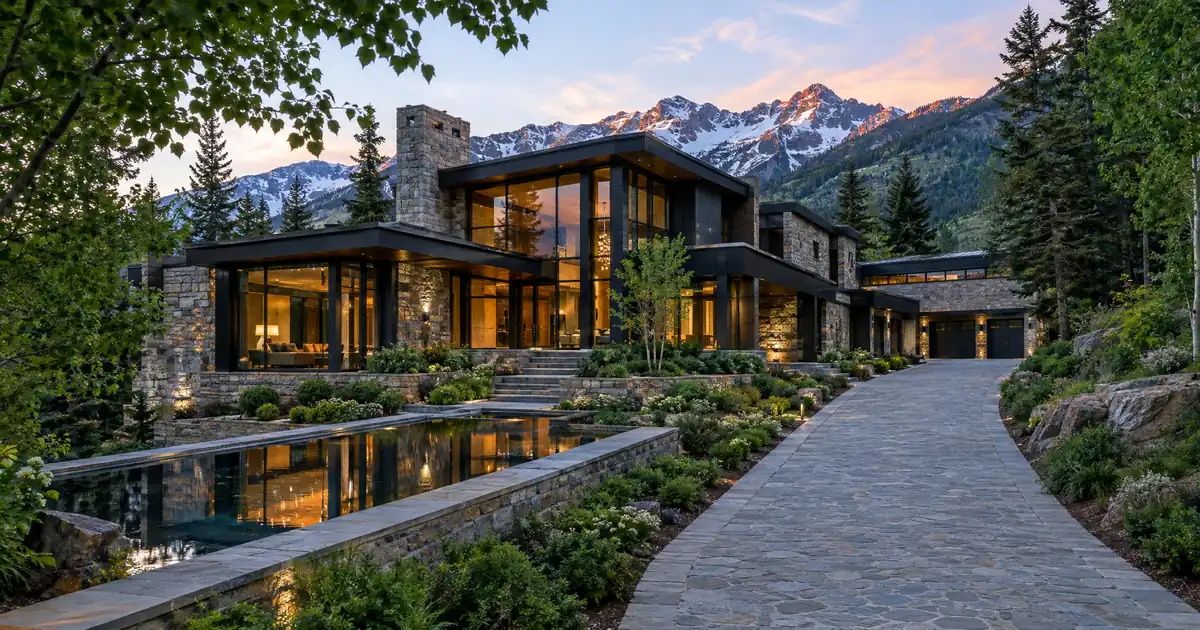
The Quick Read: You support the appraisal by handing the appraiser a clean evidence packet that proves the cabin’s year-round habitability, systems, access, and legal use, plus a short list of closed sales that explain why those comps fit. Your bank statements prove income, but they do nothing for the collateral, so the cabin has to stand on its own evidence.
- Bank statements qualify you, and the appraisal values the cabin on a separate track.
- Thin rural comps push appraisers to widen distance and time, then explain and adjust, so your packet should make that job easier.
- Documented well, septic, road access, and permitted improvements are the items that most often protect value.
- Through select wholesale programs, rural property is typically capped at 80% leverage on ten acres or less, and rural loan amounts do not go above $3,000,000.
- Every file above $4,000,000 is reviewed case by case before submission, and the super-jumbo overlays do not allow rural property.
Why a Rural Cabin Is Hard to Appraise on a Super Jumbo File
A cabin is hard to appraise because few similar properties sell nearby, and the loan is sized on the appraised value. A bank statement file adds nothing to that value. It only shows that you can carry the loan.
Here is how the two tracks run. Your 12 or 24 months of deposits, after an expense ratio, set your qualifying income. The appraisal sets the collateral value. Lenders size the loan on the lower of the appraised value or the purchase price. A cabin that appraises under contract price means a smaller loan or more cash from you, no matter how strong your deposits look.
Rural markets make this harder. McKissock, an appraiser education provider, notes that rural areas have few transactions, so appraisers may have to look at neighboring towns or wider areas. It also names recreational property as its own rural property type. A cabin on a lake, a ridge, or a forest road often has only a handful of true matches within reach.
Large balances add scrutiny. Across the wholesale network Lendmire shops, a bigger loan usually means a tighter review of the collateral. Some programs add extra appraisal or review steps at higher sizes. Lendmire’s piece Can a Rural Cabin Get a Fair Value on a Super Jumbo Bank Statement Loan? covers that question, so this article stays on the evidence you control.
The program reality matters before you spend money on a packet. Through select wholesale programs, subject to full underwriting, rural property is typically limited to 80% leverage on ten acres or less. The loan amount does not go above $3,000,000. Above $3,000,000, the super-jumbo overlays rule out rural property altogether. Anything above $4,000,000 is reviewed case by case before submission. For a very large balance on a remote cabin, the question is often eligibility before it is appraisal.
If you are new to the product itself, Lendmire’s complete DSCR loans guide explains how property-based investor loans differ from bank statement loans. Bank statement files qualify on documented deposits under the applicable program, subject to lender guidelines.
Key Terms Defined
Comparable sale (comp): A recent sale of a similar property that the appraiser uses to estimate your cabin’s value.
Adjustment: A dollar change the appraiser makes to a comp to account for a difference, such as acreage, condition, or a missing well.
Cost approach: A value method that adds the land value to the cost of rebuilding the structure, less wear. It carries more weight when comps are scarce.
Site value: The part of the value that belongs to the land, including access, topography, and views.
Excess land: Acreage beyond what the home normally needs, which the appraiser may value separately from the house.
Highest and best use: The legal, physically possible, and financially feasible use that produces the highest value for the property.
Extraordinary assumption: A condition the appraiser assumes is true without verifying it, which could change the conclusion if it turns out false.
How Underwriting Treats a Rural Cabin, Step by Step
Underwriting reviews the cabin through six checks: appraiser fit, residential character, comp selection, explanation, land separation, and cabin-specific value drivers. Your packet should speak to each one.
1. Appraiser competence. Enact, a mortgage insurer, trains reviewers to ask first whether the appraiser has the expertise for rural work. A city appraiser with no rural experience can produce a report that draws extra conditions. You usually cannot pick the appraiser on a wholesale file, but you can ask your broker to flag that the cabin is rural and remote so the order goes to someone local.
2. Residential character. The reviewer checks zoning and present land use to decide whether the property is residential or agricultural. Highest and best use has to be legally permitted, physically possible, financially feasible, and the most profitable use. A cabin on a small wooded parcel passes easily. A cabin beside a working barn and pasture invites more questions.
3. The comp search. Appraisers describe a widening sequence when sales are thin. McKissock reports that they widen the radius, stretch the time window with market-conditions adjustments, relax size criteria, and look at competing towns. One appraiser’s survey answer was 1.5 to 2 miles first, then 180 days instead of 90, then living-area tolerance up to 25%. That is one practitioner’s habit, not a rule, and McKissock also reports that agency guidance sets no fixed distance limit.
4. Explain, then adjust. When comps are older, farther away, or different, the appraiser has to say why they were chosen and adjust for the differences. McKissock’s guidance on sharing comparable sales makes the same point. Underwriters look for reports that call comps the best available and then describe the neighborhood in a way that contradicts the choice.
5. Separate house from land. Where comps differ a lot in acreage, the adjustments need an explanation. Simple price-per-acre math tends to fail on larger holdings, because the first few acres carry the home and the last ones carry far less value. Closed land sales help the appraiser support that split.
6. Cabin-specific value drivers. These are qualitative. Winterization, heating and insulation, water source and reliability, septic type and condition, outbuildings, and seasonal access move recreational value in ways a square-foot shortcut cannot see. Year-round road access, steepness, and road maintenance agreements all feed marketability. Log and other unconventional construction needs a thorough description and market data on how buyers accept it.
What to Hand the Appraiser
Give the appraiser documents that prove a feature exists, works, and is legal. An appraiser can only credit what the file shows.
| Evidence item | What it proves | Who supplies it |
|---|---|---|
| Dated improvement list and receipts | Upgrades are real and recent | You |
| Permits for additions or finished space | Square footage is legal | You or the county |
| Well log and water test | Water is present and safe | Well company or lab |
| Septic records or inspection | System is sized and working | County or inspector |
| Recorded road maintenance agreement | Access is shared and maintained | You or road district |
| Plot map or survey | Acreage and boundaries are accurate | You or surveyor |
| Recent nearby sales with addresses | Market context for comps | You or your agent |
The survey item deserves a note. Professional appraisal standards define an extraordinary assumption as one that, if false, could alter the appraiser’s conclusions. When acreage, survey, or soil information is missing, it can end up as an assumption in the report. Supplying the document removes the need for the assumption. Treat this as good practice, not a program rule.
A documented, permitted, functioning well and septic system is neutral or positive. Failing or undocumented systems can reduce value and make the property harder for a lender to accept.
Cabin Types and the Evidence Each One Needs
Different cabins trip different problems. Match your packet to the type you own.
| Cabin type | Main valuation risk | Best supporting evidence |
|---|---|---|
| Seasonal, not winterized | May not suit permanent use | Heating, insulation, freeze-protected plumbing records |
| Year-round | Few true comps | Closed sales with similar access and systems |
| Off-grid | Power and water questions | System specs, service records, water test |
| Log or timber frame | Buyer acceptance | Construction description, local sale history |
| Waterfront or water access | Access and site value | Recorded access rights, land-sale support |
A seasonal cabin may rely on holding tanks or composting toilets that do not suit permanent use. Some lenders require year-round road access.
How to Nominate Comps Without Pushing the Appraiser
You can suggest comps, but you should present them as information and not as a demand. Build a one-page sheet and give it to your broker to forward.
List each sale with its address, how far it sits from the cabin, how recently it closed, and what is alike and different. Add one sentence on why it matters. Appraisers have to explain every comp they use, so a sheet that already explains the match saves them effort. Here is the shape, filled with made-up entries for illustration.
| Comp (illustrative) | Distance and timing | Likely similarities | Likely differences |
|---|---|---|---|
| Sale A | Same lake, farther up the road | Water access, similar construction | Smaller lot |
| Sale B | Next town over, older sale | Year-round access, similar size | Different school district |
| Sale C | Same road, recent | Same road agreement, similar systems | More outbuildings |
Include closed sales only. Do not lean on active listings or projected rental revenue. The sale that supports your price should show comparable views, access, amenities, and bedroom count.
A Worked Example of a Thin-Comp Adjustment
Say your cabin sits on a few wooded acres with a well, a septic system, and a year-round gravel road. The only recent sale of a close match is in the next town. The appraiser then uses that sale and adjusts it, step by step.
The adjustments follow a predictable logic. The comp has more land, so the appraiser adjusts it down for site size. It is a bit larger, so another downward adjustment follows for living area. It sold earlier, so a market-conditions adjustment follows. Its septic system is newer than yours, so it is the better property on that point and a further small downward adjustment applies, unless your records show yours was recently inspected and sound.
The size of each adjustment is the appraiser’s judgment, backed by market data. Your packet affects the inputs. A permit for your finished loft supports the living-area count. A water test removes doubt about the well. A road agreement answers the access question. Large or numerous adjustments invite a reviewer’s questions, so a stronger comp sheet usually helps more than arguing over any one line.
Where the General Rule Breaks
The comp-distance and documentation advice above is the general pattern. Several situations change it.
Super jumbo bank statement loans are not agency products, so the program’s own overlays on radius and comp count control.
Acreage and farm features. Silos, large barns, and animal facilities push a lender to decide whether the property is residential at all. Maximum acreage varies by program, and rural eligibility runs on ten acres or less. A cabin on more land than that is a different conversation from an appraisal.
Rural classification and loan size. Rural loans stop at $3,000,000, through select wholesale programs, subject to full underwriting. Above that size, the super-jumbo overlays rule out rural property outright. Above $4,000,000, every file is reviewed case by case before submission.
Which form the appraiser uses. A rural appraiser may use the standard 1004 or the Uniform Agricultural Appraisal Report. A bank statement loan on a second-home cabin normally uses the 1004. The rent-schedule forms, 1007 and 1025, come into play when a program wants rental income on an investment cabin. Confirm which form your program expects.
Unusual construction. Log cabins, A-frames, and owner-built structures need more description and more market data on buyer acceptance. Some programs are cautious about them, so raise the construction type early.
Occupancy and use history. Whether you will live in it part-time, treat it as a second home, or rent it out changes the program and its leverage ceiling. Second-home purchases are generally offered at lower leverage ceilings as loan sizes grow, through select wholesale programs, subject to full underwriting. Investment-property purchases follow a similar ladder, with ceilings dropping faster at the largest loan sizes. Lendmire’s piece How to Support an Acreage Appraisal on a Super Jumbo Bank Statement Loan covers the land-heavy version of this problem.
What If the Value Comes In Low?
Start by sorting the problem into a factual error or a difference of opinion. The first is fixable. The second is harder.
A factual error means something concrete is wrong in the report, such as the wrong square footage, a missing permitted addition, or an unrecognized well. Give your broker the document that proves the correct fact. A difference of opinion means you disagree with which comps were chosen or how they were adjusted. Here, a short sheet of closed sales the appraiser did not use, with clear reasons they fit, is the most useful response. Whether a reconsideration request is accepted is up to the lender and its review process.
If the value stands, the options are the usual ones:
1. Renegotiate the price with the seller.
2. Bring more cash to cover the gap.
3. Restructure the financing, such as a lower loan amount or a different program.
4. Walk away if the cabin no longer makes sense at the appraised value.
Because loans are sized on the lower of appraised value or price, a low appraisal changes your cash at the table before it changes anything else.
What the Decision Looks Like in Practice
The practical decision is whether this cabin fits the programs at all, then whether you can document it well enough to hold its value.
Across the wholesale network, the rural cabin files that go smoothly tend to share three traits. The loan amount sits well inside the rural cap, the acreage is modest, and the owner or buyer has gathered system records and access documents before the appraiser visits. Files that struggle are usually very large balances on remote or acreage-heavy properties, where the property classification is the obstacle and no evidence packet can fix it.
For unique or acreage-heavy homes, some buyers pay for a pre-offer appraisal to calibrate expectations. Whether that makes sense depends on the price at stake and how thin the local sales are.
Credit and reserves matter too. Reserves typically run 3, 6, or 9 months depending on loan size. Tax treatment can depend on how the funds are used and how the property is held; borrowers should keep clear records and speak with a qualified tax professional before relying on any deduction.
Frequently Asked Questions
Can I choose the appraiser for my rural cabin?
Usually not on a wholesale file. The lender or its management company orders the appraisal. What you can do is tell your broker early that the property is rural and remote, so the order goes to an appraiser with local experience.
Does a bank statement loan make the cabin appraisal easier?
No. Bank statements document your income, and the appraisal values the property independently. A strong deposit history does not soften the collateral review, and a low value reduces the loan regardless of your income.
How far away can the comps be?
There is no single number. Agency guidance sets no fixed distance limit, and the test is whether the comps reflect the same market influences as your cabin. On a bank statement loan, the program’s own overlays on radius and comp count can apply, and your broker can confirm them for the program in question.
Do a well and septic system hurt the appraisal?
Not when they are documented, permitted, and working. Records such as a well log, water test, and septic inspection support value. Failing or undocumented systems can reduce value and make the lender less willing to accept the property.
Can I use projected rental income to justify the price?
It is better not to. The appraisal rests on closed sales with comparable views, access, amenities, and bedroom count.
Next Steps
If you are financing a high-balance property on business or personal bank statements and want to see how the numbers work, Lendmire can help you compare super jumbo bank statement loan options based on your deposits, the property, credit profile, leverage, and your goals. Programs change, every file is underwritten individually, and nothing here is a commitment to lend.
A remote cabin earns its appraisal one document at a time, and the buyer who shows up with the well log, the road agreement, and a tidy list of closed sales has already answered most of the questions a reviewer will ask.
Lendmire’s self-employed mortgages page presents both super jumbo programs, bank statement and DSCR, side by side.
About Lendmire
Lendmire (NMLS# 2371349) is a mortgage brokerage built around DSCR investor lending, with programs available in 41 markets, including Washington, D.C. DSCR lenders commonly evaluate rental-income coverage instead of personal income paperwork, a practical fit for LLC-owned and multi-property investors. Terms vary by lender, property, leverage, and program. Scotsman Guide named Lendmire a Top Mortgage Workplace in both 2025 and 2026.
Get Started
Ready to find the right loan for you?
In about 30 seconds you can review financing options available for your home or investment property. No commitment required.
Informational only. Not a Loan Estimate, approval, or commitment to lend. Program availability and eligibility are subject to lender guidelines, credit approval, property review, and underwriting.
References
1. McKissock: appraising rural properties
This article is part of Lendmire’s super jumbo bank statement loan program — full qualification details, guidelines, and scenarios live on the program page.
Related reading: Is a Super Jumbo Bank Statement Loan Available in Texas? · How a 5-Year ARM Super Jumbo Bank Statement Loan Works · How to Get a Super Jumbo Bank Statement Loan as a Physician or Realtor
Brandon Miller
Founder & CEO, Mortgage Loan Originator, Lendmire LLC
- Mortgage Loan Originator · NMLS# 1129696 · Verify on NMLS Consumer Access
- North Carolina Real Estate Broker · License# 343312 · Verify on NCREC
- North Carolina Insurance Producer · License# 19053198 · Property, Casualty, Life, Health · Verify on NAIC SBS
- Lendmire LLC · Firm NMLS# 2371349 · Verify firm licensure
Compliance and disclosures. Lendmire (NMLS# 2371349) is a licensed mortgage broker and is not a direct lender, depository institution, financial advisor, or tax professional. Content in this article is general market analysis and educational information — not financial, legal, or tax advice for any specific situation. Lendmire does not guarantee loan approval; every transaction is subject to underwriting by the funding lender. Mortgage pricing and loan program guidelines are subject to change at any time without notice and vary by borrower characteristics, property type, and state regulations. Lendmire complies with Equal Housing Opportunity. Licensure verification: NMLS Consumer Access.