
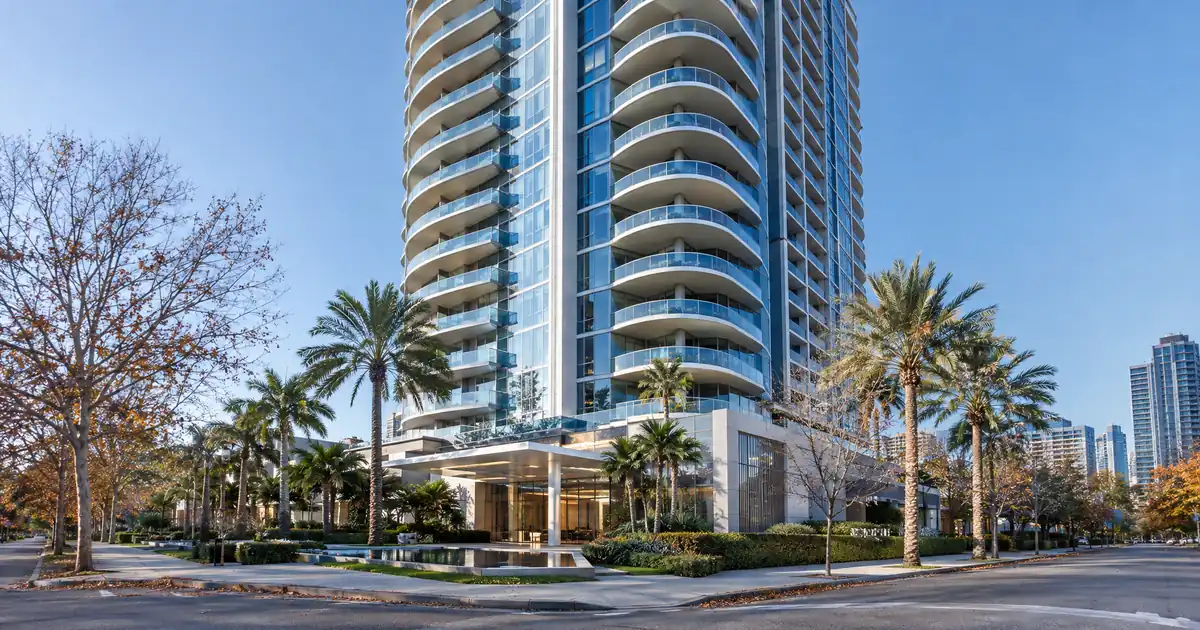
The Quick Read: Closing starts with the building, not the borrower. Lenders review the project first: who controls rentals, how healthy the association’s finances are, and whether litigation is open. Then they review the buyer’s income and assets. Through select wholesale programs, subject to full underwriting, non-warrantable condos are financed on the network’s own condo ladder, and condotels sit on a tighter one.
- Non-warrantable is a financing label for the building. It does not mean the building is bad.
- A condotel is always non-warrantable. A non-warrantable condo is not always a condotel.
- Through select wholesale programs, non-warrantable condos reach 80% and condotels reach 75% on a purchase, subject to underwriting.
- Qualifying income can come from 12 or 24 months of bank statements, assets, or property cash flow, depending on the program.
- Order the project documents before you pay for an appraisal.
What “Non-Warrantable” Actually Means
The label comes from the secondary market. Fannie Mae’s Selling Guide section on ineligible projects lists projects it will not buy. The list includes hotel-style operations, split ownership, commercial and mixed-use allocation, and mandatory memberships. Its Condo Status Finder FAQ says it cannot finance projects that operate as hotels or manage short-term rentals, even when units are individually owned.
That is a map of what the agencies reject. It is not the rulebook for the loans discussed here. A wholesale lender sets its own overlays, and those overlays decide the file.
Luxury towers trip these triggers often. They carry developer-held unsold units, heavy investor and pied-à-terre ownership, retail or hotel floors, and sometimes defect litigation. A higher price does not exempt a tower from reserve, litigation, or maintenance review.
Key Terms Defined
Non-warrantable condo: a condo project that fails the secondary market’s eligibility tests, so conventional takeout is off the table.
Condotel: a condo unit in a building run like a hotel, usually with a front desk, housekeeping, and an operator or rental pool.
Rental pool: an arrangement where an operator rents units together and splits the revenue with owners.
HOA questionnaire: the lender’s form on reserves, delinquencies, litigation, and ownership concentration, completed by the association.
Condo certification: the lender’s finding that the project meets its overlays, separate from the buyer’s qualification.
PITIA: principal, interest, taxes, insurance, and association dues, the monthly obligation in the coverage ratio.
Condo or Condotel: Classify the Building First
The first question is who controls rental decisions. In a non-warrantable condo, the owner decides. In a condotel, an operator or pool decides. Look for a front desk, housekeeping, a mandatory management agreement, owner-use limits, and hotel branding. Any of these points toward condotel treatment.
| Factor | Non-warrantable condo | Condotel |
|---|---|---|
| Rental control | Owner | Operator or pool |
| Purchase LTV ceiling | 80% | 75% |
| Cash-out ceiling | Per ladder | 65% (50% on bank program) |
| Rent basis | Lease or market rent | Owner’s net share |
| Mandatory pool | Rare | Common, hardest case |
Those ceilings come through select wholesale programs, subject to full underwriting. On any loan above $4,000,000, leverage is reviewed case by case before submission. Treat every figure at that size as a starting point, not an offer.
The Closing Roadmap, Step by Step
Here is how a clean file moves, and who owns each piece.
1. Pre-screen the building before you offer. Ask the agent for the HOA questionnaire, current budget, reserve study, master insurance certificate, litigation disclosure, delinquency data, CC&Rs, and any rental or management agreement. The buyer or agent requests these. The association produces them.
2. Confirm the rental rules match your plan. A lender will not fund a use the governing documents prohibit. A minimum rental term buried in the CC&Rs can kill a short-term plan. Whether a later amendment binds you varies by state and by the documents, so that is an attorney question.
3. Choose the qualification path. Self-employed buyers with high deposits often qualify on 12 or 24 months of bank statements after an expense ratio. Asset-heavy buyers can use the asset allowance or assets-only paths. Investors can qualify primarily on property-level rental income covering the payment, subject to lender guidelines.
4. Set the rent basis. Use a lease or market rent for long-term use. For a pool or short-term plan, use trailing operator statements. On a condotel, the owner usually receives only a share of gross revenue. Qualifying on gross room revenue overstates coverage. The numerator should be the owner’s net.
5. Order the appraisal. A unit is appraised on the condo form. The single-family rent schedule and small-income forms are built for monthly leases, so they fit nightly income poorly. Expect extra support for a condotel.
6. Run the coverage number. Divide rent used for lender review by PITIA. Luxury-tower dues can swing the ratio hard, so get the dues figure early. Watch for special assessments and recent dues increases. Some select lenders in the network will review coverage below 1.00, but leverage and terms adjust when they do.
7. Clear the condo certification and title. Underwriting reviews the questionnaire, reserves, litigation, and insurance. Then it reviews the borrower. Settlement reconciliation happens last.
How Underwriting Ranks the Problems
Underwriters do not weigh every flag equally. In rough order of severity:
1. Hotel-style controls and a mandatory rental pool.
2. Association finances: reserves, delinquencies, special assessments.
3. Litigation, especially structural or safety claims.
4. Developer-unsold concentration and presale status.
5. HOA rules on the rental term you plan to use.
6. Unit-level rent coverage.
Notice that unit-level rent comes last. Strong income does not fix a collateral problem. The two are underwritten separately. A buyer with deep deposits and a clean credit file still stalls when the project fails certification.
Litigation deserves its own note. The Urban Institute notes that defect-litigation claims are common on new buildings, and that while a case is open it is virtually impossible to sell or finance new units there. Read the litigation disclosure before the appraisal, not after.
Financing Paths and What the Numbers Look Like
Across the wholesale network, two programs carry high-balance files. A portfolio non-QM bank-statement program carries files from $300,000 to $6,000,000. A bank portfolio jumbo program carries twelve-month-statement files to $30,000,000 on its own ladder. Its ceilings are 65% to $5,000,000, 60% to $10,000,000, and 55% to $30,000,000, with interest-only at 60% or the band’s ceiling, whichever is lower.
Leverage steps down with size and depends on occupancy. Take each figure from the occupancy’s own ladder:
| Occupancy and band | Purchase ceiling | Credit for this leverage |
|---|---|---|
| Primary, to $1M | 90% | 680+ |
| Primary, $2M-$2.5M | 80% | 720+ |
| Second home, $2M-$2.5M | 80% | 720+ |
| Investment, $2M-$2.5M | 80% | 720+ |
| Investment, $3M-$3.5M | 60% (bank portfolio program) | 680+ |
These are ceilings through select wholesale programs, subject to full underwriting. The credit figure is what that band’s top leverage needs. It is not a floor. The program floors are 660 on the portfolio program, 680 on the bank program, and 700 above the super-jumbo line. A lower score takes a lower-leverage cell in the same band.
Above $3,500,000 on a primary residence, and $3,000,000 on a second home or investment property, extra overlays apply. They include a 700 credit floor, 0x30x24 housing history, and no rural property. Above $4,000,000, everything is reviewed case by case before submission.
Other file mechanics:
- Debt-to-income runs up to 50%.
- Reserves are 3 months to $500,000, 6 months to $1,500,000, and 9 months above that. Each additional financed property adds 2 months, to a 12-month maximum.
- First-time investors carry 12 months.
- Cash cannot be pulled out to satisfy reserves on super-jumbo files.
For the full program picture, see Lendmire’s complete DSCR loans guide.
Where the General Rule Breaks
Mandatory rental pools. This is the hardest case. Agency guidance treats hotel-operated projects as ineligible. Even in the non-QM lane, programs often refuse mandatory pools, timeshares, fractional ownership, and true hotel rooms without kitchens. A few lenders in the network will look at a pooled condotel, with tighter leverage and more support. Many will not. Pool structures can also raise securities-law and shortfall-assessment questions, so ask an attorney before signing a pool agreement.
Pre-construction or newly delivered towers. Closing depends on the certificate of occupancy and the developer’s remaining inventory. Large unsold inventory narrows the lender pool, and a developer who stops paying common charges can damage association finances. Buyers who put down construction deposits carry completion risk too. The WLOS report on a failed luxury condo project describes a judge ruling that buyer deposits could fund construction, and buyers could not block the sale to the construction lender. That is one project, not a rule. Still, it shows why deposit protection belongs in contract talks.
Branded mixed-use towers. A tower that stacks residences, hotel suites, and retail can fail several tests at once. Propmodo’s coverage of One Beverly Hills describes that mix, with buyer-funded bonds that rank behind senior debt. Check the structure before assuming a price tag buys normal condo treatment.
Warrantability can change. A building can regain eligibility once reserves rise, delinquencies fall, litigation resolves, or insurance is restored. That matters for your exit plan.
Where Most Files Stall
Most delays are not credit problems. They are paperwork gaps.
The association is slow on the questionnaire, or answers it incompletely. The master insurance certificate is stale. The reserve study is missing. The buyer plans nightly rentals while the CC&Rs set a minimum term. Condotel income is documented gross, not owner-net. Dues were quoted early and then rose.
Build the contract around those risks. Set the financing contingency deadline with the questionnaire in mind, and write in what happens if the association is late. Ask for deposit protection language on any pre-construction purchase. If a lender declines mid-process, the project is usually the reason, so a pre-screen of the building beats a second lender search.
One pattern from high-balance files: borrowers lead with the unit and the rent, and underwriting leads with the project. Reverse that order and the deal works cleaner.
Three Scenarios
Primary-residence buyer in a mixed-use tower. A founder with strong deposits and uneven traditional personal-income documentation buys a residence above a hotel floor. The file is reviewed on twelve months of business statements after an expense ratio, and transfers from the business count in full. The project review decides whether the building is treated as a non-warrantable condo or something harder. Leverage comes from the primary-residence ladder for the loan size, and above $4,000,000 it is case by case.
Investor in a condotel. An investor plans to keep the unit in the operator’s program. The owner’s net share of revenue is the rent figure, not gross room revenue. Purchase leverage tops out at 75% through select programs, and cash-out at 65%, or 50% on the bank program. If the pool is mandatory, the lender pool narrows sharply. Final terms depend on the lender’s guidelines, the property type, and the borrower’s complete credit picture.
Cash first, refinance later. A buyer closes with cash and plans to finance after. That can work, but a later lender will review the same project, and warrantability can shift in between. Treat the refinance as an application, not an assumption. Lendmire’s piece Can a Luxury Condo Tower Owner Cash Out a Condotel on a DSCR Loan? covers that exit in detail.
Exit Planning Before You Sign
Non-warrantable condos can be harder to sell, and may need price concessions, because buyers have fewer financing options, per Enact’s explanation of non-warrantable condos. In a tower where most buyers pay cash, that matters less at resale. It matters a lot at your next financing. Agency tightening also shrinks the pool of buildings eligible for conventional takeout, which pushes more buildings into the non-QM lane.
Short-term rental rules can vary by city, county, HOA, and property type, so investors should confirm local rules before relying on projected rental income.
Frequently Asked Questions
Can I get a conventional loan on a luxury tower unit?
Only if the project meets agency eligibility, and hotel-style, pooled, or heavily investor-owned towers usually do not. Through select wholesale programs, a non-warrantable condo can be financed on a purchase at up to 80% on its own ladder, subject to full underwriting.
Is a non-warrantable tower a bad investment?
Not by definition. The label describes financing eligibility. What matters is whether the issue is paperwork, like a late questionnaire, or structural, like open safety litigation. Paperwork issues can clear. Structural ones often cannot.
How do I know before making an offer?
Request the HOA questionnaire, budget, reserve study, insurance certificate, litigation disclosure, and rental documents first. Those show hotel controls, reserve health, and rental restrictions before you spend on an appraisal.
Can I buy with cash and refinance later?
Sometimes, but it is not assured. A later lender reviews the same project under its own overlays, and the building’s status may change. On the network’s bank program, condotel cash-out tops out at 50%.
Does strong income override a bad building?
No. Income and collateral are underwritten separately. A strong bank-statement file does not cure a project that fails certification.
If you are financing a high-balance property on business or personal bank statements and want to see how the numbers work, Lendmire can help you compare super jumbo bank statement loan options based on your deposits, the property, credit profile, leverage, and your goals. Nothing here is a commitment to lend. Tax treatment varies; consult a qualified professional.
Lendmire’s self-employed mortgages page presents both super jumbo programs, bank statement and DSCR, side by side.
About Lendmire
Lendmire — NMLS# 2371349 — is a mortgage broker that arranges bank statement, P&L-only, 1099-only and asset-based home financing in 16 states through wholesale lenders, on primary residences, second homes and investment properties. Every option is subject to the lender’s guidelines and full underwriting. Scotsman Guide named Lendmire a Top Mortgage Workplace in both 2025 and 2026.
Get Started
Ready to find the right loan for you?
In about 30 seconds you can review financing options available for your home or investment property. No commitment required.
Informational only. Not a Loan Estimate, approval, or commitment to lend. Program availability and eligibility are subject to lender guidelines, credit approval, property review, and underwriting.
References
1. Fannie Mae Selling Guide B4-2.1-03
2. Fannie Mae Condo Status Finder FAQ
4. WLOS
5. Propmodo
6. Enact
This article is part of Lendmire’s super jumbo bank statement loan program — full qualification details, guidelines, and scenarios live on the program page.
Related reading: Can You Use Bank Statements to Buy a Super Jumbo Condotel? · How Much Down Payment Does a High-Rise Condo With a Bank Statement Loan Need? · How to Meet Super Jumbo Takeout Requirements for a Retiree After an SBLOC
Brandon Miller
Founder & CEO, Mortgage Loan Originator, Lendmire LLC
- Mortgage Loan Originator · NMLS# 1129696 · Verify on NMLS Consumer Access
- North Carolina Real Estate Broker · License# 343312 · Verify on NCREC
- North Carolina Insurance Producer · License# 19053198 · Property, Casualty, Life, Health · Verify on NAIC SBS
- Lendmire LLC · Firm NMLS# 2371349 · Verify firm licensure
Important disclosures. Lendmire (NMLS# 2371349) is a licensed mortgage brokerage. Lendmire is not a direct lender, depository institution, or financial advisor. All loan inquiries are subject to lender underwriting; this article does not constitute a commitment to lend. Rates, terms, and program guidelines are subject to change without notice and vary by borrower profile, property type, and state. Information in this article is general in nature and is not financial, legal, or tax advice. Equal Housing Opportunity. NMLS Consumer Access: nmlsconsumeraccess.org.