
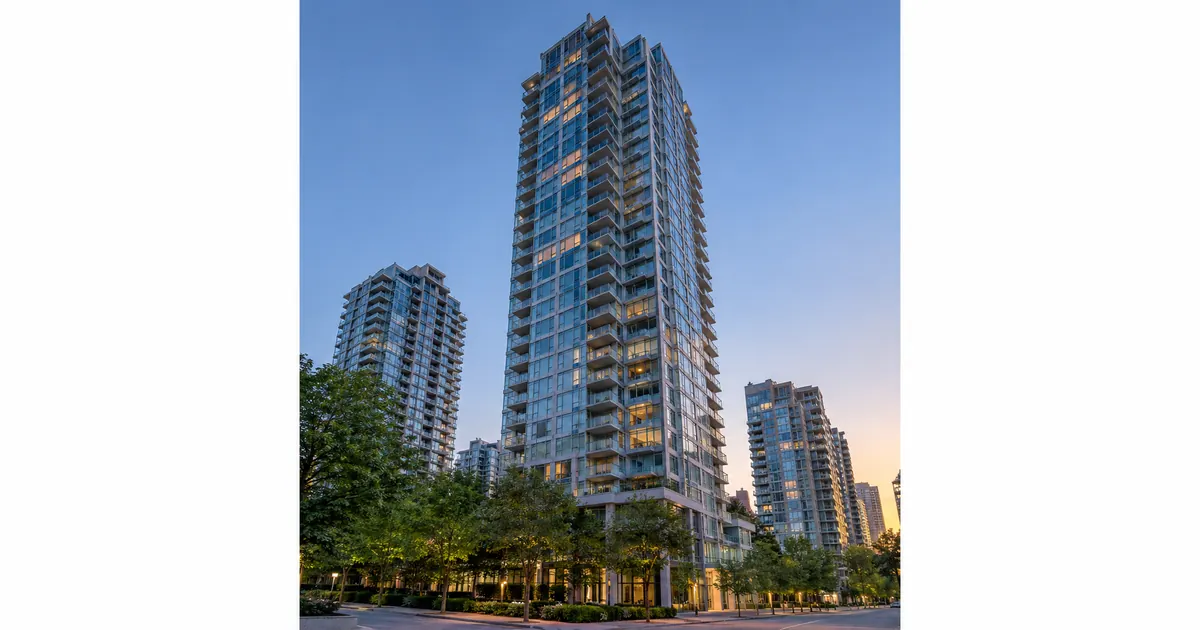
The Quick Read: A non-warrantable tower is a building that fails agency-style condo rules, so the lender reviews it on its own terms instead. Financing usually comes through DSCR, bank-statement, or bank portfolio programs, all of which size the loan to the building, the unit, and the borrower. The label describes the building’s paperwork. It says nothing about whether your unit rents well.
- The building gets reviewed, not skipped. Only the agency checklist drops away.
- HOA dues sit inside the DSCR calculation, so a tower with heavy dues or a pending assessment can sink a strong rent.
- Leverage on a non-warrantable condo typically tops out at 80%, through select wholesale programs, subject to full underwriting.
- Owning several units in one tower can create the problem you are trying to finance around.
- Entity vesting rules differ by program. Ask before you sign the contract, not after.
What Does Non-Warrantable Mean for a Tower?
It means the building, not the borrower, fails the checklist that agency-style lenders use before buying a loan. Enact, a private mortgage insurer, defines a non-warrantable condo as one that doesn’t meet eligibility requirements for delivery to the big secondary-market buyers. It adds that these condos can be harder to sell, or sell at a discount, because fewer buyers can finance them.
Think of it as a building-level label. Two identical units on different floors of the same tower carry the same status. A pristine unit in a troubled building is still non-warrantable.
That matters for LLC portfolio investors in two ways. First, agency financing is off the table, so you go to non-QM lenders (lenders that write loans outside standard government-style guidelines). Second, resale gets harder. Your exit buyer faces the same financing wall you did.
Across the wholesale network Lendmire works with, the pattern is consistent. Lenders in this space set their own building rules. Some tolerate problems others refuse. That spread is the reason a broker who shops several programs earns the fee.
How Underwriting Actually Treats a Tower, Step by Step
Underwriting a tower runs in a fixed order: why the building fails, what the documents show, whether the unit’s cash flow covers the full obligation, and how the borrower and entity hold title. Each step can end the file. Here is the sequence.
Step 1: Find the reason the building fails. The lender wants the specific trigger before anything else. Common ones are heavy investor ownership, excess commercial space, litigation, thin reserves, delinquent dues, critical repairs, and hotel-style operations. The reason decides everything downstream.
Step 2: Pull the project documents. Expect the condo questionnaire, the budget, financial statements, the master insurance certificate, and any engineer or inspection reports. The standard condo questionnaire asks about developer control, ownership concentration, delinquencies, litigation, commercial space, insurance, deferred maintenance, and reserves. Many lenders use their own form instead.
Step 3: Underwrite the unit’s cash flow. Here DSCR (debt service coverage ratio) comes in. It is monthly rent divided by the full monthly housing obligation: principal, interest, taxes, insurance, and association dues. The lender qualifies primarily on property-level rental income covering the payment, subject to lender guidelines.
Step 4: Review the borrower and the title. An LLC typically takes title on a DSCR file, with the principals signing a personal guarantee, subject to lender program eligibility. A bank-statement file is different. It qualifies the person through deposits, so the entity question needs an early answer.
Step 5: Size the loan. Non-warrantable status caps leverage below a standard rental. The next sections cover the numbers.
Which Building Problems Are Workable and Which Are Not
Some building problems are timing or paperwork issues that a non-agency lender can work through. Others, like developer control or active construction, are harder stops almost everywhere. Treat the table as a pattern from broker experience, not a promise. Every lender draws its own lines.
| Trigger | Why it matters | Usual treatment off-agency |
|---|---|---|
| Investor concentration | Too many rentals in the building | Often workable |
| Unmet presale levels | New-build sales incomplete | Often workable |
| Commercial space | Retail or office on lower floors | Depends on share |
| Litigation | Suit against HOA or developer | Safety suits are harder |
| Critical repairs | Large assessments likely | Hits DSCR and reserves |
| Developer control | Builder still runs the HOA | Frequent hard stop |
| Hotel-style operation | Front desk, rental pool | Often restricted |
The agency side of this is well documented, and it works as a reference point. Fannie Mae‘s Selling Guide lists ineligible project characteristics, including hotel or motel operations, litigation naming the HOA or developer, and non-incidental business income. Its condo FAQ adds that a project failing mandatory structural-safety inspections is ineligible, and that lenders decide which documents they need.
Those are agency rules, and DSCR loans are not agency products. Use them as a map of what lenders worry about, not as the rules of your file.
Litigation deserves a closer look. A routine dispute is one thing. Construction-defect or safety litigation is another. The second kind makes for a much harder file.
Structural-safety laws are the newest pressure point. Some states, Florida being the best known, now require milestone inspections and structural reserve studies on older multistory buildings. The assessments that follow can be large. Other states have their own regimes, and the lesson is national: ask for the engineer’s report before you ask for the price.
Your Financing Paths for a Non-Warrantable High-Rise Unit
Four paths exist: DSCR, bank-statement non-QM, bank portfolio jumbo, and short-term bridge money. Which one fits depends on whether the property or the borrower carries the file. The portfolio program is a non-QM bank-statement program carrying files to $6,000,000.
| Path | Best for | Income evaluated | Trade-off |
|---|---|---|---|
| DSCR | Rent-heavy portfolios | Property rent vs. obligation | Dues hit the ratio |
| Portfolio program | Founders, physicians | 12-24 months of deposits | Personal underwriting |
| Bank program | Large balances | 12 months of statements | Case-by-case at size |
| Bridge / hard money | Buildings mid-fix | Exit plan, equity | Short runway |
The DSCR path is the natural fit for LLC investors, because it looks at the unit’s rent instead of your traditional personal-income documentation. Programs below a 1.00 coverage ratio are available through select lenders in the network, though leverage and terms adjust to match. The standard benchmark for most files is higher.
The bank-statement paths suit high-net-worth borrowers whose returns understate income. Both use 12 or 24 months of personal or business statements, and the bank program uses 12. Business statements need at least 25% ownership. Qualifying income is eligible deposits divided by the statement months, after an expense ratio. Transfers from your own business into your personal account count at 100%, through select wholesale programs, subject to full underwriting.
Bridge money fits a narrow case. If a building is one fix away from clearing review, a short-term loan can hold the unit while the association cures the problem. Then you refinance. It works only when the cure is real and dated.
How an LLC Fits These Loans
LLC ownership works smoothly on DSCR files and unevenly on personal bank-statement files. The reason is simple: DSCR qualifies the property, while bank-statement programs qualify you. Vesting rules are program-specific, so get the answer in writing before contract.
On DSCR files, the LLC typically holds title and carries the insurance. A personal guarantee from the principals usually coexists with it, subject to program terms. The entity limits liability to outsiders. The guarantee tells the lender a person stands behind the loan. Both are normal.
On bank-statement files, income comes from your accounts. Some programs want the borrower to be you, with title questions handled at or after closing. Others accommodate entities. Because programs differ on this point, ask first. Lendmire’s piece How Trust vs LLC Vesting Affects Non-Recourse DSCR Portfolio Eligibility goes deeper on that choice.
Now the portfolio angle, which is the real tower problem. Many agency-style rules treat related owners as one. Per a summary of the agency’s single-entity test, no single entity may own more than 20% of units in larger projects, or more than 2 units in smaller ones. An investor holding several units through related LLCs can make a building non-warrantable, or keep it that way.
That is an agency test, not a DSCR rule. Whether a given DSCR program caps your unit count in one building is a program question. Some lenders do. Ask before you stack a third unit in the same tower.
One practitioner pattern: keep one LLC per property when you can, with separate bank accounts and clean records. A later lender judges your file by how tidy the earlier ones look.
How DSCR Math Works on a Tower Unit
DSCR math on a tower is rent divided by the full obligation, with HOA dues inside the denominator. That is why an apparently strong rent can fail. Here is an illustration with modeled ratios, not market data.
Picture two similar units. Both rent for the same amount. Unit A sits in a building with modest dues and clears roughly 1.3x. Unit B sits in a building with heavy dues from amenities and a reserve catch-up. Its coverage lands near 1.05x on identical rent. Same borrower, same LLC, same leverage, very different file.
Now add a special assessment. If the assessment is approved and being paid in installments, a lender may fold it into the obligation or treat it as a reserve question. If it is announced but unapproved, the lender may ask whether the building needs critical repairs. Either way, the ratio moves.
If a unit lands below 1.00 on long-term rent alone, options exist. A sub-1.00 program through select lenders in the network is one, usually with lower leverage and adjusted terms. Blended short-term rental income is another, if the building allows it. Qualification stays subject to lender guidelines, credit approval, and property review.
Tower files often come in with strong rent and a quietly large dues line. The stronger submissions put the dues and any assessment letters in front of the lender on day one. Surprises, not low rent, are what stall them.
What Leverage and Size Look Like
Non-warrantable condos typically carry a leverage ceiling of 80%, and the loan-size ladder can set a lower cell. Everything below applies through select wholesale programs, subject to full underwriting.
On an investment property purchase, the ladder runs roughly like this. From $1,000,000 to $2,500,000, the ceiling is 80%. From $2,500,000 to $3,000,000, it is 75%. From $3,000,000 to $4,000,000, the bank program’s cell is 60%. Above $4,000,000, every file is reviewed case by case before submission. Cash-out sits a few points under purchase in each band. The ladder’s cell, not the condo cap, governs whenever it is lower.
Condotels take their own limits: 75% on a purchase, 65% on a cash-out, and 50% on the bank program. They sit in a tighter bucket than ordinary tower condos, because the hotel-style operation adds its own review on top of the building’s status.
Credit works by the leverage you want. The portfolio program’s floor is 660, the bank program’s is 680, and 700 applies above the super-jumbo line. Debt-to-income runs to 50%. Higher-leverage cells ask for more. A lower score takes a lower cell in the same band.
Above $3,000,000 on investment property, super-jumbo overlays apply: a 700 credit floor, a 0x30x24 housing history, 48-month seasoning on any credit event, and U.S. citizen or permanent resident status. Cash-out proceeds cannot satisfy reserves at that size. For a related look at big-balance tower units, see Lendmire’s piece Can a Tower Condo Buyer Use a Super Jumbo DSCR on a Non-Warrantable Unit?.
Scaling a Portfolio: Reserves, Concentration, Repeat Borrowers
Reserves are the portfolio tax that most investors underbudget. On the bank-statement path, reserves run 3 months up to $500,000, 6 months up to $1,500,000, and 9 months above. Add 2 months per additional financed property, to a 12-month maximum. First-time investors carry 12 months. Those are typical ranges, not promises.
Concentration is the quieter risk. Three units in one tower is one building risk, three times. A special assessment hits all three. A litigation headline hits all three. When the building’s status changes, your exit buyers all face the same wall.
Spreading across buildings helps. So does tracking each building’s status at every purchase and refinance. Status moves. A lender can reclassify a building after a new project review if the association raises reserves, cuts delinquencies, settles litigation, or restores insurance.
Repeat borrowers earn credibility. Clean payment history, tidy entities, and organized records make later files easier. That is a pattern across wholesale lenders, not a guarantee.
Rental-Use Traps in the HOA Documents
Warrantable does not mean rentable. A building can clear every financing test and still cap rentals, set minimum lease terms, or ban short-term stays. Permission comes from the HOA documents, not the label.
Read them before contract for four things: rental caps, minimum lease length, short-term rental language, and any rental-pool or hotel-style operator arrangement. A condotel with a mandatory operator fails the control test most lenders apply. Can you list, rent, and manage the unit yourself? If not, expect restrictions.
Short-term rental rules can vary by city, county, HOA, and property type, so investors should confirm local rules before relying on projected rental income.
Pre-Contract Checklist and Walk-Away Points
Run this list before you sign:
- Ask the association why the building is non-warrantable, in writing.
- Request the questionnaire, budget, financials, master insurance certificate, and any engineer report.
- Check for approved or announced assessments.
- Confirm the share of units owned by one entity, yours included.
- Read the rental language.
- Ask your broker whether the building has been through review with the lender you are considering.
Walk away if the builder still controls the association, if construction is active, if safety litigation is pending, or if the association will not share documents. Those are the files that stall. If the building’s status changes mid-escrow, stop and re-underwrite before closing. Surprises that surface late rarely get cheaper.
Exit and Refinance Planning
Plan your exit before you buy. The buyer pool for a non-warrantable unit is smaller, so price accordingly. Three exits exist: sell to a cash or non-QM buyer, hold until the building becomes warrantable, or refinance into a permanent program.
Rechecking agency eligibility belongs on your calendar. Rules and buildings both change, so review the current guide and the building’s latest financials before relying on an old answer. If a bridge loan is in the picture, set the cure date first.
For deeper background on structuring investor financing, the complete DSCR loans guide walks through how the program works.
Which Path Fits You?
- Rent-heavy portfolio, LLC titled: DSCR, with the building review done first.
- High income that traditional personal-income documentation understates: a bank-statement path, with entity rules confirmed up front.
- Large balance above $4,000,000: expect case-by-case review on any program.
- Building one fix from clearing: short-term bridge, only with a dated cure.
- Already own units in the tower: check concentration before adding another.
Key Terms Defined
Non-warrantable: A building that fails agency-style condo eligibility. It describes the project, not the unit or borrower.
DSCR: Monthly rent divided by the full monthly housing obligation, including association dues.
Non-QM: A loan written outside standard agency guidelines, with the lender setting its own rules.
Personal guarantee: A signed promise by an individual to stand behind a loan taken in an LLC’s name.
Condotel: A condo building run like a hotel, usually with a rental pool or required operator.
Special assessment: A one-time charge to owners for major building costs.
Next Step
If you are financing a high-balance property on business or personal bank statements and want to see how the numbers work, Lendmire can help you compare super jumbo bank statement loan options based on your deposits, the property, credit profile, leverage, and your goals.
This article is general information, not legal or tax advice, and nothing here is a commitment to lend. Tax treatment varies, and building and entity questions depend on your facts, so consult a qualified attorney or CPA about your own situation.
Frequently Asked Questions
Does non-warrantable mean I can’t get a loan on the unit?
No. It means agency-style lenders won’t buy the loan. Non-QM, DSCR, and bank portfolio programs review the building themselves. Approval stays subject to lender guidelines, credit review, and the property’s own file.
Can an LLC buy a non-warrantable tower unit?
Often, on DSCR files, subject to lender program eligibility. Bank-statement programs qualify you personally, so entity rules vary. A personal guarantee usually sits alongside the LLC. Confirm vesting before contract.
How many units can I own in one tower?
That is a program question. Agency-style tests count related owners as one entity, and larger buildings limit one entity’s share. Some DSCR lenders cap unit counts, others don’t. Ask before adding units.
Do HOA dues really change the DSCR?
Yes. Dues sit in the denominator with principal, interest, taxes, and insurance. In a tower, a high dues line or an assessment can drop coverage by a wide margin even when rent is strong.
Can a building become warrantable later?
Yes. A lender can reclassify it after a fresh project review once the association fixes the failing items, such as reserves, delinquencies, litigation, or insurance. Recheck status at every purchase and refinance.
Lendmire’s self-employed mortgages page presents both super jumbo programs, bank statement and DSCR, side by side.
About Lendmire
Lendmire (NMLS# 2371349) is a mortgage broker that arranges bank statement, P&L-only, 1099-only and asset-based home financing in 16 states through wholesale lenders, on primary residences, second homes and investment properties. Every option is subject to the lender’s guidelines and full underwriting. Scotsman Guide named Lendmire a Top Mortgage Workplace in both 2025 and 2026.
Get Started
Ready to find the right loan for you?
In about 30 seconds you can review financing options available for your home or investment property. No commitment required.
Informational only. Not a Loan Estimate, approval, or commitment to lend. Program availability and eligibility are subject to lender guidelines, credit approval, property review, and underwriting.
References
1. Fannie Mae Capital Markets – LL-2026-03 announcement
This article is part of Lendmire’s super jumbo bank statement loan program — full qualification details, guidelines, and scenarios live on the program page.
Related reading: How Low Appraisal Options Work for a Non-Warrantable Super Jumbo Condo · How Much Down Payment Does a Non-Warrantable Condo Need on a Bank Statement Loan? · How to Vest a Super Jumbo Bank Statement Loan in a Trust or LLC
Brandon Miller
Founder & CEO, Mortgage Loan Originator, Lendmire LLC
- Mortgage Loan Originator · NMLS# 1129696 · Verify on NMLS Consumer Access
- North Carolina Real Estate Broker · License# 343312 · Verify on NCREC
- North Carolina Insurance Producer · License# 19053198 · Property, Casualty, Life, Health · Verify on NAIC SBS
- Lendmire LLC · Firm NMLS# 2371349 · Verify firm licensure
Disclosures. The information presented in this article is general market commentary, not financial, legal, or tax advice. Lendmire is a mortgage brokerage (NMLS# 2371349) — not a direct lender or depository institution — and loan placement is subject to lender underwriting. Nothing in this content represents a commitment to lend. Loan terms, pricing, and program availability vary based on borrower qualifications, property characteristics, and state of subject property, and are subject to change at any time. Lendmire complies with Equal Housing Opportunity requirements. Consumer access: nmlsconsumeraccess.org.