
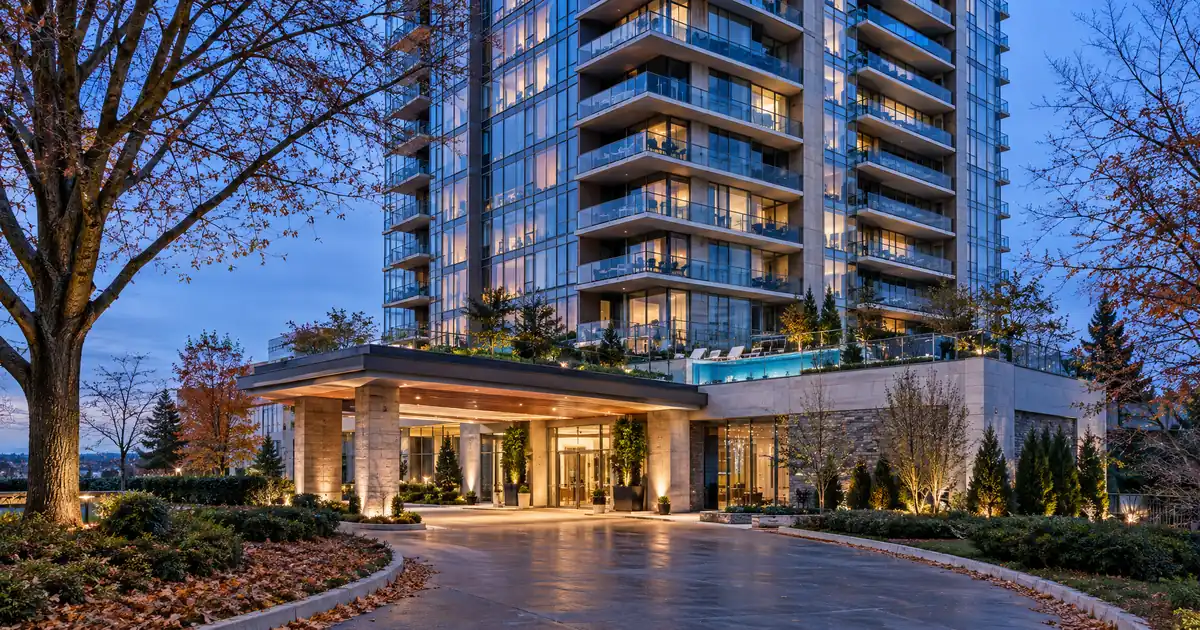
The Quick Read: Yes, a tower condo buyer can use a super jumbo DSCR loan on a non-warrantable unit, but only inside a capped lane: through select wholesale programs, non-warrantable condos are typically eligible to 75% LTV and a $1,500,000 loan amount, subject to underwriting, so the building type sets the ceiling before the loan-size ladder matters. LTV means loan-to-value, the loan as a percentage of the property’s value. The unit’s rent still has to cover the full monthly obligation, including the association dues.
- The label describes the building and its association. It does not describe you or the unit.
- Once a unit’s price passes roughly $2,000,000, the dollar cap binds before the percentage does, and you fund the gap in cash.
- Tower HOA dues sit inside the payment and can pull coverage down fast.
- Condotel-style towers get tighter treatment than ordinary non-warrantable buildings. These specifics are subject to lender guidelines and a full review of property, leverage, and credit.
Key Terms Defined
DSCR stands for debt service coverage ratio. It is the property’s qualifying monthly rent divided by the full monthly housing obligation: principal, interest, taxes, insurance, and association dues.
Non-warrantable condo is a building that does not meet the project standards set by the two largest conventional mortgage buyers. It is a financing label, not a defect in the unit. A DSCR loan on such a unit qualifies primarily on property-level rental income covering the payment, subject to lender guidelines.
Super jumbo is a trade label for very large loan balances. No regulator defines it.
PITIA is principal, interest, taxes, insurance, and association dues. It is the denominator in the coverage math.
Reserves are liquid funds you hold after closing, counted in months of PITIA on the subject property.
Condotel is a building run partly like a hotel, with nightly rentals, front-desk services, or an operator controlling occupancy.
DSCR Calculator
Run the numbers in your market
Rate source: Freddie Mac 30-yr average via FRED® — Federal Reserve Bank of St. Louis · effective Oct 15, 2026
Prefilled with starting assumptions — enter your own rent or nightly figures, taxes, insurance, and HOA for a more accurate picture.
Program parameters update from Lendmire’s centralized guideline source. Taxes and insurance are editable estimates.
As of Oct 15, 2026 · General Freddie Mac market benchmark, not a Lendmire loan offer. Rent, nightly rate, occupancy, taxes, and insurance are editable estimates. Short-term rental figures are estimates only and vary significantly by season, property type, management approach, and local short-term-rental rules — confirm local regulations before relying on them. Qualifying income for short-term rentals varies by program — some use appraisal market rent, others use documented STR history or projections — and is confirmed in underwriting. Not a Loan Estimate, approval, or commitment to lend. Program availability and eligibility are subject to lender guidelines, credit approval, property review, and underwriting.
Why Can DSCR Finance a Non-Warrantable Tower Unit at All?
DSCR loans are business-purpose investor loans, reviewed differently from a standard owner-occupied mortgage. They qualify primarily on property-level rental income covering the payment, subject to lender guidelines. The loans are also not sold into the agency pipeline, so the agency label is not the gate.
That is the whole mechanism. The “non-warrantable” tag means a building fails the standards for loans sold to the big mortgage buyers. A DSCR lender holds or places the loan elsewhere. It can look at the same building and make its own call.
The contrast helps. Personal-income jumbo loans from large retail lenders often decline non-warrantable buildings outright. Select DSCR programs accept them, with caps. Caps are the price of admission. They are not a wall.
Don’t read this as “the building doesn’t matter.” It matters a lot. Which brings up the review.
What Does the Lender Review in the Building?
The lender reviews the project, not just you. Expect to supply or obtain the HOA questionnaire, the annual budget, the reserve study, and the master insurance certificate. Most programs the Lendmire team places files with look hardest at underfunded reserves, recent dues increases, delinquent owners, and pending litigation.
Litigation deserves a pause. The HOA must disclose it on the questionnaire. Structural litigation can stop even a DSCR file, along with deed restrictions and mandatory rental pools. A clean questionnaire answer is not a formality.
Next, the building gets sorted into one of three buckets: warrantable, non-warrantable, or condotel. Each bucket has its own leverage ceiling. A tower with heavy nightly rental activity can land in the condotel bucket even if it looks like an ordinary condo from the street.
Then coverage gets calculated. Rent is divided by the full PITIA. At 1.00 or better, a file earns full leverage for its bucket. Coverage below 1.00 is a real path through select programs, but LTV and terms adjust, subject to underwriting.
Appraisal rent comes from the 1007 form, the single-family rent schedule. The 1025 form covers two-to-four-unit operating income, so it rarely matters for a single tower unit.
Where Do Super Jumbo and Non-Warrantable Collide?
They collide at the cap. The super jumbo ladder runs from $150,000 up to $10,000,000 on the portfolio investor program, while the standard DSCR program stops at $3,000,000. A non-warrantable unit never gets to use that ladder. The $1,500,000 loan cap binds first.
Here is the comparison. Every figure is a ceiling through select wholesale programs, subject to underwriting, at coverage of 1.00 or higher.
| Building type | Purchase LTV ceiling | Loan amount ceiling |
|---|---|---|
| Warrantable condo | 80% to $1M, 75% to $3M | Up to $3M standard; ladder beyond |
| Warrantable, $3M–$4M | 65% | $4M |
| Warrantable, $4M–$10M | 60%, on review only | $10M, on review |
| Non-warrantable condo | 75% | $1,500,000 |
| Condotel | 75% purchase, 65% refinance | $1,500,000 |
Above $4,000,000, every request is reviewed case by case before submission. Those figures are never a flat promise.
Think of it as two ceilings, with the lower one winning. The percentage cap and the dollar cap both apply. Divide $1,500,000 by 75% and you land at $2,000,000. Below that price, the percentage binds. Above it, the dollar cap binds, and every extra dollar of price comes out of your pocket.
Here is the investor decision. A buyer eyeing a tower unit priced at $2,000,000 or more is not looking at a “super jumbo DSCR” in the usual sense. The loan itself is mid-sized. The equity requirement is what feels super. If the numbers only work at higher leverage, the realistic options are a warrantable building, a different collateral type, or more cash. Lendmire’s piece Warrantable Condo Leverage on a Super Jumbo Bank Statement Loan shows the other side of that choice.
Tower-Specific Building Checklist
Towers carry risks that a garden-style condo does not. This table shows what lenders care about and what to ask before you go under contract.
| Issue | Why lenders care | Ask the HOA |
|---|---|---|
| Reserves | Underfunded reserves signal special assessments | Latest reserve study and funding % |
| Dues history | Recent hikes signal stress | Last three years of dues changes |
| Litigation | Structural cases can stop a file | Any pending or threatened suits |
| Rental rules | Bans or pools narrow lenders | Minimum stay, caps, mandatory pool |
| Commercial space | Podium retail or hotel use shifts class | Share of building used commercially |
| Master insurance | Gaps raise the project’s risk | Certificate and coverage limits |
Some of these items block only agency-sold loans. Others block DSCR too: structural litigation, restrictive deed terms, and mandatory rental pools. A high investor-owned share or a single owner holding many units is the kind of issue select DSCR programs tend to review at reduced leverage instead of declining.
One rule no loan structure fixes: if the HOA bans or sharply limits rentals, the unit may not work as an investment at all. Read the governing documents before you read the lender’s guidelines. Lendmire’s piece How to Build a Tower Condo Appraisal Package for Super Jumbo DSCR covers how to assemble the file once the building looks workable.
A Worked Example: Why the Dues Matter
Run the numbers on a hypothetical tower unit. These are modeled assumptions, not market data.
Say rent covers principal, interest, taxes, and insurance at roughly 1.20x. That looks healthy. Now add a tower-level association bill. Luxury towers charge for amenities, staffing, doormen, and garage upkeep, and dues roll into the denominator. With dues included, coverage might slide to about 1.00x or slightly below.
That is the squeeze. The unit “pencils” on paper but drops to the line once the association bill lands. If it falls below 1.00, select programs may still review it, but LTV and terms adjust, subject to underwriting. High-amenity towers are where this shows up most.
Three levers can help. Put more cash down to shrink the loan. Ask whether interest-only structuring applies (programs offer a 120-month interest-only period on 30- and 40-year terms, up to 75% LTV, subject to underwriting). Or pick a building with lighter dues. None is magic. All are worth running before you sign. Terms depend on the lender’s guidelines, the property type, the leverage, and a full review of the credit profile.
In files like this, the strongest ones usually lock in the HOA budget and dues schedule before the appraisal comes back. Dues are the one input that moves coverage without any change to rent or price.
Other Underwriting Pieces That Apply
Reserves. Programs typically require six months of PITIA on the subject property, or twelve for first-time investors. Cash-out proceeds can’t count toward reserves.
Appraisals. Two appraisals are required above $2,000,000 in loan amount. Because a non-warrantable unit tops out at $1,500,000, you will rarely hit that rule on this collateral. Warrantable towers at higher balances will.
Credit. The program floor is 660. Above $3,000,000 the super jumbo overlay raises it to 700. A non-warrantable unit never reaches that tier. Credit for the top leverage in each band can run higher than the floor.
Entity. An LLC or trust can hold title, subject to lender program eligibility, with no layered entities. The entity question is separate from the building question. Neither one disqualifies a file by itself.
Business purpose. Everything here assumes an investment property, not a home you will live in.
DSCR vs. conventional financing
There are two common ways to finance an investment property, and they qualify you differently — here’s how investors weigh them.
Why investors choose it
- Qualifies on the property’s rental income — no personal tax returns, W-2s, or pay stubs needed to document income.
- No personal debt-to-income ceiling to clear, so existing mortgages and obligations don’t cap your borrowing the same way.
- Can be closed in an LLC, keeping the property inside a business entity.
- Built for scaling — not held to the limit on number of financed properties that conventional financing applies.
- Underwriting centers on the deal: generally qualifies when the rent covers the payment, a 1.00x coverage ratio being a common baseline (confirmed in underwriting).
- Designed specifically for investment property, including long-term and, where the program allows, short-term rentals.
Where it’s strong
- Often the lowest ongoing financing cost for a buyer who fully qualifies on personal income — a fit for a first property or a cost-first purchase.
Trade-offs for investors
- Requires full personal income documentation and must fit within a debt-to-income limit — salary, existing debts, and other mortgages all count.
- Typically held in your personal name rather than a business entity.
- Caps how many financed properties you can carry, which can become a ceiling as a portfolio grows.
- Evaluates you as a borrower as much as the property, which usually means more paperwork.
How investors usually choose: a first or single property often optimizes for the lowest financing cost; portfolio builders often optimize for leverage, vesting in an LLC, and scaling past conventional caps. The right answer depends on your goals, the property, and current guidelines — both paths run through select lenders in Lendmire’s wholesale network, with eligibility and terms confirmed in underwriting.
Scenario Matrix: Which Lane Are You In?
| Scenario | Typical read |
|---|---|
| Long-term rental, ordinary non-warrantable tower | Eligible to 75% and $1.5M, subject to underwriting |
| Tower with heavy nightly rental or operator control | Condotel lane, tighter terms |
| Short-term rental strategy | Coverage 1.00+, loans to $1.5M in a non-warrantable tower, documented operating history |
| Refinance of an owned unit | Lower leverage than purchase; condotel 65% |
| Held in an LLC or trust | Allowed, subject to program terms |
| Cash-out | Sits under the same ceiling, at lower LTV |
Short-term rental files qualify on documented operating history, counted at 80% of gross. They are for experienced investors. Short-term rental rules can vary by city, county, HOA, and property type, so investors should confirm local rules before relying on projected rental income. Permission to operate must be documented for the specific property.
On cash-out, how much a refinance releases on this collateral is its own question.
Can the Building’s Status Change?
Yes. A building can be reclassified. If the HOA settles litigation or rebuilds reserves, a new project review may bring it back to warrantable, per a vendor explainer on non-warrantable status. The reverse happens too.
The agency side has moved as well. A recent Fannie Mae lender letter updated project standards and insurance requirements, and a law firm client alert summarizes the changes. One industry summary from TENA reports that the 50% investment-property concentration limit was retired for established projects under full review on investor loans. Some towers that failed on investor concentration alone may now clear the agency test.
This is context only. It does not change DSCR mechanics. But it does mean a quote built around a “non-warrantable” label may deserve a second look at contract. Ask the lender to re-review the building before you assume the old classification holds.
What About Exit and Resale?
A non-warrantable building has a smaller pool of buyers and lenders. A future buyer may need the same kind of non-agency financing you used. That can slow a sale or thin out offers.
Refinance exits face the same filter. If the building stays non-warrantable, your next lender faces the same caps. Plan the hold with that in mind. Owners who expect to hold for cash flow worry about this less than owners who expect to flip.
When Is This the Wrong Tool?
| If this describes you | Consider instead |
|---|---|
| Price well above the $2M crossover, little cash | A warrantable building or lower-priced unit |
| Rent can’t cover dues-inclusive PITIA | Lower leverage, or a different property |
| HOA bans or restricts rentals | A different building |
| Strong personal income, building is warrantable | Full-documentation jumbo |
| Traditional personal-income documentation understates cash flow | Bank-statement financing |
Not every tower deserves a DSCR loan. Some deserve a pass. The honest answer is sometimes a different unit.
Pre-Offer Checklist
- Get the HOA questionnaire, budget, and reserve study before contract.
- Ask for pending or threatened litigation, in writing.
- Confirm rental rules: minimum stay, caps, pools, and any operator control.
- Ask what share of the building is commercial or hotel-style.
- Estimate coverage with dues inside the payment, not outside it.
- Decide how much cash you will put down if the price passes the crossover.
- Confirm six months of reserves (twelve if first-time) beyond closing funds.
- Re-check the building’s classification before you commit.
All figures here are typical ceilings from select programs in Lendmire’s wholesale network, not commitments to lend. Programs change, and every file is underwritten individually. For a wider view of how these loans fit together, see Lendmire’s complete DSCR loans guide.
Frequently Asked Questions
Does a rental ban end the deal?
Usually, yes. If the governing documents prohibit or sharply restrict renting, the unit may not function as an investment property. No loan structure fixes a rule written into the association’s documents. Check the documents before you pick a lender.
Can a first-time investor do this?
Often, yes, with a larger cushion. Programs typically require twelve months of reserves on the subject property for first-time investors, versus six otherwise. Leverage and terms are subject to underwriting. Cash-out proceeds can’t count toward those reserves.
Is a condotel different from an ordinary non-warrantable tower?
Yes. Condotels get tighter treatment: 75% on a purchase and 65% on a refinance, a $1,500,000 cap, and $250,000 in cash in hand, subject to underwriting. A building with heavy nightly rental or an operator controlling occupancy can fall into this category.
Can I buy the unit in an LLC or trust?
Generally, yes, subject to program terms and with no layered entities. Neither one disqualifies a file on its own.
Do I need two appraisals?
Only above $2,000,000 in loan amount. Non-warrantable units top out at $1,500,000, so the rule seldom applies to them. It does apply to larger warrantable tower loans.
If you are buying or refinancing a high-balance rental property and want to see how the numbers work, Lendmire can help you compare super jumbo DSCR loan options based on the property income, the loan balance, credit profile, leverage, and investor goals.
Lendmire’s self-employed mortgages page presents both super jumbo programs, bank statement and DSCR, side by side.
About Lendmire
As a non-QM mortgage broker (NMLS# 2371349), Lendmire facilitates DSCR investor loans across 41 markets, including Washington, D.C. DSCR eligibility is generally reviewed around property-level rental income instead of personal income documentation, subject to lender guidelines, serving LLC-structured portfolios and self-employed borrowers who don’t fit conventional boxes. A two-time Scotsman Guide Top Mortgage Workplace (2025, 2026).
Get Started
Ready to find the right loan for you?
In about 30 seconds you can review financing options available for your investment property. No commitment required.
Informational only. Not a Loan Estimate, approval, or commitment to lend. Program availability and eligibility are subject to lender guidelines, credit approval, property review, and underwriting.
References
1. GoverningDocs explainer on non-warrantable condos
2. Fannie Mae lender letter on project standards and insurance requirements
3. Whiteford client alert on the Fannie Mae project standards update
4. TENA summary of the updated condo project standards
This article is part of Lendmire’s super jumbo DSCR loan program — full qualification details, guidelines, and scenarios live on the program page.
Related reading: Traditional Jumbo vs Super Jumbo DSCR for an Asset-Rich Retiree · 40-Year Fixed vs IO ARM on a Super Jumbo DSCR Loan · Full-Doc Jumbo vs Super Jumbo DSCR for a High-Value Rental Buyer
Brandon Miller
Founder & CEO, Mortgage Loan Originator, Lendmire LLC
- Mortgage Loan Originator · NMLS# 1129696 · Verify on NMLS Consumer Access
- North Carolina Real Estate Broker · License# 343312 · Verify on NCREC
- North Carolina Insurance Producer · License# 19053198 · Property, Casualty, Life, Health · Verify on NAIC SBS
- Lendmire LLC · Firm NMLS# 2371349 · Verify firm licensure
Disclosures. The information presented in this article is general market commentary, not financial, legal, or tax advice. Lendmire is a mortgage brokerage (NMLS# 2371349) — not a direct lender or depository institution — and loan placement is subject to lender underwriting. Nothing in this content represents a commitment to lend. Loan terms, pricing, and program availability vary based on borrower qualifications, property characteristics, and state of subject property, and are subject to change at any time. Lendmire complies with Equal Housing Opportunity requirements. Consumer access: nmlsconsumeraccess.org.