
The Quick Read: A portfolio investor finances a non-warrantable tower unit through a business-purpose DSCR loan that qualifies primarily on the unit’s rental income covering the full payment, including association dues, subject to lender guidelines. The building gets reviewed separately from the borrower, so a strong credit profile does not cure a project-level problem.
- “Non-warrantable” describes the building’s fit with agency project rules, not the quality of the unit.
- Across Lendmire’s wholesale network, non-warrantable condos run to 75% leverage and $1,500,000 on select programs, subject to underwriting.
- Condotels sit in a tighter lane: 75% on a purchase and 65% on a refinance, to $1,500,000, with $250,000 cash-in-hand.
- Two approvals decide the file: the investor’s and the building’s.
- Exit planning belongs in the purchase decision, because a smaller buyer pool follows the label. Terms vary by lender guidelines, property type, leverage, credit profile, and full file review.
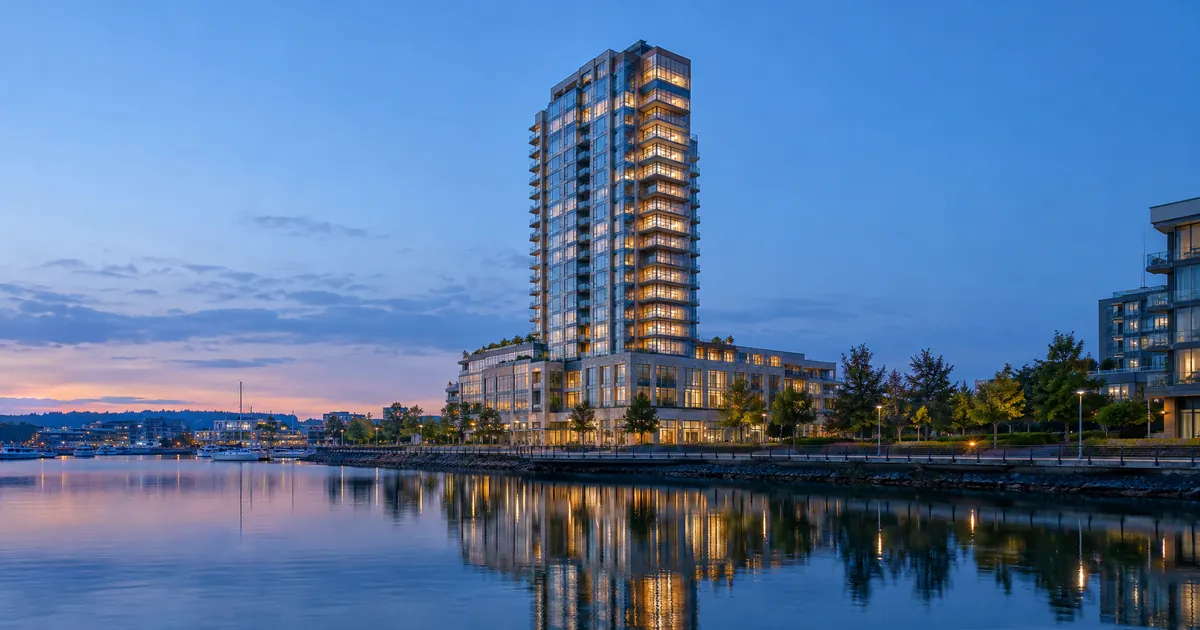
Luxury towers trip project tests more often than a garden-style complex does. They carry retail podiums, developer inventory, heavy investor ownership, and large master insurance deductibles. None of that makes the unit a bad asset. It changes which lenders will look at it and how they structure the loan.
DSCR Calculator
Run the numbers in your market
Rate source: Freddie Mac 30-yr average via FRED® — Federal Reserve Bank of St. Louis · effective Oct 15, 2026
Prefilled with starting assumptions — enter your own rent or nightly figures, taxes, insurance, and HOA for a more accurate picture.
Program parameters update from Lendmire’s centralized guideline source. Taxes and insurance are editable estimates.
As of Oct 15, 2026 · General Freddie Mac market benchmark, not a Lendmire loan offer. Rent, nightly rate, occupancy, taxes, and insurance are editable estimates. Short-term rental figures are estimates only and vary significantly by season, property type, management approach, and local short-term-rental rules — confirm local regulations before relying on them. Qualifying income for short-term rentals varies by program — some use appraisal market rent, others use documented STR history or projections — and is confirmed in underwriting. Not a Loan Estimate, approval, or commitment to lend. Program availability and eligibility are subject to lender guidelines, credit approval, property review, and underwriting.
What “Non-Warrantable” Actually Means for a Tower
The label belongs to the project, not the unit. A condo project is non-warrantable when it falls outside the eligibility rules of the two big mortgage agencies. Fannie Mae’s Selling Guide lists the ineligible categories: hotel or motel operations, split-ownership arrangements, heavy commercial space, and recreational leases or mandatory memberships.
DSCR loans are not agency products. That is the point worth holding onto. The agency checklist is a contrast, not the rulebook. A lender in the network still reviews the building, but it applies its own overlays rather than the agency list. Treatment varies a lot by lender. Some programs price an issue in. Others rule it out entirely.
For a reader building a mental model: the agencies decide what they will buy. A wholesale network decides what its investor lenders will hold or place. Those are different questions with different answers.
Why Luxury Towers Trip the Tests
Towers hit the triggers more often than smaller buildings, for structural reasons.
- Commercial or retail podium space. Ground-floor restaurants, retail, or a spa dilute the residential share of the project.
- Developer-held inventory. A newer tower still selling down can show unsold units and developer control of the board.
- Investor and single-owner concentration. Luxury buildings often have many absentee owners.
- Short-term-rental or hotel-style operations. Branded programs and rental pools change how the whole project is classified.
- Large master-policy deductibles. Big buildings carry big deductibles, and someone has to absorb them.
The deductible point deserves a closer look. Fannie Mae-linked guidance summarized by BuildingLink puts the agency master-deductible limit at 5% of coverage. On a tower insured for $60 million, Leevli’s explainer shows that 5% leaves roughly $3 million the carrier does not pay. The practical question for any lender is who absorbs it: reserves, or a special assessment on owners. A special assessment lands directly on rental cash flow.
The Two Approvals: You and the Building
A file at this level needs two separate yeses. The first is about the borrower. The second is about the project. A DSCR program can waive most of the borrower-side paperwork, since the loan is reviewed primarily on property-level rental income covering the payment, subject to lender guidelines. It does not waive the building review.
This is where portfolio investors get surprised. A 760 credit score and a clean entity structure do nothing for a building with a litigation problem or a reserve shortfall. Choose the lender for the building first, then the unit. Exact terms depend on the lender’s guidelines, property type, leverage, and a full review of the borrower’s file.
| Approval | What gets reviewed | Can the other side fix it? |
|---|---|---|
| Borrower | Credit, reserves, rent coverage, entity | No building fix |
| Building | Insurance, reserves, litigation, ownership mix | No borrower fix |
On the borrower side, the network’s standard terms apply. Credit has a 660 floor, and 700 above $3,000,000. The subject property needs 6 months of reserves, or 12 for a first-time investor. There are no extra reserves for other financed properties. Up to 20 financed properties are allowed, which is what makes the lane workable for a real portfolio. Entity vesting is welcome, with no layered entities. All of this is subject to underwriting. Every figure here varies by lender and program — guidelines, property type, leverage, and credit profile all apply.
Building Diligence: What to Pull Before You Offer
Order the documents before the contract deadline, not after. A real-estate education page on luxury condo HOA financial health lists what buyers should review: the reserve study, board minutes, master insurance declarations, recertification status, and special-assessment history.
| Document | What to look for | Why it matters |
|---|---|---|
| HOA questionnaire | Owner mix, delinquencies, litigation | Drives the project review |
| Reserve study | Funded level against planned repairs | Predicts special assessments |
| Master insurance declarations | Coverage amount, deductible | Sets the cost shock if there is a claim |
| Board minutes | Disputes, deferred work, rental-rule changes | Shows trouble before it is formal |
| Budget and financials | Dues trend, operating deficits | Moves the coverage ratio |
The piece is dated, so take it for the concept only. The concept holds: the lender wants the building’s story in writing.
How Underwriting Treats the Unit, Step by Step
The sequence runs the same way on most files.
1. Classify the problem. Does the issue block only agency loans, or does it also block the network’s lenders? Many issues are workable. Mandatory rental pools, structural litigation, and developer control are harder.
2. Screen the building. Collect the questionnaire and documents above.
3. Run the coverage ratio. The coverage number is monthly rent divided by the full monthly obligation: principal, interest, taxes, insurance, and association dues. Dues move this ratio more than most investors expect in a luxury tower.
4. Order the appraisal. For a condo unit, the appraisal is typically the individual-unit report, Form 1073, with the rent schedule on the rental forms such as 1007. In a tower, value can swing with floor, view, and in-building comps, and comparable sales can be scarce. Above $2,000,000, the network requires two appraisals.
5. Settle the structure. Entity, term, interest-only runway, and reserves get set against the leverage ladder.
At a coverage ratio of 1.00 or higher, the file is eligible for full leverage under the ladder. Coverage from 0.75 to 0.99 is a real path through select programs to $2,000,000, though LTV and terms adjust, subject to underwriting.
The Leverage Ladder and the Condo Cap
Loan size and the condo label interact. The ladder below shows how leverage steps down with size on a standard rental at 1.00 coverage or better. Every figure is a ceiling through select wholesale programs, subject to underwriting.
| Loan size | Purchase | Cash-out | Credit for this leverage |
|---|---|---|---|
| $150K–$1M | 80% | 75% | 660+ |
| $1M–$1.5M | 75% | 70% | 700+ |
| $1.5M–$3M | 75% | 60% | 720+ |
| $3M–$4M | 65% | — | 700+ |
| $4M–$10M | 60%, on review | — | 700+ |
Now overlay the condo cap. Non-warrantable condos run to 75% and $1,500,000. That means a non-warrantable unit priced at a luxury level can outrun the cap even when the borrower qualifies for a larger standard loan. The investor then fills the gap with more equity, or picks a building that is warrantable. This is where loan size, not the label, becomes the binding constraint.
Above $4,000,000, every request is reviewed case by case before submission, for a purchase or rate-and-term only. A lower score takes a lower leverage cell inside the same band. For more on how these balances compare with bank financing, see Lendmire’s piece on super jumbo non-QM versus a regional bank ARM for an LLC portfolio investor.
Interest-only is a useful lever for tower units with heavy dues. The network offers a 120-month interest-only period on 30- and 40-year terms, up to 75% leverage, with coverage of 0.75 or better, qualified on interest, taxes, and insurance. That runway can lift the coverage ratio on a unit where dues crowd the numbers. Final terms depend on lender guidelines, property type, leverage, and the borrower’s complete credit picture.
Condotels and Hotel-Style Towers
A luxury tower with a branded hotel component, a rental pool, or daily-rental operations belongs in a different category. Projects that operate as a hotel or motel, or manage daily or short-term rentals, cannot be financed by the agency even when units are individually owned.
In the network, condotels are a distinct lane: 75% on a purchase and 65% on a refinance, to $1,500,000, with $250,000 cash-in-hand, subject to underwriting. That is tighter than a standard non-warrantable condo, so identify early whether the building is a condotel instead of an ordinary non-warrantable project.
Short-term rental use is a separate question from warrantability. On a short-term-rental file, income is twelve months of operating history on a refinance or the appraisal’s short-term-rent analysis on a purchase, at 80% of gross. Coverage must be 1.00 or higher and loans run to $2,000,000, for experienced investors only. Municipal permission has to be documented for the specific property, and short-term rental rules can vary by city, county, HOA, and property type, so investors should confirm local rules before relying on projected rental income.
A Worked Example: A Portfolio Investor, Start to Finish
Consider an investor who holds several rentals through an LLC and wants a high-floor unit in a tower with a retail podium and a high share of investor-owned units. The unit is priced around $2,400,000.
Step one: building first. The investor requests the questionnaire, reserve study, and insurance declarations before going under contract. The podium and investor mix are the likely triggers. Neither is a structural-litigation red flag.
Step two: size against the cap. At a $2,400,000 price, 75% leverage would be the ceiling for a standard condo purchase on the ladder. But a non-warrantable condo is capped at 75% and $1,500,000, and 75% of this price runs past that dollar cap. So the investor sizes the loan to the cap and brings the balance as equity. The tower’s label, not the borrower, set that limit. The exact numbers vary by lender and program and follow a full review of property, leverage, and credit.
Step three: run the coverage. Rent against the full payment, with dues included, lands near 1.1x. That clears 1.00, so full leverage under the cap is in play. If dues had pushed it to 0.9x, the reduced-leverage path through select programs would apply instead, with LTV and terms adjusting, subject to underwriting.
Step four: structure. Title vests in the LLC, subject to lender program eligibility. Interest-only sits in reserve as an option if coverage tightens. Six months of reserves are required on the subject property, and cash-out proceeds cannot satisfy them.
The numbers here are modeled assumptions, not market data. The point is the sequence: building, cap, coverage, structure.
Exit and Refinance Planning
Underwrite the exit when you underwrite the entry. A project that stays non-warrantable shrinks the pool of future buyers who can finance it with an agency loan. Buyers with cash or portfolio financing can still close, but the pool is smaller, and the sale price can reflect it.
Refinance carries its own limits. Cash-out runs 75% to $1,000,000, 70% to $1,500,000, and 60% above that. There is no cash-out above $3,000,000. Unlimited proceeds are allowed at or below 60% LTV, with a $1,500,000 cap above 60%. For the details on pulling equity from a luxury condo, see Lendmire’s coverage of super jumbo DSCR cash-out rules for non-warrantable luxury condos. These specifics are subject to lender guidelines and a full review of property, leverage, and credit.
A project can also become warrantable again if the problems get cured. A building that settles litigation, rebuilds reserves, or sells down developer inventory may change category. Treat that as an upside, not a plan.
Common Mistakes
- Trusting the seller’s “it’s warrantable.” Check the project’s status yourself.
- Picking the unit before the lender. Building fit decides the program.
- Ignoring dues in the coverage math. They can move the ratio materially.
- Assuming the HOA allows nightly stays. Permission must be documented, and rules can change after purchase.
- Skipping the exit. The financing pool you buy into is the one you sell into.
Key Terms Defined
Warrantable condo: A project that meets agency eligibility rules for owner, reserve, litigation, and commercial-space standards.
Non-warrantable condo: A project that falls outside those rules, so agency lenders will not finance units in it.
Condotel: A condo project run with hotel-style features, such as daily rentals, a front desk, or a rental pool.
Coverage ratio: Monthly rent divided by the full monthly obligation, including association dues.
Master insurance deductible: The portion of a building-wide insurance claim that the policy does not pay, which the association or owners must cover.
Cash-in-hand: Liquid funds the borrower holds at closing, required on condotel files.
Frequently Asked Questions
Can a non-warrantable condo qualify for a DSCR loan?
Yes, through select programs in Lendmire’s wholesale network, subject to underwriting. Non-warrantable condos run to 75% leverage and $1,500,000. The building is reviewed on its own merits, and some issues are workable while others, such as mandatory rental pools or structural litigation, are harder. Terms depend on the lender’s guidelines, the property type, the leverage, and a full review of the credit profile.
Do agency thresholds like 35% commercial space apply to these loans?
No. Those limits are agency contrast. Homebuyer.com’s summary of the agency rules gives 35% commercial space and 20% single-entity ownership for large projects, but DSCR lenders apply their own overlays, which differ by program.
Does a high credit score override a project problem?
No. Borrower strength and building strength are separate approvals. A strong profile can earn better leverage within a band, but it cannot fix an insurance, reserve, or litigation issue in the building.
How does the loan size change things for a luxury unit?
Leverage steps down as balances rise, and the non-warrantable cap of $1,500,000 can bind before the ladder does. Above $2,000,000, two appraisals are required. Above $4,000,000, every request is reviewed case by case, on purchase or rate-and-term only.
Can I use short-term rental income on a tower unit?
Sometimes. Short-term rental files need coverage of 1.00 or higher, run to $2,000,000, and use 80% of gross income, for experienced investors. Municipal and HOA permission must be documented for the property, so confirm local rules before relying on projected income.
If you are buying or refinancing a high-balance rental property and want to see how the numbers work, Lendmire can help you compare super jumbo DSCR loan options based on the property income, the loan balance, credit profile, leverage, and investor goals. Review details are set by each lender and are not a commitment to lend. Read more in the complete DSCR loans guide. Tax treatment varies; consult a qualified professional.
For current guidelines and terms, see Lendmire’s super jumbo DSCR loan programs page.
Lendmire’s self-employed mortgages page presents both super jumbo programs, bank statement and DSCR, side by side.
About Lendmire
As a non-QM mortgage broker (NMLS# 2371349), Lendmire facilitates DSCR investor loans across 41 markets, including Washington, D.C. DSCR eligibility is generally reviewed around property-level rental income instead of personal income documentation, subject to lender guidelines, serving LLC-structured portfolios and self-employed borrowers who don’t fit conventional boxes. A two-time Scotsman Guide Top Mortgage Workplace (2025, 2026).
Get Started
Ready to find the right loan for you?
In about 30 seconds you can review financing options available for your investment property. No commitment required.
Informational only. Not a Loan Estimate, approval, or commitment to lend. Program availability and eligibility are subject to lender guidelines, credit approval, property review, and underwriting.
References
1. Fannie Mae Selling Guide B4-2.1-03
2. Fannie Mae-linked guidance summarized by BuildingLink
5. Fannie Mae Appraisers & Property Underwriting
6. Homebuyer.com – Fannie Mae ineligible projects summary
This article is part of Lendmire’s super jumbo DSCR loan program — full qualification details, guidelines, and scenarios live on the program page.
Related reading: Does a Luxury Tower Condo Lose Warrantability From STR Activity? · How a Luxury Rental DSCR Loan Works in Mississippi · How a Luxury Rental DSCR Loan Works in Florida
Brandon Miller
Founder & CEO, Mortgage Loan Originator, Lendmire LLC
- Mortgage Loan Originator · NMLS# 1129696 · Verify on NMLS Consumer Access
- North Carolina Real Estate Broker · License# 343312 · Verify on NCREC
- North Carolina Insurance Producer · License# 19053198 · Property, Casualty, Life, Health · Verify on NAIC SBS
- Lendmire LLC · Firm NMLS# 2371349 · Verify firm licensure
Disclosures. The information presented in this article is general market commentary, not financial, legal, or tax advice. Lendmire is a mortgage brokerage (NMLS# 2371349) — not a direct lender or depository institution — and loan placement is subject to lender underwriting. Nothing in this content represents a commitment to lend. Loan terms, pricing, and program availability vary based on borrower qualifications, property characteristics, and state of subject property, and are subject to change at any time. Lendmire complies with Equal Housing Opportunity requirements. Consumer access: nmlsconsumeraccess.org.