
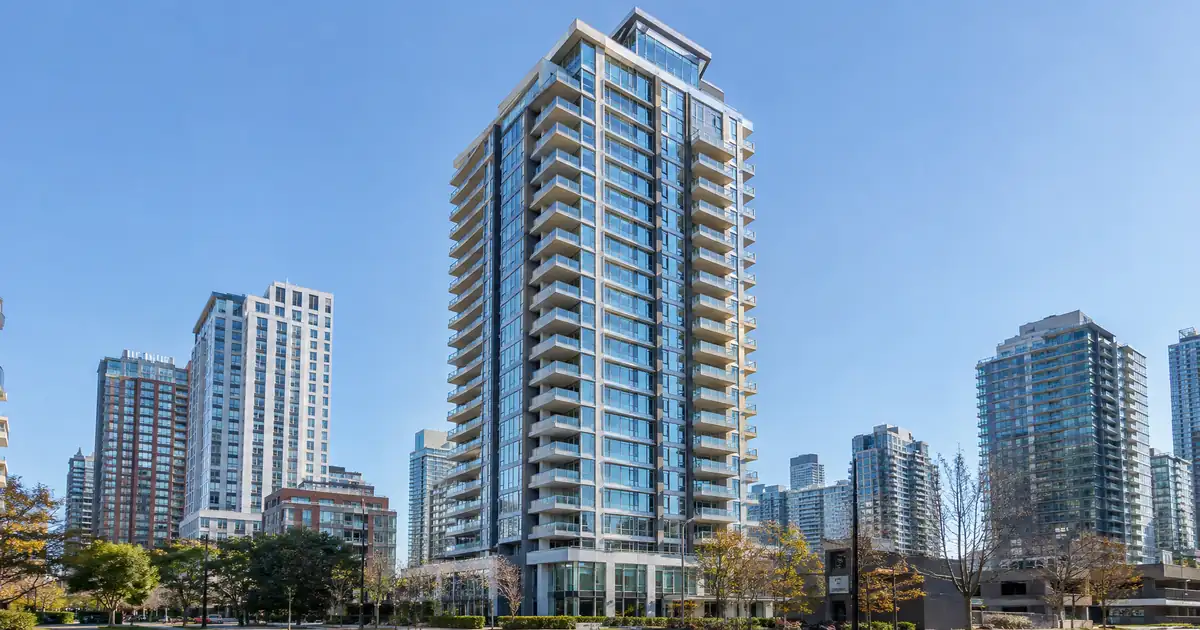
The Quick Read: Yes, but only when the reason the building fails agency review is one a DSCR program tolerates, and only through select programs in the wholesale network, subject to underwriting. Non-warrantable is a label on the building, not a grade on the unit’s cash flow. A strong rent number does not rescue a tower with a project-level problem.
- Investor-heavy ownership, unmet presale thresholds and some concentration issues are often workable.
- Litigation over safety or structure, delinquent assessments, thin reserves and weak insurance are hard everywhere.
- Hotel-style towers are a tighter tier with their own caps.
- Non-warrantable condos run to 75% leverage and $1,500,000 through select programs, subject to underwriting.
- High tower dues sit in the denominator and are often what breaks a luxury file.
Key Terms Defined
Warrantable condo: a condo project that meets the agency rules for sale to Fannie Mae or Freddie Mac.
Non-warrantable condo: a project that fails one or more of those rules. The unit may be fine. The building trips a screen.
Condotel: a condo project run with hotel-style operations, such as a front desk, a rental pool or branded management.
DSCR (debt service coverage ratio): monthly rent divided by the full housing obligation, meaning principal, interest, taxes, insurance and HOA dues.
Project review: the lender’s look at the building’s budget, insurance, ownership mix and legal status, separate from the unit.
DSCR Calculator
Run the numbers in your market
Rate source: Freddie Mac 30-yr average via FRED® — Federal Reserve Bank of St. Louis · effective Oct 15, 2026
Prefilled with starting assumptions — enter your own rent or nightly figures, taxes, insurance, and HOA for a more accurate picture.
Program parameters update from Lendmire’s centralized guideline source. Taxes and insurance are editable estimates.
As of Oct 15, 2026 · General Freddie Mac market benchmark, not a Lendmire loan offer. Rent, nightly rate, occupancy, taxes, and insurance are editable estimates. Short-term rental figures are estimates only and vary significantly by season, property type, management approach, and local short-term-rental rules — confirm local regulations before relying on them. Qualifying income for short-term rentals varies by program — some use appraisal market rent, others use documented STR history or projections — and is confirmed in underwriting. Not a Loan Estimate, approval, or commitment to lend. Program availability and eligibility are subject to lender guidelines, credit approval, property review, and underwriting.
What Does Non-Warrantable Actually Mean for a DSCR Loan?
It means the agency channel is closed, not that the unit cannot be financed. A DSCR loan is non-QM and is not sold to the agencies, so the lender applies its own project rules. Each program sets its own guidelines, which is why two lenders can read the same building differently.
The agency rules are worth one paragraph for contrast. Fannie Mae’s Lender Letter LL-2026-03 retired the 50% investment-property concentration limit for established projects under full review, while keeping the presale rule for new projects. The Community Associations Institute summarizes the same changes. Fewer rental-heavy towers fail agency review on investor ratio alone now. So a tower labeled non-warrantable last year may deserve a fresh look at the label.
That matters because a quote built on a stale label can price the wrong tier. Lenders can also keep their own investor-concentration thresholds even after the agencies dropped theirs, so the agency change does not settle a DSCR file. Scotsman Guide notes that DSCR loans fit both warrantable and non-warrantable condos. It also cautions that many DSCR programs exclude non-warrantable condos with heavy investor ownership or other red flags. Both statements are true. The network sees the same split: some programs take these buildings, many do not.
How Underwriting Treats a Tower, Step by Step
The project gets screened before the unit’s rent matters. Here is the sequence on a typical file.
1. Classify the building. The project is sorted as warrantable, non-warrantable or condotel. That sets the leverage cap and the reserve overlay.
2. Collect the project documents. The condo questionnaire comes first. Many associations don’t know their own status, which is what the questionnaire resolves. Expect the HOA budget and financials, the master insurance certificate, the declaration and bylaws, and rental-program papers if any exist. Questionnaire completeness is where preventable delays start.
3. Identify why the building fails. The trigger decides the outcome. See the matrix below.
4. Appraise the unit. A condo typically gets a unit appraisal with a market rent schedule. Above $2,000,000, two appraisals are required.
5. Run the coverage math. Monthly rent divided by the full housing obligation. At 1.00 the rent covers the obligation, and 1.00 earns full leverage. Coverage from 0.75 to 0.99 is a real path through select programs to $2,000,000, but LTV and terms adjust, subject to underwriting.
6. Document any short-term-rental income. Municipal permission must be documented for the specific property and building. Income counts at 80% of gross, not the full figure.
7. Confirm reserves and vesting. Six months of reserves on the subject property (12 for a first-time investor), and entity vesting is welcome, subject to program terms.
The Conditions That Pass, and the Ones That Don’t
Most triggers fall into three groups. The table shows how select programs in the network tend to read each one. Treat it as a pattern, not a promise. Every file is underwritten individually.
| Building condition | How DSCR lenders tend to read it | What the file needs |
|---|---|---|
| High investor ratio | Often workable | Rentals permitted, clean budget |
| Unmet presale threshold | Often workable (timing issue) | Turnover status, certificate of occupancy |
| Single-entity concentration | Lender-specific | Owner list, unit counts |
| Commercial space (retail podium) | Conditional | Space percentage, budget share |
| Pending litigation, minor | Conditional | Counsel letter, claim scope |
| Litigation on safety or structure | Usually fails | Rarely curable |
| Delinquent assessments | Usually fails | Delinquency report |
| Thin reserves or weak insurance | Usually fails until fixed | Budget, master policy |
| Developer-controlled HOA or active construction | Usually fails | Turnover proof |
| Mandatory rental pooling, deed restrictions | Usually fails or tier change | Program documents |
The agency single-entity limit is 20% of units in a project of 21 or more, per Governing Docs. That is an agency rule, so whether a DSCR program tolerates more depends on the lender. Enact MI puts the agency commercial-space limit at generally 35%, which matters for towers with retail podiums. Again, agency contrast only. A DSCR lender sets its own number.
What Makes a Luxury Tower Different?
Luxury towers add three pressures that ordinary non-warrantable condos don’t carry: heavy dues, hotel-style operations and loan size.
Dues. Amenities, staff and doorman service push monthly dues up. Dues sit in the full obligation, so a unit with strong rent can still fall short on coverage. Run the dues against rent before you make an offer. This is a common reason a good-looking tower file fails.
Operations. A front desk, a rental pool or branded residences can move a tower from ordinary non-warrantable into the condotel tier. A self-managed building that allows short stays without a formal program is not a true condotel. The label depends on the documents, not the lobby. Condotels run to 75% on a purchase and 65% on a refinance, up to $1,500,000, with $250,000 cash-in-hand, subject to underwriting.
Loan size. Luxury balances are where non-warrantable files hit a cap. Non-warrantable condos reach 75% leverage and $1,500,000 through select programs. A loan above that is a different conversation, and a tower purchase priced well over $2,000,000 may not fit the non-warrantable box at all. Compute price times leverage first, then read the band for that loan amount. Lendmire’s piece on super jumbo DSCR requirements for non-warrantable luxury condos walks through the size ladder. Final terms depend on the lender’s guidelines, the property type, and the borrower’s complete credit picture.
How the Math Breaks in a High-Dues Building
Run the numbers on two units with identical rent. In the first, dues are modest and coverage lands near 1.15x. In the second, dues are heavy, and the same rent slips to about 0.90x. These are modeled assumptions, not market data. The first fits a full-leverage cell. The second drops into the reduced-leverage path, where select programs may review it with adjusted LTV and terms, subject to underwriting.
Short-term rental changes the picture only when it is legal and documented. Income counts at 80% of gross, needs coverage of 1.00 or higher, and caps at $2,000,000. It is for experienced investors only, meaning twelve months owning income property in the last thirty-six. On a purchase, the appraisal’s short-term rent analysis supplies the income. On a refinance, twelve months of operating history does. Short-term rental rules can vary by city, county, HOA and property type, so investors should confirm local rules before relying on projected rental income. A building’s minimum-stay rule can kill the strategy even when the loan is approvable.
Due Diligence Before You Offer
Ask for the project file first. Here is the order that saves the most rework.
1. Questionnaire and budget. Look for reserves, delinquencies and the dues trend.
2. Master insurance certificate. Confirm adequacy before you price the deal.
3. Litigation disclosure. Ask what the claim touches. Safety and habitability claims are the problem.
4. Owner and rental mix. Count investor units and any single owner’s share.
5. Rental and operating documents. Find any pooling agreement or management program.
6. Turnover status. In a new tower, confirm the association has transferred to owners and the unit is rent-ready.
Then run coverage with the real dues. One practical note: the network sees reserves documentation fail more often than rent. Cash-out proceeds never satisfy the reserve requirement above $3,000,000, so source the reserves separately.
DSCR vs. conventional financing
There are two common ways to finance an investment property, and they qualify you differently — here’s how investors weigh them.
Why investors choose it
- Qualifies on the property’s rental income — no personal tax returns, W-2s, or pay stubs needed to document income.
- No personal debt-to-income ceiling to clear, so existing mortgages and obligations don’t cap your borrowing the same way.
- Can be closed in an LLC, keeping the property inside a business entity.
- Built for scaling — not held to the limit on number of financed properties that conventional financing applies.
- Underwriting centers on the deal: generally qualifies when the rent covers the payment, a 1.00x coverage ratio being a common baseline (confirmed in underwriting).
- Designed specifically for investment property, including long-term and, where the program allows, short-term rentals.
Where it’s strong
- Often the lowest ongoing financing cost for a buyer who fully qualifies on personal income — a fit for a first property or a cost-first purchase.
Trade-offs for investors
- Requires full personal income documentation and must fit within a debt-to-income limit — salary, existing debts, and other mortgages all count.
- Typically held in your personal name rather than a business entity.
- Caps how many financed properties you can carry, which can become a ceiling as a portfolio grows.
- Evaluates you as a borrower as much as the property, which usually means more paperwork.
How investors usually choose: a first or single property often optimizes for the lowest financing cost; portfolio builders often optimize for leverage, vesting in an LLC, and scaling past conventional caps. The right answer depends on your goals, the property, and current guidelines — both paths run through select lenders in Lendmire’s wholesale network, with eligibility and terms confirmed in underwriting.
When the Answer Is No
Some towers don’t fit. Active safety litigation, large delinquencies, a developer still controlling the board and mandatory rental pooling are the usual stoppers. A good coverage ratio does not change that, because project health, insurance and use restrictions are all reviewed.
Exit is the other cost. Enact MI notes that non-warrantable condos can be harder to sell, or need discounted pricing, because buyers have fewer financing options. Fewer lenders also take these files, so packaging matters. Leverage may run lower than on a warrantable unit, and terms adjust. The genuine toss-up is whether the unit’s cash flow justifies a narrower resale pool. For some investors it does, for others a warrantable building two blocks over is the better buy.
One advantage is worth naming. Scotsman Guide notes that agencies cap borrowers at 10 financed properties. The network’s programs allow up to 20 financed properties, which is a reason multi-property investors use DSCR for condos. For the full program picture, see the complete DSCR loans guide.
Program Parameters at a Glance
These are typical ranges through select wholesale programs. They are subject to underwriting and are not a commitment to lend.
| Item | Typical range |
|---|---|
| Non-warrantable condo | Up to 75% and $1,500,000 |
| Condotel | 75% purchase, 65% refinance, to $1,500,000 |
| Credit floor | 660 (700 above $3,000,000) |
| Reserves | 6 months on subject, 12 for first-time investors |
| Appraisals | Two above $2,000,000 |
| Interest-only | 120 months, to 75% |
Frequently Asked Questions
Does litigation always disqualify a tower?
No. Minor or routine claims can be workable with a counsel letter that explains the scope. Litigation touching safety, structure or habitability is the kind that usually ends the file.
Can the non-warrantable label change?
Yes. Agency rules have shifted, and a building that failed on investor ratio may now pass that point. Ask for the label to be re-checked before accepting a quote built on it. A DSCR lender’s own overlay still applies.
Do HOA dues count against coverage?
Yes. Dues sit in the full housing obligation, alongside principal, interest, taxes and insurance. In luxury towers they often decide the number.
Does an LLC matter?
Entity vesting is welcome, with no layered entities, subject to program terms. Have the entity documents ready with the project file.
Is a first-time investor eligible?
It is possible through select programs, with 12 months of reserves instead of six, subject to underwriting. Short-term-rental files require experience. Each figure is subject to lender guidelines and a complete review of property type, leverage, and credit.
Tax treatment varies; consult a qualified professional.
If you are buying or refinancing a high-balance rental property and want to see how the numbers work, Lendmire can help you compare super jumbo DSCR loan options based on the property income, the loan balance, credit profile, leverage, and investor goals. Reach the team at 828-256-2183.
Lendmire’s self-employed mortgages page presents both super jumbo programs, bank statement and DSCR, side by side.
About Lendmire
Lendmire (NMLS# 2371349) is a mortgage brokerage focused on DSCR investor financing, helping arrange programs through wholesale and investor-lending channels in 41 markets, including Washington, D.C. DSCR loans are evaluated by the lender on property cash flow rather than personal income, subject to lender guidelines, supporting LLC closings and accommodating investors with four or more financed properties. Scotsman Guide Top Mortgage Workplace in both 2025 and 2026.
Get Started
Ready to find the right loan for you?
In about 30 seconds you can review financing options available for your investment property. No commitment required.
Informational only. Not a Loan Estimate, approval, or commitment to lend. Program availability and eligibility are subject to lender guidelines, credit approval, property review, and underwriting.
References
1. Fannie Mae Lender Letter LL-2026-03
2. Community Associations Institute advocacy
3. Scotsman Guide, Invest in Your Future
4. Scotsman Guide, Get in the Game
6. Enact MI
This article is part of Lendmire’s super jumbo DSCR loan program — full qualification details, guidelines, and scenarios live on the program page.
Related reading: IO ARM vs Fixed DSCR Loans on Non-Warrantable Condos · How a Luxury Rental DSCR Loan Works in Whitefish · How to Qualify for a Super Jumbo DSCR Loan for Tower Buyers in Non-Warrantable Buildings
Brandon Miller
Founder & CEO, Mortgage Loan Originator, Lendmire LLC
- Mortgage Loan Originator · NMLS# 1129696 · Verify on NMLS Consumer Access
- North Carolina Real Estate Broker · License# 343312 · Verify on NCREC
- North Carolina Insurance Producer · License# 19053198 · Property, Casualty, Life, Health · Verify on NAIC SBS
- Lendmire LLC · Firm NMLS# 2371349 · Verify firm licensure
Legal disclosures. Lendmire (NMLS# 2371349) is a state-licensed mortgage brokerage that arranges financing through wholesale lender relationships. Lendmire is not a direct lender, depository institution, or registered financial advisor. The discussion above is general informational content about real estate financing — it is not financial, legal, or tax advice, and readers should consult licensed professionals for guidance on their individual circumstances. Loan inquiries are subject to lender underwriting; this article does not represent a commitment to lend. Loan terms, rates, and qualification standards vary by borrower, property, and state, and are subject to change at any time. Equal Housing Opportunity. NMLS Consumer Access: nmlsconsumeraccess.org.