
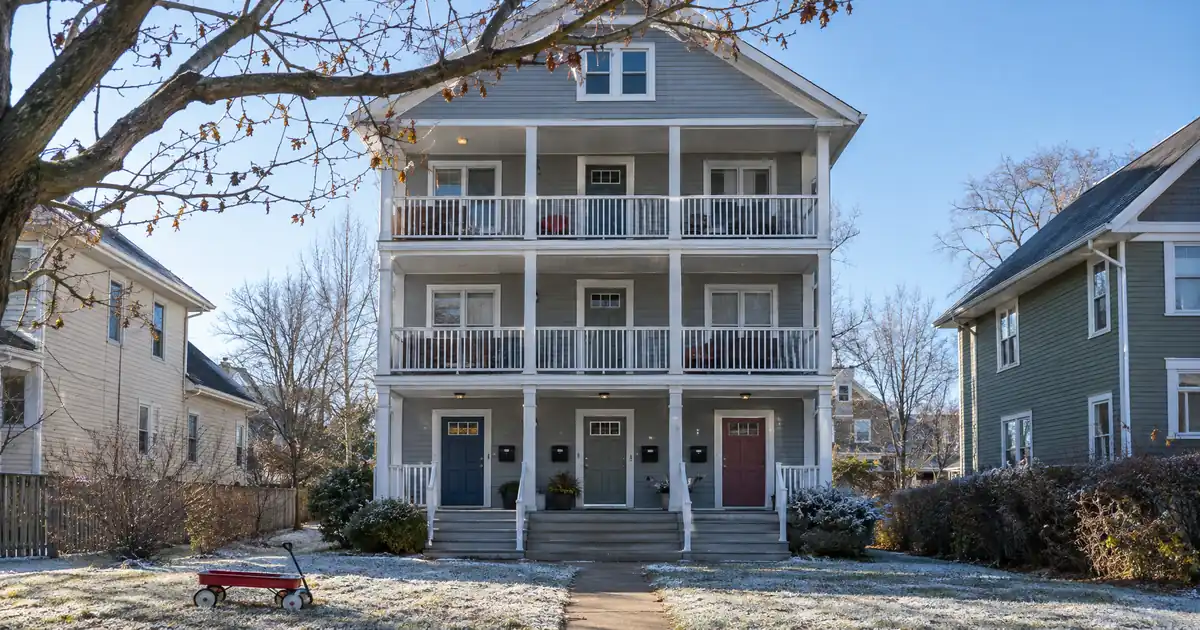
The Quick Read: The down payment depends on whether you will live in the building, and rent counts only as far as the appraisal and leases support it. A self-employed buyer who occupies one unit is underwritten on documented income, often 12 months of bank statements. A buyer who will not occupy is underwritten on the property’s rent under a different loan type.
- Owner-occupied primary residence: leverage up to 90% LTV on a purchase through select lenders, subject to lender guidelines.
- Qualifying income comes from averaged deposits, with a lender-specific expense factor applied.
- Rent from the other units is never taken at face value. Lease and appraiser market rent both matter.
- Reserves commonly run around 6 months of the housing payment.
- A rental you will not live in follows a separate, property-based path.
Most self-employed 2-4 unit files stall because the buyer assumed one rule set and the lender applied another. This piece walks through how the two halves, down payment and rent, actually get handled.
What your deposits qualify you for.
Alt-doc programs read 12 months of business or personal bank deposits instead of tax returns. Enter your average monthly deposits and see the income a lender would credit you.
The expense factor is set by the lender from your business type and profit-and-loss statement; it is not a number you choose. This widget quotes no rate and no payment.
Program parameters shown update from Lendmire’s centralized guideline source.
Estimate
Illustrative estimate only — not a quote, Loan Estimate, approval, or commitment to lend. Deposit average, expense factor, and housing ratio are editable assumptions; the expense factor a lender applies is set from your business type and documentation. No interest rate or monthly payment is quoted here. Purchase capacity is a simplified illustration and does not account for taxes, insurance, HOA dues, or other debts. Alt-doc income documentation is available on consumer mortgages in the states where Lendmire is licensed for consumer lending; actual terms vary by lender, borrower, and property.
What Is a 2-4 Unit Purchase, and Why Does Occupancy Decide Everything?
Occupancy is the first fork in every file. If you will live in one unit, the loan is an owner-occupied consumer mortgage. If you will not, it is an investment loan. The two paths use different income rules, different leverage, and different disclosures.
Across Lendmire’s wholesale network, owner-occupied 2-4 unit files are the ones where self-employed buyers get the most leverage. A primary residence can reach up to 90% LTV on a purchase or rate-term refinance through select lenders. Stronger files earn the top of that range. Weaker credit, thinner reserves, or a large loan size pull it down.
Investment purchases are different. Leverage on an investment purchase using bank statements varies by lender, so treat any single number you see online as a starting point only. Investment-property cash-out tops out around 75% LTV. Owner-occupied cash-out can reach up to 80% LTV, which is a separate ceiling from the purchase figure.
Occupancy also decides the disclosure regime. An owner-occupied file is a consumer mortgage, so TRID applies. A bank-statement loan on a non-owner-occupied rental, including a short-term rental, is business-purpose and exempt from TRID. Keep those two straight, and never assume one borrower gets both.
How Does a Self-Employed Buyer Qualify Without Tax Returns?
Many self-employed buyers show low taxable income because of write-offs. Bank-statement underwriting works around that. Lenders review 12 months of business or personal statements and average the deposits. Each lender then applies an expense factor to get a qualifying income figure.
Here is the step-by-step.
1. Pick the statement type. Business statements get an expense factor applied. Personal statements are often treated more simply. The right choice depends on how your deposits flow.
2. Average the deposits. The lender totals 12 months of qualifying deposits and divides by 12. Transfers between your own accounts and one-time items are generally excluded.
3. Apply the expense factor. Programs use a fixed ratio, or a lower ratio when an accountant prepares it. Factors differ by lender, so no universal formula exists.
4. Compare income to the housing payment. The result is measured against the new payment and your other debts.
5. Review credit, assets, and reserves. Credit tier, loan size, and reserves move the maximum leverage up or down.
An alternative exists for buyers with large liquid balances. Asset-depletion qualification runs to about 80% LTV on a primary residence. It suits someone with strong savings and uneven monthly deposits. Exact terms depend on the lender’s guidelines, property type, leverage, and a full review of the borrower’s file.
Loan sizes in this lane run roughly $125,000 to $3,500,000. Qualification happens on documented income under the applicable program, subject to lender guidelines. Credit and property review still apply.
How Does Rent From the Other Units Count?
Rent from the other units does not get added at face value. The file looks at lease evidence and the appraiser’s market rent, and the weaker of the two usually controls. Programs differ on whether rent adds to income or offsets the payment, so the treatment depends on the lender.
On a 2-4 unit, the appraiser typically completes a small residential income property report. Fannie Mae’s Selling Guide lists Form 1025 as the appraisal form for 2-4 unit properties, and that form reports market rent unit by unit. That is a form name only. Bank-statement programs are not agency products, and agency haircuts do not carry over.
Here is how the rent evidence usually resolves:
| Situation | Typical treatment |
|---|---|
| Lease above market rent | Capped at market |
| Lease below market rent | Lease usually controls |
| Month-to-month or expired lease | Often falls back to market rent |
| Vacant unit | Appraiser’s market rent alone |
A below-market lease to a relative or a legacy tenant lowers the number the file can use. Raising it later does not help the current application.
Where Do the Down Payment Rules Break the Pattern?
The general rule is simple: more occupancy means more leverage. The exceptions are where files get kicked back.
Owner-occupied cash-out. Cash-out on a primary residence or second home goes up to 80% LTV with a fixed expense ratio, or 75% with an accountant-prepared ratio, by loan size and credit. It is never the 90% purchase figure. Every figure here varies by lender and program — guidelines, property type, leverage, and credit profile all apply.
Investment cash-out. This tops out around 75% LTV. Some programs ask how the proceeds will be used. Final terms depend on lender guidelines, property type, leverage, and the borrower’s complete credit picture.
Buyers with under two years of self-employment. Bank-statement programs look at the deposit history, not a tax-return track record. Lender rules on prior related work vary, so a short history is a reason to compare programs, not to stop.
Short-term rental income. Appraiser rent reflects a long-term lease, so it is often well below actual short-term income. Some programs consider short-term income. Short-term rental rules can vary by city, county, HOA, and property type, so investors should confirm local rules before relying on projected rental income.
Large deposits. A big lump in your statements can be excluded or require a paper trail. Gift funds and business-account money used for the down payment need sourcing, and recent transfers need an explanation.
When Does the Rental Path Make More Sense Than Owner-Occupancy?
If you will not live in the building, the owner-occupied rules stop applying. The loan is an investment loan, and the file turns on the property rather than your deposits. Lendmire’s complete DSCR loans guide covers that structure in full.
The tradeoff is real. You give up the high-leverage owner-occupied purchase ceiling, and you must not live in the building. In exchange, your own traditional personal-income documentation and deposit history carry less weight, because the file looks at the rent the property earns against its payment. Because those loans are business-purpose investor loans, they are reviewed differently from a standard owner-occupied mortgage. Occupancy attestations are taken seriously, and misstating them is a serious problem.
The CFPB’s Regulation Z commentary treats credit to acquire a non-owner-occupied rental as business-purpose, and an owner who expects to occupy the property more than 14 days in the coming year falls outside that treatment. An LLC does not change the occupancy question for the people behind it.
Sub-1.00 coverage programs are available through select lenders in the network, but leverage and terms adjust when the ratio is thin. Eligibility depends on lender guidelines and the property.
Choosing a Documentation Path
| Path | Fits when | Watch for |
|---|---|---|
| Bank statements, owner-occupied | You will live in one unit | Expense factor, reserves |
| Asset depletion, primary | Large liquid balances | Up to about 80% LTV |
| Property-based, non-owner-occupied | You will not occupy | Lower leverage, appraisal rent |
Term length follows each lender’s program sheet. Interest-only and 40-year structures belong to the investor side, and Lendmire does not promise them on bank-statement files.
A Worked Scenario
Picture a sole proprietor with heavy write-offs buying a triplex and living in one unit. Traditional personal-income documentation shows low net income. Twelve months of business statements show steady deposits. After the lender’s expense factor, qualifying income clears the housing obligation with room, so the deal works forward on documented income. The strongest version of this file has a high credit tier, about 6 months of reserves, and a down payment sourced from seasoned accounts. A weaker credit tier or a larger loan would likely pull the maximum LTV below the 90% ceiling. These specifics are subject to lender guidelines and a full review of property, leverage, and credit.
Now change one fact: the buyer will not live there. The loan becomes an investment file, the owner-occupied ceiling no longer applies, and the appraiser’s market rent against the full monthly obligation sets the outcome. Same buyer, same building, different rules.
Key Terms Defined
Net income: What remains after business expenses, and the figure a tax return shows.
Expense factor: The percentage a lender subtracts from business deposits to estimate qualifying income.
Reserves: Liquid funds left after closing, commonly around 6 months of the housing payment.
Form 1025: The appraisal report that records market rent for each unit on a 2-4 unit property.
LTV: Loan amount divided by property value.
Business-purpose loan: Credit used to acquire or maintain a rental the borrower will not occupy.
Common Mistakes Before You Apply
- Assuming the lease sets the rent the lender will use.
- Moving large sums between accounts right before the application.
- Applying owner-occupied logic to a building you do not plan to live in.
- Quoting the 90% purchase ceiling on a cash-out request.
- Skipping the entity and ownership paperwork on an investment file.
Tax treatment varies; consult a qualified professional.
Frequently Asked Questions
How much down payment does a self-employed buyer need on an owner-occupied 2-4 unit?
It depends on credit, loan size, and the lender, but leverage on a primary residence purchase can reach up to 90% LTV through select lenders. That leaves a down payment of 10% at the strongest end. Weaker files need more cash down, and exact terms follow each lender’s program. Terms depend on the lender’s guidelines, the property type, the leverage, and a full review of the credit profile.
Does the rent from the other units help me qualify?
It can, depending on the program. Lenders compare lease evidence with appraiser market rent and generally use the lower figure. Whether rent adds to income or offsets the payment varies, so ask which treatment applies before you write an offer.
Can I use bank statements instead of traditional personal-income documentation?
Yes, on many owner-occupied programs. Lenders average 12 months of business or personal deposits and apply an expense factor.
What changes if I will not live in the building?
The loan becomes a business-purpose investment file, and the property’s rent against its payment drives the outcome. Leverage on an investment purchase varies by lender. Investment cash-out tops out around 75% LTV.
How many months of reserves should I expect?
Reserves commonly run around 6 months of the housing payment. Larger loans and weaker credit can push the requirement up.
For a related walk-through, see Lendmire’s piece on how a self-employed buyer finances a 2-4 unit on bank statements.
For current guidelines and terms, see Lendmire’s self-employed mortgage programs page.
About Lendmire
Lendmire (NMLS# 2371349) is a mortgage brokerage serving self-employed and high-net-worth borrowers in 16 states. Bank statement, P&L-only, 1099-only and asset-based mortgages are arranged through wholesale lending channels; Lendmire brokers the financing and the lender underwrites each application. Scotsman Guide named Lendmire a Top Mortgage Workplace in both 2025 and 2026.
Get Started
Ready to find the right loan for you?
In about 30 seconds you can review financing options available for your home or investment property. No commitment required.
Informational only. Not a Loan Estimate, approval, or commitment to lend. Program availability and eligibility are subject to lender guidelines, credit approval, property review, and underwriting.
References
1. Fannie Mae Selling Guide B4-1.2-01
This article is part of Lendmire’s bank statement loan program — full qualification details, guidelines, and scenarios live on the program page.
Related reading: Bank Statements vs Filing Later for a 1099 Contractor With Rising Income · How Much Down Payment Does a Penthouse With a Bank Statement Loan Need? · Can a Founder Get a Super Jumbo Loan on Assets and No Income?
Brandon Miller
Founder & CEO, Mortgage Loan Originator, Lendmire LLC
- Mortgage Loan Originator · NMLS# 1129696 · Verify on NMLS Consumer Access
- North Carolina Real Estate Broker · License# 343312 · Verify on NCREC
- North Carolina Insurance Producer · License# 19053198 · Property, Casualty, Life, Health · Verify on NAIC SBS
- Lendmire LLC · Firm NMLS# 2371349 · Verify firm licensure
Legal disclosures. Lendmire (NMLS# 2371349) is a state-licensed mortgage brokerage that arranges financing through wholesale lender relationships. Lendmire is not a direct lender, depository institution, or registered financial advisor. The discussion above is general informational content about real estate financing — it is not financial, legal, or tax advice, and readers should consult licensed professionals for guidance on their individual circumstances. Loan inquiries are subject to lender underwriting; this article does not represent a commitment to lend. Loan terms, rates, and qualification standards vary by borrower, property, and state, and are subject to change at any time. Equal Housing Opportunity. NMLS Consumer Access: nmlsconsumeraccess.org.