
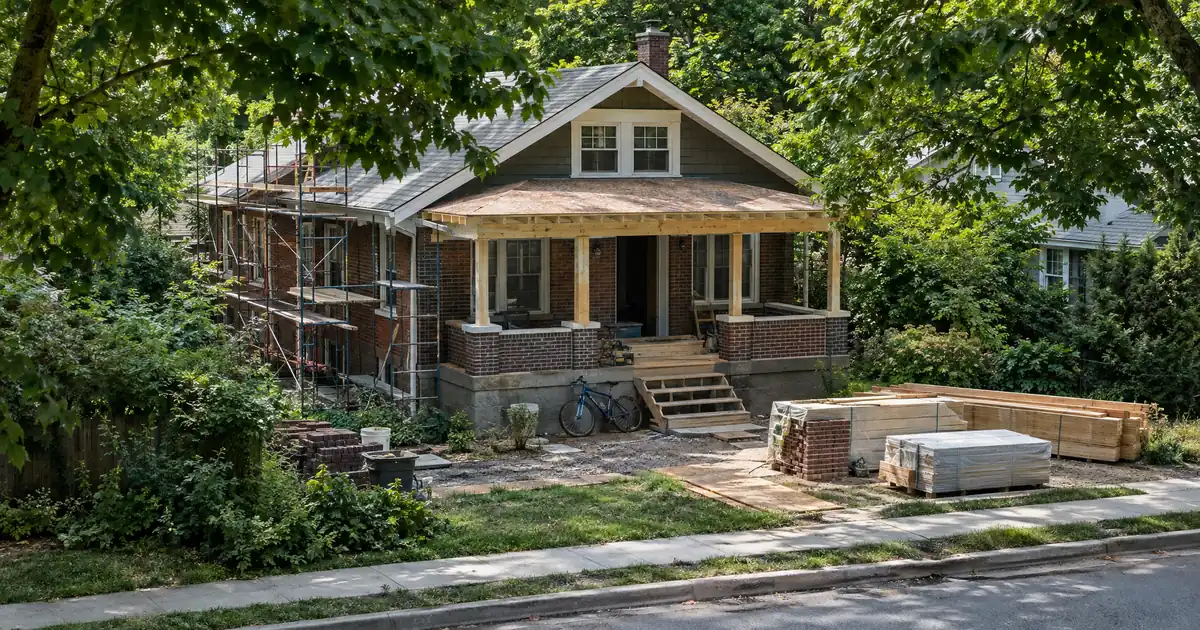
The Quick Read: A hard money bridge holds a seasonal unit that has no rent yet by lending against the property’s value and your exit plan instead of its income, so the loan can run interest-only through an empty stretch while you furnish, list, and build booking history before refinancing into long-term rental financing. The bridge buys time, and the carry is what that time costs. Every month of vacancy still bills for interest, taxes, insurance, utilities, and upkeep.
- A bridge sizes on collateral and the plan. A DSCR loan sizes on rent that already covers the payment.
- Bridge purchases without rehab run up to 80% of purchase price, and refinances up to 65% of value, varying by lender, property, and experience.
- The bridge carries the unit, and your cash carries the operating costs unless the loan documents say otherwise.
- Insurance on an empty unit is the quiet risk, because vacancy clauses can limit coverage.
- The exit is underwritten fresh on value, rent, and reserves, so approval of the bridge does not promise the refinance.
What Does It Mean for a Bridge to “Carry” a Vacant Seasonal Unit?
Carrying a unit means paying everything it costs while it earns nothing. That cost comes in two layers, and most investors budget only the first.
Financing carry is the interest on the bridge. Hard money terms typically run 6 to 18 months, interest-only, with no prepayment penalty. Loan sizes go up to $5,000,000, and smaller balances vary by lender. The loan secures a non-owner-occupied residential property of one to four units. Leverage varies by lender, property, and experience. A bridge purchase without rehab goes up to 80% of purchase price. A refinance goes up to 65% of value. Credit starts at a 620 minimum, with additional conditions below 660.
Operating carry is everything else. It covers property taxes, insurance, utilities, HOA dues, winterization, cleaning, landscaping, and maintenance. These costs do not pause when the booking calendar goes quiet. A seasonal unit makes this layer larger than usual, because the empty months are expected, not a surprise.
Most borrowers underestimate operating carry. The bridge lender sizes the loan against the property, and nobody prices the empty months for you.
Why a Vacant Seasonal Unit Can’t Go Straight to Long-Term Financing
A DSCR loan needs rent to measure. The ratio divides monthly rent by the full monthly obligation (principal, interest, taxes, insurance, and any HOA dues). A unit with no lease and no booking history gives the underwriter a zero in the numerator.
That does not make DSCR the wrong destination. It makes it the wrong first step for a unit with no income. Across most programs in a wholesale network, 1.00 is where select programs start, and stronger ratios open better pricing and leverage. Coverage below 1.00 is available through select lenders in the network, with leverage and terms adjusted. A separate path, available only through select lenders and generally for borrowers who already own a primary residence, does not run a coverage ratio at all. Neither path creates income that does not exist.
Seasonality adds a second problem. A trailing-twelve-month view blends the busy months with the slow ones. AirDNA’s market pages define annual revenue as the trailing twelve months of earnings for a typical active listing. They also score seasonality as the gap between the weakest and strongest monthly revenue. A unit that sits empty through its first season has no twelve-month picture, and the long-term lender has nothing to average.
That gap is the job a bridge does. It holds the property while the income evidence gets built.
How Underwriting Treats the Bridge, Step by Step
The bridge is asset-based. The lender is asking whether the collateral and the plan can repay the loan. Rent coverage is not the test. Here is how the file typically moves.
1. Collateral review. The lender looks at the property type, condition, location, and value. The unit may be empty, mid-rehab, or between seasons. Ineligible property types stay ineligible, and the program covers non-owner-occupied one-to-four-unit residential only.
2. Leverage sizing. The loan is sized on purchase price or value, depending on the transaction. A purchase without rehab goes up to 80% of purchase price. If the plan includes rehab, the structure changes to loan-to-cost tiers tied to documented completed projects, and up to 100% of the rehab budget funds in draws against completed work. Those are rehab-budget figures, not purchase leverage.
3. Borrower review. Underwriting checks credit, liquidity, and experience. The 620 minimum applies, and conditions tighten below 660. First-time investors typically qualify only at the lower leverage tiers.
4. Exit review. The lender wants a credible way out. For a seasonal unit, that means a refinance into long-term rental financing or a sale, and the plan should name which.
5. Carry check. Strong files show cash on hand to cover interest and operating costs through the slowest stretch. Reserves and contingency matter more here than on a stabilized rental.
Terms, leverage, and eligibility vary by lender, property, and experience. Nothing here is a commitment to lend.
Budgeting the Carry (Month by Month, Without Inventing Numbers)
The table below splits each line item by who typically pays it and how much it shifts with the season. It carries no dollar amounts, because those belong to your property. Get them from your own lender, insurer, and utility quotes and add them to your own carry sheet.
| Carry line | Typically paid by | Season sensitivity |
|---|---|---|
| Bridge interest | Borrower, monthly | Constant |
| Property taxes | Borrower | Constant |
| Insurance (incl. Vacancy endorsement) | Borrower | Rises if empty |
| Utilities | Borrower | Higher in winter or summer extremes |
| HOA dues | Borrower | Constant |
| Winterization, cleaning, upkeep | Borrower | Peaks off-season |
Two habits separate careful files from fragile ones. First, size cash reserves to the longest credible vacancy, not the shortest. Second, assume the exit will run past the plan. If the bridge term is 12 months and the exit depends on a booking history that starts in month eight, the margin is thin.
Some bridge lenders hold rehab funds back and release them in draws. That changes how much cash you need on hand at the start. Ask for the draw schedule before you commit.
Market occupancy shows how long the empty stretch can run. Awning’s occupancy analysis, which draws on AirDNA data, puts beach and Gulf Coast markets at roughly 59% to 65% occupancy and ski towns at roughly 46% to 51%. Awning also notes that how a source defines available nights moves the figure. Treat these as context for how much of the year sits idle, not as an underwriting input.
The Insurance Gap on an Empty Unit
Most homeowners and landlord policies include a vacancy clause. The Insurance Information Institute explains that these clauses typically limit or exclude coverage after 30 to 60 consecutive days without occupants. Its illustration is a water-leak loss denied under that clause.
That matters for a bridge because the collateral is the property. A loss the policy refuses to pay can erode the asset before the exit happens.
Definitions help here. Federato’s explainer on seasonal-property coverage separates a vacant property, with no occupants and no furnishings, from an unoccupied one, which is furnished but unused. Unoccupied status often keeps coverage in place with notification. A furnished, staged seasonal unit may therefore sit in a better category than a bare one. The carrier’s own wording controls, and definitions differ by insurer and state.
The practical step is simple. Before the bridge funds, ask the carrier in writing how it treats a furnished unit that is empty for long stretches, and whether a vacancy endorsement is available.
How the Exit Treats Seasonal Income
The exit is a new loan, underwritten on its own facts. The bridge’s lack of an income test does not carry over. Many investors refinance out of hard money into long-term DSCR financing once the property is stabilized, and that is the path Lendmire brokers. The complete DSCR loans guide covers how that financing works in full.
Four gates decide whether the exit works, and the list that follows covers each one:
- the new appraisal’s value
- the rent figure, either market rent or documented short-term rental income
- seasoning and booking history
- cash and reserves at payoff
A long-term rental exit is the simpler path. A vacant unit with no lease can generally rely on an appraiser’s market rent estimate in place of a lease. That is a standard mechanic across DSCR programs.
A short-term rental exit has no such shortcut. On the appraisal side, agency guidance is useful only for contrast, because DSCR loans are not agency products. Fannie Mae’s appraiser update covers short-term rentals and Form 1007, the rent schedule for single-family homes. Two-to-four-unit properties use Form 1025. McKissock’s appraiser-education explainer notes that the 1007 documents monthly rent, not nightly rates or business income. It also says appraisers value the real property only, excluding furniture and income, and that the lender decides what income counts.
So an appraisal does not prove your nightly income. The booking history does.
For short-term rental collateral in the network, expect a 640 or higher score and about 12 months of hosting history. Purchase leverage tops out at 75%, refinance runs around 70%, and cash-out on short-term rental collateral is 70%. A standard long-term rental cash-out refinance tops out around 75% across most of the network, with about six months of seasoning as the common expectation. Short-term rental rules can vary by city, county, HOA, and property type, so investors should confirm local rules before relying on projected rental income.
Structures and Variations
The same unit can move through several structures. The comparison below separates the bridge from the exit loan.
| Factor | Hard money bridge | DSCR exit loan |
|---|---|---|
| What is underwritten | Property value and plan | Value, rent, and reserves |
| Income test | Asset-based | Rent against full payment |
| Typical term | 6-18 months, interest-only | 30-year fixed as the base |
| Longer terms | None on the current program | 40-year and interest-only through select lenders |
| Prepayment | No penalty | Varies by program |
Within the bridge itself, three variations matter for a vacant seasonal unit.
Bridge purchase without rehab. An empty unit that needs only furnishing and staging fits here, with leverage up to 80% of purchase price. These specifics are subject to lender guidelines and a full review of property, leverage, and credit.
Bridge with rehab. Loan-to-cost tiers apply, tied to documented completed projects, and every tier caps at 75% of after-repair value. The top tier is reserved for experienced investors.
Bridge refinance. An investor who already owns the unit and wants to hold it through a transition can refinance up to 65% of value. Leverage is lower here, so more equity has to stay in the property.
On the exit side, the structure depends on the income plan. A long-term-rental exit runs on market rent. A short-term-rental exit runs on documented hosting income. Longer terms and interest-only periods are available through select lenders in the network. An investor who wants an adjustable structure can ask about those as well. Manufactured homes, log homes, and barndominiums are not offered under these DSCR programs.
Where the General Rule Breaks
Here are the named edge cases, and what each does to the exit.
The trailing window catches the wrong months. A lender that looks at twelve months of income sees whatever the window holds. A unit measured just after its peak months age out of the window looks weaker than the same unit measured just after those peak months are added. Timing the application around the calendar can matter as much as the income itself.
The history is too short. If the bridge ends before twelve months of hosting history exists, the outcome depends on what the exit lender accepts. Some programs have market-data or projection options and others do not. Get that answer before the bridge closes.
The exit slips. The bridge term is finite. If the refinance is delayed, the borrower faces an extension request, a second bridge, or a sale. The lender does not have to grant an extension, and extensions can add cost.
The unit has no operating cushion. A passing coverage ratio on the exit is not positive cash flow. The ratio compares rent to the full monthly payment only. Repairs, vacancy, management, cleaning, utilities, and capital expenses sit outside it. A unit that clears 1.00 can still lose money in a slow quarter.
The insurance clause bites. A loss during the vacancy window can cost the collateral. The bridge is still owed.
| Risk | What it does | Typical response |
|---|---|---|
| Exit delay | Extends interest carry | Larger cash cushion, earlier application |
| Thin booking history | Weakens income evidence | Build history before the term ends |
| Vacancy exclusion | Uninsured loss | Written carrier confirmation |
| Appraisal gap | Lowers exit proceeds | Conservative value assumption |
| Weak off-season | Drags trailing income | Plan the application timing |
What the Investor Decision Looks Like in Practice
A bridge fits when the unit has a real path to income and the borrower can pay the carry out of pocket. It is the wrong tool when the plan depends on a best-case booking calendar.
Picture an investor who buys an empty lakeside duplex with a 12-month bridge and plans a short-term-rental exit. If the unit is furnished and listed early, the booking history has time to build before the term ends. If the unit is bought as the busy season closes, the first twelve months include the slowest stretch before any strong months arrive. The same property, the same bridge, and a different timeline can produce a very different exit.
Run a short checklist before committing.
- Budget the carry for the slowest credible stretch, not the average month.
- Confirm the insurance treatment of a furnished, empty unit in writing.
- Name the exit as long-term rent or documented short-term income, and check which fits the unit.
- Stress-test the exit on the lowest credible income, not the peak.
- Hold cash for an extension, not just the planned term.
If the income already exists or is close, a direct DSCR loan may be cleaner.
Key Terms Defined
Carry: The total monthly cost of holding a property, including financing and operating costs, while it produces little or no income.
Interest-only: A payment structure where the borrower pays only interest during the term, with the principal due at payoff.
Vacancy clause: An insurance provision that limits or excludes coverage after a property sits empty for a set number of days.
Seasoning: The period a property is owned or a rental history is documented before a lender will use it in a refinance.
Trailing twelve months: A twelve-month look-back on income, used to average busy and slow months into one figure.
Frequently Asked Questions
Can a hard money bridge fund a seasonal unit that is completely empty?
Often yes, because the bridge is asset-based and reviews the property and the plan rather than current rental income. Lenders typically want a credible exit and enough cash to cover the carry. Eligibility depends on lender guidelines, credit, the property type, and the borrower’s experience, so it is never automatic.
Does the DSCR ratio tell me whether the unit will make money?
No. The ratio compares rent with the full monthly obligation of principal, interest, taxes, insurance, and any HOA dues. It leaves out repairs, vacancy, management, cleaning, utilities, and capital expenses. A unit can clear 1.00 and still run at a loss in a slow season.
What happens if the exit takes longer than the bridge term?
The borrower typically needs an extension, a second bridge, or a sale, and the lender is not obligated to grant an extension. Terms on the current program run 6 to 18 months. Plan for a delay before you sign, and keep cash set aside for it.
Do I need twelve months of booking history before I refinance a short-term rental?
For short-term-rental collateral, expect about 12 months of hosting history, a score of 640 or higher, and leverage that tops out at 75% on a purchase, around 70% on a refinance, and 70% on a cash-out. The bridge period is when that history gets built. If it is short at exit, the outcome depends on what the exit lender accepts.
Can a long-term tenant replace the seasonal plan during the off-season?
Possibly. A lease or an appraiser-supported market rent can support a long-term-rental exit, which uses a different income test than a short-term-rental exit. Choose the path before the exit application, because the documentation differs.
Next Step
If you are buying, rehabbing, or refinancing an investment property on a short timeline and want to see how the numbers work, Lendmire can help you compare hard money options based on the project, the exit plan, leverage, and your goals. Lendmire is a mortgage broker arranging financing through select lenders in its wholesale network across 41 markets, including Washington, D.C. Programs change, and every file is underwritten individually.
About Lendmire
Lendmire (NMLS# 2371349) is a mortgage brokerage focused on DSCR investor financing, helping arrange programs through wholesale and investor-lending channels in 41 markets, including Washington, D.C. DSCR loans are evaluated by the lender on property cash flow rather than personal income, subject to lender guidelines, supporting LLC closings and accommodating investors with four or more financed properties. Scotsman Guide Top Mortgage Workplace in both 2025 and 2026.
Get Started
Ready to find the right loan for you?
In about 30 seconds you can review financing options available for your investment property. No commitment required.
Informational only. Not a Loan Estimate, approval, or commitment to lend. Program availability and eligibility are subject to lender guidelines, credit approval, property review, and underwriting.
References
2. Awning: Airbnb Occupancy Rate
3. Insurance Information Institute (Triple-I): When No One’s Home
4. Federato: Vacancy Compliance for Seasonal Properties
5. Fannie Mae: Appraiser Update on Short-Term Rentals and Form 1007
6. McKissock Learning: Form 1007 and Short-Term Rental Appraisals
This article is part of Lendmire’s hard money loan program — full qualification details, guidelines, and scenarios live on the program page.
Related reading: Does a Portfolio DSCR Loan Save Money on Five Houses? · How to Time the Bridge Payoff on a BRRRR Batch Moving to DSCR · Should Eight Luxury Houses Share One Super Jumbo DSCR Portfolio Loan?
Brandon Miller
Founder & CEO, Mortgage Loan Originator, Lendmire LLC
- Mortgage Loan Originator · NMLS# 1129696 · Verify on NMLS Consumer Access
- North Carolina Real Estate Broker · License# 343312 · Verify on NCREC
- North Carolina Insurance Producer · License# 19053198 · Property, Casualty, Life, Health · Verify on NAIC SBS
- Lendmire LLC · Firm NMLS# 2371349 · Verify firm licensure
Disclosures. The information presented in this article is general market commentary, not financial, legal, or tax advice. Lendmire is a mortgage brokerage (NMLS# 2371349) — not a direct lender or depository institution — and loan placement is subject to lender underwriting. Nothing in this content represents a commitment to lend. Loan terms, pricing, and program availability vary based on borrower qualifications, property characteristics, and state of subject property, and are subject to change at any time. Lendmire complies with Equal Housing Opportunity requirements. Consumer access: nmlsconsumeraccess.org.