
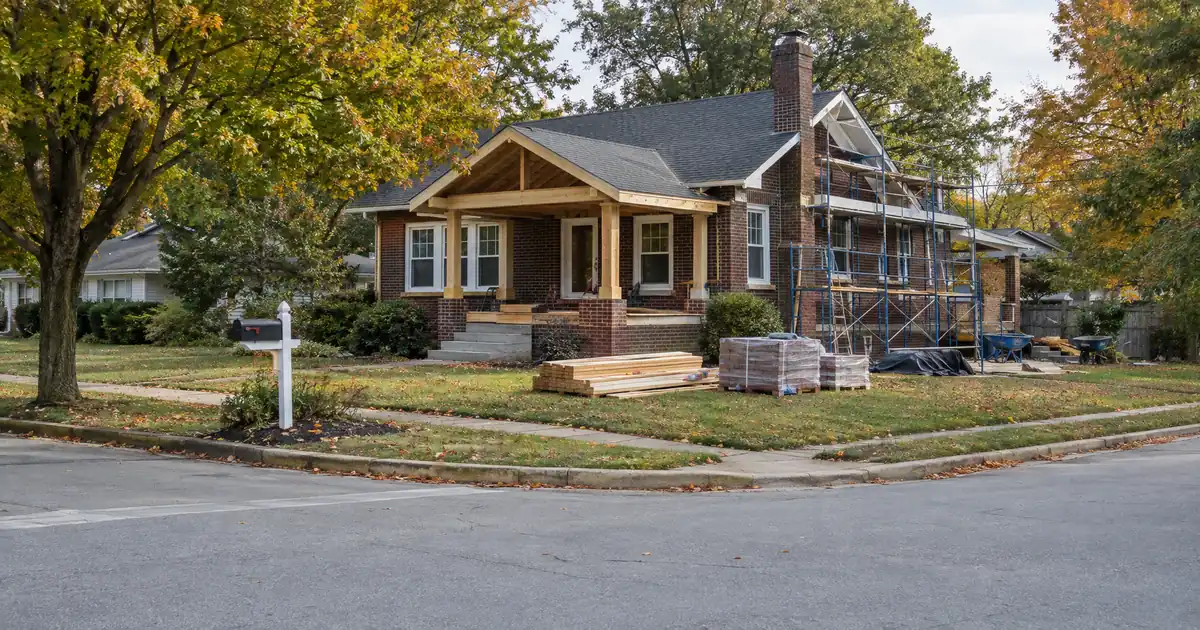
The Quick Read: On a rehab loan, the lender funds the purchase at closing and holds the renovation money back, releasing it in stages as finished work is verified, so you almost always pay for each phase first and get reimbursed after. The size of the rehab changes how many stages you have, how much cash you carry between them, and how much can go wrong.
- The purchase portion funds at closing. The rehab budget sits in a holdback and is released in draws against completed work.
- Up to 100% of the rehab budget can fund through draws on the current program, but you float each phase before it is reimbursed.
- Heavier rehabs have more stages, more inspections, and a bigger early cash gap than cosmetic ones.
- A recorded lien, mismatched lien waivers, or a draw request that does not match the scope of work can stall a release even when the work is done.
- The bridge term has to outlast the rehab, the lease-up, and the refinance. Plan it backward from the exit.
Most investors learn this the hard way. They hear “100% rehab financing” and assume the renovation cash lands in their account at closing. It does not, and the gap between that assumption and reality is where deals get stressed. This guide walks through one draw, then each stage of a rehab, then how the picture changes with project size. Program figures come from Lendmire’s wholesale network and vary by lender, property, and experience.
What a Draw Is and Why Lenders Hold the Money Back
A draw is a release of rehab funds from the holdback to you or your contractor. The holdback is the part of the loan reserved for renovation. The lender sets it aside because its collateral is the property, and an un-rehabbed property is worth much less than the finished one the loan was sized on.
Think about the lender’s position. If it handed over the whole rehab budget at closing and the money went elsewhere, it would be secured by a half-finished house. Holding the money back keeps the loan tied to work that actually exists. Releasing funds only after verification turns each draw into a small, checked advance.
For you, the practical result is simple. The purchase funds go to the seller at closing. The rehab funds come back to you in pieces, usually as reimbursement for work already done.
Key Terms Defined
Draw: A release of renovation funds from the holdback after work is completed and verified.
Holdback: The portion of the loan reserved for rehab and held by the lender until draws are approved.
Scope of work (SOW): The itemized list of renovation tasks and costs that the draw schedule is built from.
Draw schedule: The plan that breaks the SOW into stages, each tied to a release of funds.
Reimbursement draw: A release that repays you for work you already paid for, as opposed to an advance draw.
Advance (forward) draw: A release made before the work is done. It is rare and generally limited to experienced investors.
Date-down: A title update confirming no new liens have been recorded since the last disbursement.
Lien waiver: A signed statement from a contractor or supplier giving up lien rights for the amount paid through a stated date.
Retainage: A slice of the budget held back until the last item is finished and signed off.
Loan-to-cost: Loan size as a percentage of total project cost, the usual yardstick on hard money files.
The Mechanics of One Draw
Every draw follows the same loop, whatever the stage. Lenders set the exact steps in the loan agreement, so read yours before you close.
1. The scope of work comes first. Underwriting wants a detailed SOW, and many lenders want it on their own form. The SOW is broken into stages to create the draw schedule, and each draw amount has to match the cost listed for that stage.
2. You pay for the first phase. Lenders who advertise full rehab financing are technically correct, but you float the opening phase. Your contractor needs to buy materials and start labor before any reimbursement exists.
3. You submit a request with documentation. That means invoices, photos, and often lien waivers for what has been paid.
4. The lender verifies the work. Some lenders send an inspector. Some use a photographer. Some accept photos or video from the borrower.
5. Title and lien control run in the background. Each draw is effectively a new advance secured by the property. Law-firm commentary from Fortra Law notes that lenders must proactively request a date-down at each disbursement, and some pending-disbursement clauses add contractor lien waivers and proof that the owner has paid.
6. The lender releases the funds. The money goes against the verified line items, sometimes less retainage, to you or to the contractor.
A homeowner-education piece from GoBuildYourHouse describes the practical consequence. A recorded supplier lien can freeze a draw until it is resolved, and lien-waiver through-dates should match the draw period. A title insurer’s published mechanic’s lien handbook shows the same pattern: draw endorsements and subcontractor and supplier lien waivers appear as conditions of the title commitment. That handbook was written for one state, so treat it as an example. Title rules vary by state, and some states add their own requirements for larger holdbacks.
Four things decide whether a draw releases smoothly. The request has to match the SOW line items. Title has to be clean. The waivers have to be complete and match the payment period. And the inspection has to confirm the work is actually installed.
How Hard Money Draws Work Across Rehabs of Different Size
The rehab’s scale decides how many draws you see, how often the lender inspects, and how much cash you tie up. The table below shows the general pattern. Specific counts vary by lender.
| Rehab type | Draw pattern | Inspection load | Your cash buffer |
|---|---|---|---|
| Cosmetic | One or two draws | Light, often photos | Modest |
| Moderate | Several draws | Per stage | Meaningful |
| Heavy or structural | Many small draws | Per stage, permits | Largest early |
| Ground-up | Most budget in holdback | Frequent, stage-gated | Large, long |
Light or cosmetic rehab. Paint, flooring, fixtures, and a kitchen refresh can often run on one or two draws, especially with a single general contractor. The cash exposure is small because there is little work to float.
Moderate rehab. Here the work falls into distinct phases, and each phase needs its own draw. You are fronting one stage while the previous one waits on inspection and release.
Heavy rehab. Demolition, structural repairs, and rough mechanical work come first, and they are the hardest to float because nothing has been reimbursed yet. A budget on this scale is usually split into more, smaller draws so that you fund the first phase plus a bit of the next.
Ground-up construction. These loans carry a low starting balance relative to the finished project, with most of the budget in the holdback. Current program parameters allow ground-up construction up to 90% of cost and 75% of completed value at three or more completed projects, with collateral up to 10 units. Plan to cover interest on the full loan amount rather than just disbursed funds, since some lenders charge on the whole balance and some only on what has been released.
Two scope choices change the picture further. Managing subcontractors directly means more frequent payments, which can collide with a draw-count limit or per-draw fee. And some contractors bill on thirty-day terms, so you may not have paid yet when the draw arrives. That helps your cash flow, but your waivers still have to match what was actually paid.
Stage by Stage: What Gets Verified and What Sticks
Stages run in a rough order on most renovations. What a lender verifies, and where draws stall, changes at each one.
| Stage | What gets verified | Common sticking point |
|---|---|---|
| Demo and structural | Work completed, permits | Hidden damage, change orders |
| Rough-in (mechanical) | Installed work, sign-offs | Permit or inspection gaps |
| Insulation and drywall | Completed, closed-in walls | Out-of-sequence work |
| Finishes | Installed fixtures, flooring | Materials delivered, not installed |
| Final and punch | Full completion | Open punch items, retainage |
Demo and structural. This stage has the highest early cash exposure, because you have spent real money and nothing has come back. Surprises here, like rot or code upgrades, tend to produce change orders. A draw request that no longer matches the SOW is a common reason for a hold.
Rough-in. Electrical, plumbing, and HVAC are verified when installed, and permit sign-offs may be part of the lender’s checklist. Many programs fund only work that is completed or installed, so materials sitting on site do not count.
Insulation and drywall. Once walls close, the lender cannot see behind them, so the earlier inspections matter. Work done out of sequence, such as finishes before the rough-in sign-off, can make a lender pause the release.
Finishes. Cabinets, flooring, and fixtures count when they are installed. Delivered boxes in the garage do not.
Final and punch. The last draw is usually small but important. Open punch items and retainage can hold back the closing-out payment, and the final inspection often feeds your refinance or sale paperwork.
A Worked Example: The Cash-Gap Curve
This is an illustrative schedule, not a program quote. It uses percentages of the rehab budget so the shape is visible. The split is modeled for the example, and your real schedule comes from your own SOW.
| Stage | Share of budget | You pay before draw | Reimbursed after draw |
|---|---|---|---|
| 1. Demo and structural | 20% | 20% | 20% |
| 2. Rough-in | 25% | 25% | 45% |
| 3. Drywall | 20% | 20% | 65% |
| 4. Finishes | 25% | 25% | 90% |
| 5. Final and punch | 10% | 10% | 100% |
On a clean schedule, your peak exposure is roughly one stage at a time. That is why the first stage feels heavy for a heavy rehab: 20% of the budget is out the door before the lender releases anything.
Now suppose the first draw stalls on a recorded supplier lien. You are still paying for stage two, so you now carry stages one and two together, or 45% of the budget. Add a failed inspection, and the exposure stacks again. This is the cash-gap curve the schedule hides. Working capital, not the loan’s headline terms, is what keeps a rehab moving.
When Stages Overlap, Slip, or Go Over Budget
Real projects rarely run in clean sequence. Trades overlap, deliveries slip, and scope changes mid-job.
Partial approvals. If an inspector finds some work complete and some not, the lender may release only the verified line items. You carry the rest until it is fixed and re-inspected. The fix is to submit requests for work that is truly finished, not nearly finished.
Failed inspections. A failed stage means a re-inspection and another round of documentation. It also pushes the next draw back. Ask each lender how re-inspections are scheduled and whether they carry a fee.
Out-of-sequence work. If a contractor jumps ahead, say starting finishes before rough-in sign-off, the lender may decline to fund the later work until the earlier stage clears. Keep your contractor aligned to the draw order.
Overruns and scope changes. A budget that grows needs lender approval to rebalance line items. Unspent items in one category may or may not be reallocated, depending on the loan documents. Do not assume the holdback is a flexible pool. Get changes approved in writing before the work happens, not after.
Work started before closing. If work began before the loan closed, the title company may require extra protections or a pause before it will cover mechanics’ liens. Tell your lender and title company early.
The Last Draw and the Exit
The final draw ties your rehab to your exit. Retainage, punch items, and the closing inspection all land here, and so do your payoff, sale, or refinance plans.
Hard money terms on the current program run 6 to 18 months, interest-only, with no prepayment penalty, and there are no multi-year options. That makes the exit plan part of the draw plan. The term has to cover the rehab, the lease-up, any seasoning period, appraisal, and underwriting. A slow draw delays your contractors, which delays the rehab and the exit, while bridge interest keeps accruing.
Many investors refinance out of hard money into long-term DSCR financing once the property is stabilized, and Lendmire arranges that path. A DSCR loan does not fund rehab, so the draw loan and the DSCR exit are two separate jobs. The DSCR refinance sizes on its own appraisal and the property’s rent, not on the after-repair value or how much was drawn. Seasoning is lender policy, usually measured from when the title was recorded rather than when the rehab ended. A two-step DSCR cash-out can sometimes pay off hard money at cost, though how far leverage stretches depends on the cash-out ceiling.
Documented rehab spend matters in the exit because a refinance reviewer may ask for receipts. Clean draw paperwork now saves you from reconstructing it later.
For the full mechanics of that second loan, see Lendmire’s complete DSCR loans guide.
Running Several Rehabs at Once
Running two or three projects at once multiplies the cash-gap curve. Each project has its own stage one, and each stage one needs fronted cash.
Stagger the start dates so your heaviest early stages do not land together. A demo phase on one house and a demo phase on another means two peak exposures at the same time. Track each project’s draw requests, inspection status, and lien waivers on a single sheet. Keep a cash reserve sized to your worst realistic case, which is usually two stalled draws on two projects, not one.
Leverage tiers also matter here. On the current program, fix-and-flip leverage reaches 93% of project cost at five or more completed projects, 90% at two or more, and 85% with fewer than two, with each tier capped at 75% of after-repair value. Those are program ceilings that vary by lender, property, and experience, and the top tier is reserved for experienced investors. There is no true 100% purchase program. The 100% figure applies only to the rehab budget, funded in draws against completed work.
Aligning Contractor Payments With Lender Draws
Your contractor and your lender run on different clocks. A contractor often wants a deposit and then milestone payments. The lender wants proof of finished work before it reimburses you.
The cleanest arrangement matches the contractor’s payment milestones to the lender’s draw stages. If your contractor wants a large deposit but your lender reimburses only after work is installed, you carry that gap. Deposit-heavy contracts increase your exposure early. Milestone-matched contracts keep your outlay close to what the lender will reimburse.
Ask for lien waivers with every payment, with through-dates that match the draw period. That one habit prevents the most common holds.
Common Misconceptions
Full rehab financing means the money arrives up front. It does not. You float the first phase, and draws reimburse completed work.
Materials on site count. Many programs fund only work that has been completed or installed.
A passed inspection means funds are released. A recorded lien or mismatched waivers can stop a draw even after the inspection clears.
Draws cost nothing. Per-draw inspection and wire fees are common, and the amounts vary by lender.
The lender will explain the draw terms. Many do, but terms vary lender to lender. Read the loan documents and ask before you close.
I can refinance when the rehab ends. Seasoning follows the lender’s own rule, not the finish of the work or a signed lease.
What to Confirm Before You Start
Ask these questions of any hard money lender before you sign. Answers are lender-specific, so get them in writing.
- Are draws reimbursement-only, or are advance draws ever allowed?
- How many draws are permitted, and is there a minimum?
- What is the fee per draw, and are inspections or wires billed separately?
- Does the lender use an inspector, photos, or borrower-submitted video?
- Is interest charged on the full loan or only on disbursed funds?
- What lien waivers and title updates are required at each draw?
- Can I rebalance line items if the scope changes?
- Does the lender verify my working capital before closing?
The program basics matter too. Credit starts at a 620 minimum with extra conditions below 660, and first-time investors qualify at the lower leverage tiers. Collateral is non-owner-occupied 1-4 unit residential, with ground-up to 10 units. Loan amounts run up to $5,000,000, with larger by exception. Everything is subject to lender guidelines and is not a commitment to lend.
Frequently Asked Questions
Do I get my rehab money at closing?
No. The purchase portion funds at closing, and the rehab budget is held back and released in draws against completed work. You typically pay for each phase first and are reimbursed after verification.
Do materials count before they are installed?
Usually not. Many programs release funds only for work that is completed or installed, so delivered materials sitting on site do not count toward a draw. Confirm the exact rule in your loan documents.
How many draws should I expect?
It depends on the rehab. A cosmetic job can run on one or two draws, while a heavier rehab is split into several smaller ones. Your lender sets limits, and managing subcontractors directly can bump into a draw-count cap.
What if a draw is only partly approved?
The lender releases the verified line items and holds the rest until the remaining work is finished and re-inspected. You carry the unreimbursed portion in the meantime, which is why a cash reserve matters.
Can I run two rehabs on the same cash?
Only if you stagger the stages so the heaviest early phases do not overlap. Each project needs its own fronted first phase. Size your reserve for stalled draws on more than one project.
Next Steps
If you are buying, rehabbing or refinancing an investment property on a short timeline and want to see how the numbers work, Lendmire can help you compare hard money options based on the project, the exit plan, leverage, and your goals. Lendmire is a broker arranging financing through select lenders in its wholesale network across 41 markets, including Washington, D.C.
About Lendmire
Lendmire (NMLS# 2371349) is a mortgage brokerage focused on DSCR investor financing, helping arrange programs through wholesale and investor-lending channels in 41 markets, including Washington, D.C. DSCR loans are evaluated by the lender on property cash flow rather than personal income, subject to lender guidelines, supporting LLC closings and accommodating investors with four or more financed properties. Scotsman Guide Top Mortgage Workplace in both 2025 and 2026.
Get Started
Ready to find the right loan for you?
In about 30 seconds you can review financing options available for your investment property. No commitment required.
Informational only. Not a Loan Estimate, approval, or commitment to lend. Program availability and eligibility are subject to lender guidelines, credit approval, property review, and underwriting.
References
1. Fortra Law – Mechanic’s lien coverage
2. GoBuildYourHouse – Liens, waivers, draws
3. Stewart Title – Mechanic’s Lien Handbook
This article is part of Lendmire’s hard money loan program — full qualification details, guidelines, and scenarios live on the program page.
Related reading: How a DSCR Lender Splits a Rental Business Across Two LLCs · How DSCR Blanket Loan Release Terms Work for Doors in LLCs · How to Sell a Super Jumbo DSCR Pool in Stages
Brandon Miller
Founder & CEO, Mortgage Loan Originator, Lendmire LLC
- Mortgage Loan Originator · NMLS# 1129696 · Verify on NMLS Consumer Access
- North Carolina Real Estate Broker · License# 343312 · Verify on NCREC
- North Carolina Insurance Producer · License# 19053198 · Property, Casualty, Life, Health · Verify on NAIC SBS
- Lendmire LLC · Firm NMLS# 2371349 · Verify firm licensure
Legal disclosures. Lendmire (NMLS# 2371349) is a state-licensed mortgage brokerage that arranges financing through wholesale lender relationships. Lendmire is not a direct lender, depository institution, or registered financial advisor. The discussion above is general informational content about real estate financing — it is not financial, legal, or tax advice, and readers should consult licensed professionals for guidance on their individual circumstances. Loan inquiries are subject to lender underwriting; this article does not represent a commitment to lend. Loan terms, rates, and qualification standards vary by borrower, property, and state, and are subject to change at any time. Equal Housing Opportunity. NMLS Consumer Access: nmlsconsumeraccess.org.