
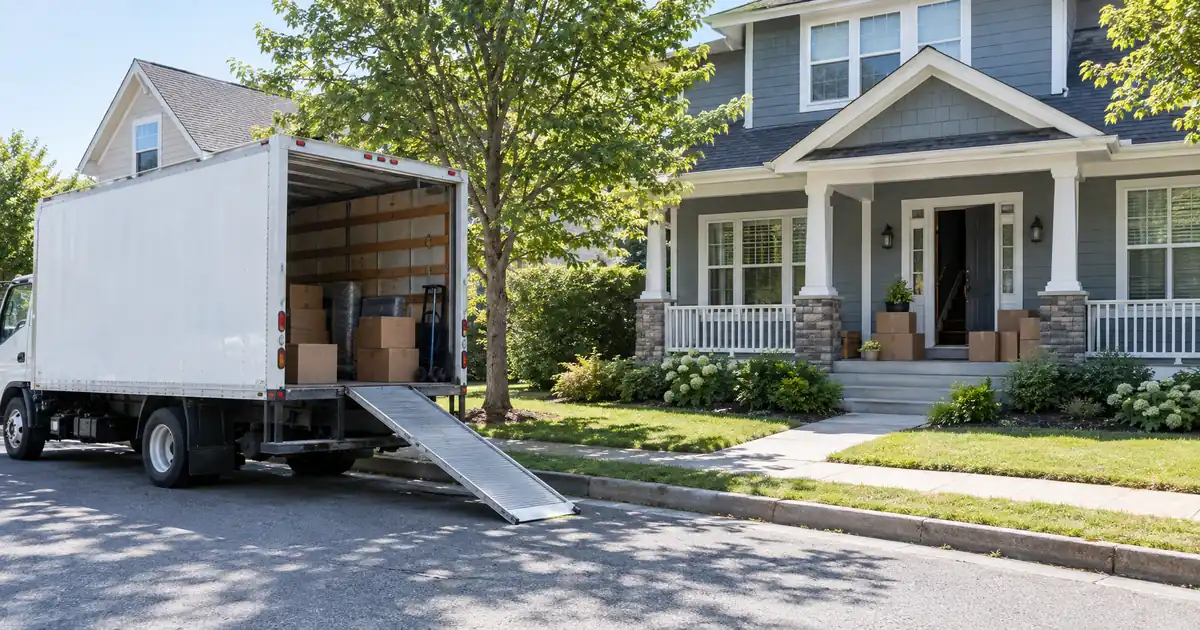
The Quick Read: As of September 28, 2026, buyers have more homes to choose from and less room in their budgets. Existing-home sales slid below a 4 million annual pace, months of supply rose, and mortgage rates climbed for a fourth straight week. When choice is wide, a listing has to earn attention. Easy walking to shops, schools and trails is one of the few features that can do that work, if it’s real and the seller can prove it.
Key Takeaways
- NAR’s report on August sales, released September 10, 2026, showed a 3.98 million annual pace and 4.9 months of supply, the highest in over ten years by NAR’s account.
- Freddie Mac’s survey for the week of September 24, 2026, showed the 30-year fixed rising for a fourth straight week.
- Builders are cutting prices and offering incentives, so resale sellers compete with new construction.
- Walkability is a stated preference in NAR’s July 2026 survey, not a proven price premium.
- Buyers should walk the actual route to the shops, school and trail before trusting a listing adjective.
What Changed in September?
Sales slowed, supply grew and borrowing costs rose, all in the same month. That combination shifts leverage toward buyers on choice while squeezing them on budget.
NAR’s existing-home sales report, released September 10, 2026, put August sales at a 3.98 million annual rate. That was down 2.0% from July and 1.2% from a year earlier. It was the first reading below 4.0 million since June 2025.
Inventory reached 1.62 million units, up 5.9% from August 2025. It was the first time since November 2019 that inventory topped 1.6 million. Months of supply rose to 4.9 from 4.6 in July. NAR’s chief economist said that gives buyers better chances to negotiate.
Now the rate side. Freddie Mac’s survey put the 30-year fixed at 7.03% for the week of September 24, 2026, up from 6.95% the week before. A year earlier it was 6.30%. The four weekly gains since September 3 add up to 32 basis points.
One caution. Freddie’s survey covers conventional, conforming purchase loans for borrowers with 20% down and excellent credit. It is not what every borrower pays. The MBA’s weekly survey for the week ending September 18 showed its own 30-year contract rate at 7.12%, from 6.97%. Different methods, different numbers. Don’t treat them as one. Every figure here varies by lender and program — guidelines, property type, leverage, and credit profile all apply.
The same MBA release showed purchase applications, unadjusted, 11% below a year earlier. Buyers are shopping. Fewer are filing.
Underneath the rate move sits the bond market. CNBC reported on September 28, 2026, that the 10-year Treasury yield was up more than 5 basis points, near 5.234%. Earlier in September it was just below 4.8%, per CNBC’s September 26 explainer. Mortgage rates follow long-term yields, not the Fed’s overnight rate.
The Fed did raise its target range 25 basis points to 3¾–4% on September 16, per the Federal Reserve’s implementation note. But mortgage rates didn’t simply follow that decision. Yields actually dipped right after it and then surged on hawkish commentary and strong data, CNBC reported. Anyone who says “the Fed hike set your mortgage rate” has the mechanism backwards.
What About New Construction?
Builders are the seller’s real competition right now. They cut prices, add incentives and have more inventory than a typical resale owner.
Census reported on September 24, 2026, that August new-home sales ran at a 684,000 annual rate. That is up 6.4% from July and 2.0% below a year earlier. Supply stood at 8.5 months. Inman noted on September 25 that the monthly gain sat within Census’ margin of error. So don’t read it as a rebound.
The same Inman piece, citing the NAHB Housing Market Index, said 38% of builders cut prices in September, and 66% used incentives, the highest share since December. The average cut held at 6%.
Here’s the point for a resale seller. A buyer who tours a discounted new build in the morning will look at your house in the afternoon with that comparison in mind. A new build on the edge of town offers a price cut. It rarely offers a sidewalk to the coffee shop.
Why Do Walkable Neighborhood Selling Points Matter Now?
When buyers have choices and little urgency, they compare more carefully, and features that change daily life start to count. Walkability is one of them.
NAR’s 2026 Community and Transportation Preference Survey was released July 10, 2026. That is outside this month’s window, so treat it as background. It found 59% of respondents preferred a smaller lot in a walkable area over a larger lot that requires more driving. A companion NAR write-up reported that 89% call sidewalks and places to walk important, and 82% call easy walking distance to shops and parks important.
Stated preference is not realized price. The survey measures what people say. It gives no dollar premium, and I’d ignore any blog that claims a tidy percentage bump. I haven’t seen one backed by a source I’d trust.
There’s also a misreading worth clearing up. Walkable doesn’t mean urban. Suburban streets with sidewalks, a trail connection and a small town center count too. A seller in a quiet subdivision with a path to the elementary school has a real selling point, even if no one would call the place a city.
Meanwhile, Realtor.com’s “Best Time to Buy” release, dated September 10, 2026, picks September 27 through October 3 as this year’s sweet spot. It projects up to 31.9% more active listings than at the start of the year and listing prices about 3.5% below the seasonal peak. It also says active listings remain about 11% below pre-pandemic levels. Its quote: shoppers get “more choices and less urgency.”
More choices, less urgency. That sentence is the whole environment in four words.
What It Means for Home Buyers
Buyers have leverage on choice and negotiation, but the rate move eats into monthly budgets. The smart play is to spend that leverage on the features you’ll live with, not on the adjective in the listing.
Consider what the pieces add up to. Supply is at 4.9 months, the highest in over ten years. Rates sit higher than a year ago. Purchase applications are down from last year. A buyer who is payment-sensitive, especially a first-time buyer, has to weigh all three at once.
Two things follow.
First, walkability can be a budget tool, not just a lifestyle perk. A home where you can reach daily errands on foot may ease pressure on your transportation costs. I can’t put a dollar figure on that, and no source in front of me does. But it’s a fair question to ask when you compare a walkable home against a cheaper one that needs a car for everything.
Second, verify it. Listings use “walkable” loosely. Walk the route yourself, at the hour you’d actually use it. Check the path to the grocery store, the school and the trail. Look for crossings, lighting and sidewalk gaps. A score on a website won’t tell you whether the sidewalk ends at a four-lane road.
Not every price band has a walkable option, and I won’t pretend otherwise. In many markets the walkable homes are a thin slice of supply. That scarcity is the reason sellers should lead with it, and the reason buyers should confirm it.
Prices also aren’t falling uniformly. NAR’s median existing-home price was $429,100, up 1.6% from a year earlier, per its housing snapshot. New-home medians are down. HousingWire reported a new-home median of $393,700, down 5.8% from a year earlier. Different measures, different kinds of homes. Don’t blend them into one “prices are falling” headline.
And 4.9 months is a national figure. NAR noted sales fell in every region except the West, which was flat. Your local market may feel tighter or looser than the average.
My Take
My read: this is a market that rewards specifics. Sellers who say “walkable” and stop there will lose to sellers who say “eight-minute walk to the grocery store, the library and the trailhead.” Buyers who accept a vague claim will find out later what it meant.
Let me be plain about what I don’t know. Nobody has shown me a reliable premium for walkability in this softening market, and I won’t invent one. What the data does show is wider choice, slower sales and a buyer pool with less monthly room. In that setting, the homes that explain themselves well should hold attention longer.
I also think the new-home discounting is being oversold as a verdict on all housing. It is one segment with its own incentives. Zonda has said buyers are becoming desensitized to discounts. If that holds, builders will have to keep sweetening, and resale sellers will need their own edge. Walkability, condition and a clean story are the edges sellers control.
On rates, my honest view is that nobody can call the top. CME FedWatch showed roughly a 64% chance of an October hike, per CNBC on September 25. Some strategists quoted there argue that much of the hike fear is already priced in. Sources disagree on what drove the sell-off, too: inflation, oil, global bonds, deficits and heavy debt issuance all come up. I’d plan for rates staying where they are, and treat any improvement as a bonus.
What I’d Do Now
Plan around today’s conditions, not the ones you wish you had. Here is how I’d approach it from each side of the table.
If you’re buying:
- Decide which daily trips you want to make on foot, then test those exact routes before you make an offer.
- Use the inventory. With more listings and less urgency, you can afford to wait for the right home and to ask for concessions.
- Gather rate quotes on the same day if you compare them. Quotes collected on different days reflect different markets, and with yields moving this fast, they aren’t comparable.
- If you find the home, lock. A rate lock simply fixes your quoted terms for a set period so a later market move doesn’t change them. Floating means you’re betting the next week is better than this one, and this month has been a hard bet to win.
- Look at your loan options before you shop seriously. Some borrowers, including self-employed buyers and investors, qualify on something other than a standard pay stub, subject to lender guidelines. The page carries the current guidelines, and I won’t restate them here.
If you’re selling:
- Lead with proof, not adjectives. Name the actual destinations and the actual walking distance.
- Photograph the route, not just the kitchen. A sidewalk, a trail entrance and a view of the corner store say more than a caption.
- Price against the competition you really face. That includes discounted new builds with incentives, not just last spring’s resale comps.
- Keep the home in good condition. Walkability gets buyers through the door. It doesn’t cover deferred maintenance.
If you own a rental you’re thinking of selling: the tax treatment of points on a refinance tied to a sale is a fair question. I covered it in a separate piece on claiming refinance points when selling a rental property. Your tax advisor has the final say.
One more thing: the next NAR existing-home sales report is due October 13, 2026. If sales slip again or supply climbs past 4.9 months, expect the buyer-leverage story to get louder. If they bounce, the softening may be a pause.
If you’re weighing a purchase or a refinance this fall, Lendmire can walk you through how the current programs fit your file.
For the end-to-end picture of how DSCR loans work — qualification, structures, and the full process — see Lendmire’s complete DSCR loans guide.
Frequently Asked Questions
Are walkable homes selling for more right now?
There’s no sourced premium I can point to. NAR’s July 10, 2026 survey found 59% of respondents would take a smaller lot in a walkable area over a larger lot requiring more driving. That measures stated preference, not realized price. Treat any specific premium percentage you read online with suspicion.
Did the Fed’s September hike raise mortgage rates?
Not directly. The Fed raised its target range to 3¾–4% on September 16, 2026, but mortgage rates track longer-term yields. CNBC reported yields moved lower right after the decision, then jumped on hawkish commentary and strong data. The 30-year fixed in Freddie Mac’s survey still rose four weeks running.
Does walkable mean I have to live in a city?
No. Sidewalks, trail links and small town centers in suburbs count. What matters is whether you can reach the things you use often without a car. A builder-community source makes the same point, though it’s promotional, so I’d use it only as a reminder to check the actual route.
About Lendmire
Lendmire — NMLS# 2371349 — is a mortgage brokerage whose founder writes this column. DSCR investor programs reach 41 markets, including Washington, D.C.; consumer programs such as bank statement, HELOC and down payment assistance loans are arranged in 16 states; every loan is placed with, and underwritten by, a wholesale lender under that lender’s guidelines. Scotsman Guide named Lendmire a Top Mortgage Workplace in both 2025 and 2026.
Get Started
Ready to find the right loan for you?
In about 30 seconds you can review financing options available for your home or investment property. No commitment required.
Informational only. Not a Loan Estimate, approval, or commitment to lend. Program availability and eligibility are subject to lender guidelines, credit approval, property review, and underwriting.
References
1. NAR existing-home sales report, August 2026
2. Freddie Mac Primary Mortgage Market Survey
3. MBA Weekly Applications Survey, September 23, 2026
4. CNBC, 10-year Treasury explainer, September 26, 2026
5. Federal Reserve implementation note, September 16, 2026
6. Inman, August new-home sales
7. NAR walkability survey release, July 10, 2026
9. HousingWire, new-home incentives
10. CNBC, Treasury yields, September 25, 2026
This article is part of Lendmire’s Mortgage News series — every loan program’s qualification details, guidelines, and scenarios live on the loan options page.
Related reading: Sell Your Home Faster This Fall As Inventory Climbs And Rates Rise · Buying A Home In A Seller’s Market Gone Soft, September 2026 · Why A Local Real Estate Broker Matters As Buyers Gain Leverage, September 2026?
Brandon Miller
Founder & CEO, Mortgage Loan Originator, Lendmire LLC
- Mortgage Loan Originator · NMLS# 1129696 · Verify on NMLS Consumer Access
- North Carolina Real Estate Broker · License# 343312 · Verify on NCREC
- North Carolina Insurance Producer · License# 19053198 · Property, Casualty, Life, Health · Verify on NAIC SBS
- Lendmire LLC · Firm NMLS# 2371349 · Verify firm licensure
Required disclosures. Lendmire (NMLS# 2371349) operates as a licensed mortgage broker, not a direct lender or depository. The discussion in this article is general in nature and should not be relied upon as financial, legal, or tax advice — every investment scenario is unique and should be reviewed by a qualified professional. Any loan inquiry is subject to lender underwriting, and this article is not a commitment to lend or a guarantee of approval. Mortgage rates, loan terms, and program guidelines vary by borrower, property, and state, and may change without notice. Equal Housing Opportunity. Verify licensure at NMLS Consumer Access.