
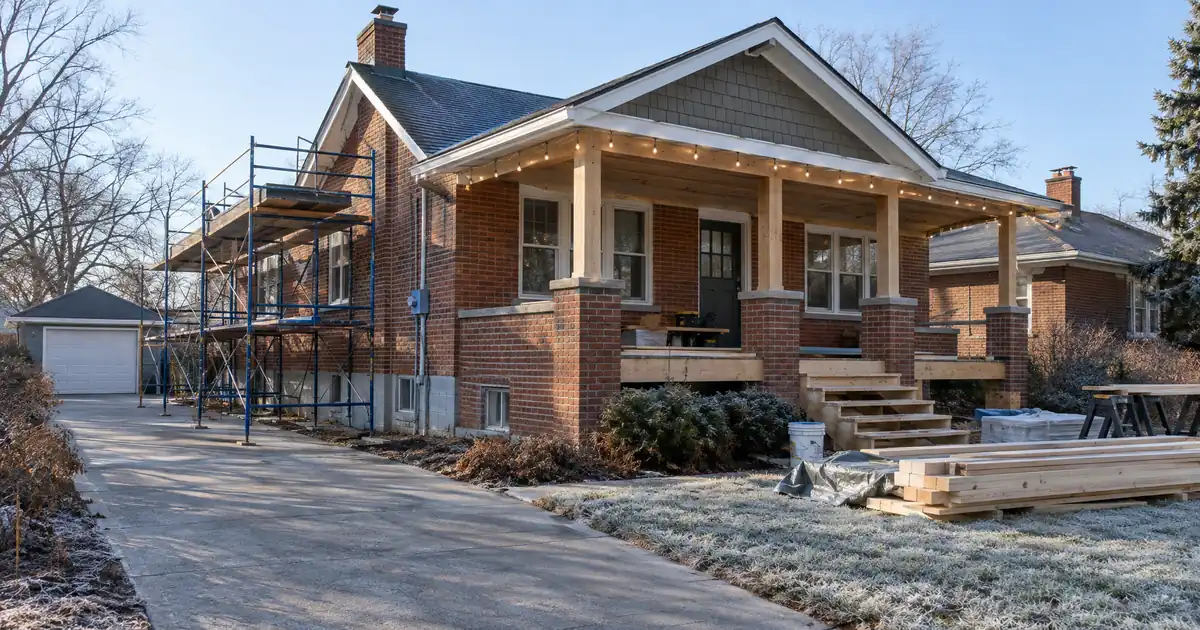
The Quick Read: A smaller cash-out now fits the investor whose hard money note is close to maturity, whose rehab added modest value, or whose next deal needs only part of the equity, while waiting for a seasoned cash-out fits the investor with a large value gain, a comfortable maturity runway, and the patience to carry the bridge loan longer.
- A smaller cash-out now usually sizes on what you paid plus documented rehab, so little of the value the rehab created is reachable.
- Waiting generally lets the lender size on its own appraised value, which can return more cash if the rehab worked.
- On most files across Lendmire’s wholesale network, a DSCR cash-out on an investment property tops out at 75% LTV and expects about 6 months of ownership, measured from title recording.
- The bridge note’s maturity date, the carry while you wait, and the appraisal are the three variables that decide the choice.
The honest answer is that neither option wins on its own. The smaller cash-out protects you from maturity pressure and appraisal risk, and the cost is leaving equity in the property. Waiting can return more capital, and the cost is more months of bridge carry and the chance that the appraisal disappoints. BRRRR is a name for a sequence, not a regulated product, and the refinance step is an ordinary cash-out refinance. That means the lender’s own policy sets the rules, and the lender’s policy is what you are really choosing between.
DSCR Cash-Out Calculator
Run the cash-out numbers in your market
Rate source: Freddie Mac 30-yr average via FRED® — Federal Reserve Bank of St. Louis · effective Oct 15, 2026
Prefilled with starting assumptions — enter your property’s value, balance, taxes, and insurance for a more accurate picture.
Program parameters update from Lendmire’s centralized guideline source. Taxes and insurance are editable estimates.
As of Oct 15, 2026 · General Freddie Mac market benchmark, not a Lendmire loan offer. Property value, balance, taxes, and insurance are editable estimates. Maximum loan-to-value varies by lender, program, property type, and seasoning. Not a Loan Estimate, approval, or commitment to lend. Program availability and eligibility are subject to lender guidelines, credit approval, property review, and underwriting.
Side-by-Side
| Factor | Smaller Cash-Out Now | Wait for Seasoned Cash-Out |
|---|---|---|
| Value basis | Cost basis: price plus documented rehab | Lender’s appraised value |
| Review basis | Rent coverage on the smaller loan | Rent coverage on the larger loan |
| Documentation | Settlement statement, rehab invoices, draw history, lease | Same file, plus a lease in place before appraisal |
| Property types | Standard 1-4 unit rentals; lender-specific | Standard 1-4 unit rentals; network-wide |
| Entity vesting | Program-specific; retitling can disturb the count | Program-specific; retitling can disturb the count |
| Timeline | Depends on lender policy; some allow it earlier | Runs from recorded title, about 6 months typical |
| Reserve expectations | Commonly around 6 months PITIA | Commonly around 6 months PITIA |
| Main risk | Equity from the rehab stays trapped | Bridge maturity and appraisal shortfall |
The left column reflects published industry norms and lender-by-lender policy, because early cash-out before seasoning is not a uniform product. The right column reflects typical parameters across the network. Both vary by lender, property, and borrower, and neither is a commitment to lend.
What Seasoning Really Decides
Seasoning decides which value the lender trusts. Before the clock clears, many lenders size cash-out on cost, because the market has not yet proven the new value. After it clears, they size on the appraisal. That single switch drives most of the gap between the two choices.
The clock generally runs from the recorded deed. Finishing the rehab or signing a lease does not start it. Most lenders care about time on title, though a signed lease and deposit usually need to be in place before the appraisal is ordered.
Across the network, about 6 months of ownership is the common expectation for a cash-out. Some lenders will consider an earlier exit when rehab is well documented. Others will not budge. Ask for the seasoning policy in writing before you commit to a timeline, because it is lender policy, not law.
A related point trips up many investors. A loan sized only to the payoff and costs, with nothing left over, is generally treated differently from a loan that returns cash. A small leftover can flip the classification and change the seasoning rules, so confirm the label with the lender before you count on a number.
When a Smaller Cash-Out Now Is the Better Fit
A smaller cash-out is the stronger choice when time is the scarcest resource. Three situations tend to point this way.
The bridge note is running out of room. Hard money terms commonly run 6 to 18 months, varying by lender, property, and experience. The maturity date does not move because a refinance is delayed. If the note matures before the seasoning clock clears, waiting becomes an extension fee, a bring-cash-to-close event, or a forced sale. A smaller refinance now can retire the note on your schedule.
The value gain is thin. Say the rehab was cosmetic and the appraisal is likely to land near your all-in cost. In that case, waiting buys little extra proceeds. Cost-basis sizing and value-based sizing may land close together, and the extra months of carry have nothing to offset them. Here the smaller loan costs you very little.
The next deal is real and funded by part of the equity. Picture an investor who needs only a portion of the trapped capital to make the next down payment. Pulling that portion now puts the money to work sooner than a larger payout later. Capital that sits idle is a cost, even if it never shows up on a statement.
A smaller loan also raises the coverage number. DSCR compares monthly rent to PITIA (principal, interest, taxes, insurance, and association dues). Borrowing less shrinks the denominator, so a property that sits near 1.00 on a larger loan can clear more comfortably on a smaller one. 1.00 is where many select programs start. A separate select-lender path takes coverage below 1.00, with leverage and terms adjusted.
One caution applies here. Clearing 1.00 does not mean the property cash flows. Repairs, vacancy, management, utilities, and capital expenses all sit outside the calculation.
Consider a scenario where the appraisal is the unknown. If you are unsure the appraiser will credit the rehab, a smaller loan keeps you inside a safer proportion of value. A low appraisal can turn a planned cash-out into a cash-in event. A modest loan size absorbs that miss better than a maximum one does.
The risks of going early are real, though. You may leave equity behind that a seasoned appraisal would have released. You may also face a second set of closing costs if you later cash out again, and you should check any prepayment terms on the first new loan before choosing a two-step path. Without an itemized scope of work and invoices, an appraiser may also miss the value you added.
When Waiting Is the Better Fit
Waiting is the stronger choice when the rehab created real value and the runway is long enough to harvest it. The appraisal is the lever, and the seasoned clock is what unlocks it.
The value gain is large. Run the numbers on a heavy rehab that took a distressed property to full rental condition. After seasoning, a cash-out sized on appraised value can reach up to 75% LTV on an investment property, subject to rent coverage and reserves. Cost-basis sizing would not reach that equity, so the difference can be the whole point of the strategy.
The maturity date is comfortable. A hard money note with several months left after the seasoning clock clears can simply be paid off at that point. Hard money terms are interest-only, and many structures carry no prepayment penalty, so timing the payoff costs you carry rather than a fee. Carry is still real money, and it is the number to weigh against the extra proceeds.
You are confident in the rent and the appraisal. The loan has to clear the coverage test at the rent the appraiser reports, not the rent you hope for. A bigger loan lowers the coverage ratio, so test the larger obligation against a conservative rent figure before you rely on it.
A simple break-even test helps. Compare the extra cash you expect from waiting against three costs: the added months of bridge carry, any second closing if you chose a two-step path, and the return the idle capital could have earned elsewhere. If the extra cash clearly exceeds those costs, wait. If it only barely does, the risk of a low appraisal usually tips the decision toward going early.
Waiting also demands readiness. The file should have a lease and deposit, the rehab invoices and draw history, and a payoff statement. Credit also matters at that point. A 620 floor exists in parts of the network, most programs want around 660, and scores of 700 or higher open the strongest leverage tiers. Reserves vary by lender, leverage, and loan size, commonly around 6 months of PITIA, with loans above $1,500,000 typically stepping up to about 9 months.
Three property types are outside these programs entirely. Manufactured homes, log homes, and barndominiums are not offered, so a rehab on one of them has no DSCR exit through this network.
Why the Agency Exception Rarely Rescues a Hard Money Purchase
Investors sometimes assume delayed financing lets them skip the wait. The agency Selling Guide does contain that exception, and it also has two separate tests: time on title and the age of the loan being paid off. The exception applies to cash purchases, and it returns documented cost rather than after-repair value. A purchase financed with hard money generally does not fit it.
That agency framework does not govern DSCR loans. Select DSCR lenders may borrow the idea at their own discretion, but you cannot count on it. Treat any early cash-out as a lender-by-lender question, and ask for the policy before you close the bridge.
The same guide family names the forms that agencies use to document rent and income property value, including the Form 1007 rent schedule and Form 1025 small income property report. DSCR programs may use different forms, so use these names for orientation only.
Edge Cases That Change the Answer
- The two-step path. A smaller or payoff-only loan now, followed by a cash-out later, can work. It adds a second closing and may trigger prepayment terms, so it only makes sense when the early exit solves a real maturity problem.
- Entity vesting. Moving title between entities can disturb the seasoning count. Ask the lender before you retitle, subject to program terms.
- Short-term rental collateral. Leverage and coverage treatment differ, and these files expect hosting history, so check program terms.
- Cash left in the deal. Leaving some capital in the property is a normal outcome of BRRRR, not a failure. Judge it by the return on the trapped capital.
Lendmire’s piece How Much a BRRRR Cash-Out Refinance Returns After Hard Money Payoff walks through how the numbers play out after the exit.
A Practical Way to Decide
Start with the maturity date. If the note ends before a seasoned cash-out is possible, the decision is made for you, and the smaller cash-out or a payoff-only loan becomes the working path. If the note has room, move to the value gain. A thin gain argues for going early, and a large gain argues for waiting.
Then test the coverage ratio at a conservative rent on the larger loan. If it only clears at optimistic rent, the smaller loan is the safer structure. Finally, ask what the cash is for. A funded next deal justifies a partial pull sooner, and idle proceeds justify patience.
Many investors refinance out of hard money into long-term rental financing once the property is stabilized, and Lendmire brokers that path through its hard money exit refinance program. The complete DSCR loans guide covers the long-term loan itself in more depth.
Tax treatment varies by situation; consult a qualified professional.
The Balanced Verdict
Go early when maturity, a thin value gain, or an imminent next deal makes time more valuable than equity. Wait when the rehab created substantial value, the note has runway, and the rent supports the larger loan. If the numbers are close, the appraisal risk usually favors the smaller loan, because a miss on a larger one costs far more than a conservative sizing.
Frequently Asked Questions
Can I refinance right after the rehab is finished?
It depends on the lender. Finishing the rehab does not start the clock, which generally runs from the recorded deed. Some lenders will consider an earlier exit on cost basis when rehab is documented, while the network norm for a full cash-out is about 6 months of ownership.
Does borrowing less avoid the seasoning wait?
Not automatically. Some lenders will do an early exit sized on cost, but others require the clock regardless of loan size. A payoff-only loan with no cash back is generally treated differently from a cash-out, so confirm the classification with the lender.
What if the appraisal comes in low?
A low appraisal shrinks the cash back, and on a heavily leveraged refinance it can leave a gap against the payoff. That is the strongest argument for a conservative loan size. Plan a fallback before closing the bridge, such as an extension, a payoff-only loan, or bringing cash to close.
Does delayed financing help after a hard money purchase?
Usually not. The agency exception is built for cash purchases, and a hard money financed purchase generally fails that test. DSCR lenders set their own treatment, so treat it as a question for the lender rather than an assumption.
How early should I talk to the exit lender?
Before you close the bridge loan. The seasoning policy, the value basis, the reserve expectation, and the documents needed are all easier to plan for than to repair later. A broker who sees many lenders’ guidelines can compare policies before you commit to a timeline.
If you are buying, rehabbing, or refinancing an investment property on a short timeline and want to see how the numbers work, Lendmire can help you compare hard money options based on the project, the exit plan, leverage, and your goals.
The investors who handle this decision best treat the maturity date and the appraisal as constraints to plan around, not surprises to react to.
About Lendmire
A non-QM mortgage broker (NMLS# 2371349), Lendmire arranges DSCR financing for real estate investors in 41 markets, including Washington, D.C. Because deals are underwritten primarily on property cash flow rather than personal income documentation, the structure suits self-employed buyers and entity-owned portfolios. Lendmire places loans through wholesale investor lenders; it is not a direct lender. Scotsman Guide named Lendmire a Top Mortgage Workplace in both 2025 and 2026.
Get Started
Ready to find the right loan for you?
In about 30 seconds you can review financing options available for your investment property. No commitment required.
Informational only. Not a Loan Estimate, approval, or commitment to lend. Program availability and eligibility are subject to lender guidelines, credit approval, property review, and underwriting.
References
2. Fannie Mae Selling Guide B2-1.3-03
3. Fannie Mae: Appraisers Property Underwriting
This article is part of Lendmire’s hard money loan program — full qualification details, guidelines, and scenarios live on the program page.
Related reading: How to Document ADU Rent for a DSCR Cash-Out Refinance · Should a Landlord Sell a Rental or Cash Out With a DSCR Refinance? · Smaller Cash-Out Refinance vs Waiting After an All-Cash Rental Purchase
Brandon Miller
Founder & CEO, Mortgage Loan Originator, Lendmire LLC
- Mortgage Loan Originator · NMLS# 1129696 · Verify on NMLS Consumer Access
- North Carolina Real Estate Broker · License# 343312 · Verify on NCREC
- North Carolina Insurance Producer · License# 19053198 · Property, Casualty, Life, Health · Verify on NAIC SBS
- Lendmire LLC · Firm NMLS# 2371349 · Verify firm licensure
Legal disclosures. Lendmire (NMLS# 2371349) is a state-licensed mortgage brokerage that arranges financing through wholesale lender relationships. Lendmire is not a direct lender, depository institution, or registered financial advisor. The discussion above is general informational content about real estate financing — it is not financial, legal, or tax advice, and readers should consult licensed professionals for guidance on their individual circumstances. Loan inquiries are subject to lender underwriting; this article does not represent a commitment to lend. Loan terms, rates, and qualification standards vary by borrower, property, and state, and are subject to change at any time. Equal Housing Opportunity. NMLS Consumer Access: nmlsconsumeraccess.org.