
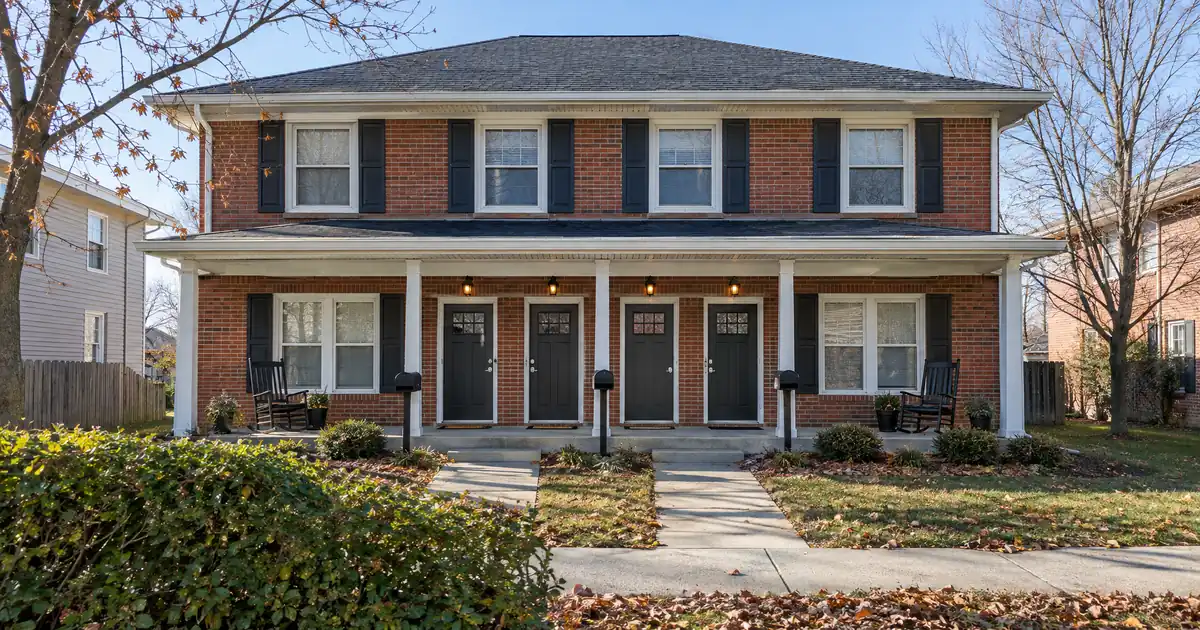
The Quick Read: It depends on your equity headroom, not the size of the remodel: on an investment property through Lendmire’s wholesale lenders, the cap is 70% of the building’s current value, minus every loan already recorded against it, with a $500,000 ceiling on the line.
- The remodel budget does not set the line. Equity does.
- The line sizes off today’s value, not the after-repair value.
- Investment lines require a 700 credit score and individual or revocable-trust title. An LLC cannot hold title.
- At least 75% of the line is drawn at closing, so slow-spending projects carry idle debt.
- When the headroom is too thin, a DSCR cash-out refinance is the usual alternative. Each figure is subject to lender guidelines and a complete review of property type, leverage, and credit.
Key Terms Defined
HELOC: A home equity line of credit. It is a revolving line secured by the property, and you borrow against it as needed up to a limit.
CLTV (combined loan-to-value): All loans against the property, including the new line, divided by the property’s value.
Lien: A recorded claim against the property. Your first mortgage is a lien, and so is any second loan.
Draw period: The stretch when you can borrow from the line, usually with interest-only payments.
DSCR: Debt service coverage ratio. It compares a rental’s monthly rent to its full monthly payment.
PITIA: Principal, interest, taxes, insurance, and association dues. It is the payment figure DSCR measures rent against.
How large a line the equity supports.
An equity line is sized by combined loan-to-value, occupancy, and credit — not by rental coverage. Switch the occupancy or the credit band and the ceiling moves with it.
Investment-property lines require a 700 minimum credit score; second-home lines start at a 640 minimum and primary-residence lines at 600, and the combined-LTV ceiling steps down as the credit band drops on primary-residence and second-home lines and holds on investment-property lines; the line cap steps down on primary-residence lines and holds at every tier on investment-property and second-home lines.
A debt-to-income ratio above 45% requires 680+ credit. Profiles under 640 are limited to single-family homes. At least 75% of the approved line is drawn at closing. Ceilings, floors, and caps update from Lendmire’s centralized guideline source.
Line estimate
Illustrative estimate only — not a quote, Loan Estimate, approval, or commitment to lend. The rate is an editable assumption; equity-line pricing is variable through both the draw and repayment periods and never converts to fixed. Occupancy and credit drive the ceiling together: an investment property tops out at 70% combined LTV (minimum credit 700, line cap $500,000); a second home tops out at 90% combined LTV (minimum credit 640, line cap $500,000), with the ceiling stepping down as the credit band drops (the cap holds at every tier); a primary residence tops out at 90% combined LTV (minimum credit 600), and its $750,000 maximum line is available only at 75% combined LTV or below with a 700-or-better credit profile (720 on the longer-runway program) and a full appraisal. Lines above $500,000 require a full appraisal. Credit, debt-to-income, property type, and full underwriting review all affect the final line.
What Is the Formula for Remodel Headroom?
The formula is simple. Maximum line equals the building’s value times the CLTV cap, minus every lien already recorded. Whatever is left is your ceiling for remodel money. A bigger scope does not raise it.
Here is a modeled example, not market data. Treat the building’s current value as 100%. The cap on an investment line is 70%. Say your first mortgage and any other liens add up to 55% of value. That leaves 15% of value as your line.
Now change one input. If existing liens sit at 68% of value, headroom shrinks to 2%. That is likely below the $25,000 minimum line size on our network. The line may not exist at all.
So the remodel decision starts with the loan balance, not the contractor’s bid. Run it backward. Take the budget, subtract a contingency cushion, and ask whether the headroom covers what is left.
What Do Network Ceilings Look Like on a Rental?
On an investment property, the network ceiling is 70% CLTV, with a maximum line of $500,000. A 700 credit score is the minimum, and a 720 score buys no extra leverage. Both tiers reach the same 70%. Leverage, reserves, and pricing vary by lender and program; the final terms follow the full file review.
For context, NerdWallet reports that market lenders on investment-property lines typically ask for 720 or better and cap loan-to-value at 80%, though many sit below 70%. Those are market-wide figures. On the network Lendmire brokers through, an investment line tops out at 70% CLTV. Every figure here is subject to lender guidelines and a full file review.
The structure matters for remodels. Investment lines run a 5-year interest-only draw followed by a 25-year fully amortizing repayment.
Two more details shape a remodel budget:
- At least 75% of the line is drawn at closing. You can’t draw slowly as the work progresses. Most of the money starts costing you on day one.
- The cost floats. It never converts to fixed, so build a cushion into your carrying budget.
Does Living in One Unit Change the Answer?
Yes, it can change the ceiling a lot. If you live in one unit of a duplex, triplex, or fourplex, the property may count as a primary residence. Primary-residence lines reach 90% CLTV, but only with a credit profile of 720 or better. Never assume the top tier.
A primary line above $500,000 is allowed only on a primary residence. It requires 700 or better credit (720 on the longer-runway structure some partners use) and caps at 75% CLTV. It also requires a full appraisal.
Investment lines never go above $500,000 or 70%. The occupancy status you can truthfully document decides which table applies. Don’t pick the one you want.
| Factor | Investment (fully rented) | Primary (house-hack) |
|---|---|---|
| Max CLTV | 70% | Up to 90% at 720+ |
| Max line | $500,000 | Up to $750,000 |
| Minimum credit | 700 | Lower floors apply |
| Appraisal | Usually automated | Full above $500,000 |
How Does Remodel Scope Map to a Line?
Match the scope to the headroom, not the reverse. A unit turn or make-ready may be smaller than the minimum line, and reserves often fit that job better. A full-building rehab can be larger than your headroom, no matter how good the rent upside looks.
| Remodel scope | Typical headroom need | Better fit |
|---|---|---|
| One-unit turn | Small | Cash reserves |
| Kitchens and baths | Moderate | HELOC if headroom exists |
| Roof or major systems | Moderate to large | HELOC or cash-out |
| Full-building rehab | Large | Cash-out or other financing |
Need here is relative to your equity headroom, not a dollar figure. A $500,000 ceiling doesn’t help if your CLTV math leaves only a sliver.
Does the Remodel Raise What You Can Borrow?
Not in advance. The line sizes off the property’s value at the time of application. Lines at or below $500,000 ordinarily use an automated valuation rather than a full appraisal. An automated valuation can’t see work you haven’t done.
After the work is complete, a new valuation may support a higher appraised value, depending on comps and underwriter review. You may request a full appraisal, so the finished work gets a closer look. That helps only if you refinance or open a new line. It doesn’t fund the first project.
This is the trap in the question itself. Investors often figure the finished remodel will pay for itself in borrowing power. It doesn’t work that way on day one.
What Happens to Rent While Units Are Offline?
Rent stops while a unit sits empty, but the line’s interest-only payment doesn’t. The more units you take offline, the bigger the hit relative to total rent.
| Building | One unit offline | Share of rent lost |
|---|---|---|
| Duplex | 1 of 2 | Half |
| Triplex | 1 of 3 | One-third |
| Fourplex | 1 of 4 | One-quarter |
A fourplex is the easiest to phase because losing one unit costs the least. A duplex has no cushion. The honest tradeoff: phasing protects cash flow but stretches the interest-only clock, and the line is mostly drawn at closing anyway.
Lenders qualify the borrower on the interest-only payment calculated on the maximum draw. Maximum debt-to-income is 50%. It drops to 45% for credit profiles from 600 to 679, and a ratio above 45% needs at least a 680 score. That 600 to 679 range is only a floor for the program overall. Investment lines need 700.
What Caps You Before Equity Does?
Several rules bind before the CLTV math does:
- Title. The individual borrower or an inter vivos revocable living trust must hold title. LLCs, corporations, partnerships, and irrevocable, blind, or land trusts cannot. A property already deeded to an LLC needs a vesting change or a different product, subject to lender program eligibility.
- Property type. Single-family, 2-4 units, PUDs, townhomes, and condos are eligible. Manufactured homes, co-ops, condotels, log homes, commercial, mixed-use, and agricultural-zoned properties are not offered.
- Exposure. A borrower is limited to three lines. An investor with more than 15 financed properties isn’t eligible.
- Credit. The score comes from a single-bureau model keyed to the primary wage earner. A bankruptcy needs 4 years of seasoning. Investment files follow a 7-year path after foreclosure and 4 years after a deed-in-lieu or short sale.
- Availability. HELOC placement runs only in Lendmire’s 16 full-service states. That is narrower than the 41-market DSCR footprint.
Can the Lender Pull the Line Mid-Project?
Yes. The CFPB’s HELOC booklet notes that a lender can generally freeze or reduce a line if the home’s value falls or your finances worsen. A remodel funded this way can lose its funding halfway through. The same booklet says HELOC cost is typically variable.
Because most of the line is drawn at closing, the exposure to a freeze is smaller than on a line you draw gradually. But any money you planned to pull later is at risk. Budget the project so a frozen line doesn’t strand a half-finished unit. This is why staged scope and cash cushions matter.
The CFPB’s plain-language definition of a HELOC as an open-end line also applies here: you can borrow, repay, and borrow again during the draw period. That flexibility is the real selling point, but only on projects that spend slowly.
When Does a DSCR Cash-Out Fit Better?
A DSCR cash-out refinance fits when the HELOC headroom is too thin, the building sits in an LLC, or the first mortgage carries a poor structure you’d rather replace. This is the practical pivot most 2-4 unit owners end up making.
A DSCR loan is a business-purpose loan that qualifies primarily on property-level rental income covering the payment, subject to lender guidelines. Our complete DSCR loans guide covers the basics.
Here is how the two compare on our network:
| Factor | Investment HELOC | DSCR cash-out |
|---|---|---|
| Reviewed on | Borrower profile | Rent vs. PITIA |
| Max leverage | 70% CLTV | Around 75% LTV (standard rental) |
| Title | Individual or trust | LLC possible, per program terms |
| Structure | Revolving line | One-time term loan |
| Seasoning | Varies by lender | About 6 months typical |
Short-term rental collateral works differently. Cash-out on STR collateral tops out around 70%, versus 75% for standard rentals.
A few DSCR realities:
- Coverage of 1.00 is where many select programs start. A separate select-lender path goes below 1.00, with leverage and terms adjusted.
- Credit floors start at 620 in parts of the network. Most programs want around 660, and 700+ opens the strongest tiers.
- Reserves commonly run around six months of PITIA, but they vary by lender, leverage, loan size, and transaction type.
- Clearing 1.00 is not the same as positive cash flow. Repairs, vacancy, management, and capex sit outside the calculation.
DSCR files in markets with older 2-4 unit stock often show the same pattern. The investor wants to remodel, the line headroom is small, and the better route is a refinance after stabilization. You lose the revolving flexibility. You gain a larger single payout and title options. It’s a genuine toss-up on a project that spends slowly, but for a quick, one-shot rehab, the term loan is cleaner.
For a deeper look at line sizing, see Lendmire’s piece How Much a Rental HELOC Releases on a 2-4 Unit Rental.
Frequently Asked Questions
Can I use a HELOC on a 2-4 unit I just bought?
Possibly, but it depends on the lender’s seasoning rules. Most files need some ownership history, and the value must support the CLTV math. On a recent purchase, your first mortgage usually eats most of the headroom anyway.
Can I use a HELOC on a rental held in an LLC?
Not directly. On our network, title must sit with the individual or a revocable living trust. An LLC-held property needs a vesting change, or a DSCR cash-out refinance fits instead.
Can I use the line for repairs only?
You can usually use the money for a remodel, but lenders may restrict use based on the line’s terms. Read the use clause, especially on rental properties, because the lender’s terms govern what the funds can be spent on.
What if my remodel costs more than the line?
Stage the scope, bring in cash reserves, or switch products. A DSCR cash-out refinance can deliver a larger single payout when the property supports it, subject to lender guidelines.
Does a larger down payment on my original purchase help?
It helps your equity headroom, but it doesn’t erase credit floors, reserve rules, or property eligibility. The strongest files clear both tests: enough equity and enough rental coverage.
What to Do Next
Start with three numbers: your property’s current value, your total recorded liens, and your remodel budget minus a contingency cushion. Run the formula. If the headroom covers the budget, a line may work. If it doesn’t, look at a DSCR cash-out. Rental HELOCs and DSCR loans solve different problems.
If you are considering a home equity line and want to see how the numbers work, Lendmire can help you compare HELOC options based on the property, the equity available, credit profile, combined leverage, and your goals. Reach out at 828-256-2183 or request a quote through Lendmire’s quote page. The site’s illustrative calculator gives an estimate only, not a quote. Most 2-4 unit remodels get decided in the equity math long before the contractor is hired.
About Lendmire
Lendmire (NMLS# 2371349) is a mortgage broker. Home equity lines of credit — on a primary residence, a second home or an investment property — are arranged through wholesale lenders in Lendmire’s 16 full-service states, and every line is underwritten by the lender under its program guidelines. Scotsman Guide named Lendmire a Top Mortgage Workplace in both 2025 and 2026.
Get Started
Ready to find the right loan for you?
In about 30 seconds you can review financing options available for your home or investment property. No commitment required.
Informational only. Not a Loan Estimate, approval, or commitment to lend. Program availability and eligibility are subject to lender guidelines, credit approval, property review, and underwriting.
References
1. NerdWallet – HELOC on an investment property
This article is part of Lendmire’s investment property HELOC program — full qualification details, guidelines, and scenarios live on the program page.
Related reading: How Much a Value Drop Cuts a HELOC Limit and What an Appraisal Fixes · Can a Rental HELOC Fund a Remodel in Stages Like a Construction Draw? · Can a Five-Unit Short-Term Rental Building Get a DSCR Loan?
Brandon Miller
Founder & CEO, Mortgage Loan Originator, Lendmire LLC
- Mortgage Loan Originator · NMLS# 1129696 · Verify on NMLS Consumer Access
- North Carolina Real Estate Broker · License# 343312 · Verify on NCREC
- North Carolina Insurance Producer · License# 19053198 · Property, Casualty, Life, Health · Verify on NAIC SBS
- Lendmire LLC · Firm NMLS# 2371349 · Verify firm licensure
Disclosure information. Lendmire is a state-licensed mortgage brokerage under NMLS# 2371349. Lendmire is not a depository institution, direct lender, or financial advisor — all loans referenced are placed through wholesale lender partners and are subject to each lender's underwriting standards. This article is provided for general informational purposes and is not a commitment to lend, nor does it constitute financial, legal, or tax advice. Loan programs, terms, rates, and qualification standards change without notice and depend on borrower profile, property type, and the state in which the subject property is located. Equal Housing Opportunity provider. NMLS Consumer Access: nmlsconsumeraccess.org.