
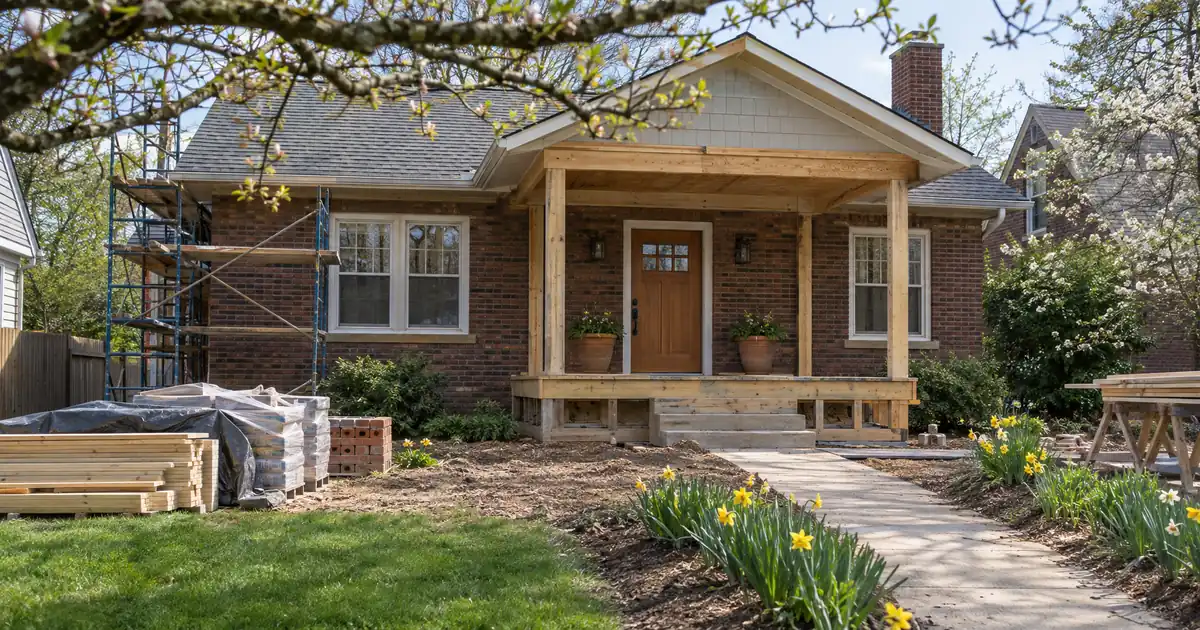
The Quick Read: A full-gut rehab needs cash equal to the equity gap at closing, plus the first phase of work paid out of pocket before any reimbursement, plus interest carry while inspections and reviews run, plus a contingency buffer and per-draw fees, so the true figure is a formula built from your scope and draw schedule rather than one number.
- Hard money rehab funds are held back and paid against completed, inspected work. You pay first, then get reimbursed.
- A gut renovation front-loads cost into demolition, structural work, rough mechanicals and permits, so your cash exposure peaks early.
- Fewer, larger draws mean lower fees but a bigger float. More frequent draws shrink the float but add fees.
- Contingency has to be your own cash, kept separate from the interest reserve.
- Running out of cash mid-rehab stalls the project and stretches the carry. That can hurt the refinance that follows.
Why a Full Gut Creates a Bigger Gap Than a Cosmetic Rehab
A full gut creates the largest between-draw gap because its most expensive work comes first. Demolition, framing fixes, rough plumbing, electrical and HVAC, and permits all land before the first inspection can verify anything. A cosmetic rehab flips that order: paint and flooring come late, when draws are already flowing.
What this loan actually costs to carry.
Hard money is sized against the project and priced by time. Enter the deal and see how much the program will lend, the cash required at closing, the carry while you hold it, and what is left at the exit.
Leverage tiers on the current program: 85% with fewer than 2, 90% with 2 or more, 93% with 5 or more completed projects — every tier capped at 75% of after-repair value. Loan amounts up to $5,000,000, larger by exception; terms of 6 to 18 months, interest-only, no prepayment penalty. The rehab portion funds in draws against completed work, not at closing.
Program parameters shown update from Lendmire’s centralized guideline source. Rate, points, and months are editable assumptions, not quoted terms.
Cost cap sets the loan · positive spread
Illustrative estimate only — not a quote, Loan Estimate, approval, or commitment to lend. Rate, points, and months are editable assumptions. Hard money is business-purpose financing for real estate investors, not a consumer mortgage. Leverage on the current program tops out at 93% of project cost for investors with a documented track record, capped at 75% of after-repair value, with rehab funding up to 100% of the documented budget released in draws; actual terms vary by lender, borrower experience, property, and exit. Lendmire is a mortgage broker, not a lender.
Hard money rehab funding works as reimbursement. The lender holds the rehab budget in escrow and releases money as work is finished and verified. Up to 100% of the rehab budget can fund in draws against completed work on the hard money programs Lendmire places, though that is a rehab-budget figure, not a purchase loan-to-cost figure. Leverage varies by lender, property, and experience.
Here is the catch. “100% of the rehab budget” does not mean zero cash from you. It means the lender will eventually fund the budget. You still float the early work.
There is also no true 100% purchase program. The structure runs on loan-to-cost, tiered by documented completed projects: about 93% of project cost at 5+ completed projects, 90% of project cost at 2+, and 85% of project cost with fewer than 2. Every tier is capped at 75% of after-repair value. The top tier is reserved for experienced investors. That remaining share of cost is your equity gap, and it is the first piece of the cash formula.
The Formula: What Your Cash Is Made Of
Think of your cash requirement as five buckets, stacked without overlap:
1. Equity gap. The share of project cost the loan does not cover at closing.
2. First-phase float. The work you pay for before the first draw reimburses you, including any contractor deposit.
3. Carry through the approval lag. Interest-only payments on the balance outstanding while inspection and review happen.
4. Contingency. Money for overruns and surprises behind the walls.
5. Draw and inspection fees. A per-draw charge that grows with the number of draws.
Add them up and you have the figure to hold in liquid cash. Each bucket depends on your scope, so any single dollar answer you read online is a guess about somebody else’s project.
How a Draw Actually Moves, Step by Step
Understanding each step shows you where cash gets trapped. The sequence below matches how most draw programs run across the lenders in Lendmire’s network, though each lender sets its own details.
1. Budget and scope. Your scope of work becomes a line-item budget. The lender pays only against approved lines.
2. Draw request. You list the line items finished since the last draw. According to a construction-draw glossary from SmartCapital, a typical package includes the contractor’s pay application, invoices, lien waivers from the general contractor and subcontractors, an updated budget showing costs to date and costs to complete, and often an inspection report.
3. Inspection. A third-party inspector or an app-based photo review verifies the work. Expect a per-draw fee. The amount varies by lender.
4. Review. A step-by-step draw review guide from MightyBot describes four checks. The inspector’s percent complete must support the amount billed, so an 80% bill against a 60% inspection is the classic overdraw. Conditional waivers must match the current draw, unconditional waivers must match prior payments, and title must show no new liens.
5. Funding. Money is wired, sometimes less a holdback. A construction-management explainer from UniCM says most construction lenders withhold 5–10% of each draw until completion. That guide is written for commercial and construction-loan contexts, so check your own loan documents for any holdback on a private rehab loan.
6. Final draw. The last tranche releases at completion, final inspection and a clean lien position. A fix-and-flip draw explainer from YieldStack illustrates a six-draw schedule on a $150,000 budget. The borrower requests the full amount but receives $135,000 before a final $15,000 holdback. That is an illustration, not a market standard.
On interest, funds typically accrue interest as they disburse, on top of the purchase advance. Some lenders charge differently. Read the note before you sign.
Sizing the Float: A Modeled Example
Run the numbers on a gut rehab split into four equal phases, each 25% of the rehab budget. These are modeled assumptions, not market data: draw one covers demolition and structural, draw two covers rough-ins, draw three covers drywall, windows and cabinets, and draw four covers finishes. Assume a 10% holdback on each draw and that the contractor keeps working while each reimbursement is pending.
| Moment | Spent to date | Reimbursed to date | Your cash out |
|---|---|---|---|
| Before draw 1 pays | 35% | 0% | 35% |
| After draw 1 pays | 35% | 22.5% | 12.5% |
| Before draw 2 pays | 50% | 22.5% | 27.5% |
| After draw 2 pays | 50% | 45% | 5% |
All figures are percentages of the rehab budget. The peak lands before the first reimbursement, not at the end. That peak is your first-phase float. Notice that the holdback adds a small amount you carry until final release.
Now change the structure. The same budget under different draw counts produces a different peak.
| Draw structure | Peak float (modeled) | Fee load |
|---|---|---|
| 2 larger draws | Highest | Lowest |
| 4 draws | Moderate | Moderate |
| 6 smaller draws | Lowest | Highest |
Fewer, larger draws save on fees but force you to hold more cash. More frequent draws cut the float but cost more in inspections and take more paperwork. Many investors find a few draws manageable and treat a long string of small draws as a drag on margin. The right count is the one where your liquid cash covers the peak with room to spare.
Stress Tests: Where the Number Breaks
A float sized for a perfect schedule fails the first time something slips. Test the number against these cases:
- Inspection delay. Every added day of lag extends your carry and keeps the contractor waiting on payment. Add a buffer to the lag in your model.
- Rejected or partial line items. The inspector’s percent complete governs the payout. Half a line item finished earns half that line’s budget. If the contractor bills ahead of the work, you cover the difference.
- Lien-waiver stalls. A construction-draw guide from YieldStack says draws stall on missing waivers, inspection scheduling and retainage disputes more often than on lender unwillingness. Collect waivers as the work happens, not at the draw deadline.
- Holdbacks. A $100,000 draw may not pay $100,000. Plan to carry the withheld portion until completion.
- Overruns. A draw pays only what the approved budget allows. A line that runs over comes out of your pocket.
- Scope surprises. Rot, bad wiring and foundation problems are common in gut jobs. Budget revisions typically need lender approval before they are reimbursable, so surprises can sit unreimbursed for a stretch.
What Sits on Top of the Draw Float
Each of the other buckets deserves its own line in your plan. The mistake is double-counting or leaving one out.
Carry. Hard money terms run 6–18 months, interest-only, with no prepayment penalty on the programs Lendmire works with. Interest-only means you owe interest each month and no principal. Hold enough cash to cover interest through the approval lag. Tax treatment of interest can vary; consult a qualified tax professional.
Contingency. Treat this as a separate pile of your own cash. A draw pays only for approved budget lines, so contingency cannot come from the rehab escrow. Keep it apart from your interest reserve so one cannot quietly eat the other. There is no verified industry standard percentage, and a gut with unknown conditions justifies a larger cushion than a clean cosmetic job.
Permits, utilities and insurance during the work. These often hit before any draw. Some lenders count them against the budget and some do not, so ask your lender how they treat each one.
Fees. Draw and inspection fees are small per draw but multiply with the draw count. Tally them against your chosen schedule.
A quick self-test: float peak plus carry plus contingency plus fees plus equity gap equals the cash you need. If that number exceeds your liquid funds, the deal is too big for your balance sheet as structured.
The First-Draw Problem and Contractor Deposits
Contractors know that reimbursement lags. Many ask for a deposit so they can buy materials and start. That deposit comes out of your pocket before a lender sees anything, and it often is the largest piece of your first-phase float.
You can reduce it with a locked schedule and milestone payments, holding back the final portion of the contractor’s pay until your lender approves the last draw. Supplier terms that let you pay materials after delivery can also bridge the gap. Pay careful attention to the contractor’s contract: any deposit you agree to is part of the cash you must hold.
Structures that advance money before work is done exist but are rare, and they usually carry more risk for the lender. Do not build a plan around one.
If You Are Short
A shortfall on paper before closing is a problem you can fix. A shortfall mid-rehab is much harder. Your options, with their tradeoffs:
- Re-sequence the scope. Move expensive early work into smaller phases. This lowers the peak but can add draws and fees.
- Renegotiate contractor terms. Ask for a smaller deposit tied to milestones. The contractor may push back or raise the price.
- Bring in a partner. Fresh equity solves the gap but costs you a share of the profit and adds an agreement to manage.
- Shrink the project. A lighter scope needs less float, but it changes the after-repair value and the deal’s math.
One more point on stakes. A stalled rehab extends your hard money term, and longer carry erodes equity. That matters later: many investors refinance out of hard money into long-term DSCR financing once the property is stabilized, and Lendmire brokers that path. Cost basis, appraised value and seasoning all feed the sizing there, so a cash shortfall during construction can carry over into the refinance. For the full picture of how DSCR loans work, see the complete DSCR loans guide.
For related reading on keeping a heavy rehab within refinance limits, see Lendmire’s piece How to Keep a Full Gut Hard Money Rehab Within DSCR Cash-Out Limits. For the equity side, see how much equity a rehab needs to retire hard money with a DSCR cash-out.
Pre-Closing Worksheet
Before you commit, answer each of these in writing:
1. What share of project cost is my equity gap at my leverage tier?
2. What does the contractor want up front, and how does that compare to the first draw?
3. How many draws does the loan allow, and what does each cost?
4. What holdback applies, and when does it release?
5. How is interest calculated, on disbursed funds or the full balance?
6. What is my peak float if the first reimbursement arrives later than planned?
7. How much contingency am I holding that is separate from my interest reserve?
If you cannot answer these, you do not yet know your number.
Key Terms Defined
Draw. A release of rehab funds after work is completed and verified.
Float. The cash you spend on work before a draw reimburses you.
Holdback (retainage). A slice of each draw the lender withholds until the project is complete.
Contingency. Your own cash set aside for overruns and surprises, separate from the approved budget.
Carry. The interest and holding costs you pay while the project is unfinished.
Loan-to-cost. The loan amount as a share of total project cost, rather than as a share of property value.
Frequently Asked Questions
How much cash do I need between hard money draws on a full gut?
It depends on your scope and draw count, but the method is consistent. Add your equity gap, the peak float before the first reimbursement, carry through the approval lag, contingency, and draw fees. On a heavy rehab the peak float is usually the largest piece because demolition, structural and rough mechanicals come first. Terms vary by lender, property, and experience.
Does a hard money lender advance rehab money before work starts?
Generally no. Funds release against completed, inspected work. Advance structures exist but are rare. Plan on paying first and being reimbursed after the inspector confirms the work.
Does interest accrue on rehab funds I have not drawn yet?
Interest typically accrues on money that has been disbursed plus the purchase advance, not on undrawn rehab funds. Some lenders differ, so read the note and ask before closing.
What happens if an inspection fails or a line item is only partly done?
The lender pays only for the percentage the inspector confirms, so a half-finished line earns half its budget. You cover the contractor in the meantime. Missing waivers or a new lien can hold a draw as well, so keep your paperwork current.
Can I reduce the cash I need by asking for fewer draws?
Fewer draws lower fees but raise your float, so they usually increase the cash you need. More frequent draws do the opposite. Pick the schedule where your liquid cash comfortably covers the peak.
Next Step
If you are buying, rehabbing or refinancing an investment property on a short timeline and want to see how the numbers work, Lendmire can help you compare hard money options based on the project, the exit plan, leverage, and your goals. Lendmire is a mortgage broker arranging financing through select lenders across 41 markets, including Washington, D.C. Programs are subject to lender guidelines, and nothing here is a commitment to lend.
For current guidelines and terms, see Lendmire’s hard money loan programs page.
About Lendmire
Lendmire (NMLS# 2371349), a non-QM mortgage broker serving investors in 41 markets including Washington, D.C., helps structure DSCR scenarios commonly evaluated around a property’s rental income rather than personal income paperwork, subject to lender guidelines. A Scotsman Guide Top Mortgage Workplace in 2025 and 2026, Lendmire places loans through wholesale investor lenders and is not a direct lender.
Get Started
Ready to find the right loan for you?
In about 30 seconds you can review financing options available for your investment property. No commitment required.
Informational only. Not a Loan Estimate, approval, or commitment to lend. Program availability and eligibility are subject to lender guidelines, credit approval, property review, and underwriting.
References
1. SmartCapital Glossary – Construction Draw
2. MightyBot – How a Construction Draw Is Reviewed
3. UniCM – What Is a Construction Draw Schedule
4. YieldStack – Fix and Flip Loan Draw Schedule
5. YieldStack – Construction Draw Schedules Guide
This article is part of Lendmire’s hard money loan program — full qualification details, guidelines, and scenarios live on the program page.
Related reading: How Much Cash a 2-4 Unit DSCR investor Brings After a Low Appraisal · How Much a Rental Insurance Increase Moves the DSCR Ratio · How to Make a DSCR Cash-Out Cover Your Hard Money Note and Rehab Cards
Brandon Miller
Founder & CEO, Mortgage Loan Originator, Lendmire LLC
- Mortgage Loan Originator · NMLS# 1129696 · Verify on NMLS Consumer Access
- North Carolina Real Estate Broker · License# 343312 · Verify on NCREC
- North Carolina Insurance Producer · License# 19053198 · Property, Casualty, Life, Health · Verify on NAIC SBS
- Lendmire LLC · Firm NMLS# 2371349 · Verify firm licensure
Compliance and disclosures. Lendmire (NMLS# 2371349) is a licensed mortgage broker and is not a direct lender, depository institution, financial advisor, or tax professional. Content in this article is general market analysis and educational information — not financial, legal, or tax advice for any specific situation. Lendmire does not guarantee loan approval; every transaction is subject to underwriting by the funding lender. Mortgage pricing and loan program guidelines are subject to change at any time without notice and vary by borrower characteristics, property type, and state regulations. Lendmire complies with Equal Housing Opportunity. Licensure verification: NMLS Consumer Access.