
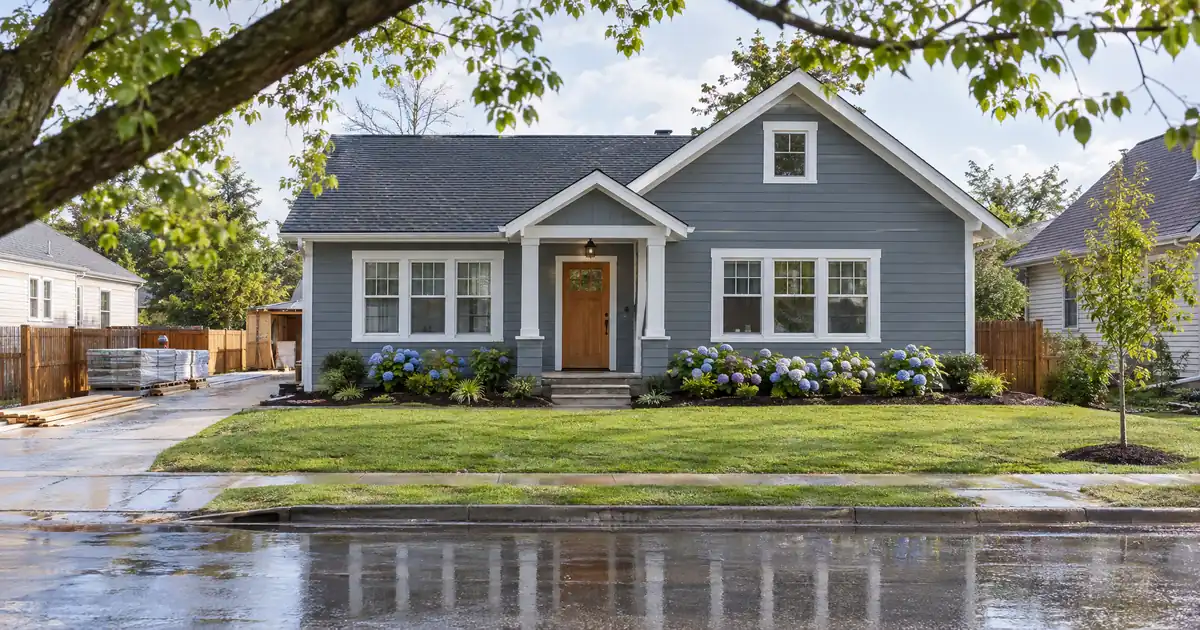
The Quick Read: Usually yes, but only when the lender can still support a credible value, and the loan tends to be smaller or more conservative than it would be with clean comps. “No comps” rarely means zero data. It usually means no close comps, so appraisers widen the search, adjust more heavily, or switch valuation methods. If no defensible value can be built, lenders cut leverage sharply or decline.
- Value is still the anchor. Hard money is asset-based, so the property and its after-repair value (ARV) drive the file.
- Thin comps lead to wider adjustments, a more conservative advance, or a full appraisal in place of a lighter opinion.
- Leverage varies by lender, property, and experience. Fix-and-flip loans on the network run up to 93% of project cost at the top experience tier, always capped at 75% of ARV.
- Strong evidence helps: scope of work, contractor bids, near-comps with written adjustments, and a clear exit.
- Nothing here is a commitment to lend. Every file is reviewed on its own.
Why Do Lenders Care So Much About Comps?
Comps are how a lender proves the exit. A hard money loan is short, interest-only, and repaid by a sale or a refinance, so the lender needs proof that a buyer or a takeout lender will pay roughly the ARV.
What this loan actually costs to carry.
Hard money is sized against the project and priced by time. Enter the deal and see how much the program will lend, the cash required at closing, the carry while you hold it, and what is left at the exit.
Leverage tiers on the current program: 85% with fewer than 2, 90% with 2 or more, 93% with 5 or more completed projects — every tier capped at 75% of after-repair value. Loan amounts up to $5,000,000, larger by exception; terms of 6 to 18 months, interest-only, no prepayment penalty. The rehab portion funds in draws against completed work, not at closing.
Program parameters shown update from Lendmire’s centralized guideline source. Rate, points, and months are editable assumptions, not quoted terms.
Cost cap sets the loan · positive spread
Illustrative estimate only — not a quote, Loan Estimate, approval, or commitment to lend. Rate, points, and months are editable assumptions. Hard money is business-purpose financing for real estate investors, not a consumer mortgage. Leverage on the current program tops out at 93% of project cost for investors with a documented track record, capped at 75% of after-repair value, with rehab funding up to 100% of the documented budget released in draws; actual terms vary by lender, borrower experience, property, and exit. Lendmire is a mortgage broker, not a lender.
The Motley Fool describes ARV as the value determined from recent nearby sales of similar properties. Landlord Studio lists two accepted methods: comparable sales, and current value plus renovation value. It says a complete estimate cross-checks both.
When both legs are weak, the lender has nothing to check your number against. That is the real problem. It is not that the lender dislikes unusual deals.
What Does “No Comps” Actually Mean?
It means different things, and each one gets a different lender response. Sort yours before you call anyone.
| Scenario | Why comps fail | Likely lender response |
|---|---|---|
| Rural or low-turnover area | Few sales, long gaps | Wider radius, older sales with time adjustments |
| Unique or custom home | Nothing matches the design | Heavier adjustments, more than one valuation method |
| Multi-unit or special use | Small pool of true matches | Full appraisal, conservative sizing |
| No renovated sales nearby | Only distressed sales exist | Lower ARV, or sizing on as-is value |
| Over-improved for the area | Your finish level beats the street | ARV capped at what nearby sales support |
McKissock names rural markets, custom-home neighborhoods, and low-turnover areas as the typical thin-comp settings. Tampa Valuation notes that special-use and mixed-use properties often have no direct comps at all.
The over-improved case catches investors most often. Upgrading past the neighborhood does not raise ARV. Value stays tied to what nearby buyers have actually paid.
How Do Appraisers Value a Property When Sales Data Is Thin?
They climb a ladder. Each rung loosens one constraint, and the appraiser has to explain why the choice is still the best available evidence.
1. Widen the search. McKissock describes widening across distance, date, and design. The stated goal is to show the chosen sales are the best available indicators of value.
2. Use older sales with time adjustments. McKissock’s sales-comparison article says appraisers may widen the geography or reach back to older sales. It also says the method works less well for unique properties.
3. Adjust more heavily. Bigger adjustments mean more appraiser judgment. Large net adjustments make a value harder to defend.
4. Reconcile other approaches. Tampa Valuation says a credible appraisal reconciles several approaches and warns that forcing weak comps creates risk. A cost approach can help on newer construction. Cost analysis works poorly for older homes that cannot be replicated.
5. Accept imperfect matches. Mueller Reports notes that USPAP does not make an appraiser responsible for finding perfectly matched pairs. The standard is support, not perfection.
Agency rules are a useful contrast. Hard money and DSCR loans are not agency products, so agency valuation rules do not govern them. Those rules do show how cautious valuation culture can be around renovation value. Final eligibility is subject to lender guidelines, credit approval, reserves, and property review.
How Does Thin Value Support Change the Loan Structure?
Lenders respond to uncertain value with less risk, not with a different product. Across the wholesale network, the typical responses are a lower advance, more equity from the borrower, tighter conditions on draws, and a full appraisal in place of a lighter valuation.
Here is the baseline. Fix-and-flip leverage on the network runs up to 93% of project cost at 5 or more completed projects, 90% of project cost at 2 or more, and 85% with fewer than 2. Every tier is capped at 75% of ARV. Up to 100% of the rehab budget funds in draws against completed work. That is a rehab-budget figure, not a purchase LTV. Bridge purchases without rehab run up to 80% of purchase price. All of this varies by lender, property, and experience.
The ARV cap is where thin comps bite. When the appraiser lands on a lower ARV, the 75% cap shrinks the loan even if your cost-based tier would have allowed more. The borrower fills the gap.
Run it with modeled inputs. Say the cost-based tier would allow a loan that looks fine, but a heavily adjusted appraisal supports an ARV well below your estimate. The cap binds, and the cash you bring rises. In that case a first-time investor at the 85% tier has the least room, since fewer completed projects usually means less lender comfort with an aggressive ARV.
There is no true 100% purchase program. Marketing that implies one usually describes cost coverage on part of the deal, not full financing.
Loan size runs up to $5,000,000 on the network, larger by exception. Terms run 6 to 18 months, interest-only, with no prepayment penalty. Credit starts at a 620 minimum, with additional conditions below 660.
What Should a No-Comps Evidence Package Include?
Build the file the appraiser and underwriter would build for themselves. The goal is to make the value easy to support.
- Scope of work with photos. Show what is being built and why it fits the area.
- Contractor bids or an itemized budget. Lenders expect support for the rehab figure, not a round number.
- Near-comps with written adjustment rationale. List the closest sales, even if they are far or old, and explain each adjustment in plain words.
- A local agent’s opinion. A market view from someone who sells in the area gives context the appraiser may lack.
- Subject history. Prior sales, listing history, and any earlier appraisal.
- A written exit plan. State whether you will sell or refinance, and what that valuation will rest on.
- Experience summary. Completed projects matter, because they set your leverage tier.
Clean documentation does not guarantee approval. It gives the reviewer fewer preventable gaps.
Keep your own ARV honest. SoldFast notes that appraisers tend to be conservative and stick to recent comparable sales, while investors are often more optimistic. If your number sits well above what the nearest sales support, expect it to be cut.
What If the Valuation Comes in Low?
Respond with evidence, not argument. You have four moves, and the right one depends on how far off the number is.
1. Submit rebuttal comps. Offer specific sales the appraiser may have missed, with the reason each is relevant. Generic claims about the neighborhood do not move a value.
2. Restructure the deal. Bring more equity, renegotiate the purchase price, or trim the scope to match what the area will pay.
3. Change the basis. A lower-leverage as-is basis can work when ARV cannot be supported. You give up some proceeds and keep the deal alive.
4. Walk away. If the supported value cannot carry the project, the appraisal just saved you from a loss.
Do not fight a defensible number because it hurts. A low ARV on a thin-comp deal is often the lender’s more affordable warning.
How Do You Plan the Exit Before You Close?
Treat the exit appraisal as the same problem you are solving now. If comps are thin today, they will likely be thin when you sell or refinance, and a buyer’s lender will face the same gap.
That matters most on a refinance exit. A long-term rental refinance depends on appraised value and rent, so a soft ARV can shrink the takeout, not just the bridge loan. Many investors refinance out of hard money into long-term DSCR financing once the property is stabilized, and Lendmire brokers that path. Lendmire’s complete DSCR loans guide covers how those programs work. The coverage test compares rent to the full monthly obligation. Clearing it says nothing about repairs, vacancy, or management costs, which sit outside the calculation.
For borrowers whose rent is still light at exit, Lendmire’s piece Exiting Hard Money Into a No-Ratio DSCR Loan When the Rent Is Still Thin walks through that case. No-ratio structures are available only through select lenders, generally for borrowers who already own a primary residence.
The 70% rule, where maximum purchase equals 70% of ARV minus repairs, is an investor filter and not a lender rule. It is only as good as the ARV you feed it. With no comps, that input is the weak link, so stress it before you rely on it.
What Should You Ask a Lender About Valuation?
Ask these before you pay for anything. Lender practice varies, and the answers decide whether the file fits.
- Who orders the valuation, and is it a full appraisal or a lighter opinion?
- Do you size on as-is value, ARV, or the lower of price and appraisal?
- How do you treat large net adjustments?
- Will you consider rebuttal comps if the number comes in low?
- What does your experience tiering do to leverage on my project?
- What do you need from me to support a thin-comp file?
Quick Decision Guide
| Your situation | First move |
|---|---|
| Comps are far or old, but they exist | Document them with adjustment notes |
| Property is unique or multi-unit | Expect a full appraisal; budget for it |
| Your ARV sits far above nearby sales | Lower the number before the lender does |
| Appraisal came in low | Send rebuttal comps, then restructure |
| Exit depends on a refinance | Test the takeout value now |
| No credible value can be supported | Reduce leverage or pass |
Frequently Asked Questions
Can I get a hard money loan with no comps at all?
Sometimes, but expect more conservative terms. Zero data is rare. Appraisers widen distance, date, and design, then reconcile other methods. If no credible value can be supported, many lenders cut leverage sharply or decline. Leverage varies by lender, property, and experience, and nothing is a commitment to lend.
Who decides the ARV, me or the lender?
The lender decides, usually through a third-party appraisal or price opinion. Your estimate is a starting point and a planning tool. You can offer rebuttal comps if the number comes in low, but the lender’s valuation governs the loan.
Do I need a full appraisal on an unusual property?
Often, yes. Unique, rural, and multi-unit properties tend to draw a full appraisal because lighter opinions rely on easy comps. Plan for the cost and the added review.
What if the appraisal comes in low?
Send specific rebuttal comps with a reason each applies. If that fails, add equity, renegotiate the price, trim the scope, or move to a lower-leverage as-is basis. Sometimes the right call is to pass.
Does a thin-comp deal affect my down payment?
Usually, yes. Fix-and-flip loans on the network run up to 93% of project cost at the top experience tier, capped at 75% of ARV. A lower supported ARV tightens that cap, so the cash you bring goes up.
Does this work on rural or unique properties?
It can, with a stronger file. Collateral is non-owner-occupied residential property of 1 to 4 units, with ground-up construction to 10 units. Commercial, land, and owner-occupied properties are not offered. Rural and unique deals need more evidence and a clear exit.
If you are buying, rehabbing, or refinancing an investment property on a short timeline and want to see how the numbers work, Lendmire can help you compare hard money options based on the project, the exit plan, leverage, and your goals. Hard money is available in 41 markets, including Washington, D.C., but not in every state or city, so confirm availability for your property first. Even in a thin-comp market, the deals that clear are the ones where the value can be proven on paper before the money moves.
About Lendmire
Lendmire is a non-QM mortgage brokerage (NMLS# 2371349) arranging DSCR investor loans in 41 markets, including Washington, D.C. DSCR eligibility is generally reviewed around property-level rental income rather than personal income, subject to lender and program guidelines, a fit for self-employed investors and LLC-owned portfolios. Lendmire was recognized as a Scotsman Guide Top Mortgage Workplace in 2025 and 2026.
Get Started
Ready to find the right loan for you?
In about 30 seconds you can review financing options available for your investment property. No commitment required.
Informational only. Not a Loan Estimate, approval, or commitment to lend. Program availability and eligibility are subject to lender guidelines, credit approval, property review, and underwriting.
References
1. The Motley Fool – ARV Formula
2. Landlord Studio – ARV in Real Estate
3. McKissock – Arriving at a Credible Appraisal When Comps Are Limited
5. McKissock – Sales Comparison Approach
6. www2.muellerreports.com: Appraising a Subject with No Comparable Sales
7. SoldFast
This article is part of Lendmire’s hard money loan program — full qualification details, guidelines, and scenarios live on the program page.
Related reading: How to Get a DSCR Loan on Your First Rental After a Bank Said No · How to Choose a DSCR Loan or Bank Loan on a Small Apartment Building · Can a Suburban Airbnb Qualify for a DSCR Loan Without Vacation Comps?
Brandon Miller
Founder & CEO, Mortgage Loan Originator, Lendmire LLC
- Mortgage Loan Originator · NMLS# 1129696 · Verify on NMLS Consumer Access
- North Carolina Real Estate Broker · License# 343312 · Verify on NCREC
- North Carolina Insurance Producer · License# 19053198 · Property, Casualty, Life, Health · Verify on NAIC SBS
- Lendmire LLC · Firm NMLS# 2371349 · Verify firm licensure
Compliance and disclosures. Lendmire (NMLS# 2371349) is a licensed mortgage broker and is not a direct lender, depository institution, financial advisor, or tax professional. Content in this article is general market analysis and educational information — not financial, legal, or tax advice for any specific situation. Lendmire does not guarantee loan approval; every transaction is subject to underwriting by the funding lender. Mortgage pricing and loan program guidelines are subject to change at any time without notice and vary by borrower characteristics, property type, and state regulations. Lendmire complies with Equal Housing Opportunity. Licensure verification: NMLS Consumer Access.