
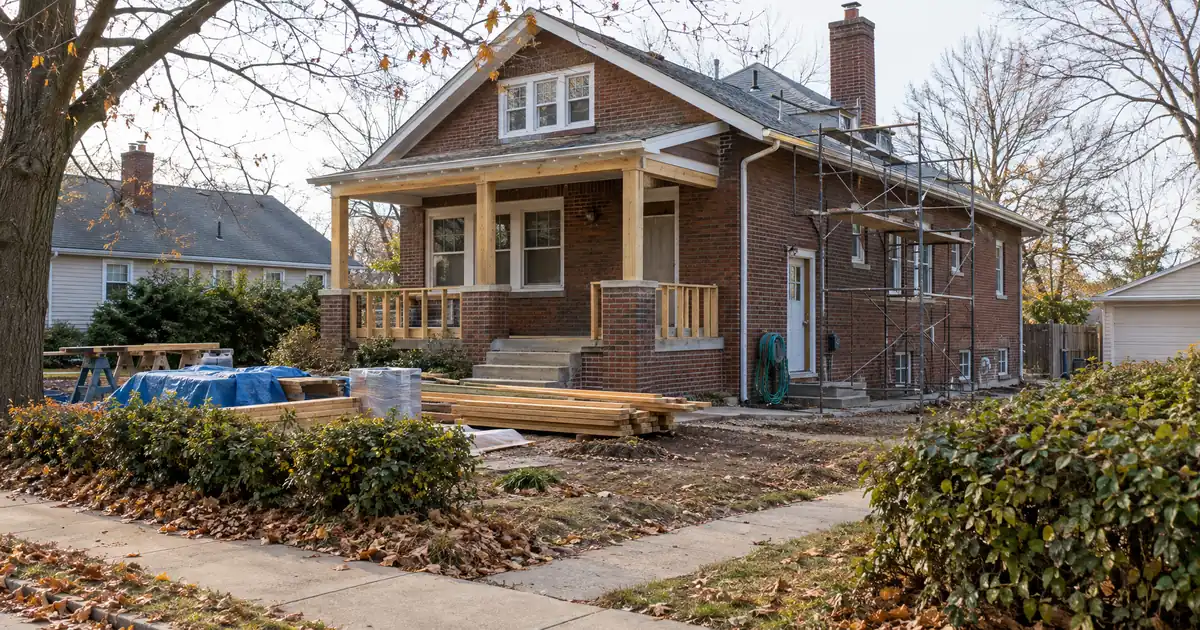
The Quick Read: Usually not in the sense of zero cash: a hard money lender can fund up to 100% of the rehab budget, but it releases that money in draws as verified work is finished, funds the purchase only up to a tiered share of project cost, and caps the whole loan at 75% of after-repair value. Terms vary by lender, property, and experience, and nothing here is a commitment to lend.
- The rehab budget can fund in full, but as reimbursement against finished work, not as a lump sum.
- There is no true 100% purchase program. Leverage runs on project cost and is tiered by completed projects.
- Every tier sits under a cap of 75% of after-repair value, so a heavy gut can push you into bringing cash.
- You still pay closing costs, interest, and the early rehab spending before the first draw arrives.
- The exit matters as much as the entry: the loan has to be paid off by a sale or a refinance.
What Does “Fully Financed” Actually Mean Here?
“Fully financed” usually describes the rehab line only. The lender approves your renovation budget at closing, holds it back, and pays it out as work is completed. That is a rehab-budget figure. It is not a purchase-price figure.
What this loan actually costs to carry.
Hard money is sized against the project and priced by time. Enter the deal and see how much the program will lend, the cash required at closing, the carry while you hold it, and what is left at the exit.
Leverage tiers on the current program: 85% with fewer than 2, 90% with 2 or more, 93% with 5 or more completed projects — every tier capped at 75% of after-repair value. Loan amounts up to $5,000,000, larger by exception; terms of 6 to 18 months, interest-only, no prepayment penalty. The rehab portion funds in draws against completed work, not at closing.
Program parameters shown update from Lendmire’s centralized guideline source. Rate, points, and months are editable assumptions, not quoted terms.
Cost cap sets the loan · positive spread
Illustrative estimate only — not a quote, Loan Estimate, approval, or commitment to lend. Rate, points, and months are editable assumptions. Hard money is business-purpose financing for real estate investors, not a consumer mortgage. Leverage on the current program tops out at 93% of project cost for investors with a documented track record, capped at 75% of after-repair value, with rehab funding up to 100% of the documented budget released in draws; actual terms vary by lender, borrower experience, property, and exit. Lendmire is a mortgage broker, not a lender.
Two terms drive everything that follows, so here they are in plain words. After-repair value (ARV) is what the property should be worth once the work is done. Loan-to-cost is the loan divided by your total project cost, meaning purchase price plus rehab budget.
Hard money leverage is built on loan-to-cost, then limited by ARV. Across the lenders we place files with, the tiers follow the borrower’s track record:
- 93% of project cost at 5 or more completed projects.
- 90% of project cost at 2 or more completed projects.
- 85% of project cost with fewer than 2 completed projects.
- Every tier capped at 75% of after-repair value.
The top tier is reserved for experienced investors. These are typical network ranges that vary by lender, property, and experience, and they are not a commitment to lend.
So even the best tier leaves a slice of the project for you to fund. A first-time investor has the largest slice. That is the direct answer to the title: the rehab can be covered, the project as a whole usually is not.
Why Is a Full Gut Harder to Fully Finance?
A full gut is the scope most likely to collide with the ARV cap. Purchase price plus a large renovation budget has to fit under that ceiling, and a gut rehab piles the most cost on top of the purchase.
Three pressures show up on these files:
1. Budget size against purchase price. When the renovation is large compared with what you paid, the total cost climbs toward the value ceiling fast. Lenders also look harder at a scope that dwarfs the purchase.
2. Appraisal risk on the finished value. Your ARV is a projection. The lender decides what it will accept, and a gutted house has few finished comps to lean on.
3. Overrun exposure. Opening walls finds surprises. Unless you built in a contingency line, overruns tend to land on you.
The lender is underwriting the property, the plan, and the exit. Those three carry more weight than your paycheck. Credit still counts: the program minimum sits around 620, with added conditions below 660, so it is not a no-questions loan.
The collateral also has limits. Hard money applies to non-owner-occupied residential property of 1-4 units. Commercial buildings, land, and owner-occupied homes are not offered.
How Does the ARV Cap Decide Whether Your Deal Fits?
Your deal fits when the lender’s share of project cost, measured against ARV, lands at or below 75%. If it lands above, the cap trims the loan and you cover the difference. Run the percentages before you make an offer.
Here is a worked example. The inputs are modeled assumptions, not market data, and they are expressed against ARV so no dollar amounts are needed.
| Scenario | Project cost vs. ARV | Tier used | Loan vs. ARV | Result |
|---|---|---|---|---|
| A | 80% | 93% of cost | 74.4% | Fits under 75% |
| B | 80% | 85% of cost | 68% | Fits, more cash from you |
| C | 90% | 93% of cost | 83.7% before cap | Capped at 75% |
In scenario C, the cap trims the loan to 75% of ARV. The remaining 15% of ARV comes from you. This is why a deal that looks “fully financed” on a marketing page can still need serious cash at the table.
Many investors screen deals with the 70% rule. It is an investor’s screening formula for profit. It is separate from the lender’s loan cap, and a deal can pass one test and fail the other.
How Do Draws Work (and Why Is Coverage Not Cash Up Front)?
A draw is a payment from the lender’s holdback to you or your contractor after a phase of work is complete. Coverage tells you how much of the rehab budget the lender will fund. Draws tell you when that money shows up. Those are two separate questions.
The usual sequence looks like this:
1. Closing. The lender funds its share of the purchase and sets aside the approved rehab budget as a holdback.
2. First phase. Demolition, framing, or whatever your scope-of-work schedule lists first. You or the contractor front this cost.
3. Draw request. You submit photos, invoices, or a request for inspection.
4. Verification. An inspection, sometimes by photo or virtual walk-through, confirms the work.
5. Release. The lender pays out that portion of the holdback. Then the cycle repeats.
Funding in arrears like this is the common structure. Advance draws exist, but they generally go to experienced investors. If your contractor expects a deposit, plan on covering it yourself until the first release.
Two other draw details matter. Ask whether the lender charges a fee per draw or per inspection, and get the full fee schedule in writing. Also ask whether interest runs only on the money already drawn or on the whole approved amount. Practices differ by lender.
How Much Cash Do You Still Need?
You need cash for the purchase-side down payment, closing costs, the first phase of work, and interest carry. Hard money loans are interest-only, so interest accrues every month of the 6-18 month term, and you pay it until the exit.
This table shows where your own money goes and whether the loan typically covers it.
| Cost | Usually covered by the loan? |
|---|---|
| Purchase price | Partly, set by experience tier |
| Rehab budget | Up to 100%, paid as draws |
| Early rehab spending | No, you front it |
| Lender and third-party fees | Generally paid by you |
| Interest during the term | Paid by you |
| Contingency for overruns | Only if built into the approved budget |
An investor with fewer than 2 completed projects sits in the 85% of project cost tier. That leaves the largest share of the project to fund. Experienced investors in the 93% tier fund less, but their ARV cap still binds on a heavy gut.
Plan your liquidity around the first phase and the carry. Adding the numbers up on a rough budget before you commit is worth the hour.
What Do Lenders Look For in a Full-Gut Scope?
Lenders want proof that the plan is real and the numbers hold. Documentation does as much work as credit does on these files.
Expect to provide:
- A detailed scope of work broken out by category, such as demolition, framing, mechanical systems, and finishes.
- Contractor bids or a budget that matches the scope line by line.
- Your experience record, because completed projects set your leverage tier.
- Your exit plan, either a sale or a refinance.
- Permits where the work requires them.
Loan size is rarely the constraint. Programs in our wholesale network run up to $5,000,000, larger by exception. The scope and the ARV cap bind first.
First-time investors can qualify at the lower leverage tiers, subject to lender guidelines. A clear scope, solid bids, and a realistic ARV help the file considerably.
What If the Gut Runs Over Budget?
Overruns are usually your money unless you planned for them. The lender approves a fixed rehab budget and holds that amount. If costs rise above it, the extra has to come from you or from a budget revision the lender agrees to.
Build a contingency line into the budget before you apply. Many investors treat a gut rehab as the project type most likely to need one, because hidden conditions show up once walls and floors come open.
The cap makes this tighter. A budget increase raises your total project cost, and the loan still cannot exceed 75% of ARV. So an overrun on a deal that was already near the cap falls almost entirely on you.
Will Your Exit Pay Off the Loan?
The loan has to be retired by a sale or a refinance, and the numbers have to work after interest and fees. A bridge sized at its cap leaves no margin for carry or exit costs. A bridge loan is short-term, collateral-backed, and repaid by permanent financing, which is why the exit plan comes first.
Hard money terms run 6-18 months with no prepayment penalty. That window has to cover the rehab, the lease-up if you are holding, and the refinance process. Work backward from the end date before you buy.
Many investors who plan to hold refinance out of hard money into long-term DSCR financing once the property is stabilized, and Lendmire brokers that path. A DSCR loan qualifies primarily on property-level rental income covering the payment, subject to lender guidelines. The numbers to plan around:
- Cash-out ceiling: about 75% LTV on standard rentals across most of the network.
- Seasoning: a common expectation is about 6 months of ownership, counted from the date title is recorded, not from the day the rehab finishes.
- Coverage: 1.00 is where many select programs start. A separate select-lender path takes coverage below 1.00, with leverage and terms adjusted.
- Appraisal: the DSCR lender orders its own appraisal. It does not take your ARV estimate. Final terms depend on lender guidelines, property type, leverage, and the borrower’s complete credit picture.
Clearing 1.00 is also not the same as positive cash flow. DSCR compares rent to the monthly housing payment only. Repairs, vacancy, management, and utilities sit outside the calculation.
The refinance is not automatic. The new, larger loan has to be covered by the rent, and the appraisal has to support the payoff. Lendmire’s piece How to Keep a Full Gut Hard Money Rehab Within DSCR Cash-Out Limits covers how to size the bridge so the refinance still works.
For the full picture of how these loans fit together, see Lendmire’s complete DSCR loans guide.
What About Agency Renovation Loans?
Agency renovation loans are built for different borrowers, and most rental investors cannot use them as a bridge. HUD describes the FHA 203(k) program as a purchase-plus-rehab loan that escrows rehab funds and releases them as work is completed. The draw logic is similar to hard money. The borrower profile is not.
They are conforming-loan products with their own documentation and eligibility rules. They do not follow the hard money or DSCR programs described here.
An investor who wants flexibility on a heavy gut usually weighs three paths. Hard money bridges the project. DSCR financing takes over once it is rented. Cash or partners fill the gap if the leverage tiers fall short.
Pre-Application Checklist: Can Your Gut Deal Be Fully Financed?
Run through these before you call a lender.
1. Count your completed projects. That sets your leverage tier.
2. Compute total project cost against your ARV. At the top tier of 93% of cost, project cost above roughly 80% of ARV pushes the loan past the 75% cap. Lower tiers hit the cap at a higher ratio.
3. Write a line-by-line scope with bids and a contingency line.
4. Plan cash for the first phase and the interest carry.
5. Check the property. It needs to be 1-4 units, non-owner-occupied.
6. Work backward from the exit. Decide between a sale and a DSCR refinance before you buy, and test the refinance coverage.
7. Confirm the term. A 6-18 month window has to outlast rehab, lease-up, seasoning, and appraisal.
If any step fails, the project may need more cash, a lower purchase price, or a smaller scope. Tax treatment varies; consult a qualified professional before relying on any deduction.
Key Terms Defined
- After-repair value (ARV): the estimated worth of the property once the planned work is finished.
- Loan-to-cost: the loan amount divided by purchase price plus rehab budget.
- Holdback: the part of the loan set aside at closing for the renovation and not paid out yet.
- Draw: a payment from the holdback after a phase of work is completed and verified.
- Seasoning: the waiting period a lender expects between buying a property and refinancing it.
- DSCR: debt service coverage ratio, meaning rent divided by the monthly housing payment of principal, interest, taxes, insurance, and any HOA dues.
Frequently Asked Questions
Does a hard money lender really fund 100% of a full-gut rehab?
Up to 100% of the rehab budget can fund, but only through draws released after verified work. It is a rehab-budget figure, not a purchase-leverage figure. The total loan still sits under the 75% of ARV cap, and availability varies by lender, property, and experience.
Do I need a down payment on a hard money rehab loan?
Yes, in nearly every case. Leverage is 93%, 90%, or 85% of project cost depending on completed projects, so a share of the project is yours. There is no true 100% purchase program. Lender fees, closing costs, and interest are generally your own money as well.
Can a first-time investor get a hard money loan for a full gut?
Often yes, at the lower leverage tiers. First-time investors can qualify with fewer than 2 completed projects at the 85% of project cost tier, subject to lender guidelines. A credit score of at least 620 is the program minimum, with additional conditions below 660.
What happens if the finished home appraises below my ARV?
The loan cap and any refinance are measured on the lender’s appraised value, not yours. A lower value can leave you short at the payoff, so you may need to bring cash to retire the bridge. Test the exit against a conservative value before you buy.
Can I refinance a hard money rehab into a long-term DSCR loan?
Many investors do. The usual conditions are about 6 months of seasoning from the recorded title, a new appraisal, and rent that covers the new payment. A cash-out refinance on a standard rental tops out around 75% LTV across most of the network, and every file is underwritten individually. These specifics are subject to lender guidelines and a full review of property, leverage, and credit.
Putting It Together
If you are buying, rehabbing or refinancing an investment property on a short timeline and want to see how the numbers work, Lendmire can help you compare hard money options based on the project, the exit plan, leverage, and your goals. Lendmire is a broker that arranges financing through select lenders in its wholesale network, across 41 markets including Washington, D.C. You can reach the team at 828-256-2183.
A full gut rarely needs zero dollars from you, but it often needs fewer than investors fear. The deals that work are priced low enough to fit under the cap and have an exit that has been tested before the first offer goes in.
About Lendmire
As a DSCR and non-QM mortgage broker, Lendmire (NMLS# 2371349) connects investors with wholesale lending channels across 41 markets, including Washington, D.C. The property’s rental income, not the borrower’s traditional personal-income documentation, is central to lender review, which works for self-employed operators and portfolios beyond four financed properties. Scotsman Guide named Lendmire a Top Mortgage Workplace in both 2025 and 2026.
Get Started
Ready to find the right loan for you?
In about 30 seconds you can review financing options available for your investment property. No commitment required.
Informational only. Not a Loan Estimate, approval, or commitment to lend. Program availability and eligibility are subject to lender guidelines, credit approval, property review, and underwriting.
References
1. Corporate Finance Institute: What Is Bridge Loan
2. HUD: Single Family Mortgage Programs 203k
This article is part of Lendmire’s hard money loan program — full qualification details, guidelines, and scenarios live on the program page.
Related reading: DSCR Cash-Out vs Business Loan for a Self-Employed Landlord · Forbearance vs Loan Modification for a HELOC: Which Counts Longer · How Much Rehab a Rental HELOC Funds for a BRRRR Investor
Brandon Miller
Founder & CEO, Mortgage Loan Originator, Lendmire LLC
- Mortgage Loan Originator · NMLS# 1129696 · Verify on NMLS Consumer Access
- North Carolina Real Estate Broker · License# 343312 · Verify on NCREC
- North Carolina Insurance Producer · License# 19053198 · Property, Casualty, Life, Health · Verify on NAIC SBS
- Lendmire LLC · Firm NMLS# 2371349 · Verify firm licensure
Legal disclosures. Lendmire (NMLS# 2371349) is a state-licensed mortgage brokerage that arranges financing through wholesale lender relationships. Lendmire is not a direct lender, depository institution, or registered financial advisor. The discussion above is general informational content about real estate financing — it is not financial, legal, or tax advice, and readers should consult licensed professionals for guidance on their individual circumstances. Loan inquiries are subject to lender underwriting; this article does not represent a commitment to lend. Loan terms, rates, and qualification standards vary by borrower, property, and state, and are subject to change at any time. Equal Housing Opportunity. NMLS Consumer Access: nmlsconsumeraccess.org.