
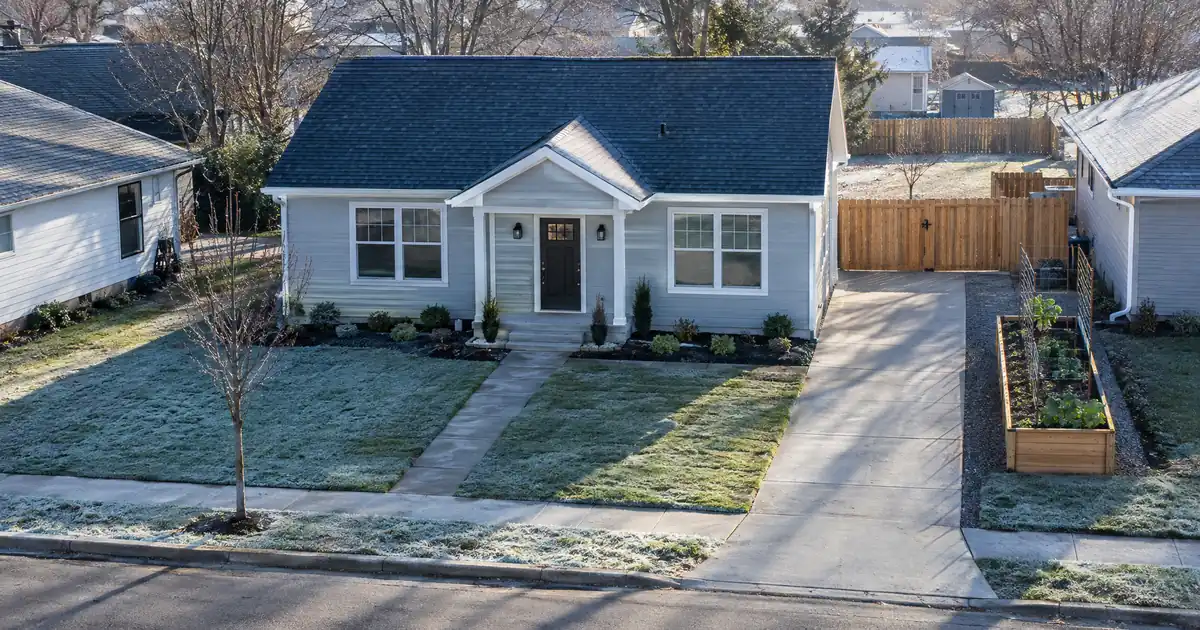
The Quick Read: The cash a first-time flipper needs between hard money draws is the largest stage of work you must pay for before the lender reimburses it, plus the interest carry while you wait, plus a delay buffer and a contingency, all on top of what you bring to closing. No single number fits every deal, because the figure depends on how the work is staged. A flip that is sequenced well needs far less float than the same budget run in overlapping phases.
- Draws reimburse finished work. Your cash, or your contractor’s patience, funds each stage first.
- Cash at closing and cash between draws are two separate buckets. Most beginners budget only the first.
- Float equals the largest unreimbursed stage, plus carry, plus a delay buffer, plus contingency.
- The low point on your cash curve is the real number. It is not the total rehab budget.
- Smaller stages, aligned contractor terms, and a reserve you never touch for ordinary scope all shrink the gap.
Key Terms Defined
Draw: a release of money from the lender’s rehab holdback after a stage of work is finished and verified.
Holdback: the part of the loan the lender keeps in escrow and releases only as work is completed.
Float: the cash you must carry between paying for work and receiving the draw that repays you.
Carry: the interest and holding costs that keep running while the property is being renovated.
Contingency: money set aside for overruns and surprises, kept inside your cash and not funded from draws.
Loan-to-cost: the share of total project cost (purchase plus rehab) that the lender funds.
After-repair value (ARV): the estimated value of the property once the renovation is finished.
What this loan actually costs to carry.
Hard money is sized against the project and priced by time. Enter the deal and see how much the program will lend, the cash required at closing, the carry while you hold it, and what is left at the exit.
Leverage tiers on the current program: 85% with fewer than 2, 90% with 2 or more, 93% with 5 or more completed projects — every tier capped at 75% of after-repair value. Loan amounts up to $5,000,000, larger by exception; terms of 6 to 18 months, interest-only, no prepayment penalty. The rehab portion funds in draws against completed work, not at closing.
Program parameters shown update from Lendmire’s centralized guideline source. Rate, points, and months are editable assumptions, not quoted terms.
Cost cap sets the loan · positive spread
Illustrative estimate only — not a quote, Loan Estimate, approval, or commitment to lend. Rate, points, and months are editable assumptions. Hard money is business-purpose financing for real estate investors, not a consumer mortgage. Leverage on the current program tops out at 93% of project cost for investors with a documented track record, capped at 75% of after-repair value, with rehab funding up to 100% of the documented budget released in draws; actual terms vary by lender, borrower experience, property, and exit. Lendmire is a mortgage broker, not a lender.
Why You Need Cash Between Draws
A hard money rehab loan is a reimbursement structure. It is not a pile of cash handed over at closing. Across the network of lenders Lendmire works with as a broker, the purchase portion funds at closing while the renovation money sits in a holdback. The lender releases it as work is completed. Up to 100% of the rehab budget can fund this way, but only against finished work.
That sequence creates the gap. A typical draw cycle runs like this:
1. You close. The purchase funds, and the rehab budget goes into the holdback.
2. Your contractor starts the first stage. You pay for materials and labor from your own cash.
3. The stage is finished. You submit a draw request with invoices and photos.
4. The lender sends an inspector to verify the work.
5. Funds are released from the holdback and reimburse you.
6. The next stage starts, and the cycle repeats.
Hard money lending is also collateral-driven. The programs Lendmire places files with differ from conventional loans in how they are sized. They size on loan-to-cost, with leverage that varies by lender, property, and experience, as covered below.
The Two Cash Buckets
Cash at closing and cash between draws answer different questions. Many explanations blur them into a single reserves line, and that is how first-timers end up short.
| Factor | Cash at closing | Cash between draws |
|---|---|---|
| When it is needed | Before the purchase funds | After closing, during the rehab |
| Main components | Down payment, closing costs, lender fees | Largest unreimbursed stage, carry |
| Predictable? | Mostly, from the term sheet | Depends on your schedule |
| Gets returned? | No | Partly, through draws |
| Common mistake | Assuming zero down | Treating the draw as available cash |
Start with leverage. Across the programs Lendmire works with, fix-and-flip leverage is tiered by documented completed projects. It runs up to 93% of project cost at five or more completed projects, up to 90% at two or more, and up to 85% with fewer than two. Every tier is capped at 75% of after-repair value. These figures vary by lender, property, and experience, and nothing here is a commitment to lend.
As a first-timer, you sit in the lowest tier. That tier typically leaves the largest share of the project for you to fund. The ARV cap can push your share higher when the purchase price is close to the finished value. The top tiers are reserved for experienced investors. The term 100% rehab financing refers to the rehab holdback, which pays out as work is finished. It is not a true 100% purchase program, and no such program exists.
Credit matters here too. Most programs want a 620 minimum score, with additional conditions below 660. First-time investors qualify at the lower leverage tiers, and underwriting stays centered on the property, the plan, and the exit.
The Float Formula, Step by Step
Here is the formula in plain terms. Float equals the largest stage you must pay before reimbursement, plus the carry during the wait, plus a delay buffer, plus a contingency.
Fill it in one line at a time.
Largest unreimbursed stage. Take your contractor’s line-item scope and mark where each draw request would land. Find the stretch of work you pay for before any money comes back. Include materials you buy yourself. This is usually your biggest line.
Carry during the wait. Interest on a hard money loan is interest-only, and it keeps running while the work happens. Some lenders charge interest on the full loan amount, and others charge only on funds disbursed. Read the term sheet and ask which applies. Then budget the carry for the whole stage, not for a single month. Terms run 6 to 18 months, so a slow stage eats runway as well as cash.
Delay buffer. Draws do not always arrive on schedule. An inspector’s calendar, a missing invoice, or a photo that does not match the line item can stretch the wait. Add a buffer for one late draw. Ask your lender how its inspection and release process normally works, and get the answer in writing.
Contingency. Overruns are the rule, not the exception, on a first flip. Keep contingency in your own cash and in the submitted budget. Do not plan to fund it from the draw schedule. A draw credits the approved line item. It does not credit what you happened to spend.
Worked Example: The Cash Curve
Run the numbers on a modeled rehab, using percentages of the rehab budget instead of dollars. These are illustrative assumptions, not market data.
Assume the work splits into three stages. Stage one is demolition and rough-in at 35% of the budget. Stage two is drywall, flooring, and systems at 25%. Stage three is finish work and final contractor payment at 40%. Assume each draw reimburses a stage in full once it is inspected.
| Stage | You pay (% of rehab budget) | Reimbursed by draw | Cash out at the low point |
|---|---|---|---|
| 1. Demo and rough-in | 35% | After inspection | 35% |
| 2. Drywall, floors, systems | 25% | After inspection | 25% |
| 3. Finish work | 40% | After inspection | 40% |
Run cleanly, the low point equals your largest stage: 40% of the rehab budget. That is your base float, before carry and contingency.
Now overlap the phases. Say your contractor starts stage two before draw one lands. Your cash out at that moment is stage one plus stage two, or 60% of the budget. The total rehab cost has not changed. Only the timing has. You have added 20 points of float with a scheduling choice.
That is why the trough in the curve matters more than the total budget. A first-timer who plans around the total will overestimate the need in some cases. In others, with overlap and a late draw, the same planner will run out.
Stress Test: What a Late Draw Does
Now test the same deal against three cases.
| Case | What happens | Effect on cash needed |
|---|---|---|
| Draw on time | Inspection passes, funds release | Base float holds |
| Draw arrives late | Contractor idles or you keep paying | Carry grows; buffer absorbs it |
| Inspection fails or repeats | Work is redone or re-verified | Float stays tied up longer |
A late draw rarely adds work, but it does add carry and pressure. A failed inspection is worse. Your money stays out while the fix happens, and if the contractor stops, the schedule stalls. Interest keeps running either way. The delay buffer exists for exactly these cases.
Here is where practitioner experience helps. Across the files Lendmire sees, the cash trouble on a first flip rarely comes from the purchase side. It comes from a mid-rehab month when two things overlap: a draw waiting on inspection, and a contractor who wants the next stage funded. First-timers who survive it usually staged the work to keep stages small and held reserves they refused to spend on ordinary scope.
Where the Rule Breaks
The formula is a starting point. Several situations bend it.
Contractor terms shrink the float. A contractor who accepts payment a set number of days after an inspected stage cuts your cash exposure sharply. A contractor who wants half up front and half at completion raises it. Ask about payment terms before you sign.
Few big draws versus many small ones. Fewer draws mean fewer inspections and fewer inspection fees, but each stage is larger, so your float is larger. More draws keep the float smaller but add inspection costs and paperwork. Neither choice is free.
Budget changes after approval. The lender credits work against the approved scope. If your scope changes and the lender has not approved the change, a draw may not credit the new work. Savings on one line can often move to another, but get changes approved in the lender’s system before you spend.
Ground-up construction. Across the programs Lendmire works with, ground-up construction carries its own tiers. Leverage reaches up to 90% of cost and 75% of completed value at three or more completed projects. Most of the budget sits in the holdback, so the float question is larger. A first-timer should treat it as a different project.
Partial credit. Many lenders credit a partially finished line at roughly its completed share. Do not count on a half-finished stage releasing in full.
Owner-occupant renovation loans. Some rehab products escrow repair money and release it as the work is completed, much like a hard money holdback. The FHA 203(k) program is one example. It is built for owner-occupants, though, so it does not help a business-purpose flipper.
Very thin cash. If your reserves cannot cover the largest stage plus carry, the structure is working against you. A smaller scope, a cheaper property, or an experienced partner is usually better than hoping the draws arrive in time.
Ways to Shrink the Float
You can cut the cash you need without cutting the project.
- Stage the scope. Split a large phase into two inspectable pieces. Each draw then reimburses less work, and your exposure falls.
- Sequence trades. Do not start the next stage until the last draw is funded, unless you can afford the overlap.
- Align contractor payment with the draw cycle. Pay on completed, inspected work.
- Request draws promptly. Photograph progress and keep invoices organized so the package is complete when you submit it.
- Include soft costs in the budget where the lender allows it. Costs the first draw can reimburse leave you with more working cash.
- Ask about turnaround. Get the lender’s stated draw process in writing before closing.
Ways to Fund a Shortfall
Plan the order of your defenses before you need them. Here is how the options compare.
| Option | Cost | What it does to your file |
|---|---|---|
| Cash already in reserve | Lowest | Strongest position |
| Contractor payment terms | Often none | Depends on relationship |
| Partner or private capital | Shared profit or fees | Adds a party to the deal |
| Reducing scope | Lost upside | Lowers future ARV |
Cash on hand is first because it costs nothing extra and keeps your plan simple. Contractor terms come next. A partner can fill a gap, but the partnership has to be written clearly before money moves. Cutting scope is the last resort because it can lower the finished value.
Pre-Closing Liquidity Checklist
Before you commit, confirm each of the following.
1. You know the closing cash from the term sheet, including your share of project cost and lender fees.
2. You have marked your largest unreimbursed stage on the scope.
3. You know whether interest runs on the full loan or only on funds drawn.
4. You have a delay buffer for at least one late draw.
5. Your contingency sits in your own cash.
6. Your contractor’s payment terms fit the draw cycle.
7. You know which scope changes need lender approval.
8. You can explain how a stalled rehab would hurt your exit.
Common Mistakes
- Counting the holdback as cash on hand. It is not yours until the work is verified.
- Treating the down payment as the whole cash need. Closing costs, fees, carry, and float come on top.
- Spending contingency on ordinary scope. Then nothing is left for surprises.
- Starting the next stage before the last draw lands. This is how a 40% float becomes a 60% float.
- Assuming interest is charged only on funds drawn. Check the term sheet.
- Changing scope without approval. The draw may not credit the new work.
What Happens at the Exit
A flip that goes over budget also hurts the exit. If you plan to hold the property as a rental, a cost overrun raises your hard money payoff and may shrink any cash back at the refinance. Many investors refinance out of hard money into long-term DSCR financing once the property is stabilized, and Lendmire brokers that path. A DSCR loan, which compares the property’s rent to its full monthly housing payment, sizes on its own appraisal and rent coverage, not on what the rehab cost you. A DSCR cash-out refinance tops out around 75% LTV across most of the network, and about 6 months of seasoning is the common expectation. Final terms depend on lender guidelines, property type, leverage, and the borrower’s complete credit picture.
Clearing a 1.00 coverage ratio is not the same as positive cash flow. The ratio compares rent to the payment only. It does not account for repairs, vacancy, management, or utilities. For how much equity a high-leverage rehab needs, see this look at equity for a top-leverage hard money rehab. The complete DSCR loans guide covers the rental-loan side in full.
Tax treatment varies; consult a qualified professional.
Frequently Asked Questions
Is a hard money draw an advance?
No. A draw is a reimbursement for work that has been completed and verified. The lender holds the rehab budget in escrow and releases it as stages are finished. That means your own cash, or your contractor’s credit, funds each stage first.
How long do draws take to arrive?
It varies by lender and by how clean your draw package is. Ask for the lender’s stated process in writing before you close. Then plan your delay buffer around a late draw, not an on-time one.
How much cash should I keep untouched?
Keep your contingency separate from your float, and treat it as off limits for ordinary scope. There is no universal percentage. Size it to your budget and the age and condition of the property. A first-timer with an unfamiliar contractor should lean toward a larger cushion.
Can my contractor wait for payment?
Sometimes. Some contractors accept payment after an inspected stage, which shrinks your float. Others want a deposit up front, which raises it. Negotiate terms before work starts, and align them to the draw schedule.
What happens if I run out of cash mid-rehab?
Work can stall while interest keeps running. A stalled project also erodes your exit window, and the lender may not release further draws without the next stage verified. Prepare for this before closing by sizing reserves to your largest stage plus carry and a delay buffer.
If you are buying, rehabbing or refinancing an investment property on a short timeline and want to see how the numbers work, Lendmire can help you compare hard money options based on the project, the exit plan, leverage, and your goals. Program details vary by lender, property, and experience, and nothing here is a commitment to lend.
A flip does not fail because the budget was wrong. It fails in the one month when the cash curve hits its low point and nothing is left to cover it.
Get Started
Ready to find the right loan for you?
In about 30 seconds you can review financing options available for your investment property. No commitment required.
Informational only. Not a Loan Estimate, approval, or commitment to lend. Program availability and eligibility are subject to lender guidelines, credit approval, property review, and underwriting.
About Lendmire
As a DSCR and non-QM mortgage broker, Lendmire — NMLS# 2371349 — connects investors with wholesale lending channels across 41 markets, including Washington, D.C. The property’s rental income, not the borrower’s traditional personal-income documentation, is central to lender review, which works for self-employed operators and portfolios beyond four financed properties. Scotsman Guide named Lendmire a Top Mortgage Workplace in both 2025 and 2026.
This article is part of Lendmire’s hard money loan program — full qualification details, guidelines, and scenarios live on the program page.
Related reading: How Much a DSCR Cash-Out Releases for an Investor With Several Rentals · How Much Equity a DSCR Cash-Out Releases Compared With a Sale · How Much a DSCR Cash-Out Can Cover for a Fund Capital Call
Brandon Miller
Founder & CEO, Mortgage Loan Originator, Lendmire LLC
- Mortgage Loan Originator · NMLS# 1129696 · Verify on NMLS Consumer Access
- North Carolina Real Estate Broker · License# 343312 · Verify on NCREC
- North Carolina Insurance Producer · License# 19053198 · Property, Casualty, Life, Health · Verify on NAIC SBS
- Lendmire LLC · Firm NMLS# 2371349 · Verify firm licensure
Important disclosures. Lendmire (NMLS# 2371349) is a licensed mortgage brokerage. Lendmire is not a direct lender, depository institution, or financial advisor. All loan inquiries are subject to lender underwriting; this article does not constitute a commitment to lend. Rates, terms, and program guidelines are subject to change without notice and vary by borrower profile, property type, and state. Information in this article is general in nature and is not financial, legal, or tax advice. Equal Housing Opportunity. NMLS Consumer Access: nmlsconsumeraccess.org.