
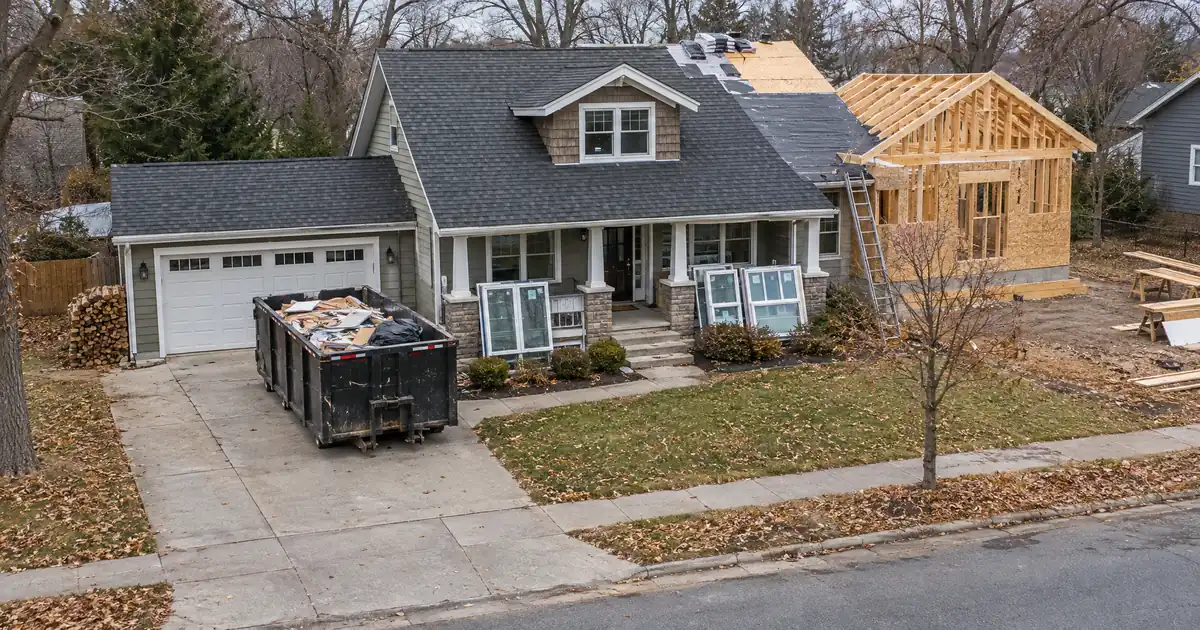
The Quick Read: An overrun belongs to you unless your loan documents say otherwise, because a hard money lender releases only the approved rehab budget, and only against work that has been completed and inspected, so any cost above the approved line lands on you before a draw reimburses it. You fund the gap from a contingency you set aside, your own liquidity, or a budget change the lender agrees to in writing. Which source comes first depends on how big the overrun is and how much margin the deal still has.
- Hard money rehab funds are held back and released in draws, so you pay first and get reimbursed later.
- Up to 100% of the rehab budget can fund in draws on the program we broker, but that is a rehab-budget figure, not a purchase loan-to-value figure.
- A contingency, kept separate from the approved budget, is a more affordable overrun fix.
- Tell the lender early and bring paperwork, because a budget change needs approval before the work starts.
- Run a margin test before you keep spending. Sometimes the right move is to cut scope, rent the property, or sell.
Why Do You Feel the Overrun Before the Lender Does?
You feel it first because draws reimburse work after the fact. Your cash goes out to the contractor, then the inspector confirms the work, then the lender releases money. An overrun hits during the first stage, while your cash is still the only money in the project.
What this loan actually costs to carry.
Hard money is sized against the project and priced by time. Enter the deal and see how much the program will lend, the cash required at closing, the carry while you hold it, and what is left at the exit.
Leverage tiers on the current program: 85% with fewer than 2, 90% with 2 or more, 93% with 5 or more completed projects — every tier capped at 75% of after-repair value. Loan amounts up to $5,000,000, larger by exception; terms of 6 to 18 months, interest-only, no prepayment penalty. The rehab portion funds in draws against completed work, not at closing.
Program parameters shown update from Lendmire’s centralized guideline source. Rate, points, and months are editable assumptions, not quoted terms.
Cost cap sets the loan · positive spread
Illustrative estimate only — not a quote, Loan Estimate, approval, or commitment to lend. Rate, points, and months are editable assumptions. Hard money is business-purpose financing for real estate investors, not a consumer mortgage. Leverage on the current program tops out at 93% of project cost for investors with a documented track record, capped at 75% of after-repair value, with rehab funding up to 100% of the documented budget released in draws; actual terms vary by lender, borrower experience, property, and exit. Lendmire is a mortgage broker, not a lender.
Here is the structure behind that. On a typical fix-and-flip file, the lender funds a share of the purchase and holds the rehab money back. On the program we broker, leverage is measured against project cost. It runs 93% of project cost for investors with 5 or more completed projects, 90% of project cost at 2 or more, and 85% with fewer than 2. Every tier is capped at 75% of after-repair value. Up to 100% of the rehab budget funds in draws against completed work. All of this varies by lender, property, and experience, and nothing here is a commitment to lend.
Notice what that last sentence does not say. There is no true 100% purchase program. When a lender advertises full rehab financing, it means the rehab budget is funded in full once the work is done. It does not mean you put nothing in. You front early costs, and you float whatever the approved budget does not cover.
The first draw is the biggest gap. Contractors often want a deposit or a material purchase before they start. The lender will not pay for that work until it exists and has been inspected. Many lenders also check that you have the liquidity to start the job at all.
Key Terms Defined
Holdback: The part of the loan the lender keeps in escrow and releases only as renovation work is finished.
Draw: A release of held-back money, requested after you complete a stage of work and the lender inspects it.
Contingency: Extra money, budgeted or kept in cash, that is set aside for costs you did not predict.
After-repair value (ARV): The estimated value of the property once the planned renovation is complete.
Change order: A written agreement with your contractor that adds, removes, or reprices part of the scope.
Lien waiver: A written statement from a contractor, subcontractor, or supplier giving up the right to file a lien for the work covered by a payment.
What Does Your Cash Exposure Look Like at Each Stage?
Your exposure is highest right after you close and shrinks with every draw you collect. An overrun hurts most when it lands early, because later draws cannot absorb it. The table shows where it bites.
| Stage | What you pay | What reimburses you | Where an overrun bites |
|---|---|---|---|
| Closing | Down payment, closing costs | Nothing yet | Cash needed for closing and phase one |
| Phase one | Deposit, materials, first labor | First draw after inspection | Largest float of the project |
| Middle draws | Progress payments | Each draw, per line item | Line items that run over their approved amount |
| Final phase | Final labor, punch list | Last draw, once complete | Cash tied up until final inspection |
| Exit | Carry, refinance or sale costs | Sale proceeds or refinance | Thin margin from earlier overruns |
Reimbursement can also be partial. Some lenders pay a share of a line item that matches how much of it is finished. If your contractor bills on terms rather than upfront, your float shrinks. Ask for those terms before the job starts.
What Do You Do in the First 48 Hours?
Start by confirming what the overrun actually is before you spend another dollar. Surprises come in different shapes, and each calls for a different response.
1. Identify the cause. Hidden damage, a scope change you chose, and a bid that was simply too low are three different problems. The cause tells you whether the lender will see it as reasonable.
2. Get the change order in writing. A verbal price is not a price. Ask the contractor for the revised cost by line item.
3. Freeze nonessential spending. Pause cosmetic items until the structural and mechanical work is priced.
4. Stop paying ahead of inspections. Pay for work that is finished, not work that is promised.
5. Recalculate the margin. Compare your new all-in cost to a realistic after-repair value. If the number no longer works, you want to know now.
6. Call the lender. Early notice protects the relationship, and any change generally needs approval before the work begins.
Which Funding Source Comes First?
Use a more affordable, lowest-risk source first and move down only when the overrun outgrows it. The ladder below shows the order most investors follow.
| Source | Best fit | Main risk |
|---|---|---|
| Contingency | Small overruns on any line | Already spent if the budget was tight |
| Moving money between lines | Savings on one line cover another | Needs lender approval |
| Your own cash | Moderate overruns with margin left | Drains money needed at exit |
| Lender budget change | Scope grew and the loan has headroom | Bounded by the lender’s value cap |
| Partner or private capital | Overrun is too large for your liquidity | Cuts into profit and adds a party |
| Scope reduction | Margin is thin and finishes can wait | May lower the appraised value |
Contingency. The best overrun money is the money you reserved before the job started. Keep it separate from the lender-approved budget, because the lender will not reimburse spending that exceeds an approved line. No contingency size is universal. A heavier scope or an older house calls for more.
Reallocation. If you saved money on a line, such as flooring, you may be able to move it to a line that ran over. Lenders usually want the request in writing, with the reason and the updated budget.
Your own cash. This is where most overruns end up. Count it honestly. Draw reimbursements are not available cash, so never plan on them to cover the next bill.
A lender budget change. Some lenders will modify the budget, but a larger loan still has to fit inside the lender’s value cap. On the program we broker, that cap is 75% of after-repair value for every tier. If the loan already sits near that cap, expect no extra room.
Partner or private capital. Bringing in more capital works, but you give up part of the profit. Agree on terms in writing before you take the money.
Credit cards or a revolving line. These help you float the first draw before reimbursement arrives. They are a timing tool, not an overrun fix, because a draw repays them only up to the approved budget.
How Should You Ask the Lender for Help?
Ask early and bring a clean file. Lenders respond better to a borrower who says “here is the problem and here is the plan” than one who surfaces after a failed inspection.
Bring these items:
- The contractor’s written change order, broken out by line item.
- Any inspection or engineering report that explains a hidden condition.
- An updated budget showing what has been spent and what remains.
- Your updated estimate of after-repair value.
- A plain statement of how you will fund the gap.
A vague budget causes problems here too. An itemized budget by trade and area lets an inspector decide what to release. A single line labeled interior for the whole house does not.
Also ask about interest on undrawn funds. Some lenders charge interest only on money you have drawn. Others charge on the full loan from day one. The structure changes your carry cost, so ask each lender before you commit.
How Do Contractor Controls Protect Your Cash?
Contractor controls decide how much of your float you can recover if something goes wrong. Four habits help most.
Pay on inspected work. Match your payments to the lender’s inspection rhythm. Paying ahead of inspections widens your float.
Hold back final payment. Keep a meaningful final payment until the punch list is done and the last inspection passes.
Re-bid remaining trades. If an overrun shows the first bid was weak, get fresh prices for the work that is left rather than assuming the rest will hold.
Collect lien waivers. Paying your general contractor does not by itself protect you. FindLaw explains that a mechanic’s lien can attach to a property even when the owner has paid the general contractor, because subcontractors and suppliers can pursue the property for unpaid work. The same article notes that waiver rules vary by state. As one example, the Minnesota Attorney General’s handbook defines a lien waiver as a written statement in which a subcontractor gives up the right to file a lien. Check your own state’s rules before you rely on any waiver.
Tax treatment varies; consult a qualified professional.
What Does an Overrun Look Like in Practice?
Run the numbers on one modeled deal three ways. The inputs below are assumptions for illustration, expressed as percentages of the rehab budget, not market data.
| Scenario | Overrun size | Added delay | Your cash need | Margin verdict |
|---|---|---|---|---|
| Overrun only | 10% of rehab budget | None | Contingency covers it | Continue |
| Overrun plus delay | 10% of rehab budget | Extra months of carry | Overrun plus added interest and utilities | Adjust: cut scope or tighten the schedule |
| Large overrun | 30% of rehab budget | Some delay | Contingency, own cash, and likely a partner | Stop and test: compare finishing against selling as-is |
Keep overrun and delay separate in your math. An overrun is a scope cost. Delay is a time cost made of interest, taxes, insurance, and utilities. Many lenders treat them differently, and your margin feels both.
Use a simple test. Take your realistic after-repair value, subtract the new all-in cost and selling costs, and see what profit is left. If you would not have bought the deal at that margin, treat that as a warning sign. The money you have already spent is gone either way, so judge only the money still ahead of you.
In the large-overrun case, the answer is often to stop adding scope. A cleaner, simpler finish may sell or rent just as well, though value always depends on comps and underwriter review.
Keep It, Rent It, or Sell It?
Your choice depends on the margin left and the cash you still have. The decision table gives a starting point.
| Situation | Usual move |
|---|---|
| Margin still healthy, cash available | Finish and sell |
| Margin thin, rent supports the property | Finish and hold as a rental |
| Margin gone, cash short | Cut scope or sell as-is |
| Overrun came from a fixable mistake | Re-bid and finish |
Hard money terms run 6 to 18 months, interest-only, with no prepayment penalty, and there are no multi-year options on the current program. Those terms vary by lender and experience. An investor who wants to hold the property usually refinances out of hard money into long-term rental financing once the property is stabilized. Lendmire brokers that path.
Here is the catch for overruns. Money the lender did not fund does not raise your loan. It comes out of your pocket, and you will need cash again at the refinance. Select DSCR lenders in our network typically cap a cash-out refinance on a standard rental at about 75% LTV, and they generally expect about 6 months of seasoning. DSCR compares rent to the full monthly payment only. Clearing 1.00 is not the same as positive cash flow, because repairs, vacancy, and management sit outside the calculation. For the full picture, see the complete DSCR loans guide.
Appraisal risk compounds all of this. An overrun does not guarantee a higher value, and an improvement may support a higher appraised value only depending on comps and underwriter review.
How Do You Prevent the Next Overrun?
Prevention is mostly planning. Build the budget by line item, get written bids, and add a contingency before you close. Add time buffers too, since delay costs money.
Plan your liquidity in three layers: the first draw float, a contingency, and refinance or sale costs. Leave all three out of your spending plan. Leverage on the loan never replaces cash in the bank.
Frequently Asked Questions
Will my lender give me more money if I go over budget?
It depends on the loan agreement and how much headroom the loan has. Lenders usually fund only the approved budget, and a modification generally needs approval before the work starts. Any increase still has to fit under the lender’s value cap, which on the program we broker is 75% of after-repair value.
What if the overrun happens before my first draw?
You pay it with your own cash, because nothing has been reimbursed yet. This is the most strained moment of a project. Stop nonessential spending, get the change order in writing, and tell the lender right away.
Can I move money between budget lines?
Often yes, but only with the lender’s approval. Ask in writing and explain which line has savings and which one ran over. An itemized budget makes that request much easier to approve.
Who pays if a draw is late?
You do, because your contractor still expects payment while the lender’s inspection or paperwork is pending. Late draws also add to your carry. Keep reserves for this gap and submit complete draw requests so the lender has what it needs.
Is an overrun different from a delay?
Yes. An overrun is a cost above the approved scope, while a delay adds interest, taxes, insurance, and utilities. Track them separately so you can see which one is eroding your margin.
If you are buying, rehabbing or refinancing an investment property on a short timeline and want to see how the numbers work, Lendmire can help you compare hard money options based on the project, the exit plan, leverage, and your goals.
For current guidelines and terms, see Lendmire’s hard money loan programs page.
About Lendmire
A DSCR-focused mortgage broker, Lendmire (NMLS# 2371349) places investor financing across 41 markets — 40 states plus Washington, D.C. — with DSCR eligibility generally reviewed by the lender on property cash flow instead of tax returns, subject to lender guidelines. Scotsman Guide named Lendmire a Top Mortgage Workplace in 2025 and 2026.
The exit plan matters as much as the purchase price on short-term financing – see the hard money loan overview.
Get Started
Ready to find the right loan for you?
In about 30 seconds you can review financing options available for your investment property. No commitment required.
Informational only. Not a Loan Estimate, approval, or commitment to lend. Program availability and eligibility are subject to lender guidelines, credit approval, property review, and underwriting.
References
1. FindLaw: Understanding Mechanic’s Liens
2. Minnesota Attorney General: Understanding Mechanic’s Liens
This article is part of Lendmire’s hard money loan program — full qualification details, guidelines, and scenarios live on the program page.
Related reading: How to Build a Rent Roll for a DSCR Takeout After a BRRRR Rehab · How to Document Gap Funding so a DSCR Lender Accepts the Source · How to Make a DSCR Cash-Out Cover Your Hard Money Note and Rehab Cards
Brandon Miller
Founder & CEO, Mortgage Loan Originator, Lendmire LLC
- Mortgage Loan Originator · NMLS# 1129696 · Verify on NMLS Consumer Access
- North Carolina Real Estate Broker · License# 343312 · Verify on NCREC
- North Carolina Insurance Producer · License# 19053198 · Property, Casualty, Life, Health · Verify on NAIC SBS
- Lendmire LLC · Firm NMLS# 2371349 · Verify firm licensure
Compliance and disclosures. Lendmire (NMLS# 2371349) is a licensed mortgage broker and is not a direct lender, depository institution, financial advisor, or tax professional. Content in this article is general market analysis and educational information — not financial, legal, or tax advice for any specific situation. Lendmire does not guarantee loan approval; every transaction is subject to underwriting by the funding lender. Mortgage pricing and loan program guidelines are subject to change at any time without notice and vary by borrower characteristics, property type, and state regulations. Lendmire complies with Equal Housing Opportunity. Licensure verification: NMLS Consumer Access.