
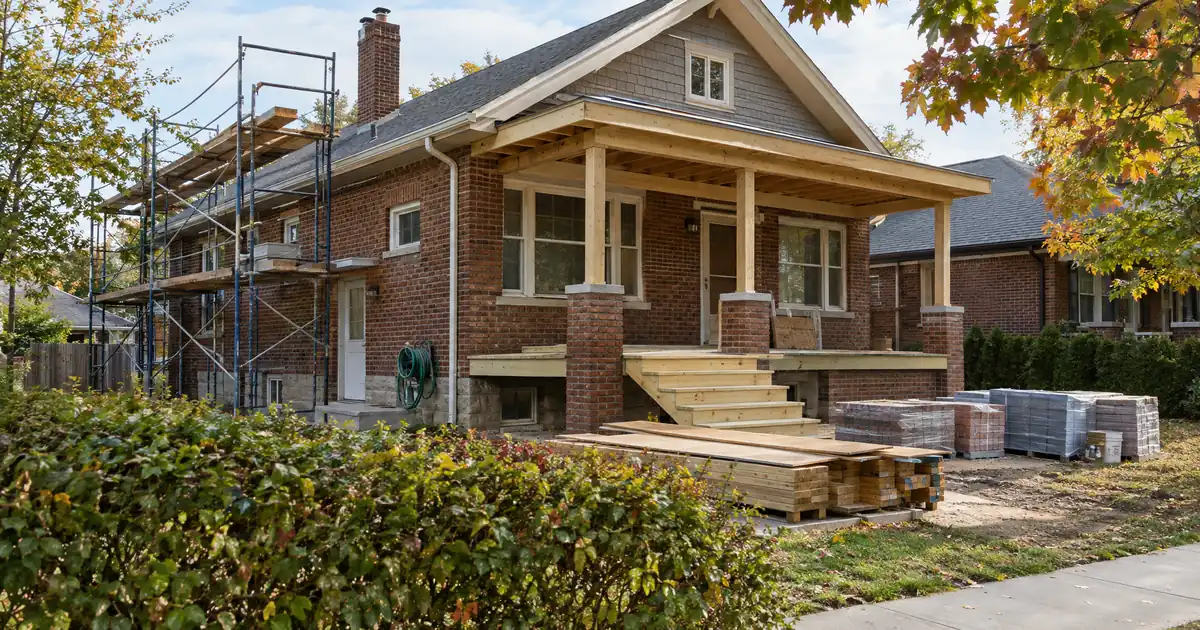
The Quick Read: Gap money is the working capital that covers the space between paying for rehab work and getting reimbursed by the hard money lender, and the cleanest structure keeps it out of the lien stack. Size the float first, fund it with cash or a loan that does not touch title, and tell the draw lender about any other debt.
- Rehab money is a holdback released after verified work. You pay first, then request the draw.
- Up to 100% of the rehab budget funds in draws against completed work, subject to lender guidelines. That is a rehab-budget figure, not a purchase loan-to-value.
- Fix-and-flip leverage is tiered by completed projects and capped at 75% of after-repair value. Terms and leverage vary by lender, property, and experience.
- A recorded second lien is the hardest gap structure to place and can freeze draws.
- Test the exit before you start. A DSCR refinance should still work on realistic rent.
Most investors who get squeezed on a rehab were not underfunded on paper. They ran out of cash in the middle of the project, between a contractor invoice and the next draw. This article walks through how the float works, how to size it, and how to fund it without creating a title problem.
What this loan actually costs to carry.
Hard money is sized against the project and priced by time. Enter the deal and see how much the program will lend, the cash required at closing, the carry while you hold it, and what is left at the exit.
Leverage tiers on the current program: 85% with fewer than 2, 90% with 2 or more, 93% with 5 or more completed projects — every tier capped at 75% of after-repair value. Loan amounts up to $5,000,000, larger by exception; terms of 6 to 18 months, interest-only, no prepayment penalty. The rehab portion funds in draws against completed work, not at closing.
Program parameters shown update from Lendmire’s centralized guideline source. Rate, points, and months are editable assumptions, not quoted terms.
Cost cap sets the loan · positive spread
Illustrative estimate only — not a quote, Loan Estimate, approval, or commitment to lend. Rate, points, and months are editable assumptions. Hard money is business-purpose financing for real estate investors, not a consumer mortgage. Leverage on the current program tops out at 93% of project cost for investors with a documented track record, capped at 75% of after-repair value, with rehab funding up to 100% of the documented budget released in draws; actual terms vary by lender, borrower experience, property, and exit. Lendmire is a mortgage broker, not a lender.
Why Does the Float Exist?
The float exists because a hard money rehab holdback pays you back; it does not pay the contractor first. The initial advance covers the purchase. The rehab budget sits in reserve and is released in draws after the work is done and verified. Whatever you spend before that release comes out of your pocket.
Treat any single investor’s rule of thumb on how much to front as one opinion, not a standard. Draw structure varies by lender, and the note governs.
The cycle runs the same way on most files: work gets done, you pay for it, you submit a draw request with documentation, the lender inspects, title or lien checks run, and funds release. Your cash stays out for the whole loop. Every step that slows down lengthens the float.
Key Terms Defined
Draw: A release of rehab funds from the holdback after completed work is verified.
Holdback: The part of the loan reserved for rehab and paid out in stages, not at closing.
Float: The cash you carry between paying for work and being reimbursed.
Gap money: Capital layered in to cover down payment, closing costs, carry, or the draw float.
Lien waiver: A document from a contractor or supplier giving up lien rights for work already paid.
Subordinate lien: A recorded loan that sits behind the first lender in repayment priority.
Date-down: A title update confirming no new liens appeared since the last draw.
How Do You Size the Cash You Must Hold?
Peak cash need is roughly the cost of your largest work phase between draws, plus carry, fees, and a contingency buffer. That is the number to fund. Not the total rehab budget, and not the average phase.
Work it in this order:
1. Start with your down payment and closing costs. Those are due before any draw exists. Leverage on the purchase side varies by lender, property, and experience, so confirm the tier you actually qualify for.
2. Add the cost of the first work phase. This is usually the largest early outlay, since materials and demolition come first.
3. Add holding costs through the first reimbursement: interest, insurance, utilities, and any draw or inspection fees. One model rehab-loan walkthrough builds the draw fee and interest through the first draw into the cash plan, with interest on drawn funds due the following month.
4. Add a contingency buffer for delays and overruns.
5. Find the low point. Lay out each draw against each payment and mark where your cash is thinnest. That trough is your float.
Run the numbers on a simple pattern: three phases, with the draw for phase one landing after phase two has already started. Your low point is not after phase one. It is during phase two, when you have paid for two phases and been reimbursed for none or one. Sequencing the work so each reimbursement funds the next phase shrinks that trough. That is how you recycle one pool of working capital.
Ask the lender early whether interest accrues only on disbursed funds or on the whole loan from day one. That is a note-by-note term and it changes your carry.
What Does the Draw Process Add to the Float?
Each control in the draw cycle adds time, and time is cash tied up. A construction-education guide lists the flow as a pay application, contractor sworn statement, conditional waivers, lender or title review with inspection, payment, and unconditional waivers after funds clear (GoBuildYourHouse). The same guide says lenders likely want a title update and a draw inspection, and that the date-down endorsement confirms no new liens showed up since the prior draw.
Two quiet friction points matter here. First, a clean prior draw does not prove the current period is clean, so the date-down repeats. Second, lien waiver forms and timing can be set by state statute, and a generic form may not work everywhere (Primior). A contractor who hands you the wrong waiver form creates a gap in the file, and the draw waits.
For contrast, HUD’s model rehabilitation loan agreement requires the lender to get lien waivers at each disbursement to protect the first lien, a partial conditional waiver for completed items on each draw, and a release of all liens at completion (HUD). That is an FHA-family document, not a DSCR or hard money rule. It shows the standard logic lenders follow.
Budget for the fee drag too. Inspection and title update charges recur on each draw, and they vary by state and lender.
What Are the Ways to Fund the Gap?
The best structure is the one that adds the least friction to the first lender’s lien position. From most lender-friendly to least, the options look like this:
| Option | Lien on title? | Best for | Main risk |
|---|---|---|---|
| Own cash or reserves | None | Any size float | Thins your cushion |
| Personal line against other assets | None on subject | Short, modest floats | Personal liability |
| Private note, no recorded lien | None | Down payment or float gaps | Cost; must be disclosed |
| Equity JV partner | None | Larger or repeat deals | Shared profit |
| Recorded second lien | Yes | Last resort | Frozen draws, consent |
Own cash is the cleanest option. A personal credit line against other property is the next realistic source investors name, along with personal contacts. A private lender on an unsecured promissory note, with no recorded lien, avoids the title problem, but it should be disclosed to the primary lender.
An equity partner puts in capital for a share of profit, with no debt on title. One contractor’s view in an investor thread is that a primary lender wants to see the borrower’s own money in the deal, and that an undisclosed gap loan behind the primary can create serious trouble. That is an opinion, not a legal ruling. The practical point holds: lenders look for undisclosed secondary liens, and hiding one is the wrong plan.
Why Is a Second Lien the Hard One?
A recorded second lien can freeze your rehab funds. At each draw the lender runs a lien search, sees the second mortgage, and may hold disbursement until it is resolved or consented to. Most hard money lenders want to be the only lienholder during the rehab.
That is the failure mode to plan around. Even when a second lien is permitted, it usually needs the first lender’s written consent. Without it, you risk a default under the first note or a hold on draws right when your cash is thinnest.
There is also a leverage point. Hard money leverage in Lendmire’s network is tiered by documented completed projects. Fix-and-flip files run 93% of project cost at 5 or more completed projects, 90% of project cost at 2 or more, and 85% of project cost with fewer than 2, each capped at 75% of after-repair value. Those are loan-to-cost figures, not purchase LTVs, and they vary by lender, property, and experience. There is no true 100% purchase program. Stacking a second lien to fake one is exactly the structure that draws scrutiny.
How Do You Shrink the Float Before You Close?
Negotiate it down. A smaller float needs less gap money, and a smaller gap is easier to place.
- Phase the work to the draw schedule. Put early-draw items first so reimbursements fund later phases.
- Align contractor payments with draws. A contractor on a draw-keyed payment schedule carries part of the timing risk.
- Ask about inspection turnaround and fee structure before closing, not after the first invoice.
- Confirm whether funds go to you or directly to the contractor. It varies by loan.
- Get supplier credit terms on large material orders where available.
Pre-closing questions for the lender should cover: draw fees, inspection timing, how interest accrues on committed versus disbursed funds, and what happens if an inspection is delayed or a draw is short-paid.
How Do You Paper the Repayment Order?
Write down who gets repaid first when a draw lands. If gap money comes from a private lender or partner, put the repayment waterfall in the note or operating agreement: contractor obligations first, then draw-lender fees, then the gap provider, with the remainder to you. Ambiguity here creates disputes at exactly the wrong moment.
Keep a clean paper trail:
- Conditional waiver with each draw request and unconditional waiver after funds clear.
- Contractor agreement keyed to draw timing.
- Photos and budget line items for each phase.
- Written change-order approval before any extra spend.
- Disclosure of any secondary debt to the draw lender.
Documentation discipline decides whether the draw releases on the first pass or sits in review.
What Goes Wrong?
| Failure mode | Early warning | Mitigation |
|---|---|---|
| Second lien surfaces at date-down | Title update flags it | Use unsecured or JV structure; disclose |
| Inspection delayed | Draw request sits | Larger buffer; request early |
| Draw short-paid | Lender cuts a line item | Tighter scope and photo documentation |
| Overrun leaves float unrecovered | Change orders pile up | Contingency; approve changes in writing |
| Wrong waiver form | Title or lender rejects | Use state-correct forms |
A contractor’s warning in one investor thread is worth repeating: one delay can wipe out a zero-out-of-pocket deal. The structure that survives is the one with cash left over after a delay.
Where Does the DSCR Exit Fit?
Test the exit before you start. Many investors refinance out of hard money into long-term DSCR investor loans once the property is stabilized, and Lendmire brokers that path. If you used gap debt, the take-out lender will see it. Whether secondary debt is paid at the refinance, and how it affects leverage, depends on the program and lender guidelines.
Coverage compares rent to the full monthly obligation (principal, interest, taxes, insurance, and any HOA dues). Across the network, 1.00 is where select programs start, and stronger ratios open better pricing and leverage. A separate select-lender path takes coverage below 1.00, with leverage and terms adjusted. Clearing 1.00 is not the same as positive cash flow, since repairs, vacancy, management, and utilities sit outside the calculation. Cash-out refinance tops out around 75% LTV across most of the network, with about six months of seasoning a common expectation. Run the refinance on realistic rent before you break ground. For the full picture, see the complete DSCR loans guide. Exact terms depend on the lender’s guidelines, property type, leverage, and a full review of the borrower’s file.
If the rehab runs past your loan term, Lendmire’s piece How to Bridge the Gap When Hard Money Matures Before DSCR Closes covers that bridge problem. Hard money terms run 6 to 18 months, interest-only, with no multi-year options, so the exit timeline belongs in the plan.
Is Gap Money Worth It?
Gap money pays off when delay costs more than the carry on the gap capital. Picture an investor with a clean first-lien loan, a modest float, and a partner willing to put in cash for a profit share. The structure costs profit, but it keeps title clean and draws moving. Now picture the same investor with a recorded second lien the draw lender did not know about. If draws freeze mid-project, the carry on both loans runs while the work stops.
The honest break-even test: compare the cost of the gap capital against the cost of a slower, self-funded project. If self-funding means losing a purchase, the gap may be worth it. If it only means a smaller rehab scope, probably not. This is a toss-up on many files, and the answer shifts with float size, duration, and whether you will repeat the structure across projects.
Frequently Asked Questions
Can I use gap money for the first draw only?
Yes, many investors fund only the first phase, since the first reimbursement then recycles into the next. Plan the sequence so each draw covers the next phase, and keep a buffer for a delayed inspection.
Do I need the draw lender’s consent for gap funding?
For a recorded second lien, yes, and expect it to be hard to get. For an unsecured private note or an equity partner with nothing recorded on title, consent may not be required, but disclosure to the draw lender is still the safe path. Check your loan documents.
Is interest charged on the full loan or only on drawn funds?
It depends on the note. Some accrue interest only on disbursed funds. Others charge on the whole loan from day one. Ask before closing, since it changes your carry.
Can the contractor carry the float?
Sometimes, through a payment schedule keyed to draws. It shifts timing risk to the contractor, who may price it in. Keep lien waivers in place with every payment.
What happens to the gap at payoff?
It should be repaid from sale or refinance proceeds according to the waterfall you wrote down. If you refinance into DSCR financing, the take-out lender reviews any secondary debt under its own guidelines. Tax treatment varies; consult a qualified professional.
If you are buying, rehabbing or refinancing an investment property on a short timeline and want to see how the numbers work, Lendmire can help you compare hard money options based on the project, the exit plan, leverage, and your goals. Hard money programs are available across 41 markets, including Washington, D.C., through select lenders in the network, subject to lender guidelines and not a commitment to lend.
About Lendmire
Lendmire, NMLS# 2371349, is a mortgage brokerage focused on investor financing, arranging DSCR loans in 40 states plus Washington, D.C. — 41 markets total. Qualification is based on the property’s income rather than personal income documentation, subject to lender guidelines, making it a fit for LLC-held rentals and scaling portfolios. Scotsman Guide named Lendmire a Top Mortgage Workplace in both 2025 and 2026.
Get Started
Ready to find the right loan for you?
In about 30 seconds you can review financing options available for your investment property. No commitment required.
Informational only. Not a Loan Estimate, approval, or commitment to lend. Program availability and eligibility are subject to lender guidelines, credit approval, property review, and underwriting.
References
1. GoBuildYourHouse – Mechanics’ liens, waivers, draws
2. Primior Group – Draw process controls
3. HUD Rehabilitation Loan Agreement (model)
This article is part of Lendmire’s hard money loan program — full qualification details, guidelines, and scenarios live on the program page.
Related reading: Gap Funding vs. a Money Partner for Your First DSCR Rental · DSCR Cash-Out Now vs Waiting for Hard Money and Rehab Card Payoff · How Much a Rent Gap Moves a DSCR Loan on a Newly Signed Lease
Brandon Miller
Founder & CEO, Mortgage Loan Originator, Lendmire LLC
- Mortgage Loan Originator · NMLS# 1129696 · Verify on NMLS Consumer Access
- North Carolina Real Estate Broker · License# 343312 · Verify on NCREC
- North Carolina Insurance Producer · License# 19053198 · Property, Casualty, Life, Health · Verify on NAIC SBS
- Lendmire LLC · Firm NMLS# 2371349 · Verify firm licensure
Important disclosures. Lendmire (NMLS# 2371349) is a licensed mortgage brokerage. Lendmire is not a direct lender, depository institution, or financial advisor. All loan inquiries are subject to lender underwriting; this article does not constitute a commitment to lend. Rates, terms, and program guidelines are subject to change without notice and vary by borrower profile, property type, and state. Information in this article is general in nature and is not financial, legal, or tax advice. Equal Housing Opportunity. NMLS Consumer Access: nmlsconsumeraccess.org.