
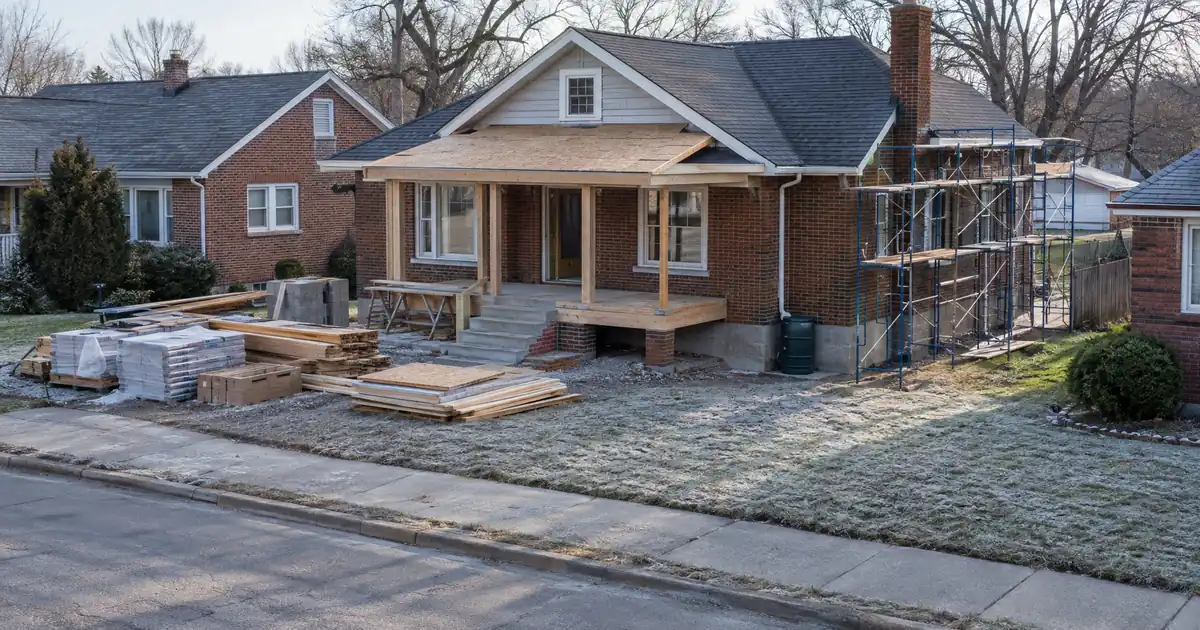
The Quick Read: Usually yes, but only with the lender’s written approval, and the extra cost lands on your own cash while the request is reviewed. Most hard money loans hold the rehab money back and release it in draws after an inspector confirms completed work, so you pay first and get reimbursed. A raise is typically limited by the after-repair-value cap and re-underwriting, which means the loan agreement controls the answer.
- Draws are reimbursements for finished work, not advances for work you plan to do.
- A true budget increase usually needs a change order, new costs, and lender sign-off before the work starts.
- Hard money leverage varies by lender, property, and experience; the top fix-and-flip tier is 93% of project cost, always capped at 75% of after-repair value.
- Overruns are usually funded from your contingency and your cash, in that order.
- Many investors refinance out of hard money into long-term DSCR financing once the property is stabilized, and Lendmire brokers that path.
What Does “Fronting a Draw” Actually Mean?
Fronting a draw means you pay the contractor first and the lender repays you after an inspection. The rehab money sits in a controlled account. It is released against milestones in the scope of work, not on a calendar.
What this loan actually costs to carry.
Hard money is sized against the project and priced by time. Enter the deal and see how much the program will lend, the cash required at closing, the carry while you hold it, and what is left at the exit.
Leverage tiers on the current program: 85% with fewer than 2, 90% with 2 or more, 93% with 5 or more completed projects — every tier capped at 75% of after-repair value. Loan amounts up to $5,000,000, larger by exception; terms of 6 to 18 months, interest-only, no prepayment penalty. The rehab portion funds in draws against completed work, not at closing.
Program parameters shown update from Lendmire’s centralized guideline source. Rate, points, and months are editable assumptions, not quoted terms.
Cost cap sets the loan · positive spread
Illustrative estimate only — not a quote, Loan Estimate, approval, or commitment to lend. Rate, points, and months are editable assumptions. Hard money is business-purpose financing for real estate investors, not a consumer mortgage. Leverage on the current program tops out at 93% of project cost for investors with a documented track record, capped at 75% of after-repair value, with rehab funding up to 100% of the documented budget released in draws; actual terms vary by lender, borrower experience, property, and exit. Lendmire is a mortgage broker, not a lender.
Up to 100% of the rehab budget can fund in draws against completed work on the programs Lendmire places files with, though the exact share varies by lender, property, and experience. That figure describes the rehab budget only. It is not a purchase loan-to-value number, and there is no true 100% purchase program. The purchase itself is financed at the leverage tiers described below.
The surprise for new investors is timing. “100% rehab financing” sounds like no cash is needed. In practice you need cash for the down payment, the first phase of work, and carrying costs until the first reimbursement lands. One Yieldstack explainer describes reimbursement as the standard structure and notes that deposits on materials generally are not fundable until the work is installed.
Key Terms Defined
Draw: A release of rehab funds to the borrower after the lender verifies completed work.
Holdback: The portion of the loan reserved for rehab and released in stages rather than at closing.
Reimbursement basis: A structure where you pay for work first and the lender repays you after inspection.
Change order: A written request, with updated costs and a timeline, asking the lender to approve a change to the approved scope or budget.
Line-item reallocation: Moving approved dollars from one budget line to another without raising the total.
Contingency: A cushion built into the budget for surprises, which must be approved at closing to count.
ARV (after-repair value): The value of the property once the work is done, supported by comparable sales.
Can the Budget Really Be Raised After Closing?
Sometimes. There are three different paths, and they are not equally easy. The deciding factors are the approved scope, the ARV cap, whether the remaining funds cover the work, the inspection result, and your own liquidity.
Reallocation is the easiest. You shift money between lines, such as moving unused dollars from landscaping to a roof repair, and the total stays flat. Lenders still want it in writing.
A change order covers new work or changed costs inside the existing structure. A practitioner explainer on rehab draws and inspections says a mid-project scope change needs lender approval and may need a revised budget, and that major changes made without written approval can put future draws at risk. Treat that as practitioner commentary, not a universal rule.
A true increase in the total holdback is the hardest. It is typically subject to the ARV limit and to re-underwriting. If leverage already sits near the 75% of ARV cap, the lender has little room, and the extra rehab dollars come from you. The same practitioner source lists four options when funds run short: put in personal capital, request a loan modification subject to appraisal and lender approval, scale back the scope, or refinance.
Even the federal template points the same direction. HUD’s 203(k) draw request form states that no construction item is paid until the work is acceptably installed and that materials on site cannot be included in a draw request. A companion HUD form, available through Regulations.gov, has the borrower acknowledge that extra escrow money cannot be taken without lender approval. That is an owner-occupant program and does not govern hard money. It is useful only as a picture of how draw logic works.
Your Options When Costs Exceed the Budget
| Option | What it requires | Effect on cash you front |
|---|---|---|
| Use contingency | Funds already in the approved budget | Little to none, if approved |
| Reallocate lines | Lender’s written OK | None; total unchanged |
| Change order | New costs, timeline, approval | You front until approved |
| True budget increase | Re-underwriting, ARV room | Higher, and delays possible |
| Add your own cash | Liquidity on hand | Full amount, often not reimbursed |
| Cut scope | Revised plan | Lowers cash needed |
The exit matters in every row. Whatever you spend raises total project cost, and if leverage is already at the cap, each added dollar is yours.
How Does Fronting Work Across a Real Draw Sequence?
Run the sequence in plain terms rather than dollars. Picture an investor with a four-draw plan: demolition and framing, mechanicals, finishes, and final punch list.
Before the first draw, the investor funds the down payment, the demolition and framing phase, and the interest on funds already disbursed. The inspector visits, the lender approves, and the first draw repays that phase. Because reimbursed money can pay for later work, sequencing matters. Strong investors pair cheaper phases with early draws so the lender’s money recycles into the next phase.
Now add a raise. Suppose the mechanical phase uncovers a failing sewer line. The investor needs a change order. During the review, the contractor still wants payment. The investor either pauses the job, which extends carry on a loan that runs 6-18 months, or pays out of pocket and hopes the change order is approved and reimbursed. Spending ahead of approval is where unapproved changes can freeze the next draw. Pausing is expensive. Paying first is risky. Neither is free.
That is the real answer to “while fronting each draw.” A raise does not just add cost. It stretches the time your cash is out, which lengthens the period you carry interest-only payments on funds already drawn.
What Does a Draw Cost You Besides the Work?
Expect inspection and draw fees, and expect them to add up. Fees vary by lender, and some charge none, so ask for the full list before signing. Because no authoritative survey of typical fees exists, treat any single number you see as anecdotal.
More draws also mean more fees. If your subcontractors want frequent payment, you may be squeezed between their schedule and the lender’s. Fewer draws lower inspection costs but raise the cash you must float between them. That tradeoff is worth sketching before closing, not after.
On interest, the usual structure charges interest only on funds actually disbursed, so the payment rises as draws are received. You generally do not pay interest on the full rehab budget from day one. Confirm that in your loan agreement.
How to Ask for a Raise Without Stalling the Job
Ask early, in writing, with documentation. A sound request typically includes:
1. A description of what changed and why, with photos if the issue is hidden damage.
2. An updated line-item budget with new bids.
3. A revised timeline.
4. An updated ARV view if the added work changes the finished value.
5. Proof you can fund the gap if the lender approves less than you asked.
Talk to your loan contact before you pay for anything outside the approved scope. That is a reasonable default for small overruns. For large ones, the lender needs to hear first.
Experience from broker desks suggests the cleanest requests come with a clear tie to the exit. Lenders respond better to “here is why the finished value supports this added spend” than to “I ran over.”
What a Raise Does to Your Exit
Overruns do not just shrink profit. If you plan to exit a bridge loan into long-term rental financing, every added dollar of rehab raises your basis and can squeeze the refinance. Many investors refinance out of hard money into long-term DSCR investor loans once the property is stabilized, and Lendmire brokers that path through select lenders in its network. DSCR compares rent to the full monthly obligation, so a bigger loan means rent has to cover more. Cash-out refinance ceilings on DSCR files tend to top out around 75% LTV across most of the network, which can leave less proceeds than you planned.
Lendmire’s piece How to Keep a Hard Money Rehab Budget Under the DSCR Cash-Out Ceiling walks through that math before you commit. Early in the seasoning window, some lenders size off documented cost, so keep receipts, invoices, and inspection reports organized. And clearing 1.00 coverage is not the same as positive cash flow. Repairs, vacancy, management, and utilities sit outside the calculation.
For a wider view of how rental coverage and leverage interact, the complete DSCR loans guide is the place to start.
How to Avoid Needing a Raise in the First Place
The best raise is the one you never request. Four habits help:
- Write a tight scope. Vague scopes cause the biggest funding gaps. Use line items with bids, not lump sums.
- Build contingency into the approved budget. Contingency inside the loan budget is different from your own reserves. Know which one you have.
- Slice line items sensibly. Smaller, milestone-based lines make partial completion and reallocation simpler.
- Request draws ahead of the contractor. Submit paperwork, photos, and lien waivers as each phase nears completion so approval is not the bottleneck.
Also consider your own liquidity honestly. Hard money leverage tops out at 93% of project cost for investors with 5+ completed projects, 90% at 2+, and 85% with fewer than 2, always capped at 75% of ARV. Exact terms vary by lender, property, and experience. First-time investors qualify at lower tiers, with a 620 minimum credit score and additional conditions below 660. That gap between loan and cost is the first place your cash goes, before any draw is fronted.
Questions to Ask the Lender Before Signing
| Question | Why it matters |
|---|---|
| Is a budget increase ever allowed? | Some loans permit it, some do not |
| What is the ARV and cost cap? | Sets how much room a raise has |
| Do you pay for percent-complete work? | Affects how much you front |
| Is there an upfront advance? | Reduces early cash need |
| What are inspection and draw fees? | Adds up across draws |
| How is an out-of-scope item handled? | Determines reimbursement risk |
Hard money draw terms come from each lender’s loan agreement, not from a regulator, so the answers differ across lenders.
Frequently Asked Questions
Can a hard money lender increase my rehab holdback?
Some will, but not by default. A raise typically needs a change order, new costs, and re-underwriting, and it is limited by the ARV cap. If your leverage is already near that cap, expect the added money to come from you.
Do I have to front every draw?
Usually you front the early work and are repaid after inspections. Some lenders pay for partly complete work, and some release a small advance at closing, though practices vary by lender. Ask what the first draw covers so you can size your cash.
Can I be reimbursed for overruns?
Overruns on approved scope are typically absorbed by contingency first, then your reserves. Spending outside the approved scope may not be reimbursed without an approved change order, so get the approval before the work, not after.
Does a raise change what I owe in interest?
Interest is usually charged on disbursed funds only, so a larger holdback raises the payment as it is drawn. A longer fronting period can also extend the time you carry the loan, so check your term against the revised timeline.
What if the lender says no?
Your options are adding your own cash, scaling back scope, requesting a loan modification subject to appraisal and approval, or refinancing. Which fits depends on your liquidity and how far the project has progressed.
If you are buying, rehabbing or refinancing an investment property on a short timeline and want to see how the numbers work, Lendmire can help you compare hard money options based on the project, the exit plan, leverage, and your goals. Reach the team at 828-256-2183 or request a quote.
Tax treatment varies; consult a qualified professional.
A budget that survives contact with a contractor is built before closing, not negotiated after it.
About Lendmire
As a DSCR and non-QM mortgage broker, Lendmire — NMLS# 2371349 — connects investors with wholesale lending channels across 41 markets, including Washington, D.C. The property’s rental income, not the borrower’s tax returns, is central to lender review, which works for self-employed operators and portfolios beyond four financed properties. Scotsman Guide named Lendmire a Top Mortgage Workplace in both 2025 and 2026.
Get Started
Ready to find the right loan for you?
In about 30 seconds you can review financing options available for your investment property. No commitment required.
Informational only. Not a Loan Estimate, approval, or commitment to lend. Program availability and eligibility are subject to lender guidelines, credit approval, property review, and underwriting.
References
1. Yieldstack: Fix and Flip Draw Schedules
2. Rehab draws and inspections explainer
3. HUD Form 9746-A Draw Request, Section 203(k)
4. HUD-9746-A via Regulations.gov info page
This article is part of Lendmire’s hard money loan program — full qualification details, guidelines, and scenarios live on the program page.
Related reading: Is a DSCR Loan Better Than a Bank Commercial Loan on a Fourplex? · How to Refinance Out of Hard Money With a DSCR Loan Before the Payoff · Gap Funding vs. a Money Partner for Your First DSCR Rental
Brandon Miller
Founder & CEO, Mortgage Loan Originator, Lendmire LLC
- Mortgage Loan Originator · NMLS# 1129696 · Verify on NMLS Consumer Access
- North Carolina Real Estate Broker · License# 343312 · Verify on NCREC
- North Carolina Insurance Producer · License# 19053198 · Property, Casualty, Life, Health · Verify on NAIC SBS
- Lendmire LLC · Firm NMLS# 2371349 · Verify firm licensure
Compliance and disclosures. Lendmire (NMLS# 2371349) is a licensed mortgage broker and is not a direct lender, depository institution, financial advisor, or tax professional. Content in this article is general market analysis and educational information — not financial, legal, or tax advice for any specific situation. Lendmire does not guarantee loan approval; every transaction is subject to underwriting by the funding lender. Mortgage pricing and loan program guidelines are subject to change at any time without notice and vary by borrower characteristics, property type, and state regulations. Lendmire complies with Equal Housing Opportunity. Licensure verification: NMLS Consumer Access.