
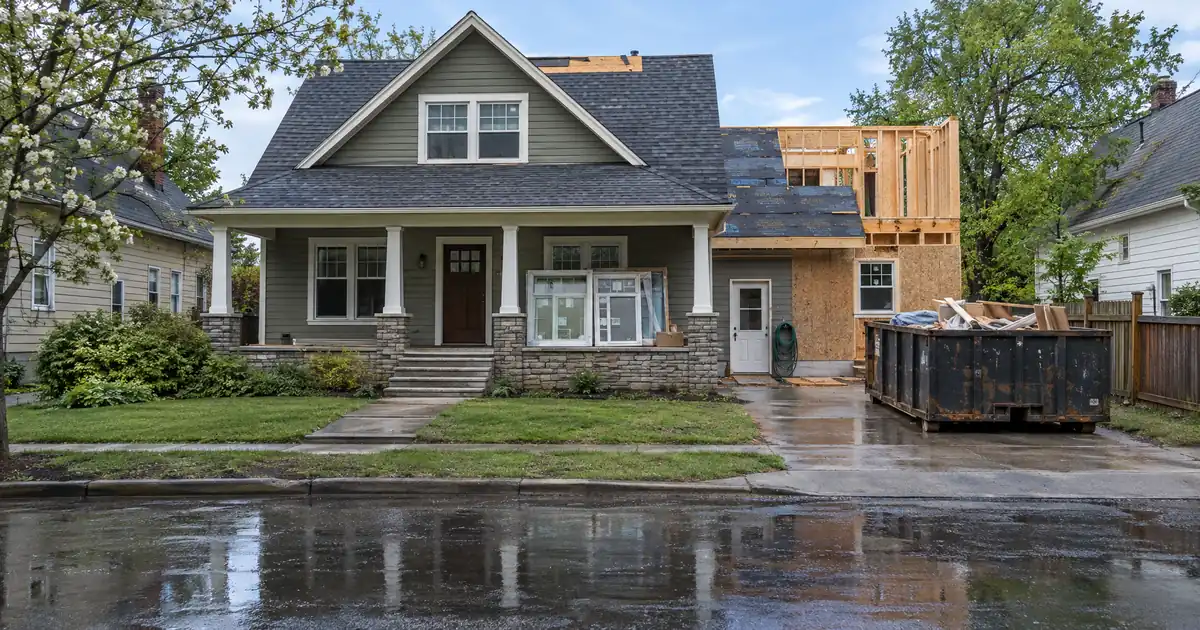
The Quick Read: No hard money lender works from one fixed mileage rule, so a distant comp is not rejected automatically; the lender asks whether that sale truly competes with your finished house, and it sizes the loan on its own supported after-repair value, not yours. A first-time flipper carries more of that scrutiny because there is no track record to lean on.
- Distance is a lender policy, not a regulation, and it flexes by market type.
- The lender runs its own valuation and usually trusts the more cautious number.
- A comp across a school, town or road boundary needs a written reason it still competes.
- If the supported value lands low, the gap becomes your cash at the table.
- The later rental refinance gets its own appraisal, so a stretched value can hurt twice.
What Does “Distant” Mean to a Hard Money Lender?
Distant means a sale that sits outside the pool of buyers who would actually pick your finished house. Mileage is only one measure. Market boundaries and buyer pool matter just as much.
What this loan actually costs to carry.
Hard money is sized against the project and priced by time. Enter the deal and see how much the program will lend, the cash required at closing, the carry while you hold it, and what is left at the exit.
Leverage tiers on the current program: 85% with fewer than 2, 90% with 2 or more, 93% with 5 or more completed projects — every tier capped at 75% of after-repair value. Loan amounts up to $5,000,000, larger by exception; terms of 6 to 18 months, interest-only, no prepayment penalty. The rehab portion funds in draws against completed work, not at closing.
Program parameters shown update from Lendmire’s centralized guideline source. Rate, points, and months are editable assumptions, not quoted terms.
Cost cap sets the loan · positive spread
Illustrative estimate only — not a quote, Loan Estimate, approval, or commitment to lend. Rate, points, and months are editable assumptions. Hard money is business-purpose financing for real estate investors, not a consumer mortgage. Leverage on the current program tops out at 93% of project cost for investors with a documented track record, capped at 75% of after-repair value, with rehab funding up to 100% of the documented budget released in draws; actual terms vary by lender, borrower experience, property, and exit. Lendmire is a mortgage broker, not a lender.
Think of three kinds of distance:
- Mileage. How far the sold house sits from the subject.
- Market distance. Whether it sits in a different school zone, town, or service area, or across a major road.
- Buyer-pool distance. Whether the same shopper would compare the two houses.
A comp half a mile away across a rail line can be farther, in value terms, than one two miles away in the same subdivision style. Reviewers read the map this way. McKissock, an appraiser-education provider, notes that crossing school-district, municipal or service-area lines can be fine, but those lines often mark submarkets, so the report has to explain why the comp still competes with the subject.
Is There a Fixed Distance Rule?
No. Hard money is private, asset-based credit, so each lender sets its own comp standard. Across a wholesale network of lenders, the pattern is tight radii in dense areas and looser ones in thin markets, with a written reason attached.
Even the appraisal world has no universal number. Agency guidance sets no fixed distance limits and asks instead whether the comps reflect the same market influence as the subject.
For contrast only, the agency guides show how appraisers handle distance on conventional loans. They do not govern hard money. Fannie Mae’s Selling Guide has the appraiser state each comp’s distance in miles with a direction, measured in a straight line. It asks for commentary and location adjustments when the appraiser reaches outside the market area. A hard money lender can be stricter or looser than that. Treat any mileage figure you read online as one lender’s habit, not a rule.
How Does Underwriting Actually Treat a Distant Comp?
The lender validates the value itself, selects comps against a set of factors, adjusts them, and then sizes the loan on its own number. A distant comp survives only if it passes each step with a documented reason.
1. Package. You submit the purchase contract, scope of work, budget and your own after-repair value (ARV) with comps. Hard money sizes on project cost and ARV.
2. Independent check. The lender validates ARV with an appraisal, a broker price opinion, a desktop review, or some mix. Many order through an appraisal management company and then cross-check with internal underwriting. Your number is an opening position, not the answer.
3. Comp selection. Reviewers weigh distance, how recently the sale closed, size, bed and bath count, style, and renovation level. They want closed sales of finished homes, not active listings. Listings show the ceiling of asking prices, not proof of value.
4. Adjustments. Each comp is adjusted toward the subject for differences. Bigger differences mean bigger adjustments. Rates are not quoted here. Heavy reliance on large adjustments is a risk signal in any market, because the value then rests on judgment rather than direct evidence.
5. Outcome. The loan is set against the lender’s ARV. If it comes in under yours, the loan is trimmed, repriced or declined, or you bring more cash.
6. Exit check. A second valuation comes later, at the sale or the rental refinance. It can come in lower than the first. That gap is paid out of pocket.
Appraiser adjustments and lender review trimming are different things. The appraiser adjusts comps to the subject. The lender may then discount the result further for risk. Neither step is a formula, which is why two reviewers can reach different values from the same data.
Why Does a First Flip Change the Read?
A first flip changes the read because the lender has no completed projects to weigh against your ARV. The collateral has to carry the file, so the comps get closer scrutiny and the leverage tier is lower.
Across the wholesale network, leverage on fix-and-flip loans is tiered by documented completed projects. On the program Lendmire places, the leverage runs 93% of project cost at 5 or more completed projects, 90% of project cost at 2 or more, and 85% of project cost with fewer than 2. Every tier is capped at 75% of after-repair value. Terms run 6 to 18 months, interest-only. These figures vary by lender, property, and experience, and nothing here is a commitment to lend.
Here is the catch for a first-timer. The cost-based tier looks generous, but the 75% ARV cap is the one that bites when comps are thin. If the lender’s ARV is lower than yours, the cap, not the cost tier, sets the loan. A distant comp that inflates your ARV only helps if the lender accepts it.
Underwriting stays asset-based: property, plan and exit. A first-time investor with a 620 minimum score and the lower leverage tiers can qualify, with additional conditions below 660.
When Is a Distant Comp Tolerated, and What Does the Reviewer Worry About?
| Factor | Usually tolerated when | Reviewer’s worry |
|---|---|---|
| Distance | Same market, same buyer pool | Different submarket |
| Age of sale | Recent closed sale | Stale value in a moving market |
| Size | Close to the subject | Large size adjustment |
| Condition | Renovated, finished | Aspirational finish level |
| Market type | Rural or thin, with written reason | Urban blocks that differ street by street |
| Property type | Same style and use | Unique layout hard to compare |
Dense urban markets sit at the strict end. Values can differ street by street, so a far comp is weak evidence there. Rural and sparse markets sit at the other end, where distant comps are normal.
What Do Rural and Thin Markets Look Like?
In rural markets a wider search is expected, but it still needs a written reason. The standard is explained distance, not ignored distance.
An appraisal vendor gives an example of acceptable commentary. The subject market was rural with only 13 sales in 12 months, so the search was widened 15 miles, and some comps came from a different city, supported by city-level median values. That is the shape of a defensible reason: the count of sales, the widening, and a support point for the cross-city comp.
Lender appetite still varies. Some lenders pass on rural collateral, and others lend at lower leverage there. Unique properties, such as a double lot with an in-law suite, lean on the appraiser’s adjustments or the lender’s own review.
One honest edge case: if no comps exist within a short distance, many experienced flippers walk away, because the exit suffers too. A buyer or appraiser at the back end will struggle with the same thin evidence. The exception is a very desirable area where owners rarely sell, which tends to show very low days on market.
What Happens When the Supported Value Comes In Low?
The loan is resized on the lower value, and you cover the difference in cash. Here is an illustrative case with modeled numbers, not market data.
Say a first-time flipper submits an ARV built on two sales from a neighboring town. The lender’s review leans on nearer sales and lands lower. Because the 75% ARV cap applies to every tier, the lower ARV shrinks the maximum loan even though the cost-based tier would have allowed more. The investor then chooses among four moves:
- Bring more cash to cover the gap.
- Renegotiate the purchase price with the seller.
- Cut the scope so project cost falls in line with the supported value.
- Submit rebuttal comps that are closer, recent, and renovated, with a short note on why each competes.
Renegotiating price is almost always cheaper than stretching an ARV the lender will not accept.
How Do You Defend Distant Comps Before You Submit?
Flag the distance yourself and put the reason in writing. A reviewer who finds the problem alone assumes you missed it or hid it.
- List every comp with its distance, closing date, size and condition.
- Lead with the closest closed sales, then add the far ones as support.
- Write one sentence per far comp: same school zone, same buyer pool, same finish level.
- Show the market count, such as how few sales closed in a year, when the area is thin.
- Leave out active and pending listings as proof of value.
- Run your own numbers at a lower, lender-style ARV before you sign. Underwriting with a cushion beats being surprised.
The Exit Appraisal Is a Separate Test
Hard money and the long-term exit use different valuations. Many investors refinance out of hard money into long-term DSCR investor loans once the property is stabilized, and Lendmire brokers that path. The rental loan sizes on its own appraisal and on rent coverage. A DSCR cash-out on a standard rental tops out around 75% of value, with about 6 months of seasoning as the common expectation, subject to lender guidelines.
With a 75% ARV cap on the flip and a 75% ceiling on the exit, there is little margin. An optimistic ARV that the hard money lender accepted can still come in lower at the second appraisal, and the shortfall is yours. Lendmire’s piece How to Budget a First Flip So the DSCR Cash-Out Still Clears Hard Money walks through that overlap, and the complete DSCR loans guide covers the rental side.
Key Terms Defined
- ARV (after-repair value): The estimated value of the property once the planned rehab is finished.
- Comp: A recently closed sale of a similar property used to support a value.
- Adjustment: A dollar change applied to a comp to account for differences from the subject.
- BPO (broker price opinion): A broker’s value estimate, lighter than a full appraisal.
- Desktop review: A value check done from data and records without a full inspection.
- Loan-to-cost: The loan as a share of purchase price plus rehab budget.
Where the General Rule Breaks
Three situations flip the usual thinking. In rural or thin markets, distance is expected and the reason matters most. In dense urban blocks, even near comps can fail if they cross a street type or boundary. On unique properties, no comp is close, so the adjustments and the lender’s own review carry the file. Programs also differ in what they allow, so check the specific lender’s standard rather than assuming one.
Frequently Asked Questions
Is there a mileage cutoff a hard money lender must follow?
No. Each lender sets its own radius, and it usually tightens in dense areas and widens in rural ones with justification. Agency guidance, which does not govern hard money, also sets no fixed distance limit.
Will the lender reject my file if my comps are far away?
Not automatically. The lender checks whether each comp competes with your finished house, then sizes the loan on its own supported value. A weak ARV usually means a smaller loan, a reprice, or more cash from you, though a decline is possible.
Do first-timers get treated differently on comps?
The comp standard is the same, but a first-timer has no completed projects behind the file. Lower leverage tiers apply, so the lender leans harder on the collateral and the exit. Terms vary by lender, property, and experience.
Can I use pending sales or active listings as comps?
They carry little weight. Closed sales are evidence; listings only suggest a ceiling on asking prices. Lead with closed, recently sold, renovated homes.
What if the lender’s value lands below my number?
The loan resizes on the lower value, so you cover the gap in cash, renegotiate the price, trim the scope, or offer closer rebuttal comps. Lenders often order their own appraisal or review, so your comps are tested against theirs.
Next Step
If you are buying, rehabbing or refinancing an investment property on a short timeline and want to see how the numbers work, Lendmire can help you compare hard money options based on the project, the exit plan, leverage, and your goals. Reach the team at 828-256-2183, or use Lendmire’s quote page.
About Lendmire
Lendmire — NMLS# 2371349 — is a DSCR and non-QM mortgage brokerage with investor loan programs in 41 markets, including Washington, D.C. DSCR eligibility is commonly reviewed by the lender around property-level rent rather than personal income documentation, subject to lender guidelines, and the brokerage helps arrange financing for LLC-owned portfolios beyond conventional financed-property limits. Recognized by Scotsman Guide as a Top Mortgage Workplace in 2025 and 2026.
Get Started
Ready to find the right loan for you?
In about 30 seconds you can review financing options available for your investment property. No commitment required.
Informational only. Not a Loan Estimate, approval, or commitment to lend. Program availability and eligibility are subject to lender guidelines, credit approval, property review, and underwriting.
References
1. McKissock Learning: arriving at an accurate appraisal when comps are few
2. Fannie Mae Selling Guide B4-1.3-08, Comparable Sales
This article is part of Lendmire’s hard money loan program — full qualification details, guidelines, and scenarios live on the program page.
Related reading: Can You Replace a Frozen HELOC With a New Line From Another Lender? · How Long Each Step of a DSCR Refinance Takes to Pay Off Hard Money · How a DSCR Lender Values a Rental After Storm Repairs
Brandon Miller
Founder & CEO, Mortgage Loan Originator, Lendmire LLC
- Mortgage Loan Originator · NMLS# 1129696 · Verify on NMLS Consumer Access
- North Carolina Real Estate Broker · License# 343312 · Verify on NCREC
- North Carolina Insurance Producer · License# 19053198 · Property, Casualty, Life, Health · Verify on NAIC SBS
- Lendmire LLC · Firm NMLS# 2371349 · Verify firm licensure
Legal disclosures. Lendmire (NMLS# 2371349) is a state-licensed mortgage brokerage that arranges financing through wholesale lender relationships. Lendmire is not a direct lender, depository institution, or registered financial advisor. The discussion above is general informational content about real estate financing — it is not financial, legal, or tax advice, and readers should consult licensed professionals for guidance on their individual circumstances. Loan inquiries are subject to lender underwriting; this article does not represent a commitment to lend. Loan terms, rates, and qualification standards vary by borrower, property, and state, and are subject to change at any time. Equal Housing Opportunity. NMLS Consumer Access: nmlsconsumeraccess.org.