
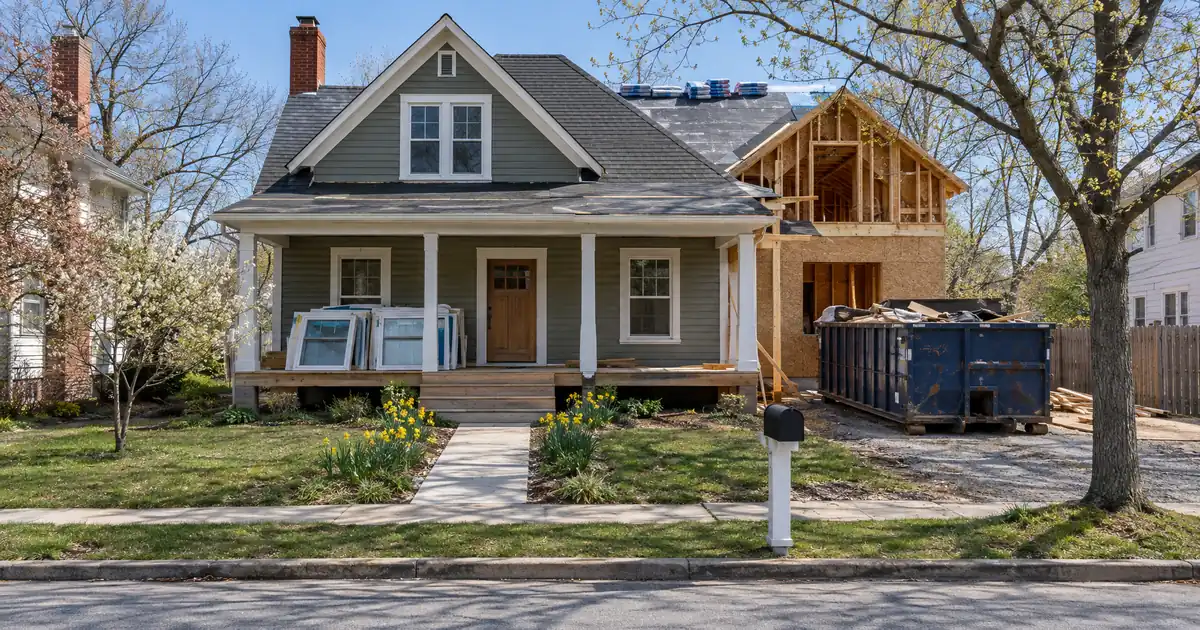
The Quick Read: Hard money lenders size loans on the project’s cost and after-repair value, but they also need a lien on the property, and a plain land contract usually leaves the buyer unable to grant one. So the real answer depends on whether the investor holds a deed at closing. Once a deed is in place, the loan is sized like any other deeded BRRRR purchase.
- On a plain land contract, where the seller keeps legal title, a lender often has nothing it can take a first lien on, so sizing may not apply at all.
- Once the investor pays off or buys out the seller at closing and receives a deed, the deal is sized as a purchase, not on the contract balance.
- Network hard money for a rehab purchase runs up to 85%-93% of project cost, depending on completed projects, capped at 75% of after-repair value. All figures vary by lender, property, and experience.
- The exit is a DSCR loan, and the ownership clock for it likely starts at deed recording, not at contract signing.
Why a Land Contract Changes the Hard Money Question
A hard money loan is secured by the property. The lender wants a recorded lien, a clear title chain, and an exit that repays the loan. A land contract disrupts the first two.
DSCR Calculator
Run the numbers in your market
Rate source: Freddie Mac 30-yr average via FRED® — Federal Reserve Bank of St. Louis · effective Oct 15, 2026
Prefilled with starting assumptions — enter your own rent or nightly figures, taxes, insurance, and HOA for a more accurate picture.
Program parameters update from Lendmire’s centralized guideline source. Taxes and insurance are editable estimates.
As of Oct 15, 2026 · General Freddie Mac market benchmark, not a Lendmire loan offer. Rent, nightly rate, occupancy, taxes, and insurance are editable estimates. Short-term rental figures are estimates only and vary significantly by season, property type, management approach, and local short-term-rental rules — confirm local regulations before relying on them. Qualifying income for short-term rentals varies by program — some use appraisal market rent, others use documented STR history or projections — and is confirmed in underwriting. Not a Loan Estimate, approval, or commitment to lend. Program availability and eligibility are subject to lender guidelines, credit approval, property review, and underwriting.
In a land contract, the seller keeps legal title while the buyer makes payments. The buyer gets possession and what the law calls equitable title. Legal title is the record-owner interest, and only that holder can mortgage or encumber the property, as LegalClarity explains in its overview of who holds title in an installment contract.
That one fact drives everything else here. A lender that cannot record a first lien is not really making a hard money loan. It is making an unsecured or loosely secured bet on the buyer.
Most of the questions investors ask about this topic come back to one test. Can the borrower grant a lien on the property at the moment the lender funds? If yes, sizing is a familiar exercise. If no, the conversation is about structure, not leverage.
Key Terms Defined
Land contract: A seller-financed purchase in which the buyer pays in installments and the seller keeps the deed until the balance is paid. It also goes by contract for deed, bond for deed, and land installment contract.
Legal title: The record-owner interest that appears in public records and carries the power to sell or mortgage the property.
Equitable title: The buyer’s right to possess and use the property under the contract, without a deed.
Loan-to-cost: The share of the purchase price plus rehab budget that a lender funds.
After-repair value (ARV): The projected value after the rehab is finished. It acts as the ceiling on hard money sizing.
Draw: A release of rehab funds after completed work is inspected.
Seasoning: The ownership period a lender expects before it funds a cash-out refinance.
Land loan: Financing for vacant land. It is a different product from a land contract, despite the similar name.
How Underwriting Treats a Land Contract, Step by Step
Across Lendmire’s wholesale network, a file with a land contract in the middle gets reviewed in the same order every time. Understanding the order explains why a leverage number alone never answers the question.
Step one: can a lien be recorded? The lender asks who holds legal title on the funding date. If it is the seller, the buyer cannot give a first lien. The lender would need the seller to join the transaction, or it would have to lend against the buyer’s contract interest alone. A BiggerPockets thread on contract for deed and equity makes the same practical point. A lien needs the title holder’s signature, and recording a contract gives notice of a claim but not title.
Step two: what is the collateral? With a plain land contract, the most a lender could take is an assignment of the buyer’s contract rights. Whether any given lender will do that is its own call, and it is uncommon for a rehab lender focused on a first-lien position. The equity built up under the contract is not the same as lendable equity, because the seller’s legal claim comes first.
Step three: what debt sits under the seller? If the seller still has a mortgage, a due-on-sale clause can turn the whole arrangement into a risk for everyone. Title companies and attorneys also tend to shy away from insuring contract-for-deed structures, as one BiggerPockets thread on using a land contract instead of a novation points out.
Step four: how is the loan sized? Only after the first three steps does leverage come up. This is where the figures below apply, and they apply to a deeded purchase.
Step five: what does the exit look like? A hard money lender asks how it gets repaid. For BRRRR, the answer is almost always a long-term refinance, and that refinance needs a borrower who holds title.
What Hard Money Actually Funds Once There Is a Deed
On a deeded rehab purchase, network hard money is sized on cost and capped on value. The figures below are typical ranges, they vary by lender, property, and experience, and none is a commitment to lend.
| Loan type | Typical sizing in the network | Basis |
|---|---|---|
| Rehab purchase, 5+ completed projects | Up to 93% | Of project cost |
| Rehab purchase, 2+ completed projects | Up to 90% | Of project cost |
| Rehab purchase, fewer than 2 projects | Up to 85% | Of project cost |
| Rehab purchase, all tiers | Capped at 75% | Of after-repair value |
| Bridge purchase, no rehab | Up to 80% | Of purchase price |
| Refinance (cash-out or rate/term) | Up to 65% | Of value |
Rehab money is separate. Up to 100% of the rehab budget funds in draws against completed work. That is a rehab-budget figure, not a purchase leverage figure, and there is no true 100% purchase program. The top tier is reserved for experienced investors.
Two details matter for land contracts specifically.
First, “project cost” means the purchase price plus the rehab budget. If the investor is buying out a land contract, the purchase price in the lender’s file is the amount that actually pays off the seller and delivers the deed. It is not the investor’s equity so far, and it is not the original contract price. Lenders do not generally credit the payments already made as cash invested in the way an investor might hope.
Second, the ARV cap still binds. A deal that looks fine against cost can still shrink if the after-repair value is modest. A lender sizes to the lower of the two tests.
Terms are typically 6 to 18 months, interest-only, with no prepayment penalty, and the collateral is non-owner-occupied residential property with 1 to 4 units. Vacant land and lots are not on the sheet. That is where the land contract / land loan confusion causes trouble. A land contract is a payment structure for buying a house. A land loan finances dirt. BRRRR needs a rentable structure, so it only ever involves the first.
Four Structures, and Which Ones Put a Deed in the Investor’s Hands
Most workable land contract BRRRR deals pick one of these paths. Each should be confirmed with a real estate attorney and the lender before anyone signs.
| Structure | Who holds title at funding | What the lender needs | Main risk |
|---|---|---|---|
| Payoff at closing | Investor, by deed | Seller payoff, clean title | Seller must agree to deed |
| Buy out the seller | Investor, by deed | Purchase contract, title report | Seller’s own lien |
| Seller deeds with carryback | Investor, by deed | Recorded seller mortgage | Seller lien may sit ahead |
| Plain land contract | Seller | Lender-specific, often none | No first lien available |
The first row is the usual route. The hard money lender’s funds pay off the seller, a deed is delivered to the investor, and the lender records its lien. From the lender’s view, it is an ordinary purchase. The land contract simply ends at closing.
The third row deserves a note. In a deeded seller carryback, the buyer holds title and the seller records a purchase-money mortgage. A hard money lender can then take a lien, but usually in a junior position unless the seller subordinates or is paid off. Junior liens are workable for some lenders and a deal-breaker for others, and the leverage tiers above shrink accordingly.
The last row is where most investors get stuck. A plain land contract with no deed does not give a lender the collateral it is built to rely on.
Where the General Rule Breaks
The rule is simple: no lien, no loan. These edge cases bend it.
The seller won’t deed. If the contract blocks early payoff or the seller has a mortgage that prevents a clean transfer, the structure may not convert at all. A Stimmel Law explainer on contracts for deed describes the exposure plainly. A buyer who defaults can lose the property and the payments already made. Rehab dollars spent on a house the investor does not own are at risk.
An assignment. A wholesaler who holds only an equitable interest and assigns the contract is selling a position, not a property. The assignee still gets legal title only at closing, so the same deed-at-funding test applies.
An unrecorded contract. Recording does not create title, but it gives public notice and some protection against the seller encumbering the property again. An unrecorded contract exposes the buyer to third parties who rely on the record.
Delayed financing. Delayed financing is an exit idea that waives seasoning on a cash purchase. A hard money loan secured by the subject property generally rules it out. A land contract may also fail the test of an all-cash, arm’s-length purchase. That land contract point is an inference, since programs differ, so confirm it before planning around it.
State variation. Contract-for-deed rules differ sharply by state. Some treat them as installment sales with consumer protections, while others leave them to private agreement, as Certinal’s contract-for-deed guide outlines. Investors should check local rules with an attorney before relying on any structure.
Property type. DSCR financing in the network does not extend to manufactured homes (single- or double-wide), log homes, or barndominiums. A land contract on one of those does not become reviewable by converting it to a deed.
The Exit: What a DSCR Loan Needs From a Land Contract Deal
Hard money for BRRRR is bridge debt. The long-term loan that repays it is typically a DSCR loan, which qualifies primarily on property-level rental income covering the payment, subject to lender guidelines. A DSCR loan compares monthly rent to the full monthly obligation: principal, interest, taxes, insurance, and any association dues.
Here is what the DSCR loan program allows, as typical ranges that vary by borrower, property, and lender:
- A DSCR cash-out refinance on a standard rental tops out around 75% LTV.
- A DSCR rate-and-term refinance on an investment property can reach up to 85% LTV, with no cash back at closing.
- The DSCR loan’s coverage floor starts at 1.00 on select programs. A separate select-lender path takes coverage below 1.00, with leverage and terms adjusted.
- Credit on a DSCR loan generally starts at a 620 floor, with most programs wanting about 660 and the strongest leverage tiers opening around 700.
- A DSCR loan commonly asks for about 6 months of reserves, and about 9 months on loans above $1,500,000.
- A DSCR cash-out refinance generally expects about 6 months of seasoning, measured from title recording.
That last bullet is where land contracts hurt. The ownership clock most likely starts when the deed records, not when the contract was signed. An investor who lived under a land contract for a year before getting a deed may still face the full seasoning wait for a DSCR cash-out refinance. No published rule says so directly, and individual lenders can differ, so treat this as the practical expectation rather than a promise.
Also remember what the coverage ratio measures. A DSCR loan tests rent against the payment only. Clearing 1.00 does not mean positive cash flow, because repairs, vacancy, management, and utilities sit outside the calculation.
Many investors refinance out of hard money into long-term rental financing once the property is stabilized, and Lendmire brokers that path through its hard money exit refinance program. A larger payoff balance, a shorter runway, and a thin ARV cushion all make the exit harder, so it is worth sizing the bridge loan backward from what the DSCR loan could repay. Lendmire’s piece How a BRRRR Investor Sizes Hard Money for a Clean DSCR Refi walks through that backward math.
What the Investor Decision Looks Like in Practice
The land contract may save a down payment. It limits access to institutional leverage until legal title arrives. That trade is the whole decision.
Picture an investor with a signed land contract on a small rental house and a rehab plan. Before asking any lender for a number, that investor has three questions to answer.
1. Can the contract convert to a deed at funding? If the seller will accept a payoff, the deal becomes a normal purchase and the leverage table above applies.
2. What lien sits underneath? A seller mortgage, a judgment, or a tax lien changes who gets paid first and may stop the payoff cold.
3. Does the exit hold up on a deeded basis? The DSCR loan reviews the file as a purchase and measures seasoning from the deed. If rent cannot cover the payment on the refinance balance with room to spare, no amount of hard money leverage fixes it.
A document set speeds up the conversation with any lender, and these are the pieces specific to land contracts.
| Document | Why it matters |
|---|---|
| Executed land contract | Shows terms, payoff rights, and restrictions |
| Payment history | Documents the balance owed to the seller |
| Recorded memorandum, if any | Shows public notice of the buyer’s claim |
| Seller payoff statement | Fixes the amount needed to deliver a deed |
| Title commitment | Shows liens ahead of the new loan |
| Scope of work and rehab budget | Supports the cost basis and draws |
An investor who cannot get a deed should not rush a rehab on someone else’s legal title. Recording the contract and getting title insurance where available are priorities, since both reduce the risk of losing the property and the money spent on it. If the seller will not budge, the honest answer is often to pause the rehab and renegotiate the structure rather than shop for a lender that will lend against a contract interest.
Investors weighing sub-1.00 coverage on the exit should know it is available through select lenders in the network, with leverage and terms adjusted. It is a structural choice, not a substitute for deed and title work.
Tax treatment varies; consult a qualified professional before relying on any deduction.
Frequently Asked Questions
Can I get hard money with only equitable title?
Rarely. Hard money needs a lien, and only the legal title holder can grant one. Some lenders may consider an assignment of contract rights, but there is no standard guideline for it and leverage is usually well below the deeded tiers. The cleaner path is to pay off the seller at closing and take a deed.
Does the seller have to be paid off at closing?
Usually, yes, when a lender wants a first lien. The payoff delivers the deed and removes the seller’s interest. If the seller keeps a recorded carryback mortgage instead, the hard money lender may take a junior lien, which tends to lower leverage and narrow the field of lenders.
Does recording the land contract change my financing options?
It protects the buyer’s claim against later liens, but it does not make the buyer the owner. Lenders still look for a deed. Recording is worth doing for protection, and it should not be mistaken for title, as the BiggerPockets discussion on contracts for deed explains.
Will the DSCR loan treat my exit as a refinance or a purchase?
Expect purchase-like treatment when a deed is delivered at the end of a land contract. Lenders generally view financing out of a contract for deed as a purchase loan. For the DSCR loan, seasoning is generally measured from title recording, and a cash-out refinance tops out around 75% LTV on a standard rental.
Is a land contract the same as a land loan?
No. A land contract is a seller-financed way to buy a property, and a land loan finances vacant land. The hard money program covers non-owner-occupied residential property with 1 to 4 units, not vacant land or lots.
If you are buying, rehabbing, or refinancing an investment property on a short timeline and want to see how the numbers work, Lendmire, a broker working with select lenders across 41 markets including Washington, D.C., can help you compare hard money options based on the project, the exit plan, leverage, and your goals. Investors can also read the complete DSCR loans guide to see how the long-term exit is evaluated. Every figure here varies by lender, property, and experience, and none is a commitment to lend.
About Lendmire
Lendmire is a DSCR-focused mortgage brokerage, NMLS# 2371349, placing investor loans across 41 markets, including Washington, D.C. DSCR eligibility is generally reviewed by the lender around a property’s rental income rather than personal income documentation, which fits LLC-held rentals, self-employed investors, and portfolios scaling past conventional financed-property limits. Scotsman Guide named Lendmire a Top Mortgage Workplace in both 2025 and 2026.
Get Started
Ready to find the right loan for you?
In about 30 seconds you can review financing options available for your investment property. No commitment required.
Informational only. Not a Loan Estimate, approval, or commitment to lend. Program availability and eligibility are subject to lender guidelines, credit approval, property review, and underwriting.
References
1. LegalClarity – Who holds title in an installment contract
2. BiggerPockets – Contract for deed and equity
3. BiggerPockets – Land contract instead of novation
4. Stimmel Law – Contracts for Deed
5. Certinal’s contract-for-deed guide
This article is part of Lendmire’s hard money loan program — full qualification details, guidelines, and scenarios live on the program page.
Related reading: How to Document Private Loan Money on Your First DSCR Rental Loan · How Long Each Step of a DSCR Refinance Takes to Pay Off Hard Money · How Much a Florida Reassessment Moves the DSCR Payment
Brandon Miller
Founder & CEO, Mortgage Loan Originator, Lendmire LLC
- Mortgage Loan Originator · NMLS# 1129696 · Verify on NMLS Consumer Access
- North Carolina Real Estate Broker · License# 343312 · Verify on NCREC
- North Carolina Insurance Producer · License# 19053198 · Property, Casualty, Life, Health · Verify on NAIC SBS
- Lendmire LLC · Firm NMLS# 2371349 · Verify firm licensure
Legal disclosures. Lendmire (NMLS# 2371349) is a state-licensed mortgage brokerage that arranges financing through wholesale lender relationships. Lendmire is not a direct lender, depository institution, or registered financial advisor. The discussion above is general informational content about real estate financing — it is not financial, legal, or tax advice, and readers should consult licensed professionals for guidance on their individual circumstances. Loan inquiries are subject to lender underwriting; this article does not represent a commitment to lend. Loan terms, rates, and qualification standards vary by borrower, property, and state, and are subject to change at any time. Equal Housing Opportunity. NMLS Consumer Access: nmlsconsumeraccess.org.