
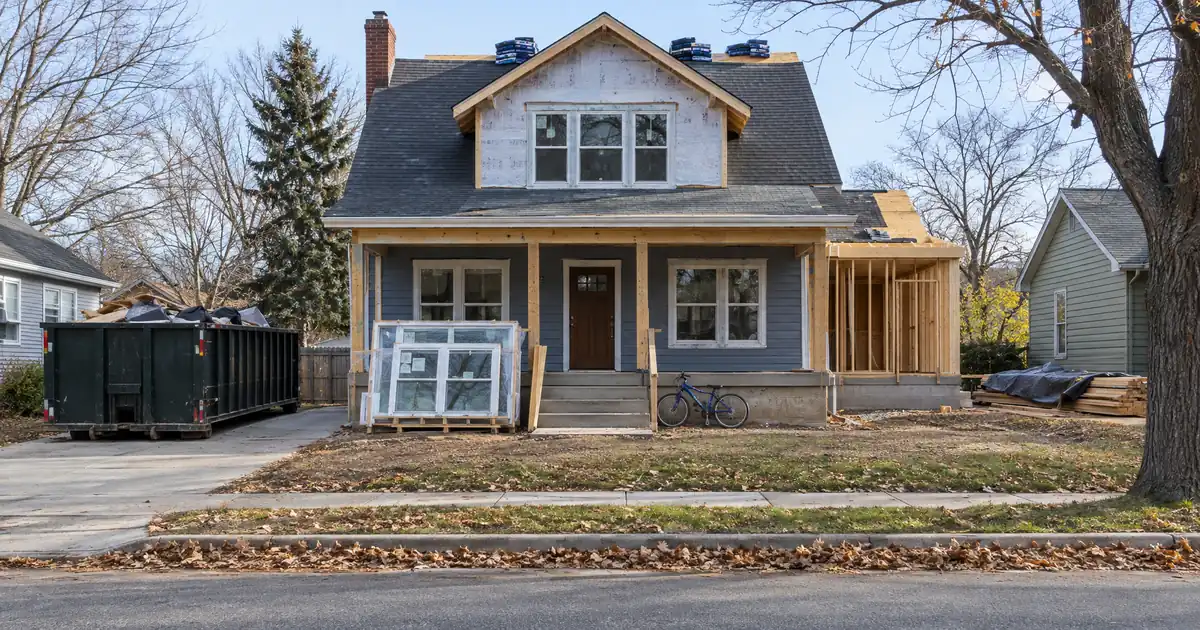
The Quick Read: A hard money lender budgets for the time an eviction adds, not the legal fees. Every month a holdover tenant stays pushes back the rehab, the lease-up, and the refinance or sale, and the loan keeps accruing interest the whole time.
- Eviction is a state and local court process, so duration swings widely.
- Interest-only carry on a short-term loan is usually the largest cost, not the filing fee.
- A lease still in force means the occupant is not a holdover at all.
- Hard money terms run 6-18 months, so a long case can outlast the loan.
- Estoppels, leases, and notice records belong in the file before closing.
Hard money underwriting is asset-based. It looks at the property, the plan, and the exit. An occupant who will not leave interferes with all three. Everything below walks through how that risk gets sorted, timed, and priced, and where the usual rules break.
What this loan actually costs to carry.
Hard money is sized against the project and priced by time. Enter the deal and see how much the program will lend, the cash required at closing, the carry while you hold it, and what is left at the exit.
Leverage tiers on the current program: 85% with fewer than 2, 90% with 2 or more, 93% with 5 or more completed projects — every tier capped at 75% of after-repair value. Loan amounts up to $5,000,000, larger by exception; terms of 6 to 18 months, interest-only, no prepayment penalty. The rehab portion funds in draws against completed work, not at closing.
Program parameters shown update from Lendmire’s centralized guideline source. Rate, points, and months are editable assumptions, not quoted terms.
Cost cap sets the loan · positive spread
Illustrative estimate only — not a quote, Loan Estimate, approval, or commitment to lend. Rate, points, and months are editable assumptions. Hard money is business-purpose financing for real estate investors, not a consumer mortgage. Leverage on the current program tops out at 93% of project cost for investors with a documented track record, capped at 75% of after-repair value, with rehab funding up to 100% of the documented budget released in draws; actual terms vary by lender, borrower experience, property, and exit. Lendmire is a mortgage broker, not a lender.
What Is a Holdover Tenant?
A holdover tenant is a renter who stays after the lease ends without signing a new one. Cornell’s Legal Information Institute says the landlord may remove the tenant or bind them to a new lease. It also says that if the landlord keeps accepting rent, some jurisdictions may treat that as a lease renewal.
That last point trips up new owners. Taking a payment from someone who should be leaving can reset the notice clock. A holdover is also different from a nonpayment eviction. The tenant may be fully paid up and still have no right to stay.
How Does a Lender Think About the Eviction?
Lenders treat it as exit risk. They do not price the eviction itself. They price the delay and what it does to the exit.
A short-term loan has a fixed term and is typically interest-only. The exact terms vary by lender, property, and borrower experience. Say a buyer closes on an occupied property planning a rehab. The rehab cannot start until the occupant is out. The property cannot be rented until the rehab is done. A refinance into long-term rental financing cannot happen until the property is rentable. Each step waits on the one before it.
So the lender asks one question: can the loan term absorb the notice period, the court process, turnover, rehab, rent-up, and the takeout lender’s own requirements? If the answer is no, the file needs a different structure. That might mean an extension, a different exit, or reserves set aside to carry the loan.
Underwriting here is built on the property, the plan, and the exit, with credit and leverage tiers still applying. Nothing about a holdover changes that. It just makes the plan harder to believe.
Step 1: Classify the Occupant
Before anyone budgets time, the occupant gets sorted into one of four types:
- A tenant with a valid lease.
- A holdover with an expired lease.
- A month-to-month tenant.
- An occupant with no lease at all, such as a former owner.
The first type is the one buyers misread most. If the lease is still in force, the tenant is not a holdover and cannot be removed on the buyer’s schedule. As BiggerPockets explains, a buyer generally inherits the lease and cannot change its terms without the tenant’s consent. A sale does not void a lease. Foreclosure is the exception. Buyers should collect and read every lease before closing.
Step 2: Gather the Documents
Three items matter most: the leases and amendments, a current rent roll, and a tenant estoppel certificate.
Rollins Legal lists what an estoppel typically confirms: the lease exists and is in force, there are no defaults, the security deposit amount, no claims or offsets, and any prepaid rent. The same source notes the tenant is then barred from later claiming different facts, and that estoppels are common in commercial deals but often skipped in residential ones.
A tenant who refuses to sign one is telling you something. Gimer Law puts it plainly: if the tenant won’t certify the facts, you have a problem. On a hard money file, that is a flag to raise with the lender early, not after the appraisal.
Step 3: Map the Court Sequence
Holdover eviction follows a rough order. Credit People describes it, and the Cornell source above describes the same general path:
1. Notice to the tenant.
2. Filing with the court.
3. Tenant response.
4. Hearing, or default if the tenant does not answer.
5. Judgment for possession.
6. Writ of possession.
7. Sheriff lockout.
Self-help does not substitute for any of it. Changing locks or removing belongings can create liability that outlasts the case. Notice length and the number of court steps change by state and sometimes by county.
Step 4: Pick a Time Budget
These are commonly cited practitioner ranges, not national statistics. No government or trade body publishes a national average for holdover duration.
Leaserunner puts an uncontested case at roughly 3-6 weeks and a contested one at 2-3 months or more. Hearings are often set one to four weeks out, and continuances can add another 2-8 weeks. A tenant-screening roundup says uncontested cases in most states run about 30-45 days from notice to lockout. It places landlord-friendly states near 3-4 weeks and tenant-friendly states at 2-5 months.
| Scenario | Commonly cited duration | What drives it |
|---|---|---|
| Uncontested | About 3-6 weeks | Tenant does not answer |
| Contested | 2-3 months or more | Hearing dates, continuances |
| Tenant-friendly jurisdiction | Often 2-5 months | Local notice and court rules |
The sound habit is to budget the longest realistic case, not the average one. A single contested hearing with a continuance can double the plan.
Step 5: Budget the Direct Costs
Direct costs are real but smaller than most people expect. MRI Software lists typical components: filing fees of $45-$450, uncontested attorney flat fees of $500-$1,500, one to three months or more of lost rent, and turnover cost of about $3,872 per unit. It notes some of these, such as service and lockout fees, are Texas-county examples. Credit People puts attorney time at $150-$250 an hour and a straightforward case at $1,500-$2,000 at most.
The filing fee is the smallest number in the budget. Lost rent, turnover, and carry dominate.
| Cost line | Type | Recoverable? |
|---|---|---|
| Notice, service, filing | Direct | Sometimes, if judgment awards costs |
| Attorney fees | Direct | Varies by jurisdiction |
| Lost rent | Opportunity | Rarely collected in full |
| Interest carry on the loan | Carry | No, treat as sunk |
| Turnover and rehab delay | Carry | No |
Step 6: Convert Delay to Carry
This is the step competitors’ budgets skip. Interest accrues on the loan every month the property sits occupied. Legal cost is a one-time number. Carry repeats.
Run the same property three ways. In the quick case, the occupant leaves after an uncontested filing, and rehab starts with most of the loan term intact. In the contested case, a hearing and a continuance eat several months of the term, so rehab and lease-up get squeezed. In the worst case, the case runs past maturity. That is when the borrower is negotiating an extension from a weak position, or carrying the loan out of reserves.
Label every one of those as illustrative. The point is the shape: each added month compounds against a fixed term, and the cushion shrinks faster than the legal bill grows. Many investors size reserves to cover carry through the worst realistic scenario, not the typical one.
Buyout or Litigation?
Cash-for-keys, meaning paying the occupant to leave by a set date, is a budget line worth pricing against the court route. It can shorten the timeline and avoid a contested hearing. It also uses cash, and on a hard money file that cash has to come from somewhere. Rehab draws fund completed work. They are not a pool for tenant buyouts. Anything paid to an occupant should be cleared with the lender first.
A buyout tends to beat litigation when the tenant is likely to contest, the jurisdiction runs slow, and the loan term is short. Litigation tends to win when the occupant has no real defense and the court moves fast. Neither answer holds everywhere, which is why the local timeline check matters.
Where the General Rule Breaks
Seller-delivered vacancy. The cleanest fix is making closing contingent on the seller delivering the property vacant. Investors in BiggerPockets discussions recommend exactly that. The risk runs the other way too: a seller’s tenant who refuses to leave days before closing becomes the buyer’s holdover.
Foreclosure and REO purchases. The Protecting Tenants at Foreclosure Act changes the math. HUD’s Federal Register notice says a foreclosure successor takes the property subject to the existing lease and must give occupying tenants at least 90 days’ notice to vacate. Nolo explains that month-to-month tenants get that 90 days, tenants with a bona fide lease may generally stay to the end of the term, and a longer state-law period controls where one exists. The owner-occupant exception does not help an investor buying a rental. For an occupied REO, budget at least that notice period before any work begins.
State and local overlays. Month-to-month notice periods and court steps differ by state. Rent control, just-cause rules, and subsidized tenancies can stretch the process. Judges sometimes show discretion on timing, though that is anecdotal and no basis for a budget.
Accepting rent. One payment accepted after the lease ends can renew the tenancy in some places. Decide before closing who collects what, and from whom.
What the Lender Wants Documented
A clean file gives the lender fewer surprises. Gather:
- Leases, amendments, and the rent roll.
- The tenant estoppel, if available.
- Notices served, with proof of service.
- Any court filings and a dated timeline log.
- A written plan for the exit if the case runs long.
Disclose an occupancy problem at application. One found at the appraisal or title stage is a bigger problem than one flagged up front. These records also help later, because a takeout lender will want lease or market-rent evidence once the property is rentable.
How This Reaches the Exit
A holdover is a timing risk to the refinance. A DSCR takeout generally needs a leased or marketable, rent-ready property. An occupant paying nothing, or a property that needs turnover after eviction, does not present that way yet. The lease or market-rent evidence comes after the eviction and the turnover.
Many investors refinance out of hard money into long-term DSCR financing once the property is stabilized, and Lendmire brokers that path. Coverage on a DSCR file compares rent to the full monthly obligation. Where a select program starts at 1.00 coverage, a separate select-lender path takes coverage below 1.00 with leverage and terms adjusted. Both depend on lender guidelines, credit, reserves, and the property. The complete DSCR loans guide covers those mechanics.
On leverage, fix-and-flip files run up to 93% of project cost at 5+ completed projects, 90% of project cost at 2+, and 85% with fewer than 2, each capped at 75% of after-repair value. Bridge purchases without rehab go up to 80% of purchase price, and cash-out and rate/term refinances up to 65% of value. Minimum credit is 620, with extra conditions below 660. These vary by lender, property, and experience, and none is a commitment to lend.
Key Terms Defined
Holdover tenant: A renter who remains after the lease ends without a new agreement.
Estoppel certificate: A signed statement from the tenant confirming the lease terms, deposit, and any defaults.
Writ of possession: The court order that lets a sheriff remove an occupant after judgment.
Carry: The interest and holding costs that keep running while the property earns nothing.
Bona fide tenancy: Under the foreclosure-protection rules, an arm’s-length lease at near-market rent where the tenant is not the borrower or the borrower’s close family, as the National Low Income Housing Coalition’s guide describes.
Frequently Asked Questions
Does a hard money lender allow a tenant-occupied property?
Often yes, but the occupant has to fit the plan. A fix-and-flip needs the property vacant to start work, so a holdover pushes the timeline. A property already leased to a paying tenant may suit a rental-focused plan. Occupancy is reviewed file by file and varies by lender, property, and experience.
Who pays for the eviction?
The borrower carries it. Filing and attorney fees may be partly recoverable if the court awards costs, but lost rent and interest carry usually are not. Budget them as sunk.
Does accepting rent hurt the case?
It can, depending on the jurisdiction. In some places, taking rent after the lease ends may be treated as a renewal, which can reset the notice clock. Check local rules before accepting any payment.
What if the eviction is not finished by maturity?
Talk to the lender before the term runs out. The usual options are an extension, a different exit, or carrying the loan on reserves. Extension terms vary by lender, and an early conversation leaves more of them open.
Is cash-for-keys worth it?
When the tenant is likely to contest and the local court is slow, it can cost less than months of carry. It uses cash that is not part of rehab draws, so clear it with the lender first. Laws vary, and this is not legal advice.
If you are buying, rehabbing or refinancing an investment property on a short timeline and want to see how the numbers work, Lendmire can help you compare hard money options based on the project, the exit plan, leverage, and your goals.
For current guidelines and terms, see Lendmire’s hard money loan programs page.
About Lendmire
A non-QM mortgage broker (NMLS# 2371349), Lendmire arranges DSCR financing for real estate investors in 41 markets — 40 states plus Washington, D.C. Because deals are underwritten primarily on property cash flow rather than personal income documentation, the structure suits self-employed buyers and entity-owned portfolios. Lendmire places loans through wholesale investor lenders; it is not a direct lender. Scotsman Guide named Lendmire a Top Mortgage Workplace in both 2025 and 2026.
Many investors treat hard money as the acquisition tool and plan the exit up front – see the hard money loan overview.
Get Started
Ready to find the right loan for you?
In about 30 seconds you can review financing options available for your investment property. No commitment required.
Informational only. Not a Loan Estimate, approval, or commitment to lend. Program availability and eligibility are subject to lender guidelines, credit approval, property review, and underwriting.
References
1. Cornell Legal Information Institute, Holdover Tenant
4. Gimer Law
6. Leaserunner, How Long Does an Eviction Take
8. MRI Software, Eviction Costs
10. BiggerPockets forum (seller’s tenant refuses)
11. HUD via Federal Register, Protecting Tenants at Foreclosure Act guidance
12. Nolo, Protections for Tenants After a Landlord’s Foreclosure
13. National Low Income Housing Coalition, Protecting Tenants at Foreclosure
This article is part of Lendmire’s hard money loan program — full qualification details, guidelines, and scenarios live on the program page.
Related reading: Gap Funding vs. a Money Partner for Your First DSCR Rental · DSCR Cash-Out Now vs Waiting for Hard Money and Rehab Card Payoff · Staying With a DSCR Lender That Sold Your Loan vs Using a Broker
Brandon Miller
Founder & CEO, Mortgage Loan Originator, Lendmire LLC
- Mortgage Loan Originator · NMLS# 1129696 · Verify on NMLS Consumer Access
- North Carolina Real Estate Broker · License# 343312 · Verify on NCREC
- North Carolina Insurance Producer · License# 19053198 · Property, Casualty, Life, Health · Verify on NAIC SBS
- Lendmire LLC · Firm NMLS# 2371349 · Verify firm licensure
Legal disclosures. Lendmire (NMLS# 2371349) is a state-licensed mortgage brokerage that arranges financing through wholesale lender relationships. Lendmire is not a direct lender, depository institution, or registered financial advisor. The discussion above is general informational content about real estate financing — it is not financial, legal, or tax advice, and readers should consult licensed professionals for guidance on their individual circumstances. Loan inquiries are subject to lender underwriting; this article does not represent a commitment to lend. Loan terms, rates, and qualification standards vary by borrower, property, and state, and are subject to change at any time. Equal Housing Opportunity. NMLS Consumer Access: nmlsconsumeraccess.org.