
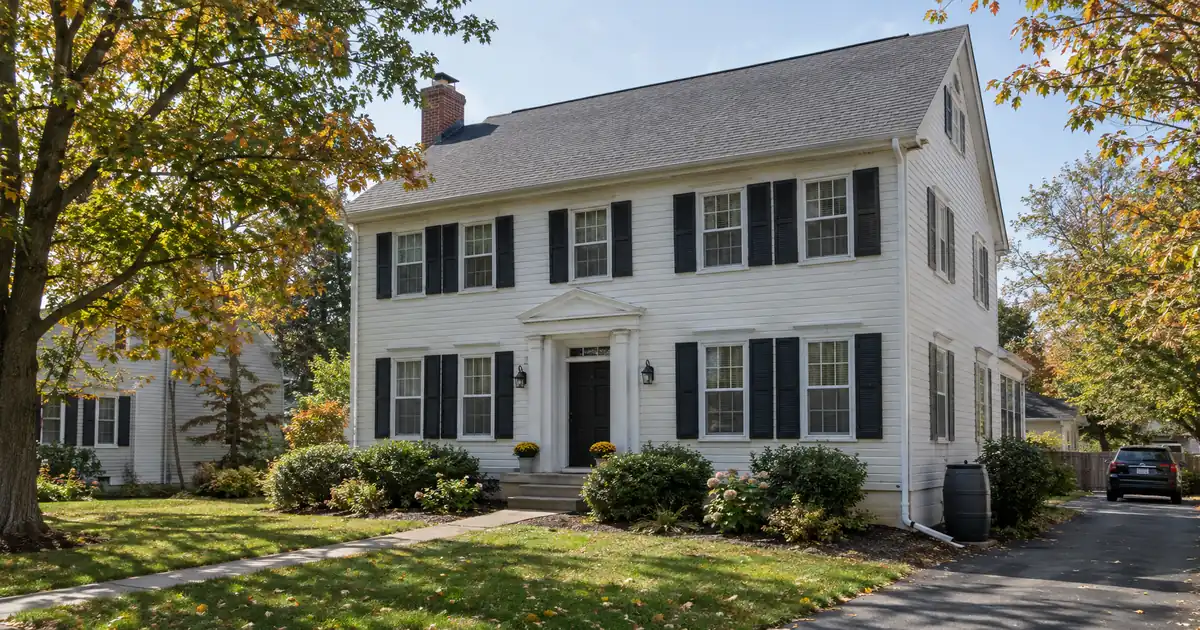
The Quick Read: A higher insurance premium never changes the payment on the HELOC itself, because a line of credit has no insurance component. The increase is counted in the housing payment of the property, which feeds either the personal debt-to-income test or the rental coverage ratio on a DSCR loan.
- The HELOC payment moves with the balance and the draw structure, not with the premium.
- On a personally underwritten line, a higher escrowed premium raises the first mortgage payment and therefore the debt-to-income ratio.
- On a DSCR file, only the denominator grows, because rent is untouched.
- The lender generally uses a current quote or binder, not the seller’s old bill.
- Equity lines are a different product from DSCR loans, with their own occupancy and vesting rules.
Most investors ask this question after a renewal notice arrives, and the honest answer has two parts. The premium is a cost of the property. The HELOC is a cost of the borrower. Lenders test each in a different place, and mixing them up leads to bad assumptions about what a premium jump can do to an approval.
How large a line the equity supports.
An equity line is sized by combined loan-to-value, occupancy, and credit — not by rental coverage. Switch the occupancy or the credit band and the ceiling moves with it.
Investment-property lines require a 700 minimum credit score; second-home lines start at a 640 minimum and primary-residence lines at 600, and the combined-LTV ceiling steps down as the credit band drops on primary-residence and second-home lines and holds on investment-property lines; the line cap steps down on primary-residence lines and holds at every tier on investment-property and second-home lines.
A debt-to-income ratio above 45% requires 680+ credit. Profiles under 640 are limited to single-family homes. At least 75% of the approved line is drawn at closing. Ceilings, floors, and caps update from Lendmire’s centralized guideline source.
Line estimate
Illustrative estimate only — not a quote, Loan Estimate, approval, or commitment to lend. The rate is an editable assumption; equity-line pricing is variable through both the draw and repayment periods and never converts to fixed. Occupancy and credit drive the ceiling together: an investment property tops out at 70% combined LTV (minimum credit 700, line cap $500,000); a second home tops out at 90% combined LTV (minimum credit 640, line cap $500,000), with the ceiling stepping down as the credit band drops (the cap holds at every tier); a primary residence tops out at 90% combined LTV (minimum credit 600), and its $750,000 maximum line is available only at 75% combined LTV or below with a 700-or-better credit profile (720 on the longer-runway program) and a full appraisal. Lines above $500,000 require a full appraisal. Credit, debt-to-income, property type, and full underwriting review all affect the final line.
Where Does Insurance Sit in a HELOC Approval?
Insurance sits inside the housing payment, not inside the line. A HELOC lender adds an estimated line payment to the borrower’s existing obligations, and the first mortgage payment already contains taxes and insurance. When the premium rises, that housing payment rises, and the ratio moves with it.
The CFPB describes a HELOC as an open-end line of credit that a borrower can draw on repeatedly, with minimum payments typically based on the current balance. That description matters here. The payment follows the balance and the draw terms. It does not follow the homeowner’s policy.
Two separate tests can apply, and the two should stay apart:
1. The personal test. Total monthly debts divided by gross monthly income, usually called debt-to-income.
2. The property test. On a DSCR loan, monthly rent divided by the full monthly obligation, which is principal, interest, taxes, insurance and association dues.
Which one applies depends on how the loan is set up. Across the wholesale network Lendmire works with, the equity lines it places are qualified on the borrower personally, with a 50% maximum debt-to-income ratio, or 45% for credit profiles from 600 to 679. A DSCR loan, by contrast, qualifies primarily on property-level rental income covering the payment, subject to lender guidelines. For the basics of that structure, Lendmire’s complete DSCR loans guide covers the full picture.
How Does the Personal DTI Test Count a Premium Increase?
It counts the premium through the first mortgage payment. If the first mortgage is escrowed, a higher premium raises the escrow portion, which raises the monthly housing payment, which raises debt-to-income. The estimated payment on the new line is then stacked on top.
The effect per dollar is small. Near a ceiling, it is real. Consider a borrower sitting a few points under the 50% maximum. A large premium jump can eat the room that was left for the line, and the lender may trim the requested limit or decline.
Here is how the mechanics run, step by step:
1. The lender pulls the first mortgage payment, including the escrowed taxes, insurance and dues.
2. The lender adds the other recurring debts reported on the credit file.
3. The lender estimates the line payment. On this network’s equity lines, the qualifying payment is the interest-only payment calculated on the maximum draw, not on the balance the borrower plans to use.
4. The total is divided by gross monthly income.
5. The result is compared with the program’s ceiling for that credit tier.
Step three is where borrowers get surprised. The line is tested at its maximum draw, so a large limit counts heavily even if the plan is to borrow a fraction of it. That is a separate lever from the premium, and it is usually the bigger one.
An undrawn line is a related question. Some lenders ignore a zero balance on a line the borrower already holds, while others impute a payment. Treatment varies, so ask before applying rather than assuming either way.
Which Premium Number Does the Lender Actually Use?
The lender uses the figure it can document today, typically a current quote, binder or declarations page, and not a stale number from a prior owner. If the numbers disagree, the higher current figure usually governs the file.
| Source document | When it is typically used | What it signals |
|---|---|---|
| Declarations page | Existing policy in force | Actual current cost |
| Current quote or binder | Purchase or new policy | Market cost today |
| Escrow analysis figure | Existing escrowed first mortgage | Servicer’s collected amount |
| Seller’s old bill | Rarely accepted alone | Can understate true cost |
Which document wins varies by lender and by transaction, so treat the table as a typical pattern, not a rule. One thing holds across most files: a premium that understates the real cost overstates the coverage, and underwriters tend to correct that.
Escrowed vs. Not Escrowed
An escrowed premium flows into the housing payment automatically. A premium paid directly still gets counted, but the lender converts it to a monthly figure.
| Factor | Escrowed first mortgage | Premium paid directly |
|---|---|---|
| How it is counted | Part of the servicer’s payment | Annual premium divided by 12 |
| Effect of a renewal | Payment resets after analysis | Lender uses the new quote |
| Shortage risk | Catch-up installment possible | Not applicable |
The shortage matters because a premium jump on an escrowed loan often produces two increases at once: the new ongoing amount and a catch-up installment for the gap. Whether a lender counts a temporary catch-up at full value or only the ongoing amount differs by lender. Ask directly.
What Changes on a DSCR File With a Second Lien?
Only the denominator changes. Rent stays the same, and the premium, divided by 12, joins the monthly obligation. If the second lien is itself a DSCR-style loan on that rental, its payment sits in the denominator with the first lien’s payment, taxes, insurance and dues, so a first lien that passes alone can fail once the second is added. An equity line underwritten on the borrower personally works differently: its payment stays out of the property’s coverage ratio and is tested in the borrower’s debt-to-income instead (see the edge cases below).
Before going further, a structural point about equity lines. Across the network, an investment-property line caps at 70% combined loan-to-value, and it requires a 700 credit score. Primary-residence and second-home lines reach 90% only at a 720-or-better profile. Some market surveys report higher figures for rental lines. NerdWallet’s overview of rental-property equity lines notes that these lines are not offered by all lenders and offer lower borrowing power than lines on a primary home. On this network, the investment ceiling is 70% combined loan-to-value, whatever the broader market shows. Every figure here varies by lender and program: guidelines, property type, leverage, and credit profile all apply.
Title is the sharpest difference from a DSCR loan. These lines must be held by the individual borrower or a revocable living trust. An LLC cannot hold title. A rental already deeded to an LLC needs a vesting change, or a DSCR cash-out refinance instead.
The Sensitivity Rule: What a Premium Jump Does to Coverage
The new ratio equals the old ratio divided by one plus the added premium as a share of the current obligation. Insurance’s share of the payment is what decides the outcome, so the same percentage increase hurts very differently from one property to the next.
Run the numbers this way, using modeled assumptions and not market data:
- Low insurance share. If insurance is about 8% of the monthly obligation and the premium rises 25%, the obligation rises about 2%. A 1.25x file lands near 1.23x.
- High insurance share. If insurance is about 25% of the obligation and the premium doubles, the obligation rises 25%. A 1.25x file falls to 1.00x.
The takeaway is that a headline percentage means little without the premium’s share of the payment. A 25% jump on a small premium is a rounding error. A doubling on a coastal or high-hazard property can erase the whole cushion.
A few things decide the result:
- Insurance’s share of the monthly obligation.
- How much headroom the file had above the program floor.
- Which premium the lender uses.
- Whether the second lien is amortizing or interest-only.
On the last point, an interest-only draw period behaves differently from a closed-end second while the draw runs. On this network’s investment lines, the structure is a 5-year interest-only draw followed by a 25-year fully amortizing repayment. Lenders still look at what the payment becomes afterward, so a draw-period ratio that looks comfortable can mislead. The CFPB booklet notes that some plans require principal plus interest during the draw while others allow interest-only, and that with a variable rate the payment can change even if the borrower draws nothing more.
When Does the Timing Matter?
Timing is lender-dependent, but the stages follow a pattern. The premium that counts is usually the one on file when the loan is reviewed, so a renewal that lands mid-application can reopen the numbers.
| Stage | What is typically checked | What a higher premium does to the file |
|---|---|---|
| Application | Current housing payment and quote | Sets the starting ratio |
| Underwriting | Updated policy documents | Raises DTI, or lowers DSCR |
| Closing | Proof of coverage in force | Rarely reopens the file |
| After closing | Usually no retest | Affects cash flow, not the approval |
After closing, a premium increase generally does not trigger a retest of an equity line. It still hits the investor’s cash flow. That is where the real damage tends to show up.
Do the Lender’s Own Insurance Requirements Count Too?
They are a separate question. The line lender may require its interest to be listed on the policy and may set minimum dwelling coverage. That is a collateral requirement, not a ratio input. The cost of meeting it still flows into the premium, so a higher required coverage level can raise the figure that enters the housing payment.
Keep the two ideas apart: the premium that sits in the ratio, and the coverage the lender requires to protect its collateral. A borrower can pass one and stumble on the other.
Where the General Rule Breaks
The general rule is that insurance rides in the housing payment and nothing else. Several edge cases bend it.
A DSCR first lien with a personal-DTI line elsewhere. A DSCR loan on a new property does not run the borrower’s personal ratio, and the line’s payment sits outside the DSCR math. The line still has to pass its own debt-to-income test, and it still costs real cash.
Flood, wind and umbrella coverage. Some lenders add these to the monthly obligation. When both wind and flood apply, the quotes belong in one combined denominator. A surplus-lines placement after last-minute shopping can raise the premium the underwriter sees.
Deductibles. The lender usually sets minimum coverage and leaves the deductible to the borrower. A higher deductible lowers the premium and therefore the payment, though the investor carries more risk on a claim.
Closed-end second versus a line. A closed-end second amortizes from day one and hits the ratio right away. A draw period can look better at first.
Reserves. Reserves are commonly sized in months of the full monthly obligation, so a larger premium raises the dollar target. That varies by program.
Property type. Manufactured homes, co-ops, condotels, log homes, commercial and agricultural-zoned properties are not eligible for these lines.
What Does the Investor Decision Look Like?
The decision is about headroom. A borrower with room under the debt-to-income ceiling, or a coverage ratio well above the program floor, can absorb a premium jump. A borrower near the edge cannot.
A Fast Company report on a ResiClub survey found that 84% of surveyed landlords said rising premiums hurt their cash flow over the past 12 months. The sample was 216 single-family investors, and the survey was sponsored by a lender, so read it as survey data and not neutral research. It shows the direction of travel, not a precise measure.
Before applying, an investor can do five things:
1. Get a current binding quote before contract, not a stale bill.
2. Ask the servicer for the present escrow figure.
3. Shop the policy and compare deductible tradeoffs.
4. Ask whether the lender ignores or imputes a payment on an undrawn line.
5. Use the premium gap in price negotiation when the quote comes in high.
A passing ratio is not the same as positive cash flow. DSCR compares rent to the monthly obligation only. Repairs, vacancy, management, utilities and capex sit outside it, so an investor can clear the test and still lose money each month.
If the numbers only work at last year’s premium, that is a signal to re-examine the deal, not the loan type. Where coverage lands below 1.00, a select-lender path in the network exists, with leverage and terms adjusted, but reaching for it because the premium broke the math usually means the property is wrong, not the structure.
Key Terms Defined
Debt-to-income (DTI): total monthly debts divided by gross monthly income.
PITIA: principal, interest, taxes, insurance and association dues, the full monthly obligation on a property.
DSCR: monthly rent divided by the full monthly obligation of the property.
Escrow shortage: the gap that appears when a premium rises above what the servicer collected, usually repaid through a temporary higher payment.
Declarations page: the policy document that lists coverage amounts, deductible and premium.
Lien position: whether a loan is first or second in line to be repaid from the property.
Frequently Asked Questions
Does a higher premium raise my HELOC payment?
No. The line’s payment follows the balance and the draw structure. The premium raises the first mortgage escrow or the property’s monthly obligation, and that is where the ratio moves.
Can an insurance increase cost me the line?
Only if it pushes the ratio past the program ceiling. On a personally underwritten line, the maximum is 50% debt-to-income, or 45% for profiles from 600 to 679. A borrower near that limit has the most to lose, subject to lender guidelines and full file review.
Which premium does the lender use when quotes differ?
Usually the current, documentable figure, such as a binder or declarations page. A seller’s old bill tends to understate the cost, so underwriters generally prefer the present quote. Practice varies by lender.
Does the line count if I have not drawn on it?
It depends on the lender. Some ignore a zero balance, and others impute a payment. On this network’s lines, qualification uses the interest-only payment on the maximum draw.
Can an LLC-owned rental get an equity line?
Not on this network. LLCs, corporations and partnerships cannot hold title, and the property must sit with the individual borrower or a revocable living trust. For an entity-owned rental, a DSCR cash-out refinance is the usual alternative, subject to program terms.
If you are considering a home equity line and want to see how the numbers work, Lendmire can help you compare HELOC options based on the property, the equity available, credit profile, combined leverage, and your goals. Reach the team at 828-256-2183 or request a quote. Premium renewals can land at any time and the lender counts whatever figure is current, so the investors who hold up best are the ones who test every file at a premium higher than today’s.
About Lendmire
Lendmire — NMLS# 2371349 — is a mortgage broker that arranges home equity lines of credit in its 16 full-service states through wholesale lenders, on primary residences, second homes and investment properties. Every line is subject to the lender’s guidelines and full underwriting. Scotsman Guide named Lendmire a Top Mortgage Workplace in both 2025 and 2026.
Get Started
Ready to find the right loan for you?
In about 30 seconds you can review financing options available for your home or investment property. No commitment required.
Informational only. Not a Loan Estimate, approval, or commitment to lend. Program availability and eligibility are subject to lender guidelines, credit approval, property review, and underwriting.
References
2. NerdWallet – HELOC on investment property
4. Fast Company – ResiClub investor survey
This article is part of Lendmire’s home equity line of credit program — full qualification details, guidelines, and scenarios live on the program page.
Related reading: How to Respond to a Frozen HELOC as a W-2 Homeowner · How Much of a HELOC Balance Can Be Locked and What It Does to Payment · Co-Signer vs Co-Owner vs Guarantor on a Rental HELOC: What Each Risks
Brandon Miller
Founder & CEO, Mortgage Loan Originator, Lendmire LLC
- Mortgage Loan Originator · NMLS# 1129696 · Verify on NMLS Consumer Access
- North Carolina Real Estate Broker · License# 343312 · Verify on NCREC
- North Carolina Insurance Producer · License# 19053198 · Property, Casualty, Life, Health · Verify on NAIC SBS
- Lendmire LLC · Firm NMLS# 2371349 · Verify firm licensure
Required disclosures. Lendmire (NMLS# 2371349) operates as a licensed mortgage broker, not a direct lender or depository. The discussion in this article is general in nature and should not be relied upon as financial, legal, or tax advice — every investment scenario is unique and should be reviewed by a qualified professional. Any loan inquiry is subject to lender underwriting, and this article is not a commitment to lend or a guarantee of approval. Mortgage rates, loan terms, and program guidelines vary by borrower, property, and state, and may change without notice. Equal Housing Opportunity. Verify licensure at NMLS Consumer Access.