
The Quick Read: Usually not as a stand-alone qualifier, because a home equity line on a rental is underwritten mainly on the borrower’s credit, debt-to-income ratio, and equity, and room-level leases are the weakest form of rent evidence a lender sees. Documented rent can help at the margins, but it rarely carries the file. When rent is the strength of the deal, a DSCR cash-out refinance is usually the better fit.
- On an investment property, the network’s equity line tops out at 70% CLTV, with a 700 minimum credit score and a $500,000 maximum line.
- Room leases that add up to more than the appraiser’s whole-house market rent do not raise the number a DSCR lender uses.
- Documented rent history helps a line far more than a projected, room-by-room pro forma does.
- Title matters: an LLC cannot hold title on the equity line, but entity ownership is workable on a DSCR loan, subject to program terms.
What Does “Counting” Rent-by-the-Room Income Actually Mean?
Rent counts when a lender adds it to the numbers that decide your approval. Rent-by-the-room means each bedroom has its own lease, with shared kitchens and living areas. The income can be real and strong. The question is whether an underwriter will give it credit.
How large a line the equity supports.
An equity line is sized by combined loan-to-value, occupancy, and credit — not by rental coverage. Switch the occupancy or the credit band and the ceiling moves with it.
Investment-property lines require a 700 minimum credit score; second-home lines start at a 640 minimum and primary-residence lines at 600, and the combined-LTV ceiling steps down as the credit band drops on primary-residence and second-home lines and holds on investment-property lines; the line cap steps down on primary-residence lines and holds at every tier on investment-property and second-home lines.
A debt-to-income ratio above 45% requires 680+ credit. Profiles under 640 are limited to single-family homes. At least 75% of the approved line is drawn at closing. Ceilings, floors, and caps update from Lendmire’s centralized guideline source.
Line estimate
Illustrative estimate only — not a quote, Loan Estimate, approval, or commitment to lend. The rate is an editable assumption; equity-line pricing is variable through both the draw and repayment periods and never converts to fixed. Occupancy and credit drive the ceiling together: an investment property tops out at 70% combined LTV (minimum credit 700, line cap $500,000); a second home tops out at 90% combined LTV (minimum credit 640, line cap $500,000), with the ceiling stepping down as the credit band drops (the cap holds at every tier); a primary residence tops out at 90% combined LTV (minimum credit 600), and its $750,000 maximum line is available only at 75% combined LTV or below with a 700-or-better credit profile (720 on the longer-runway program) and a full appraisal. Lines above $500,000 require a full appraisal. Credit, debt-to-income, property type, and full underwriting review all affect the final line.
Lenders credit rent in two very different ways.
On a home equity line, rent is a supporting input. The lender is judging you, and the rent can help your debt-to-income picture. On a DSCR loan, rent is the main test. The lender compares the property’s rent to its full monthly obligation: principal, interest, taxes, insurance, and any HOA dues.
Those two roles explain almost everything about how room leases are treated.
How Does an Investment Property HELOC Look at You Instead of the Rent?
An investment-property HELOC is a borrower-based product. NerdWallet’s explainer on investment-property HELOCs notes that these lines are possible but not offered by every lender, that requirements are strict, and that a debt-to-income ratio of up to 50% may be acceptable based on projected rental income. Rent can help the ratio. It does not decide whether the line is approved.
Here is what the network’s investment line actually looks at, subject to lender guidelines and full file review:
- Leverage: 70% CLTV on an investment property. Credit scores of 720 and 700 both reach that same 70%, so a higher score buys eligibility, not extra leverage.
- Credit: a 700 minimum on an investment line, with no tier beneath it.
- Line size: a $500,000 maximum on an investment property. Larger lines exist only on primary residences.
- Debt-to-income: 50% maximum, with the payment qualified on the interest-only amount at the maximum draw.
- Structure: a standalone line in first or second lien position, with a 5-year draw followed by a 25-year repayment period. At least 75% of the line is drawn at closing.
- Valuation: with a $500,000 cap, an investment line sits in the automated-valuation lane and commonly closes with no traditional appraisal.
That last point matters for this topic. If no appraiser prices the rent, there is no whole-house market-rent figure in the file. The rent evidence has to come from you: leases, deposits, and tax-return history.
Market surveys report that many equity-line lenders allow an 80% combined loan-to-value ceiling on rentals, with many sitting below 70%, per NerdWallet. On an investment property, the network ceiling is 70% CLTV.
How Do Lenders Treat Room Leases as Rent Evidence?
Room leases are the hardest rent evidence to verify. Across the lenders a broker sees, rent is credited when it is documented, and usually at a discount to the gross figure. That is typical practice rather than a published rule, so treat it as a pattern.
A single whole-house lease is one document and one deposit stream. Four room leases are four documents, four deposit patterns, and four tenants who may turn over on different schedules. An underwriter has to reconcile all of it.
The documents that carry weight are consistent:
- Signed leases for every room, current and not expired.
- A rent ledger that matches bank deposits.
- Tax-return history showing the rent.
- A management agreement, if someone else runs the house.
A first-year rent-by-the-room property with no return history may earn no rental credit at all. That does not make it a bad property. It means the line will be sized on your personal profile.
Here is the investor trap. Imagine room leases that add up to about 30% more than a comparable whole-house lease. A borrower who builds the plan around that extra 30% is counting on income the lender may never recognize.
Will a DSCR Lender Use the Room Total or the Whole-House Rent?
A DSCR lender generally uses the appraiser’s whole-house market rent, not the sum of your room leases. The appraisal works from comparable rentals and ends with one reconciled monthly figure for the property. That is how the Fannie Mae Single-Family Comparable Rent Schedule (Form 1007) is built, and Freddie Mac’s Form 1000 is the matching document lenders use to obtain market rent for a single-family investment property.
DSCR loans are non-QM and agency rules do not govern them. The forms matter only because appraisers use them to document rent. Two-to-four-unit properties use the sister operating-income form.
Run the numbers on a hypothetical house, with illustrative figures only. Say the appraiser’s whole-house rent covers the full monthly obligation about 1.05 times. The room leases, added up, look like roughly 1.35 times. The lender reads 1.05. The extra coverage is upside for you, not qualifying income.
| Factor | Room-by-Room View | DSCR Lender’s View |
|---|---|---|
| Rent figure | Sum of every room lease | Appraiser’s whole-house market rent |
| Comparables | None needed | Whole-property rentals nearby |
| Extra room income | Counted in your pro forma | Treated as upside |
| Illustrative coverage | About 1.35x | About 1.05x |
On a DSCR purchase, most files land at 75%-80% LTV. On a cash-out refinance, leverage tops out around 75% LTV on standard rentals, with roughly six months of seasoning as the common expectation. Coverage of 1.00 is where select programs start, and stronger ratios open better pricing and leverage. A separate select-lender path takes coverage below 1.00, with leverage and terms adjusted.
Clearing the coverage test is not the same as positive cash flow. DSCR compares rent to the payment only. Repairs, vacancy, utilities, management, and capital spending sit outside it, and room-by-room houses carry more of all of those.
For the DSCR side of this question in more depth, Lendmire’s piece Can Room-by-Room Rent Count on a DSCR Loan? covers the mechanics.
HELOC or DSCR Cash-Out: Which Fits a Room-Rental Investor?
The right product depends on what carries your file. If your credit, income, and equity are strong and the house is in your own name, a HELOC may fit. If the rent is the strength and the title sits in an LLC, DSCR cash-out is the more natural path.
| Factor | Investment HELOC | DSCR Cash-Out |
|---|---|---|
| Underwritten on | You: credit, DTI, equity | Property rent vs. payment |
| Leverage | 70% CLTV, investment | About 75% LTV, standard rental |
| Credit | 700 minimum | Many programs want about 660 |
| Title | Individual or revocable trust | LLC possible, per program terms |
| Existing first mortgage | Stays in place | Replaced |
| Room rent role | Supporting at most | Whole-house market rent governs |
Two points deserve a closer look.
The first mortgage. A HELOC leaves your first mortgage alone. That matters if your existing loan is a strong one. A DSCR cash-out replaces it, so you are making a decision about the whole capital structure, not just the equity.
Debt on your personal file. A HELOC counts as personal debt. It can affect your debt-to-income ratio on the next loan. A DSCR loan is a business-purpose investor loan reviewed on property income, which is why portfolio investors often prefer it as they scale. DSCR loans run up to $3,000,000 on standard programs (smaller balances available through select lenders), with credit floors that vary by program: a 620 floor exists in parts of the network, most want about 660, and 700 or better unlocks the strongest leverage tiers.
Reserves vary by lender, leverage, loan size, and transaction type. Many files carry around six months of PITIA, while conservative rate-term files at modest leverage under $1,500,000 can see reserves waived.
Not every borrower falls neatly into one lane. Investors with little traditional employment income often struggle on the equity line, and Lendmire’s article Investment Property HELOC for Owners With Little Personal Income works through that profile.
Where Does Title Change the Answer?
Title can settle the question before rent ever comes up. The network’s equity line requires title in the individual borrower’s name or an inter vivos revocable living trust. LLCs, corporations, partnerships, and irrevocable, blind, or land trusts cannot hold title.
A property already deeded to an LLC therefore needs one of two moves: a vesting change, or a DSCR cash-out instead. DSCR loans to entity-titled borrowers are available subject to program terms.
A few other eligibility edges apply on the equity line:
- Single-family homes, two-to-four-unit properties, PUDs, townhomes, and condos (including non-warrantable condos) are eligible.
- Manufactured homes, co-ops, condotels, log homes, commercial, mixed-use, and agricultural-zoned properties are not.
- A borrower is limited to three lines in total. A borrower with more than 15 financed properties is not eligible.
- Equity lines are available only in Lendmire’s 16 full-service states, a narrower footprint than the 41-market DSCR platform.
Property types matter for DSCR too. DSCR loans are not offered on manufactured homes, log homes, or barndominiums. A rent-by-the-room strategy built on one of those is not reviewable through these programs.
Owner-Occupied House Hack vs. Investment Property
Living in the building changes the product, the ceilings, and the underwriting. An owner-occupied house hack is a primary-residence file, not an investment file.
| Factor | Owner-Occupied | Investment Property |
|---|---|---|
| Occupancy | You live there | You do not |
| Ceiling | Up to 90% CLTV, 720+ only | 70% CLTV |
| Max line | Up to $750,000 | $500,000 |
| Credit floor | 600 program floor | 700 minimum |
| Rent from roommates | Supporting input | Supporting input |
Notice the 90% figure carries its own condition: it exists only at a 720-or-better credit profile, and it applies to primary residences and second homes only. It never describes an investment line.
Occupancy must be reported accurately. A lender asks whether you live in the property and how it is leased, and the answers shape the whole file. Misreporting either one is not a clever structure. It is a problem that follows the loan.
What If You Want to Use Rent-by-the-Room Income Anyway?
Document the rent as if the whole house were the income, then treat the room premium as a bonus. Investors who run this strategy often analyze each deal as a straight long-term rental first. BiggerPockets contributors comparing the two approaches describe higher potential cash flow from renting by room, along with more moving parts, vacancy risk, and maintenance.
That advice maps well onto financing. If the deal works on whole-house rent, the financing works. If it only works on the room total, you are asking a lender to credit income it generally will not credit.
Here is a practical sequence for investors weighing this decision:
1. Test the whole-house rent. Estimate what a single lease would bring and see whether coverage clears your target.
2. Build the paper trail. Collect room leases, a ledger, and deposit records, and file the rent on your return.
3. Check title. Decide whether the property stays in your name or an LLC.
4. Pick the product. Use a HELOC when your personal profile is the strength. Use DSCR cash-out when the property’s rent is.
5. Check local rules. Room rentals and short-term rentals can face restrictions on zoning, parking, and fire safety, as BiggerPockets investors point out. Those rules can affect whether the income is lawful and insurable.
One more practical observation from broker-side experience. In files like these, the most common surprise is not a denial. It is a line that comes back smaller than the pro forma implied, because the lender never credited the room premium. Building the plan on the conservative number avoids that.
Key Terms Defined
CLTV (combined loan-to-value): All loans secured by the property, added together, divided by the property’s value.
DTI (debt-to-income ratio): Your monthly debt payments divided by your monthly income.
DSCR (debt service coverage ratio): The property’s monthly rent divided by its monthly payment, including principal, interest, taxes, insurance, and any HOA dues.
Market rent: The monthly rent an appraiser estimates from comparable rentals, as a single figure for the whole property.
Rent roll: A list of every unit or room, its tenant, its lease term, and its rent.
Draw period: The stretch of an equity line during which you can borrow against it, before repayment of principal begins.
Frequently Asked Questions
Can I use my room leases to qualify for an investment property HELOC?
Rarely as a primary basis. The line is underwritten on your credit, debt-to-income ratio, and equity, and rent is a supporting input at most. Signed leases, a rent ledger, and tax-return history improve the file. A new rent-by-the-room property with no history may get no rental credit.
Does a rental property need a tenant in place to get a HELOC?
Many lenders want evidence of long-term tenants, and NerdWallet lists proof of long-term tenants among rental-property documentation. A vacant or newly converted house has a harder path, because there is no rent history to document. Projected rent is weaker evidence than rent already collected.
My rental is in an LLC. Can I still use a HELOC?
Not on the network’s equity line, which requires title in an individual’s name or an inter vivos revocable living trust. Options are a vesting change or a DSCR cash-out refinance, which is available for entity-titled properties subject to program terms. The right choice depends on whether the change in title creates other problems for you.
Will a DSCR appraisal count what each room pays?
Generally it uses a single whole-house market rent, not the room total. The appraiser works from comparable rentals and reconciles to one monthly figure. Room income above that figure is upside, so run the coverage on the lower number.
How much can I borrow on an investment property HELOC?
On an investment property the network ceiling is 70% CLTV, up to a $500,000 line, with a 700 minimum credit score. Figures are subject to lender guidelines and full file review. If your main goal is cash-out proceeds and the rent is the strength, a DSCR cash-out around 75% LTV on a standard rental may be worth comparing.
Next Step
If you are considering a home equity line and want to see how the numbers work, Lendmire can help you compare HELOC options based on the property, the equity available, credit profile, combined leverage, and your goals. For investors whose rent is the stronger half of the file, the same conversation can cover a DSCR cash-out. The complete DSCR loans guide lays out how that path works. Lendmire is a broker that arranges financing through select lenders in its wholesale network, and every figure above is subject to lender guidelines. Nothing here is a commitment to lend.
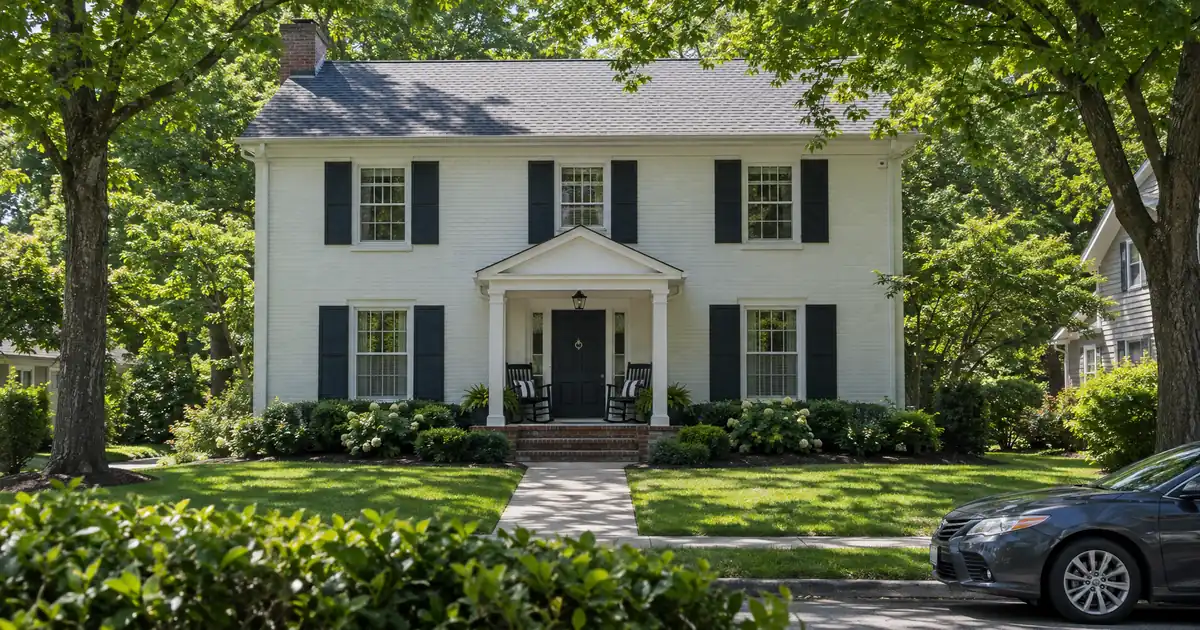
A house that rents by the room can earn more than a single lease, but lenders still price it as one house with one market rent.
About Lendmire
Lendmire is a mortgage brokerage (NMLS# 2371349) arranging home equity lines of credit — primary-residence, second-home and investment-property lines — through a wholesale lending network in its 16 full-service states. Eligibility is determined by the lender on each file. Scotsman Guide named Lendmire a Top Mortgage Workplace in both 2025 and 2026.
Get Started
Ready to find the right loan for you?
In about 30 seconds you can review financing options available for your home or investment property. No commitment required.
Informational only. Not a Loan Estimate, approval, or commitment to lend. Program availability and eligibility are subject to lender guidelines, credit approval, property review, and underwriting.
References
1. NerdWallet – Can You Get a HELOC on an Investment Property?
2. Fannie Mae Form 1007 (Single Family Comparable Rent Schedule)
4. BiggerPockets – Renting per room vs renting the whole home
5. BiggerPockets – Strategy for cash flow: rent by room vs whole house
This article is part of Lendmire’s investment property HELOC program — full qualification details, guidelines, and scenarios live on the program page.
Related reading: Can a Rental With a Rent-to-Own Tenant Qualify for a DSCR Loan? · How to Build a Rent Roll for a DSCR Takeout After a BRRRR Rehab · How to Restore a Reduced HELOC Limit Through Appeal or a New Line
Brandon Miller
Founder & CEO, Mortgage Loan Originator, Lendmire LLC
- Mortgage Loan Originator · NMLS# 1129696 · Verify on NMLS Consumer Access
- North Carolina Real Estate Broker · License# 343312 · Verify on NCREC
- North Carolina Insurance Producer · License# 19053198 · Property, Casualty, Life, Health · Verify on NAIC SBS
- Lendmire LLC · Firm NMLS# 2371349 · Verify firm licensure
Disclosure information. Lendmire is a state-licensed mortgage brokerage under NMLS# 2371349. Lendmire is not a depository institution, direct lender, or financial advisor — all loans referenced are placed through wholesale lender partners and are subject to each lender's underwriting standards. This article is provided for general informational purposes and is not a commitment to lend, nor does it constitute financial, legal, or tax advice. Loan programs, terms, rates, and qualification standards change without notice and depend on borrower profile, property type, and the state in which the subject property is located. Equal Housing Opportunity provider. NMLS Consumer Access: nmlsconsumeraccess.org.