
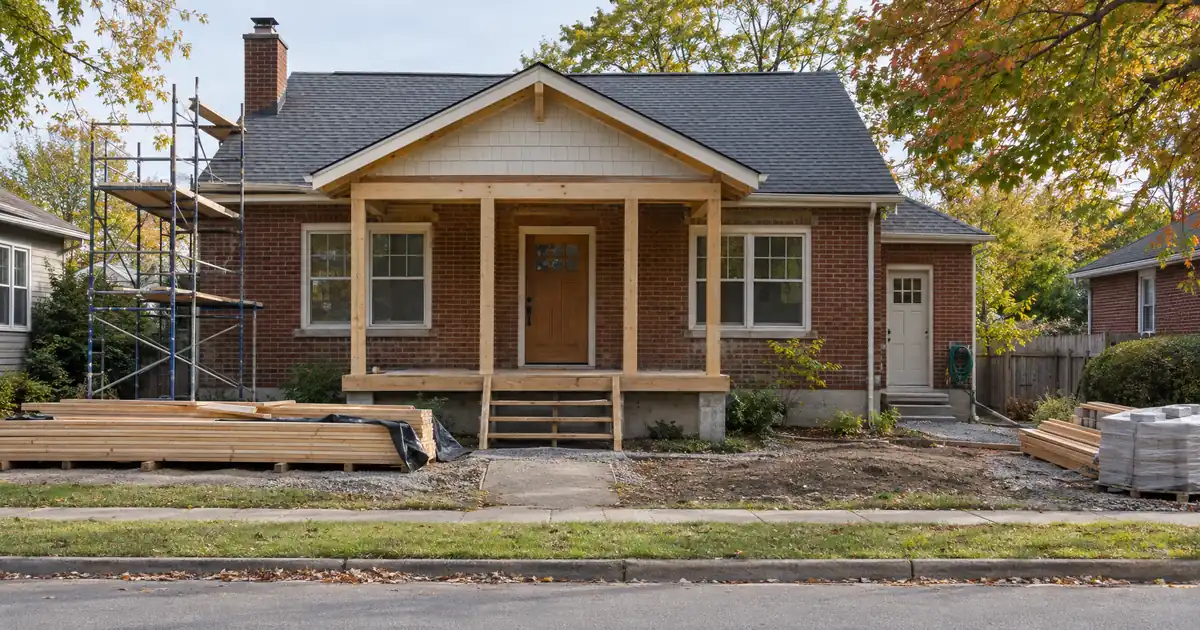
The Quick Read: A hard money lender funds a new first-lien loan that pays the seller off in full and releases the seller’s lien, and it works when the property has enough equity, the title is clean, and you have a plan to refinance again before the short hard money term ends. The payoff has to come from the property’s value, not from your income. Most of the work is paperwork: the seller’s payoff letter, the title search and the recorded lien release.
- Across the wholesale network Lendmire works with, hard money refinances typically top out around 65% of the property’s value. Terms generally run 6 to 18 months, interest-only, and vary by lender, property and experience.
- Equity is the deciding factor. If the seller’s balance plus costs exceeds the loan, you bring the difference in cash.
- The seller’s cooperation matters as much as the lender’s. You need a written payoff figure, and the lien has to be released on the public record afterward.
- A hard money loan is a bridge, not a destination. Plan the long-term loan before the bridge matures.
What Does Replacing a Seller Note Actually Mean?
A seller-carried note is a promissory note, secured by a mortgage or deed of trust, in which the seller acts as your lender. Replacing it means a new lender sends enough money to the seller at closing to clear the balance. The seller’s lien comes off the title, and the new lender takes first position.
What this loan actually costs to carry.
Hard money is sized against the project and priced by time. Enter the deal and see how much the program will lend, the cash required at closing, the carry while you hold it, and what is left at the exit.
Leverage tiers on the current program: 85% with fewer than 2, 90% with 2 or more, 93% with 5 or more completed projects — every tier capped at 75% of after-repair value. Loan amounts up to $5,000,000, larger by exception; terms of 6 to 18 months, interest-only, no prepayment penalty. The rehab portion funds in draws against completed work, not at closing.
Program parameters shown update from Lendmire’s centralized guideline source. Rate, points, and months are editable assumptions, not quoted terms.
Cost cap sets the loan · positive spread
Illustrative estimate only — not a quote, Loan Estimate, approval, or commitment to lend. Rate, points, and months are editable assumptions. Hard money is business-purpose financing for real estate investors, not a consumer mortgage. Leverage on the current program tops out at 93% of project cost for investors with a documented track record, capped at 75% of after-repair value, with rehab funding up to 100% of the documented budget released in draws; actual terms vary by lender, borrower experience, property, and exit. Lendmire is a mortgage broker, not a lender.
Many carry notes include a balloon payment. That is a large lump sum due at a set date, usually after several years of smaller payments based on a longer schedule.
Hard money fits this problem because it is built for deals that need a fast-moving bridge instead of a perfect borrower profile. The lender looks mainly at the property, the plan and the exit. Hard money loans are designed for non-owner-occupied investment properties. Because they are business-purpose investor loans, they are reviewed differently from a standard owner-occupied mortgage.
Key Terms Defined
Seller-carried note: A loan the seller gives the buyer, secured by the property, instead of the buyer borrowing from a bank.
Balloon payment: The lump sum owed at the end of a note whose monthly payments were set on a longer schedule.
Payoff statement: A written figure from the lender, here the seller, showing the exact amount needed to clear the debt on a given closing date.
Satisfaction of mortgage: The recorded document that shows the debt is paid and clears the lien from the public record. Deed-of-trust states use a similar document called a reconveyance.
Lien position: Where a loan ranks in line for repayment. A first lien gets paid before a second.
LTV (loan-to-value): The loan amount divided by the property’s appraised value.
When Does a Hard Money Payoff Make Sense?
It makes sense when the balloon date is close and a long-term loan cannot be arranged in time. That usually means the property needs work, has no lease in place yet, or has not been owned long enough for permanent financing.
It makes less sense when the seller’s note is cheap and the balloon is years away. A low-interest seller note can be worth keeping until the balloon forces your hand, because a hard money bridge adds new closing costs and short-term interest. You would be paying twice to escape a note that was not hurting you.
Here is how the main routes compare for a borrower facing a balloon:
| Route | Best when | Main drawback |
|---|---|---|
| Hard money payoff | Balloon is near, property needs work or a lease | Short term, added costs |
| Seller extension | Seller is friendly and the note is cheap | Seller can say no |
| Straight to long-term DSCR loan | Property is leased and past seasoning | Not always ready in time |
| Sell the property | Equity is thin or the plan changed | You give up the asset |
How Do You Replace the Note, Step by Step?
1. Pull the note and the recorded lien
Read the note and the mortgage or deed of trust before you call a lender. Check the maturity date, any prepayment penalty, and whether the seller holds the first lien. Look for a second lien behind the seller or a wraparound structure, because both would need to be paid off or resolved at closing.
2. Get a written payoff statement from the seller
The payoff figure is not the balance on your last statement. It includes principal, interest accrued up to the closing date, and any fees, as PropLogix explains in its lien-release guide. Private sellers often have no servicer, so the title company usually coordinates the letter and the wire instructions.
3. Confirm what kind of note you have
In a straight owner-finance sale, you hold the deed and the seller holds a recorded mortgage. A land contract, also called a contract for deed, is different. The seller keeps legal title while you hold equitable title, according to Paperstac. Paying off a land contract means the seller must deliver a deed at closing, so the title work looks different.
4. Size the loan against value
A hard money lender sizes the loan on the property’s value and the exit plan. For a refinance that pays off an existing note, most files in the network land at up to roughly 65% of value, subject to lender guidelines. The loan has to cover the seller’s payoff, closing costs and lender fees. Whatever is left uncovered is cash you bring.
5. Close through title and escrow
The title search should find the seller’s recorded lien. The hard money loan funds through escrow, and the money goes directly to the seller. The new lender records its lien in first position.
6. Confirm the lien release after closing
A payoff letter proves the debt is settled, but it does not change the public record. The recorded satisfaction of mortgage, or the reconveyance in deed-of-trust states, is what clears the title. Ask the title company who is responsible for recording it and when. Then check the county record yourself.
Who does what
| Party | Job |
|---|---|
| You | Gather the note, order the appraisal, bring any cash gap |
| Seller | Provide the payoff letter and sign the release |
| Hard money lender | Size the loan, review the property and exit plan |
| Title or escrow | Search title, route the payoff, record the release |
What Equity Do You Need? A Worked Example
Run the numbers on a modeled file. These are assumptions, not market data, and they are shown as percentages of value on purpose.
Modeled appraised value: 100%.
Modeled seller payoff, including accrued interest: 68%.
Modeled closing costs and fees: roughly 3%.
Total needed to retire the note: about 71%.
Hard money refinance ceiling in this example: 65% of value.
Cash you bring: about 6% of value.
This is the most common way these deals get stuck. The payoff is higher than the lender can fund, and the appraisal comes in below what the investor hoped. Do not count on appreciation to close the gap. Size the deal on today’s value, and ask the lender what they will accept before you count on a number. Leverage and terms vary by lender, property and experience, and nothing here is a commitment to lend.
What Should You Say to the Seller?
Start with the note itself. If it has a prepayment penalty, that cost goes into your payoff math. If it has none, a seller who is happy to be paid in full has little reason to resist.
Some sellers will accept a discounted payoff for cash now, and some will not. You can ask, but do not build your plan around a discount.
If the seller is slow, hard to reach or disputes the payoff figure, the closing stalls. The payoff and the release both depend on the seller’s signature. Send a written request early, keep the title company in the loop, and give yourself time before the balloon date.
Where the General Rule Breaks
The steps above assume a clean first-lien note on a property you own outright in title. These cases change the plan.
Land contracts. Because the seller keeps legal title, default often means forfeiture rather than foreclosure, and that varies by state. The buyer may also be restricted from refinancing without the seller’s approval, according to Landmodo. The payoff has to be arranged so the deed moves at closing.
Second-position seller notes. If a bank holds the first lien and the seller holds a second, a new first-lien loan has to retire both. Hard money lenders generally want first position, so a subordinate seller note adds to the payoff stack instead of staying in place.
Unrecorded or poorly recorded notes. If the note was never recorded, the title company may find nothing to release, and the paper trail is harder to prove. Fix this before you apply, not at the closing table.
Owner-occupied properties. The hard money program in the network covers non-owner-occupied residential property of one to four units. A home you live in is not eligible. Credit also matters: the typical floor is a 620 score, with additional conditions below 660.
A short runway. If your balloon is only months away, a hard money loan can still work. But the hard money term is also short, typically 6 to 18 months, so you are buying time, not solving the problem. If the property cannot be stabilized in that window, you may only be moving the same deadline.
The seller’s note terms. Federal seller-financing rules shape what a note can look like. The three-property exclusion for sellers generally requires a fully amortizing note with no balloon, according to Frascona. The one-property exclusion permits a balloon, as Umstead summarizes. Because your purchase was a business-purpose investment, these rules may apply differently to you, so ask an attorney if the note looks unusual.
State rules on foreclosure type, balloon notices and recording deadlines vary widely. Check yours before you count on any timeline.
How Do You Plan the Exit From the Bridge?
Start the permanent loan work the day the hard money loan closes. The bridge usually carries no prepayment penalty, so refinancing early costs you nothing in lost fees.
Many investors refinance out of hard money into long-term DSCR financing once the property is stabilized, and Lendmire arranges that path through select lenders in its wholesale network. A DSCR loan is reviewed primarily on property-level rental income covering the payment, subject to lender guidelines. On a cash-out, most programs in the network top out around 75% LTV on a standard rental and look for about 6 months of seasoning. Select programs start at a 1.00 coverage ratio, while a separate select-lender path takes coverage below 1.00 with leverage and terms adjusted. The complete DSCR loans guide walks through how that coverage number is built.
Clearing the ratio does not mean the property cash flows. DSCR compares rent to the monthly payment, taxes and insurance only. Repairs, vacancy, management and capital costs sit outside it, so budget for them separately.
Pre-Application Checklist
Gather these before you call a lender:
- The signed note and the recorded mortgage or deed of trust.
- Your payment history on the note.
- A written payoff statement with a per-day interest figure.
- A current valuation estimate and any rehab plans.
- A clear exit plan, including the long-term loan you expect to use.
- Proof of ownership structure and your investing experience.
Experience can affect your terms. First-time investors qualify at the lower leverage tiers, while the strongest leverage is reserved for borrowers with a record of completed projects.
Frequently Asked Questions
Does the seller have to agree to a payoff?
The seller must accept payment in full under the note’s terms, but cannot usually refuse a legitimate payoff once the note allows it. What the seller can do is slow things down by delaying the payoff letter or the release. If the note includes a prepayment penalty, that amount is part of what you owe, so read the terms first.
Does the hard money lender need the original note?
The lender needs the note and the recorded security instrument to understand what is being paid off, along with the payoff statement. The title company confirms the lien on record. The seller typically signs the release, and the new lender cares most that its own lien lands in first position.
Can hard money pay off a second-position seller note?
It can, but the new loan has to retire everything ahead of its own lien position, so both the first and the second would be paid at closing. That makes the payoff stack larger and the equity requirement tougher. Leverage varies by lender, property and experience.
What if the appraisal comes in low?
A low appraisal shrinks the loan you can get, and the gap becomes cash you bring. On a refinance, most files land at up to roughly 65% of value, so a lower value reduces the loan dollar for dollar. Some investors renegotiate with the seller, add cash, or wait until the property is improved.
Is there a prepayment penalty on the hard money loan?
The hard money program described here typically carries no prepayment penalty, with interest-only terms of 6 to 18 months. That is a program feature that varies by lender, so confirm it for your file. The seller’s note is the one more likely to carry a penalty.
Where to Go From Here
If you are buying, rehabbing or refinancing an investment property on a short timeline and want to see how the numbers work, Lendmire can help you compare hard money options based on the project, the exit plan, leverage and your goals. Lendmire is a mortgage broker arranging financing through select lenders in its wholesale network across 41 markets, including Washington, D.C.
For current guidelines and terms, see Lendmire’s hard money loan programs page.
About Lendmire
Lendmire is a non-QM mortgage brokerage (NMLS# 2371349) arranging DSCR investor loans in 41 markets, including Washington, D.C., through wholesale and investor-lending channels. DSCR loans are evaluated by the lender on rental income rather than personal income, subject to lender guidelines — a fit for LLC-owned portfolios, self-employed investors, and operators scaling beyond conventional loan caps. Recognized as a Scotsman Guide Top Mortgage Workplace in 2025 and 2026.
The exit plan matters as much as the purchase price on short-term financing – see the hard money loan overview.
Get Started
Ready to find the right loan for you?
In about 30 seconds you can review financing options available for your investment property. No commitment required.
Informational only. Not a Loan Estimate, approval, or commitment to lend. Program availability and eligibility are subject to lender guidelines, credit approval, property review, and underwriting.
References
1. PropLogix – How to get a mortgage lien released
2. Paperstac
3. Landmodo
4. Frascona – Dodd-Frank owner financing
5. Umstead – Dodd-Frank seller financing
This article is part of Lendmire’s hard money loan program — full qualification details, guidelines, and scenarios live on the program page.
Related reading: How Long Each Step of a DSCR Refinance Takes to Pay Off Hard Money · No-Reserves DSCR Loan vs Standard DSCR Loan on Pricing and LTV · How to Refinance Out of Hard Money With a DSCR Loan Before the Payoff
Brandon Miller
Founder & CEO, Mortgage Loan Originator, Lendmire LLC
- Mortgage Loan Originator · NMLS# 1129696 · Verify on NMLS Consumer Access
- North Carolina Real Estate Broker · License# 343312 · Verify on NCREC
- North Carolina Insurance Producer · License# 19053198 · Property, Casualty, Life, Health · Verify on NAIC SBS
- Lendmire LLC · Firm NMLS# 2371349 · Verify firm licensure
Compliance and disclosures. Lendmire (NMLS# 2371349) is a licensed mortgage broker and is not a direct lender, depository institution, financial advisor, or tax professional. Content in this article is general market analysis and educational information — not financial, legal, or tax advice for any specific situation. Lendmire does not guarantee loan approval; every transaction is subject to underwriting by the funding lender. Mortgage pricing and loan program guidelines are subject to change at any time without notice and vary by borrower characteristics, property type, and state regulations. Lendmire complies with Equal Housing Opportunity. Licensure verification: NMLS Consumer Access.