
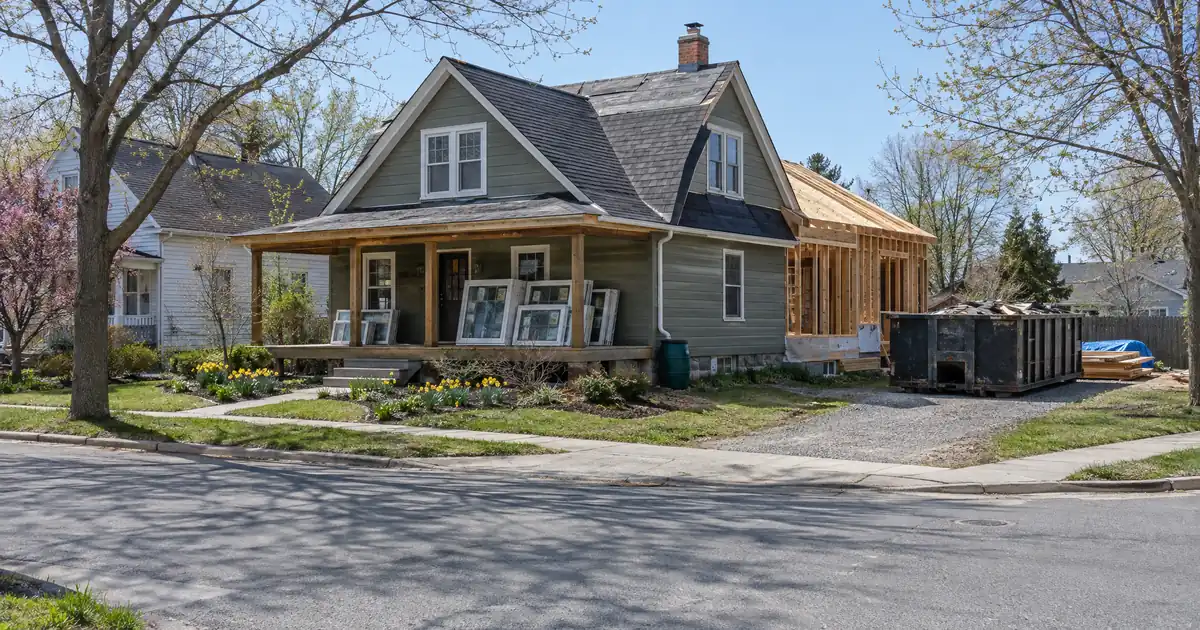
The Quick Read: Hard money lenders typically hold the rehab budget in a holdback account and release it in draws after completed work is verified. You front each phase and get reimbursed afterward. The written draw terms decide how much cash you carry in between. Those terms live in your loan agreement, not in any universal rule, which is why they deserve a close read before you sign.
- Up to 100% of the rehab budget can fund in draws against completed work. That is a rehab-budget figure, not a purchase loan-to-value figure, and it varies by lender, property, and experience.
- Buying materials usually does not trigger a draw. Installed, inspected work does.
- Reimbursement does not always mean you paid cash first. Contractor payment terms can change your float.
- Your peak cash need depends on how many draws exist, how big each one is, and how long each takes to arrive.
- Per-draw fees, retainage, interest treatment, and who gets paid are all negotiable terms. Get them in writing.
What Does Reimbursement Actually Mean?
Reimbursement means the lender pays for a phase of work after that work is done and checked. At closing, only the acquisition portion funds. The rehab money sits in escrow until you earn it out, one milestone at a time.
What this loan actually costs to carry.
Hard money is sized against the project and priced by time. Enter the deal and see how much the program will lend, the cash required at closing, the carry while you hold it, and what is left at the exit.
Leverage tiers on the current program: 85% with fewer than 2, 90% with 2 or more, 93% with 5 or more completed projects — every tier capped at 75% of after-repair value. Loan amounts up to $5,000,000, larger by exception; terms of 6 to 18 months, interest-only, no prepayment penalty. The rehab portion funds in draws against completed work, not at closing.
Program parameters shown update from Lendmire’s centralized guideline source. Rate, points, and months are editable assumptions, not quoted terms.
Cost cap sets the loan · positive spread
Illustrative estimate only — not a quote, Loan Estimate, approval, or commitment to lend. Rate, points, and months are editable assumptions. Hard money is business-purpose financing for real estate investors, not a consumer mortgage. Leverage on the current program tops out at 93% of project cost for investors with a documented track record, capped at 75% of after-repair value, with rehab funding up to 100% of the documented budget released in draws; actual terms vary by lender, borrower experience, property, and exit. Lendmire is a mortgage broker, not a lender.
That surprises many first-time borrowers. A loan advertised as funding the whole rehab sounds like cash in hand on day one. It is not. It is a commitment to pay as work is completed.
Here is the leverage picture on the program side. Fix-and-flip loans in Lendmire’s network of select lenders run up to 93% of project cost for investors with 5 or more completed projects. They run up to 90% of project cost at 2 or more projects and 85% with fewer than 2. Every tier is capped at 75% of after-repair value. Those figures are loan-to-cost, not loan-to-value, and they vary by lender, property, and experience.
There is no true 100% purchase program. The “up to 100%” figure applies only to the rehab budget, and only as draws against completed work. You still bring cash to the purchase, and you still carry the gap between paying for work and getting paid back.
One more clarification. Reimbursement does not always mean you paid the contractor in full first. Some contractors bill on net terms, so the invoice comes due after the draw lands. If you negotiate that up front, your out-of-pocket float shrinks. Other contractors want deposits, and then you really are paying first.
Key Terms Defined
Holdback: The portion of the loan held in escrow and released as rehab work is completed and verified.
Draw: A single request to release part of the holdback after a phase of work is finished.
Initial advance: The money funded at closing, which covers the purchase and not the rehab.
Retainage: A slice of each draw kept back until the project is fully complete and free of liens.
Scope of work: The line-item budget and plan the lender approves before closing. Draws are measured against it.
Lien waiver: A signed document from a contractor or supplier giving up lien rights for the amount they were paid.
Float: The cash you have spent on work that the lender has not yet reimbursed.
How the Draw Flow Works, Step by Step
Every lender words it differently, but the sequence is consistent.
1. Closing. The acquisition funds. The rehab budget goes into holdback.
2. Budget approval. The scope of work is split into line items, usually by milestone or percent complete. The lender wants a line item finished and installed before it pays.
3. You front the work. You pay out of pocket, use your own credit lines, or negotiate contractor terms so payment follows the draw.
4. Draw request. You submit a description of completed work, photos, and often invoices or receipts.
5. Inspection. A lender or third-party inspector verifies the work. The inspection cost is commonly passed to you, sometimes deducted from the draw itself.
6. Lien and title check. The lender confirms nothing new has been recorded against the property since the last draw.
7. Release. Funds go to you or jointly to you and the contractor, less any retainage. The final draw releases what remains once last-stage conditions are met.
Bank construction lending uses much the same logic. The OCC’s commercial real estate lending handbook describes draw requests organized by construction phase and cost category. It also describes a borrower certification that suppliers and subcontractors have been paid. That guidance covers banks, not private lenders. It shows that paying only for verified work is a mainstream credit control and not a hard money quirk.
What decides whether a draw clears is rarely mysterious. The work must be complete and installed, not just purchased. The line items must match the approved budget. Permits, liens, and title issues cannot surface. And the loan agreement should say in writing how draw timing works.
How Much Cash Do You Carry Between Draws?
Your peak out-of-pocket need is the biggest number most rehabbers never calculate. It is not the total rehab budget. It is the largest amount of unreimbursed work you have in flight at one time.
Run the numbers on a modeled four-phase rehab. Assume the budget splits 20%, 30%, 30%, and 20% across the phases. Assume each next phase starts before the prior draw has landed, which is how real job sites tend to run. The figures below are percentages of the rehab budget, not dollar amounts.
| Step | You pay | Lender reimburses | Net cash out |
|---|---|---|---|
| Phase 1 work | 20% | n/a | 20% |
| Phase 2 starts, draw 1 requested | 30% | n/a | 50% |
| Draw 1 funds | n/a | 20% | 30% |
| Phase 3 work | 30% | n/a | 60% |
| Draw 2 funds | n/a | 30% | 30% |
| Phase 4 work | 20% | n/a | 50% |
| Draw 3 funds | n/a | 30% | 20% |
| Final draw funds | n/a | 20% | 0% |
The peak is 60% of the rehab budget, even though the lender funds the whole budget in the end. If each draw landed before the next phase began, the peak would drop to the largest single phase, 30%. Draw timing is the lever.
This model leaves out your cash at closing. It also leaves out per-draw fees, inspection costs, and any retainage still held at the end. Add those, and the real number rises. This is a modeled illustration, not a market average.
Hard Money Draw Reimbursement Terms to Confirm Before You Sign
Draw terms are lender-specific. Across the lenders Lendmire works with, the differences show up in a handful of places, and each one changes your float or your cost.
| Term | What it controls | What to ask |
|---|---|---|
| Verification method | Proof needed per draw | Photos, receipts, or inspection? |
| Partial completion | Pay on unfinished line items | Is a half-done item payable? |
| Retainage | Amount held per draw | Is any held, and when released? |
| Interest on undrawn funds | Carry cost | Is interest charged on the full loan or drawn funds? |
| Per-draw charges | Fee drag per request | What fees and inspection costs apply? |
| Who gets paid | Contractor vs. you | Direct to contractor or to you? |
| Final-draw conditions | Last release | Permits, lien waivers, final inspection? |
| Change orders | Out-of-scope work | How is added work approved? |
Interest-only terms of 6 to 18 months are standard on this kind of loan, with no prepayment penalty. That makes timing matter. A slow draw cycle extends your carry and eats your runway. Per-draw fees add up too, so the number of draws trades fee cost against cash gap. More draws mean smaller gaps and more fees. Fewer draws mean the reverse.
What Proof Do Lenders Require?
Lenders want evidence that work is complete and that nobody else has a claim on the property. Four kinds of proof come up.
| Proof | What it shows | When it applies |
|---|---|---|
| Photos | Visible progress | Most draws |
| Receipts or invoices | What was spent | Some lenders only |
| Inspection | Work is complete | Most draws |
| Lien waivers | Payee gave up claims | Before next release |
Receipts versus photos-only is a real difference between lenders. Some pay on inspection and photos. Others pay each voucher against a bill. Ask which applies.
The federal rehab template makes the logic plain. The FHA 203(k) draw request form makes the borrower certify that the draw is for completed work done in a workmanlike manner. It holds 10% back until all work is done and no mechanic’s or materialmen’s liens are on the property. It even carries a line for paying the fee inspector out of the draw. That program is for owner-occupants, not rental investors, so use it only as a picture of the mechanics. Private lenders set their own terms.
Lien waivers deserve special attention. They are generally required by contract or by the lender and title company rather than by statute. According to Corpay’s construction lien waiver explainer, lenders typically want conditional waivers for the current draw and unconditional waivers for the prior draw. Skip them and the next release can stall. Holdbacks also do not erase subcontractor rights. Unpaid subs can still file liens under state law, as one construction firm’s holdback guide explains, so have counsel confirm the rules for your state.
Where the General Rule Breaks
Most of the time, the sequence above holds. Here is where it does not.
Retainage inside each draw. Bank progress-payment plans often hold back 10% to 20% of each payment, per the same OCC handbook. That is bank practice, not a hard money term. On Lendmire’s side, the program figure is up to 100% of the rehab budget funding in draws against completed work, and any retainage is lender-specific. Confirm it in writing.
Voucher-basis payment. Some lenders pay only against presented bills. If you work with a handyman who never writes invoices, that becomes a problem.
Owner-performed work. If you do labor yourself, a private lender may pay only for materials, or nothing for labor. Some federal programs treat sweat equity differently, but private lenders may not follow suit. Ask before you commit to doing the work yourself.
Partial line items. A line item half finished may not pay half. Many lenders pay only at completion, which pushes your float up on large items like a roof or a kitchen.
Second liens and gap funding. A second mortgage found on the lien search at draw time can freeze rehab funds until it is removed. Gap funding structured as a promissory note without a lien is less likely to cause trouble.
Late draws. Stalled inspections or paperwork can leave you out of pocket longer than planned. Contractors do not wait forever, and interest keeps running.
Direct-to-contractor payment. Some lenders pay the contractor directly and some pay you. That is policy, so ask early.
Change orders. Added work outside the approved scope does not reimburse by default.
Tactics for Fronting Costs Without Choking Your Liquidity
Your real liquidity need covers more than the down payment. It includes closing costs, working capital to start the rehab, and reserves for surprises. Plan for all of it before you commit to a budget.
A few moves shrink the float.
- Negotiate contractor terms. Net terms or milestone payments tied to draw dates keep your cash out of the gap.
- Sequence the work. Put the cheaper early phases first when you can, and avoid ordering several expensive phases at once.
- Time the requests. Submit a draw the moment a phase passes. Delays on your side add days to the gap.
- Keep paperwork clean. Photos, invoices, and lien waivers collected as you go prevent a held draw.
- Hold a contingency. Budgets drift. A reserve outside the holdback keeps a short draw from stopping the job.
Tax treatment varies; consult a qualified professional.
Planning the Exit Before the First Draw
Many rehab-and-hold investors plan to refinance into long-term DSCR financing once the property is stabilized. Lendmire brokers that path. The draw process affects how ready you are for it. A stalled rehab or an unreleased holdback leaves the property in worse condition at the refinance appraisal and rent schedule. The complete DSCR loans guide explains how that next loan is reviewed, and it qualifies primarily on property-level rental income covering the payment, subject to lender guidelines.
Hard money terms of 6 to 18 months leave little room for a rehab that drags. Count your draw cycle into the timeline, not just the construction schedule.
Frequently Asked Questions
Does 100% rehab funding mean I need no cash for the rehab?
No. Up to 100% of the rehab budget funds in draws against completed work, and you carry the gap between paying for work and being reimbursed. You also bring cash toward the purchase, since leverage is measured against project cost and capped at 75% of after-repair value. All of this varies by lender, property, and experience.
Do I have to pay the contractor before I can request a draw?
Not always. Many lenders reimburse work that is complete and verified, and some contractors bill on net terms. Whether you must show proof of payment depends on the lender, so ask whether receipts or paid invoices are required.
Can I be reimbursed for materials I bought but have not installed?
Usually not. Draws are tied to completed, installed work. The federal template makes the same point, and most private lenders follow similar logic.
What happens if the inspector disagrees with my draw request?
The draw is typically reduced or held until the item is corrected or documented. Read the loan agreement for how disputes and re-inspections are handled, and who pays for them. Re-inspection costs can be passed to you.
Are draw fees and inspection charges negotiable?
Often, yes, at least in part. Fees are charged per draw, so the number of draws changes your total cost. Ask for the full fee schedule in writing before you sign.
Getting the Terms in Writing
If you are buying, rehabbing or refinancing an investment property on a short timeline and want to see how the numbers work, Lendmire can help you compare hard money options based on the project, the exit plan, leverage, and your goals. As a broker, Lendmire arranges financing through select lenders in its wholesale network across 41 markets, including Washington, D.C. Every file is reviewed individually, and nothing here is a commitment to lend.
About Lendmire
A DSCR-focused mortgage broker, Lendmire (NMLS# 2371349) places investor financing across 41 markets — 40 states plus Washington, D.C. — with DSCR eligibility generally reviewed by the lender on property cash flow instead of tax returns, subject to lender guidelines. Scotsman Guide named Lendmire a Top Mortgage Workplace in 2025 and 2026.
Many investors treat hard money as the acquisition tool and plan the exit up front – see the hard money loan overview.
Get Started
Ready to find the right loan for you?
In about 30 seconds you can review financing options available for your investment property. No commitment required.
Informational only. Not a Loan Estimate, approval, or commitment to lend. Program availability and eligibility are subject to lender guidelines, credit approval, property review, and underwriting.
References
1. OCC Comptroller’s Handbook, Commercial Real Estate Lending (previous version)
2. HUD Form 9746-A, Section 203(k) Draw Request
3. Corpay, Construction Lien Waivers
4. RKM Homes, What Is a Holdback in a Construction Draw Schedule
This article is part of Lendmire’s hard money loan program — full qualification details, guidelines, and scenarios live on the program page.
Related reading: How to Document Gap Money in a Hard Money to DSCR Takeout · How to Buy an Occupied Property With Hard Money and Plan the Exit · How to Stabilize a Ten-Unit With Vacancies Using Hard Money and DSCR
Brandon Miller
Founder & CEO, Mortgage Loan Originator, Lendmire LLC
- Mortgage Loan Originator · NMLS# 1129696 · Verify on NMLS Consumer Access
- North Carolina Real Estate Broker · License# 343312 · Verify on NCREC
- North Carolina Insurance Producer · License# 19053198 · Property, Casualty, Life, Health · Verify on NAIC SBS
- Lendmire LLC · Firm NMLS# 2371349 · Verify firm licensure
Legal disclosures. Lendmire (NMLS# 2371349) is a state-licensed mortgage brokerage that arranges financing through wholesale lender relationships. Lendmire is not a direct lender, depository institution, or registered financial advisor. The discussion above is general informational content about real estate financing — it is not financial, legal, or tax advice, and readers should consult licensed professionals for guidance on their individual circumstances. Loan inquiries are subject to lender underwriting; this article does not represent a commitment to lend. Loan terms, rates, and qualification standards vary by borrower, property, and state, and are subject to change at any time. Equal Housing Opportunity. NMLS Consumer Access: nmlsconsumeraccess.org.