
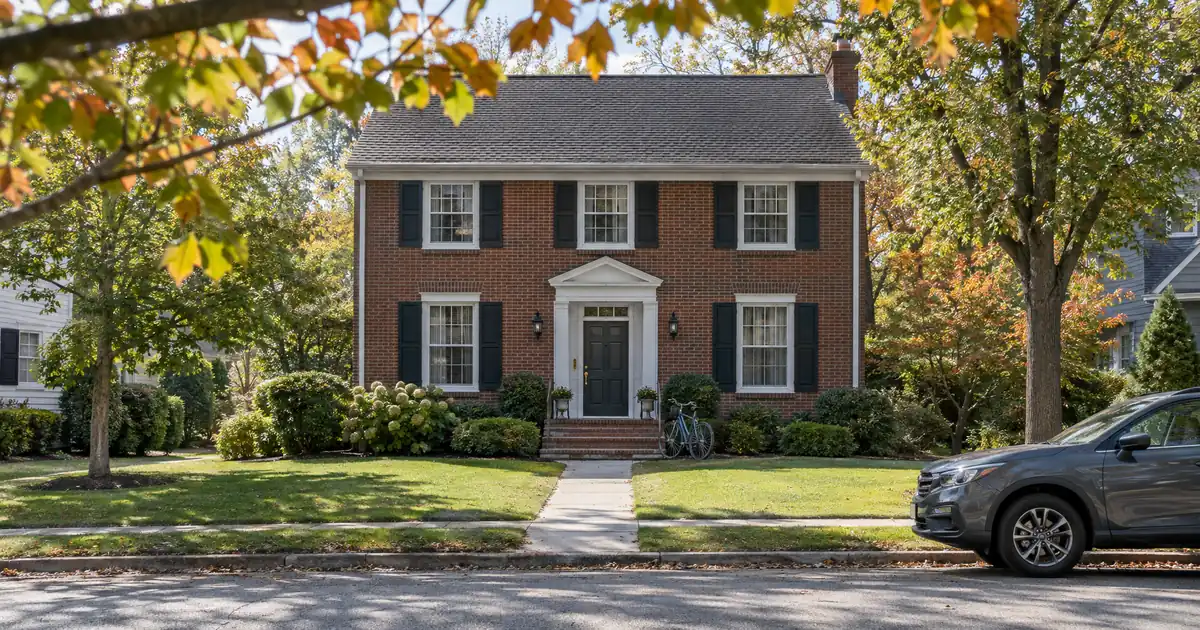
The Quick Read: Usually, yes, when you will live in the home as a primary residence or second home, the new loan covers the old payoff plus the equalization payment inside the leverage cap, and your eligible assets, after the credit percentages, equal or exceed the entire loan. A decree or a deed never removes an ex from the old mortgage. Only a payoff does, and a refinance is the usual way to get one. If you are keeping the home as a rental, a different path applies, and that is covered below.
- Assets cover the loan: On the asset qualifier path, no employment or income is documented, but the assets are.
- Assets become income: On the asset depletion path, usable assets divided by 60 months become qualifying monthly income.
- Leverage differs by path: The qualifier path allows up to 80% on a purchase and 75% on a refinance, on a principal residence or second home. The depletion path allows up to 80% on a purchase or rate-and-term refinance of a principal residence or second home, but only 60% on a cash-out. On an investment property, depletion allows 65% and 60%.
- Settlement money counts only once: The same dollar cannot both qualify you and pay your ex.
- Rentals are different: A rental you keep usually points to a depletion-path loan or a DSCR loan, not the qualifier path.
All figures here are typical ceilings and floors across select programs in Lendmire’s wholesale network, subject to underwriting. They are not offers. Lendmire is a broker and arranges these loans through select lenders.
Why Does the Refinance Have to Come First?
The court splits the property, but the lender never agreed to the split. Your ex signed the original note, so your ex stays on it until the loan is paid off, refinanced, or assumed with a written release.
A quitclaim deed makes this worse if you sign it too early. It moves title only. Your ex can end up with no ownership but full liability for the mortgage, which is the worst position for both of you.
The cleaner sequence is to vest title in your name at the closing table, if the lender allows it. The new loan then pays off the old one in the same step. The attorney confirms the amounts, and the lender only needs the new loan to fit its guidelines.
Here is where an asset-based loan matters. A standard refinance asks you to prove a single income after the divorce. An asset-based loan asks you to prove what you hold. If your balances are large and your documented income is thin, that is a real difference.
Which Path Fits Your Buyout?
Match the path to your situation. If your assets can cover the whole new loan, the asset qualifier path fits. If your assets are large but fall short of the loan, converting them to income on the depletion path may fit. A rental you keep points to depletion or DSCR. A borrower is reviewed on one path at a time, and the two tables of rules never blend.
| Factor | Asset Qualifier | Asset Depletion | DSCR |
|---|---|---|---|
| What the lender tests | Assets vs. the whole loan | Assets ÷ 60 months as income | The property’s rent vs. its payment |
| Property types | Primary home, second home | Primary, second, investment | Non-owner-occupied rentals |
| Refinance leverage | Up to 75% | Up to 80% rate-and-term, 60% cash-out (primary or second home) | Set by the DSCR program |
| Removes the ex from the loan | Yes, via new loan | Yes, via new loan | Yes, via new loan |
On the qualifier path, loans run up to $4,000,000 and the minimum credit score is 600. On the depletion path, loans run from $125,000 to $3,500,000, and the lender’s score and loan-amount matrix governs. A first-time investor on the depletion path needs a 700 score. Housing history is typically 0x30x12, though one 30-day late in the last twelve months is considered case by case. Multiple bankruptcies are not eligible. All of it is subject to underwriting.
DSCR loans are designed for non-owner-occupied investment properties. Because they are business-purpose investor loans, they are reviewed differently from a standard owner-occupied mortgage. They qualify primarily on property-level rental income covering the payment, subject to lender guidelines. Programs below 1.00 coverage are available through select lenders in the network, with adjusted leverage and terms. Lendmire’s complete DSCR loans guide covers that path in full.
Most files do not land on one path by accident. A retiree keeping the family home with a large brokerage account sits on the qualifier path. An early-retired professional whose portfolio is bigger than the loan but whose documented income is small sits on the depletion path. Someone keeping a duplex that rents well may skip both and use DSCR.
How Does the Buyout Math Work?
The buyout equals the home’s value, minus all liens, times your ex’s share. The new loan must cover the old payoff, the equalization payment, and closing costs, all inside the leverage cap. Run that number before you sign the settlement.
DivorceNet gives a clean illustration of the structure. A home carries a $250,000 loan balance and $250,000 of equity, split equally. The buying spouse needs a loan of at least $375,000: $250,000 to pay off the original loan and $125,000 in cash to the ex. Treat that as a picture of the structure, not market data.
Three things can break the math.
- The leverage cap. If the loan needed exceeds the cap, the file fails even when your assets are strong. The only fixes are more cash from elsewhere, a smaller buyout, or a different funding route.
- A low appraisal. A low value shrinks both the loan and the buyout price. Agree in writing on a fallback, such as a second appraisal, before the first one comes back.
- Not 50/50. Many settlements trade retirement accounts against home equity, or credit one spouse for a separate-property down payment. The decree should state the final dollar equalization amount. A vague clause can stall a file.
One question to ask a lender early is how the file will be classified. Some lenders treat equalization cash going to an ex as a cash-out, and others treat it differently. That choice matters on the depletion path, where cash-out leverage is lower. On the qualifier path, whether cash-out proceeds are allowed, and at what leverage, is set by the lender and is not published, so ask for the lender’s answer in writing.
How Are Your Assets Tested?
Lenders test what you hold, how long you have held it, and what share of each balance counts. The assets are documented on both paths. No income documentation never means no documentation.
Asset qualifier path. These shares of each balance count:
- Brokerage accounts, certificates of deposit, money market and savings: 100%.
- 401(k) and IRA balances: 90% if you are under 59½, and 100% at 59½ or older.
- Accounts combine.
- Seasoning is 60 days, with two months of statements for each qualifying account.
Reserves are not required at or below 75% loan-to-value. Above that, the lender sets them.
An illustration: an $800,000 loan with $330,000 in brokerage accounts (100% is $330,000), $300,000 in a 401(k) while under 59½ (90% is $270,000) and $200,000 in savings (100% is $200,000) counts $800,000 of usable assets. That is reviewed on assets alone. The lender’s own calculation governs.
Asset depletion path. These shares count:
- Cash accounts and certificates of deposit: 100%.
- Securities: 80%.
- Private stock: 75%.
- Retirement accounts: 70% at any age.
- Real-estate equity: 60%.
- Not eligible: custodial accounts, deferred compensation, escrow accounts, foreign funds, cash on hand, stock options, non-vested restricted stock units, and funds from non-regulated financial companies.
Statements must be at least 120 days old at application, plus the most recent statement within 45 days. Sale-of-business, inheritance and legal-settlement funds are excused from that seasoning. You need qualified assets of at least the lesser of $1,000,000 or 1.25 times the loan balance, and never below $250,000 liquid when depletion is your only income source. Cash-out proceeds never count as qualifying assets.
An illustration: $1,500,000 in securities (80% is $1,200,000) plus $300,000 in cash (100% is $300,000) is $1,500,000 usable. Divided by 60 months, that is $25,000 of monthly qualifying income. That income then carries the housing payment and your other debts through the debt-to-income test. Asset income can also supplement documented income, up to a 45% debt-to-income ratio, and in that case the minimum-assets rule is waived.
Assets that are not listed. Cryptocurrency, precious metals, collectibles, pledged or borrowed funds, and business accounts beyond your ownership share are not published as eligible on either path. The documented route is converting them to a seasoned cash balance in a regulated account, with the source reviewed by the lender.
The Settlement-Money Trap
A common mistake on these files is counting one pile of money twice. Say your settlement leaves you a brokerage account, and you plan to use part of it to pay your ex and the rest to qualify. On the qualifier path, the assets must cover the whole loan. Money you spend on the equalization payment is gone from the account, and a lender may count only what remains.
Ask the lender how it treats assets used for the equalization payment. The safe working assumption is that a dollar counts once.
Timing matters too. Funds moved right before or after the decree need a paper trail, and a transfer into your name can restart a seasoning clock. A retirement-account split is the same kind of question. The balance you receive may count, but spending it on your ex reduces what is left to qualify on. Have the numbers checked before the settlement is final, not after.
If You Are Keeping a Rental
The qualifier path is for principal residences and second homes. Investment property is covered only on the depletion path, where leverage tops out at 65% on a purchase or rate-and-term refinance and 60% on a cash-out. A buyout funded with equalization cash is the scenario to ask about, since cash-out leverage is the lowest figure.
DSCR often fits better when the rent is strong. It does not depend on your post-divorce income. Asset-based qualifying is the alternative when the rent does not cover the payment but your portfolio is large. A smaller loan may do if your assets fund part of the equalization payment directly.
One legal wrinkle applies to investors. Federal law protects certain transfers to a spouse under a divorce decree from due-on-sale enforcement. According to Foust & Foust, the protected spouse should occupy the property to stay within that safe harbor. If you are keeping a rental, you may sit outside it. Do not deed the property into an LLC before the refinance, because it can trigger problems with the existing note. Moving the rental into an entity at the same closing may be possible, subject to program eligibility. Have your attorney review it first.
Key Terms Defined
Asset qualifier: A loan program that approves the loan on the borrower’s eligible assets, after credit percentages, with no employment or income documented.
Asset depletion: A method that divides usable assets by 60 months to produce a monthly qualifying income.
Equalization payment: The cash one spouse pays the other to even out the split of the home’s equity.
Seasoning: The waiting period assets must sit in an account, or statements must age, before a lender counts them.
Loan-to-value (LTV): The loan amount divided by the home’s appraised value.
Release of liability: A written lender release that frees a person from a mortgage.
Step by Step
1. Fix the buyout number. Put the dollar equalization amount in the decree or settlement agreement.
2. Pick the path. Decide between the qualifier path, the depletion path, and DSCR, using the table above.
3. Collect your statements early. The qualifier path wants two months for each account, and the depletion path wants aged statements plus a recent one.
4. Order the appraisal and title work. Size the loan against the leverage cap with the actual value.
5. Sequence the deed with the loan. Vest title at closing if the lender allows it, rather than signing a quitclaim first.
6. Close with proceeds going to your ex. Your attorney confirms the amounts.
A typical file includes the certified decree or settlement agreement, any recorded deed, a title report, the old mortgage payoff, and the court-ordered equalization terms. Asset files add the account statements. DSCR files add leases and an appraisal with rent data. For related background, see Lendmire’s explanation of how a cash-out refinance works to buy out an ex-spouse.
Wording the Settlement So the Loan Can Happen
Write the refinance deadline into the settlement with room for an appraisal and a lender’s review. State who pays closing costs. Say what happens if the refinance fails, such as an extension, a sale, or a second appraisal.
Support counts as income only with documentation. Support you pay counts as debt on income-based files. That matters little for asset qualifier files, which document no income, or for DSCR.
Tax treatment can depend on how the funds are used and how the property is held. Transfers between spouses incident to a divorce generally trigger no gain or loss, per IRS Publication 504, but borrowers should speak with a qualified tax professional before relying on any treatment.
What If This Doesn’t Work?
Work down this list in order.
- Another qualification route. A bank statement program suits borrowers who document income with deposits. A co-borrower may also help, subject to program rules. For a self-employed owner with a large loan, see Lendmire’s piece on whether a self-employed owner can refinance a jumbo loan to buy out an ex-spouse.
- An assumption with a release. The lender approves you taking over the existing loan and releases your ex. It keeps the existing loan terms, but it depends on servicer policy and is harder on investment property. The CFPB’s report on homeowners after divorce confirms that removing a party from a loan generally requires a refinance. It also notes that a servicer’s successor-in-interest rules help with information but do not release anyone.
- A seller note or deferred buyout. Your ex agrees to be paid later, which lowers the loan you need today.
- A home equity loan. It can fund the cash but does not release your ex from the first mortgage.
- A sale. It is the cleanest fallback when the leverage cap and your assets cannot meet the buyout.
Agency rules differ from non-QM rules. Some conventional divorce buyouts can be treated as limited cash-out refinances, with conditions such as documented joint ownership for 12 months. Those are agency conditions, not asset qualifier rules, and they do not apply here.
Risks to Weigh
You carry the full payment alone after closing. Paying your ex may drain the liquid balance you planned to live on. A low appraisal can shrink the loan below what the buyout needs.
Think about liquidity after closing. A large balance qualifies you, but a balance that is spent down to the minimum leaves you with little cushion. Asset-based files also make sense only if the home itself is a home you want to keep. Keeping it is a financial and personal decision, and selling is sometimes the stronger move.
Frequently Asked Questions
Can I buy out my ex with no income?
On the asset qualifier path, you document no employment or income, but you do document your assets. Eligible assets, after the credit percentages, must equal or exceed the entire loan. It applies to principal residences and second homes, through select programs and subject to underwriting.
Does the divorce decree take my ex off the mortgage?
No. The decree divides property between the two of you, but the lender was never a party to it. Your ex stays liable until the loan is paid off, refinanced, or assumed with a written release.
Can I use retirement funds to qualify?
Yes, usually, at a discount. On the qualifier path, 401(k) and IRA balances count at 90% under age 59½ and 100% at 59½ or older. On the depletion path they count at 70% at any age. The lender’s own calculation governs.
Does the buyout count as a cash-out refinance?
It depends on the lender and the path. Some lenders treat equalization cash as a cash-out, which lowers the available leverage on the depletion path. On the qualifier path, cash-out treatment is set by the lender and not published, so confirm it in writing before you sign the settlement.
Do alimony and child support help me qualify?
Only with documentation, and only on files that use income. The qualifier path documents no income.
Next Step
If you are qualifying on assets rather than income and want to see how the numbers work, Lendmire can help you compare asset-based mortgage options based on your statements, the property, credit profile, leverage, and your goals. Lendmire is a mortgage broker with consumer lending licensed in 16 states: Alabama, California, Colorado, Florida, Georgia, Indiana, Michigan, Montana, New Mexico, North Carolina, Ohio, Pennsylvania, Tennessee, Texas, Virginia, and Washington. This article is a national explanation, not a commitment to lend.
About Lendmire
As a mortgage broker (NMLS# 2371349), Lendmire helps self-employed and high-net-worth borrowers in 16 states qualify on bank statements, a profit-and-loss statement, 1099s or liquid assets instead of traditional personal-income documentation, through wholesale lenders. Lendmire is never the lender; program terms are set by the lender and its guidelines. Scotsman Guide named Lendmire a Top Mortgage Workplace in both 2025 and 2026.
Get Started
Ready to find the right loan for you?
In about 30 seconds you can review financing options available for your home or investment property. No commitment required.
Informational only. Not a Loan Estimate, approval, or commitment to lend. Program availability and eligibility are subject to lender guidelines, credit approval, property review, and underwriting.
References
1. DivorceNet: Negotiating a House Buyout
2. Foust & Foust: Due-on-Sale Exceptions
This article is part of Lendmire’s asset-based mortgage program — full qualification details, guidelines, and scenarios live on the program page.
Related reading: How an Asset Qualifier Rate-and-Term Refinance Works on a Second Home · How an Asset Qualifier Cash-Out Refinance Works on a Second Home · Can You Cash Out a Georgia Home on an Asset Depletion Refinance?
Brandon Miller
Founder & CEO, Mortgage Loan Originator, Lendmire LLC
- Mortgage Loan Originator · NMLS# 1129696 · Verify on NMLS Consumer Access
- North Carolina Real Estate Broker · License# 343312 · Verify on NCREC
- North Carolina Insurance Producer · License# 19053198 · Property, Casualty, Life, Health · Verify on NAIC SBS
- Lendmire LLC · Firm NMLS# 2371349 · Verify firm licensure
Required disclosures. Lendmire (NMLS# 2371349) operates as a licensed mortgage broker, not a direct lender or depository. The discussion in this article is general in nature and should not be relied upon as financial, legal, or tax advice — every investment scenario is unique and should be reviewed by a qualified professional. Any loan inquiry is subject to lender underwriting, and this article is not a commitment to lend or a guarantee of approval. Mortgage rates, loan terms, and program guidelines vary by borrower, property, and state, and may change without notice. Equal Housing Opportunity. Verify licensure at NMLS Consumer Access.