
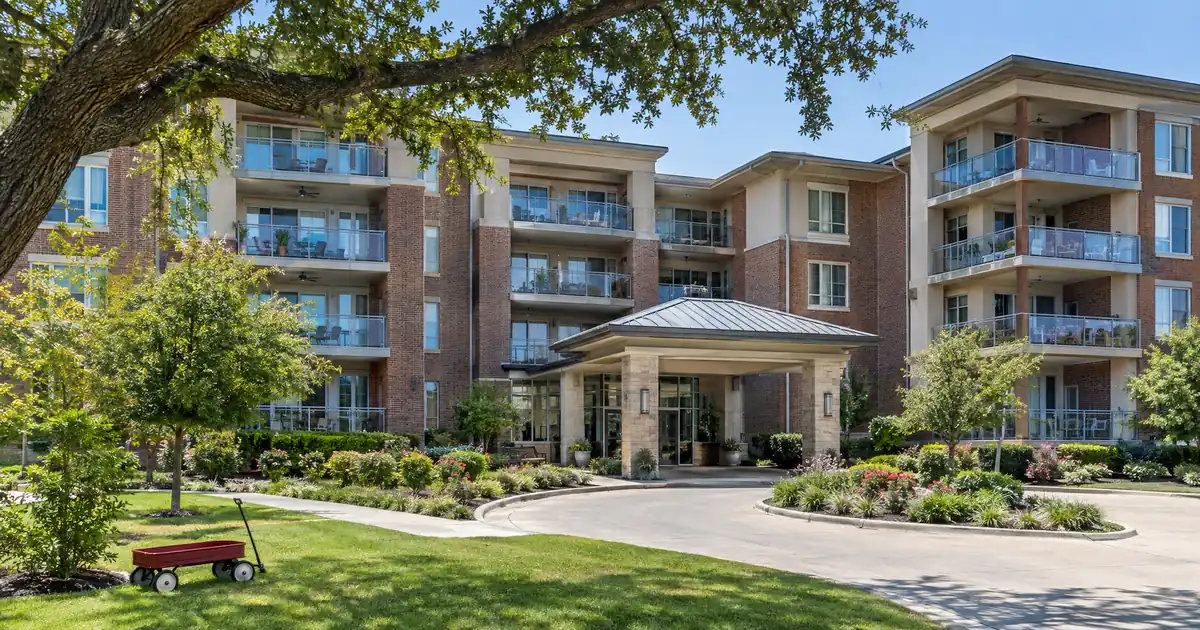
The Quick Read: Yes, a Texas condo can usually be financed on assets alone, as long as your balances either cover the whole loan or convert into enough monthly qualifying income, and the building passes the lender’s project review, which is a separate test from your own file. Your statements prove you can repay. The condo documents prove the collateral is sound. Both have to clear, subject to underwriting.
- Two paths exist. The asset qualifier path counts eligible assets against the full loan. The asset depletion path turns usable assets into monthly income.
- The building gets its own review. A strong borrower can still be turned down because of the project.
- Texas helps with paperwork. Sellers must hand over a resale certificate that discloses assessments and restrictions.
- Occupancy matters. A rental condo is allowed only on the depletion path, and at lower leverage.
This guide is for people with large balances and modest documented income. That includes retirees, business sellers, inheritance recipients, early-retired professionals, and households living on a portfolio. Each of them can look rich on a statement and thin on a pay stub.
Which Path Fits a Condo Buyer Living on Assets?
Choose the asset qualifier path if your eligible balances equal or exceed the entire loan amount. Choose the asset depletion path if your balances are large but smaller than the loan, because they can be turned into monthly income. A borrower is reviewed on one path at a time, never a blend of both.
Asset qualifier path. Here the assets cover the whole loan, and no employment or income is documented. Through select programs, leverage runs up to 80% on a purchase and 75% on a refinance, for a principal residence or second home. Loans run up to $4,000,000. The credit floor is 600, subject to underwriting.
Asset depletion path. Here the lender adds up usable assets after haircuts and divides by 60 months. The result is a monthly qualifying income. That income must carry the housing payment and your other debts through the debt-to-income test. Loan amounts run from $125,000 to $3,500,000. The lender’s own score and loan-size matrix sets the credit requirement.
The depletion path has one more entry bar. You need qualified assets of at least the lesser of $1,000,000 or 1.25 times the loan balance. If assets are your only income source, you also need at least $250,000 in liquid funds. These are the published figures, and every file is reviewed individually.
Both paths document your assets in full. Skipping income paperwork never means skipping paperwork. The lender reads your statements closely.
Two Tests: You and the Building
A condo loan faces two reviews. The first checks your assets, credit, and seasoning. The second checks the building: who owns the units, how it is run, whether it is financially healthy, and whether the lender will accept it as collateral. Most surprises come from the second test.
| Factor | Borrower test | Building test |
|---|---|---|
| What is reviewed | Assets, credit, statements | HOA finances, rules, ownership mix |
| Who supplies it | You | Association and seller |
| Typical failure | Assets not seasoned | Litigation or poor reserves |
| Can you fix it? | Often, by waiting | Only if the HOA cures the issue |
A weak building is not something your balances can offset. The lender cares about the collateral on its own terms.
Why Does a Condo Get Declined When the Borrower Is Strong?
Condos get declined for building-level reasons: too many investor-owned units, commercial space in the project, pending litigation, thin reserves, unfinished construction, or insurance gaps. None of these says anything about you. All of them can stop a file.
Here is how each one plays out.
- Investor concentration. When most units are rented rather than owner-occupied, some lenders get cautious. Others look past it.
- Mixed use. Ground-floor retail or office space can move a project into a narrower lane.
- Litigation. Pending lawsuits can push a project into non-warrantable territory. Acceptance varies by lender.
- Reserves. The HOA budget and reserve funding show whether a big repair would land on owners as a special assessment.
- Active construction or developer control. Projects still being built, or still run by the developer, are a common stopper.
- Wind and hail coverage. Texas master policies often carry percentage-based deductibles. A large storm loss can fall back on the association, then on owners. Lenders read that exposure carefully, especially on the coast and in hail-prone areas.
Special assessments matter to you directly. They raise your holding cost, and on the depletion path your dues already eat into the income the lender derived from your assets.
Warrantable vs. Non-Warrantable: What Should You Expect?
A warrantable condo meets the standard project tests used by the big agency lenders. A non-warrantable condo fails at least one. The label is a financing label, not a judgment on the unit. A non-warrantable building can still be a good place to live or rent.
Here is the practical picture from the wholesale network Lendmire works with. Warrantable condos move through standard asset-based programs most easily. Non-warrantable condos sometimes work, but it depends on the lender and the specific reason the project failed. Some programs add HOA documentation. Others lower leverage or change pricing. A few will not touch certain building types at all. Condotels and mandatory rental-pool projects are narrower still.
Agency standards also shift. The Community Associations Institute reports that Fannie Mae dropped its 50% investor-concentration limit for established projects and widened its review waiver for small projects. A building that failed that test before may pass it now. That is a useful reminder that the label can change. Agency rules still do not decide how a non-agency asset-based loan is underwritten.
What Documents Does a Texas Condo File Need?
You need two document sets: one for your assets and one for the building. The asset set proves the money exists and has been yours long enough. The building set shows the lender what it is taking as collateral.
Your assets.
- On the qualifier path: two months of statements for each qualifying account, with 60 days of seasoning.
- On the depletion path: statements at least 120 days old at application, plus the most recent statement within 45 days. Funds from the sale of a business, an inheritance, or a legal settlement are excused from that seasoning.
The building. Lenders typically ask for a condo questionnaire completed by the association, the budget and financial statements, the master insurance policy, the governing documents, meeting minutes, reserve information, and disclosures of litigation or special assessments. Many programs use a questionnaire modeled on the agency form. Associations often do not know their own warrantability status, so the questionnaire exists to find out.
Order the building documents early. The association controls that timeline, not you.
What Assets Count, and How Much?
Each account type counts at a set percentage of its balance. The percentages differ by path, so never mix the two lists.
| Asset | Qualifier path | Depletion path |
|---|---|---|
| Cash, savings, money market | 100% | 100% (cash accounts) |
| Certificates of deposit | 100% | 100% |
| Brokerage and securities | 100% | 80% |
| Private stock | Not published | 75% |
| 401(k) and IRA | 90% under 59½; 100% at 59½+ | 70% at any age |
| Real-estate equity | Not published | 60% |
On the depletion path, custodial accounts, deferred compensation, escrow accounts, foreign funds, cash on hand, stock options, and non-vested restricted stock units are not eligible. Cryptocurrency, precious metals, and collectibles are not published as eligible on either path. The documented route is to convert them into a seasoned cash balance in a regulated account, with the source reviewed by the lender. Pledged or borrowed funds do not count, and cash-out proceeds never count as qualifying assets.
A Worked Example: Where HOA Dues Show Up
Run the numbers on the depletion path with a modeled portfolio. These figures are illustrative, and the lender’s own calculation governs.
Say you hold $1,500,000 in securities and $300,000 in cash. Securities count at 80%, which is $1,200,000. Cash counts at 100%, which is $300,000. Usable assets total $1,500,000. Divide by 60 months and you get $25,000 of monthly qualifying income.
That income then has to carry the full housing payment and your other debts through the debt-to-income test. On a condo, the housing payment includes the HOA dues, taxes, and insurance. Dues are a fixed claim on that derived income from day one. A building with high dues, or one facing a special assessment, shrinks the room you have left.
Now the qualifier path. Say your loan is $800,000. You hold $330,000 in brokerage accounts (100% counts), $300,000 in a 401(k) while under 59½ (90% counts, or $270,000), and $200,000 in savings (100% counts). That adds up to $800,000 of usable assets, which equals the loan. You qualify on assets alone, and no income is documented. Dues still matter to your monthly budget, even though no income test runs.
Texas-Specific Condo Rules That Affect Your File
Texas gives condo buyers a strong disclosure package. The state’s condominium law, Chapter 82 of the Property Code, requires a selling owner to give the buyer the declaration, bylaws, rules, and a resale certificate. Section 82.157 says the certificate must be prepared no earlier than three months before delivery. It discloses assessments, unpaid amounts, and transfer restrictions.
The association must furnish the certificate after a written request. If it does not, the owner may give the buyer a sworn affidavit instead. That is a statutory obligation for the association, not a promise about how long your loan takes, since timing varies by file and lender.
A GoverningDocs summary of Texas condo rules adds two points. A condo buyer can cancel before the sixth day after receiving the certificate, and cannot be forced to close until the documents are delivered. It also notes that the separate Chapter 209 does not apply to condos, which matters if you are looking at a townhome or planned community, because those follow different rules.
Two more Texas points are easy to miss.
- No reserve mandate. HOA Weekly reports that neither Chapter 82 nor Chapter 209 requires a reserve study or reserve funding. Reserve adequacy is therefore a lender judgment, building by building. Do not assume a building is healthy because Texas has a condo statute.
- Older buildings. Chapter 82 governs declarations recorded on or after January 1, 1994. Older condos fall under Chapter 81, though some Chapter 82 sections also reach them. Read the declaration, because the rules that apply depend on when it was recorded.
Primary Home, Second Home, or Rental Condo?
Occupancy decides which path you can use. The asset qualifier path is for principal residences and second homes. A condo you plan to rent out requires the depletion path, at lower leverage.
| Occupancy | Qualifier path | Depletion path |
|---|---|---|
| Principal residence | Yes: 80% purchase, 75% refi | Yes: 80% purchase/rate-term, 60% cash-out |
| Second home | Yes: same as above | Yes: same as above |
| Investment condo | Not available | 65% purchase/rate-term, 60% cash-out |
All figures are ceilings through select programs, subject to underwriting. On the qualifier path, cash-out terms are set by the lender and not published.
Rental condos carry an extra hurdle that no loan structure can fix. If the HOA bans leasing, or limits terms to something other than your plan, the plan is dead. Warrantability is a financing test. Rental permission comes from the declaration. Read it before you make an offer. That includes short-term rentals, because short-term rental rules can vary by city, county, HOA, and property type, so investors should confirm local rules before relying on projected rental income.
If the condo is a pure rental and you would rather qualify on what it earns than on your balances, a different tool fits. Business-purpose rental financing is DSCR, which qualifies primarily on property-level rental income covering the payment, subject to lender guidelines. Lendmire’s complete DSCR loans guide explains how that works. Many investors with big portfolios still prefer the asset route for a personal-use condo and DSCR for the rentals.
Key Terms Defined
Warrantable condo: A project that passes the standard tests lenders use for building ownership mix, finances, and legal status.
Non-warrantable condo: A project that fails at least one of those tests. The unit may be perfectly rentable. The label describes financing only.
Resale certificate: The Texas disclosure document from the association listing assessments, unpaid amounts, and transfer restrictions.
Condo questionnaire: A form the HOA completes so the lender can review the project’s finances, ownership, and legal status.
Seasoning: The time your funds must sit in an account before they count toward qualifying.
Asset depletion: Dividing usable assets by 60 months to create monthly qualifying income.
Condotel: A condo building run partly like a hotel. These sit in narrower lender lanes.
When Another Loan Fits Better
An asset-based mortgage is a tool for a particular borrower. It is not always the most affordable or the simplest route. Consider the alternatives.
- Bank statement program. This is for self-employed borrowers who document income through deposits. If you run a business with steady deposits, it may fit better.
- Conventional or full-documentation jumbo loan. If your pay stubs and traditional personal-income documentation shows strong income, that route may be cleaner. Those are the rules of those programs, not of this one.
- DSCR. If the condo is a rental and its rent covers the payment, DSCR looks at the property rather than your balances.
Asset-based makes the most sense when your balances are large and your documented income is small or irregular. Any other profile deserves a side-by-side comparison.
How to Start, Step by Step
1. Read the declaration first. Confirm rentals are allowed if that is your plan.
2. Identify the building type. Ask whether it is a standard condo, a non-warrantable condo, or a condotel.
3. Request the resale certificate and HOA questionnaire. Texas law backs your request.
4. Pick your path. Do your usable assets cover the loan, or do they become income?
5. Check seasoning. Confirm your statements meet the age requirements for that path.
6. Run the dues into the math. Count HOA dues inside the housing payment when you test the debt-to-income ratio.
7. Ask for a comparison. Different lenders in a network treat the same building differently.
Frequently Asked Questions
Can I buy a Texas condo with assets and no employment income?
Yes, through select programs, subject to underwriting. On the asset qualifier path your eligible assets must equal or exceed the entire loan, and no employment or income is documented. On the depletion path your assets become qualifying income. Either way, your statements are fully documented, and the building still has to pass review.
Is a non-warrantable condo eligible?
Sometimes. It depends on the lender and on why the project failed. Some programs lend on non-warrantable condos with extra HOA documentation or adjusted leverage. Others will not. A building’s status can also change if the association cures the failing item and a new project review is done.
Do HOA dues count against me?
Yes. Dues sit inside the housing payment. On the depletion path, they use up part of the monthly income derived from your assets. On the qualifier path, no income test runs, but dues still count toward your carrying cost. A pending special assessment is worth asking about before you sign.
Do retirement accounts count toward qualifying?
Yes, at a percentage. On the qualifier path, a 401(k) or IRA counts at 90% if you are under 59½ and 100% at 59½ or older. On the depletion path, retirement accounts count at 70% at any age. Seasoning and statement rules still apply.
Can I buy a Texas condo as a rental using this program?
Only on the depletion path, with leverage up to 65% on a purchase or rate-and-term refinance and 60% on a cash-out. A first-time investor on that path needs a 700 credit score. If the HOA restricts leasing, no loan fixes that, so check the declaration. Each figure is subject to lender guidelines and a complete review of property type, leverage, and credit.
If You Are Qualifying on Assets Rather Than Income
If you are qualifying on assets rather than income and want to see how the numbers work, Lendmire can help you compare asset-based mortgage options based on your statements, the property, credit profile, leverage, and your goals. Lendmire is a mortgage broker, so it arranges financing through select lenders in its network. Consumer mortgage lending is available in 16 states, including Texas. Program details change, and every file is underwritten individually.
Condo financing in Texas rarely turns on the unit itself. It turns on the building’s paperwork, and the buyer who reads the resale certificate before the loan officer asks for it is usually the one who gets to the table first.
Lendmire’s asset-based mortgage in Texas page presents the program for Texas borrowers.
About Lendmire
Lendmire is a mortgage brokerage (NMLS# 2371349) licensed for consumer mortgage lending in 16 states, arranging bank statement and other alternative-documentation mortgages — P&L-only, 1099-only and asset-based paths — through a wholesale lending network. Eligibility is determined by the lender on each file. Scotsman Guide named Lendmire a Top Mortgage Workplace in both 2025 and 2026.
Get Started
Ready to find the right loan for you?
In about 30 seconds you can review financing options available for your home or investment property. No commitment required.
Informational only. Not a Loan Estimate, approval, or commitment to lend. Program availability and eligibility are subject to lender guidelines, credit approval, property review, and underwriting.
References
1. Community Associations Institute – Fannie Mae and Freddie Mac condo update
2. Justia – Texas Property Code §82.157
3. GoverningDocs – Texas HOA Laws
4. HOA Weekly – Texas reserve studies
This article is part of Lendmire’s asset-based mortgage program — full qualification details, guidelines, and scenarios live on the program page.
Related reading: Does a Securities-Backed Line of Credit Hurt Your Asset-Based Mortgage Application? · Can You Get an Asset Depletion Mortgage After a Foreclosure or Short Sale? · Is an Asset-Based Mortgage Reported to Credit Bureaus Like Any Other Mortgage?
Guides: Asset-Based Mortgage in Texas
Brandon Miller
Founder & CEO, Mortgage Loan Originator, Lendmire LLC
- Mortgage Loan Originator · NMLS# 1129696 · Verify on NMLS Consumer Access
- North Carolina Real Estate Broker · License# 343312 · Verify on NCREC
- North Carolina Insurance Producer · License# 19053198 · Property, Casualty, Life, Health · Verify on NAIC SBS
- Lendmire LLC · Firm NMLS# 2371349 · Verify firm licensure
Legal disclosures. Lendmire (NMLS# 2371349) is a state-licensed mortgage brokerage that arranges financing through wholesale lender relationships. Lendmire is not a direct lender, depository institution, or registered financial advisor. The discussion above is general informational content about real estate financing — it is not financial, legal, or tax advice, and readers should consult licensed professionals for guidance on their individual circumstances. Loan inquiries are subject to lender underwriting; this article does not represent a commitment to lend. Loan terms, rates, and qualification standards vary by borrower, property, and state, and are subject to change at any time. Equal Housing Opportunity. NMLS Consumer Access: nmlsconsumeraccess.org.