
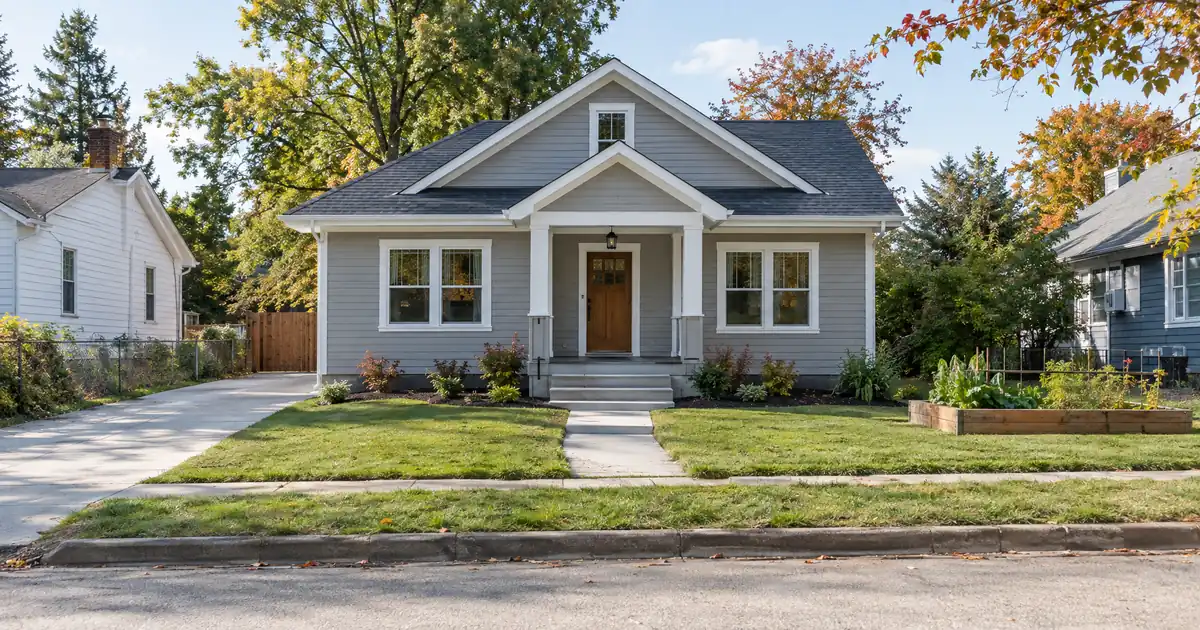
The Quick Read: No, no law says a hard money loan must go to an LLC, but many lenders require or prefer one as their own program rule, and others lend to individuals on investment properties. Which rule applies depends on the lender, the property, and your experience.
- The LLC is a lender policy, not a legal requirement, so the answer changes from lender to lender.
- Even when an LLC takes title, the lender usually asks the owners for a personal guarantee and reviews their credit and track record.
- An LLC cannot turn a home you plan to live in into an investment loan.
- Decide how title will be held before you sign the purchase contract, not after closing.
- Many investors later refinance out of hard money into long-term rental financing, and vesting should work for that exit too.
Why Do Some Lenders Insist on an LLC?
Lenders ask for an entity because it makes the loan cleanly a business loan. Hard money is for non-owner-occupied investment property. Because these are business-purpose investor loans, they are reviewed differently from a standard owner-occupied mortgage. A borrower named as an LLC removes most doubt about what the money is for.
What this loan actually costs to carry.
Hard money is sized against the project and priced by time. Enter the deal and see how much the program will lend, the cash required at closing, the carry while you hold it, and what is left at the exit.
Leverage tiers on the current program: 85% with fewer than 2, 90% with 2 or more, 93% with 5 or more completed projects — every tier capped at 75% of after-repair value. Loan amounts up to $5,000,000, larger by exception; terms of 6 to 18 months, interest-only, no prepayment penalty. The rehab portion funds in draws against completed work, not at closing.
Program parameters shown update from Lendmire’s centralized guideline source. Rate, points, and months are editable assumptions, not quoted terms.
Cost cap sets the loan · positive spread
Illustrative estimate only — not a quote, Loan Estimate, approval, or commitment to lend. Rate, points, and months are editable assumptions. Hard money is business-purpose financing for real estate investors, not a consumer mortgage. Leverage on the current program tops out at 93% of project cost for investors with a documented track record, capped at 75% of after-repair value, with rehab funding up to 100% of the documented budget released in draws; actual terms vary by lender, borrower experience, property, and exit. Lendmire is a mortgage broker, not a lender.
The entity also helps the lender in practical ways. The lender can see the ownership, the people who can sign, and the person standing behind the debt. Some lenders simply built their program around entities years ago and never changed it.
That is why you will hear conflicting answers. One lender tells a new investor it only lends to LLCs. Another lender says individuals are fine. Both are describing real policies. Neither is describing a law.
Across the lenders in Lendmire’s wholesale network, the pattern is mixed. Many prefer an entity on title. Others lend to individuals, trusts, or partnerships when the property and plan are clearly investment. A few get more careful with individuals on a first deal, because a new borrower with no entity and no track record gives them less to lean on.
What Does the LLC Do for You, and What Doesn’t It Do?
An LLC separates the property from your personal assets. If a tenant sues over the building, the claim is aimed at the entity first. Practitioners also like it for keeping the property out of a co-owner’s personal liens and judgments.
It does not make you personally safe from the loan. Hard money lenders almost always want a personal guarantee. That means you promise to repay if the LLC does not. The guarantee is a separate document from the deed, and it follows you.
The guarantee is also why the LLC itself carries little weight. A new LLC has no credit history. The lender underwrites the people behind it: their credit, their experience, and their ability to finish the project and exit.
Across Lendmire’s network, hard money underwriting stays asset-based. The lender cares most about the property, the plan, and the exit. Credit still matters. A 620 score is typically the minimum, with extra conditions below 660, though that varies by lender, property, and experience. A first-time investor can qualify at the lower leverage tiers.
Investors disagree on how much the LLC is worth. Some say a good insurance policy and an umbrella policy protect them more than an entity does. Others have paid heavily for skipping one. A fair reading is that the LLC is one layer of protection, not the whole wall.
How Do the Borrower Structures Compare?
Title, borrower, signer, and guarantor are four different roles. One person can hold all four, or the roles can be split. Lenders want to see them lined up on the application and in the documents.
| Structure | Who holds title | Who guarantees | Typical lender view |
|---|---|---|---|
| Individual | You personally | You | Accepted by some lenders |
| Single-member LLC | The LLC | You, personally | Widely accepted |
| Multi-member LLC | The LLC | Usually each owner | Accepted, more paperwork |
| Trust | The trustee | Varies | Case by case |
| Co-owners, no entity | Both names | Both people | Fewer lenders, more friction |
Lender views differ, so use this table as a map of the roles, not a promise of how any lender will treat a file. Subject to lender program eligibility, an LLC with several members will usually need every member to sign the operating agreement and may need each owner to guarantee.
When Will a Lender Close in Your Personal Name?
Some will, and the cases are fairly predictable. A lender may take an individual when the contract is already signed in your name and changing it would put the deal at risk. A lender may also take an individual when the borrower has a solid track record and the property is clearly an investment. Lenders often handle these cases one file at a time.
Individuals sometimes get an easier first deal, because there is one less set of documents to review. Some investors report that loans to individuals are simpler to find on a first purchase. That is an opinion, not a rule, and nobody should expect a price difference either way.
The practical test is what the lender’s program says. Ask the first call question directly: “Do you lend to individuals on non-owner-occupied 1-4 unit properties?” A clear yes or no saves you from forming an entity you may not need, or from losing a contract date because you did not form one.
Lendmire is a broker arranging financing through select lenders in its wholesale network across 41 markets, including Washington, D.C. That lets a file be matched to a lender whose entity rules fit the borrower, instead of forcing the borrower to fit one lender’s rules.
Does an LLC Fix an Owner-Occupied Deal?
No. The loan is treated by its real purpose, not by the name on the deed. A borrower who plans to live in the property cannot solve that by forming an entity. Hard money in Lendmire’s network is for non-owner-occupied residential property of one to four units, with ground-up construction to ten units, and nothing on that list is a primary residence.
There is a legal reason behind this, and it matters mainly at the edges. Federal consumer-credit rules exempt credit extended primarily for business purposes. The Federal Reserve’s guidance on those rules says credit to acquire or improve a rental property that is not owner-occupied is treated as business-purpose credit. That exemption follows the purpose of the loan. It does not depend on the borrower being an LLC.
That is also why the claim that a federal law forces investors into LLCs is wrong. Lenders choose an entity to keep the loan clearly on the business side. A loan to an individual for a true investment can sit on that side as well.
The edge cases come with owner occupancy. Compliance Alliance explains that the loan’s purpose controls over the collateral. It also explains that when an owner lives in a rental property, the business-purpose test gets stricter. Credit to buy an owner-occupied rental counts as business purpose only above two units. Credit to improve it counts only above four units.
For you, the message is simple. Do not use an entity as a costume. The stated purpose, the occupancy, and the real plan have to match.
How Do You Set Up the Entity Correctly?
Set up the entity before you sign the purchase contract, and put the contract in the entity’s name. Closing in your own name and deeding the property to an LLC afterward is the pattern that causes trouble. The entity path works best when it is planned first.
Here is the order that tends to work:
1. Ask the lender first. Confirm that it lends to entities, to individuals, or to both on your property type.
2. Form the LLC in the right state. If the LLC was formed in a different state from the property, it generally has to register to do business in the property’s state before it can take title.
3. Get an EIN and open a business bank account. Keep deal money in the entity’s account so the paper trail is clean.
4. Sign a full operating agreement. The lender typically wants the articles of organization and an operating agreement signed by all members.
5. Match everything. Names, ownership percentages, and signers should be the same on the application, the documents, and the contract.
6. Put the LLC on the contract. Do this before the deal is signed, not afterward.
Most “LLC problems” are really entity defects. A missing or unsigned operating agreement is the usual one. Others are a signer who is not listed as a member, ownership percentages that do not match the application, an entity that is not in good standing, and no EIN. Each one is fixable, but each one can delay a file past a contract deadline.
Layered ownership works too. If a holding company owns part of the borrowing LLC, the lender will look through it to the real people. Expect to supply documents for each layer. A two-partner deal needs the same discipline: both partners named as members, both on the operating agreement, and both underwritten as guarantors if the lender requires it.
What About Moving Title After You Buy?
Be careful. If you buy in your own name with a loan and then move the property into an LLC, the lender may treat that as a transfer. Most loan documents include a due-on-sale clause, which lets the lender demand full repayment when the property changes hands. Some investors cite a federal exception for certain transfers into trusts, but the loan documents can still treat any conveyance as a transfer. Opinions differ on how often lenders enforce the clause, and the risk exists either way.
Do not treat that as a reason to panic. Treat it as a reason to plan. If you want the property in an LLC eventually, ask the lender before closing whether a transfer is allowed, and have an attorney review the answer.
The same timing logic applies at your exit. A hard money loan runs on a short interest-only term, typically six to eighteen months, with no prepayment penalty. There are no multi-year options on the current program, so investors who need longer runway refinance into long-term rental financing. Many investors refinance out of hard money into long-term DSCR investor loans once the property is stabilized, and Lendmire brokers that path. Think about that exit now. If the entity is already on title, the refinance does not need a transfer that adds title work and cost.
For the longer view, Lendmire’s complete DSCR loans guide covers how the rental-loan side works. If your plan is a rental hold, Lendmire’s piece How to Time Draws on a BRRRR Hold Financed With Hard Money shows how the project stages fit together. If you are still deciding whether to hold or sell, the piece How to Run the Hold-or-Sell Decision on a Flip Before Hard Money Matures covers that call.
Two Hypothetical Investors
Picture a solo investor with two completed projects who finds a rehab. The lender she talks to only takes entities. She forms a single-member LLC in the property’s state, gets an EIN, and signs the operating agreement. She puts the LLC on the purchase contract and signs a personal guarantee at closing. The leverage on such a file can reach 90% of project cost at two or more completed projects, always capped at 75% of after-repair value, and varies by lender, property, and experience.
Now consider two partners buying a duplex. They want to share ownership but disagree on who should be named. The cleanest answer is a multi-member LLC with a signed operating agreement. Both are listed as members, both are on the application, and the lender may require both to guarantee. If one partner has weak credit, the lender can weigh the stronger partner’s file, but the weaker partner’s score still gets reviewed.
The point of both examples is the sequence. Entity first, contract second, loan third.
What Leverage Should You Expect?
The entity question sits beside the leverage question, because a borrower’s experience drives both. The figures below are typical ranges across the select lenders in Lendmire’s network, and they vary by lender, property, and experience. Nothing here is a commitment to lend.
- Fix-and-flip: up to 93% of project cost at five or more completed projects, up to 90% of project cost at two or more, and 85% with fewer than two. Every tier is capped at 75% of after-repair value.
- Bridge purchase without rehab: up to 80% of purchase price.
- Cash-out and rate-and-term refinance: up to 65% of value.
- Rehab budget: up to 100% of the rehab budget funds in draws against completed work. That is a budget figure, not a purchase loan-to-value.
- Loan size: up to $5,000,000, with larger by exception.
The top tier is reserved for experienced investors. No program offers a true 100% purchase loan.
A Decision Checklist: LLC or Not?
Use these questions before you talk to lenders:
- Is the property non-owner-occupied, one to four units, and a true investment?
- Does the lender you want take individuals, entities, or both?
- Will you buy more than one property? An entity set up once can be reused.
- Do you have a partner, or will you add one? A multi-member entity should be set up from the start.
- Which state is the property in, and is the LLC registered there?
- What is your exit? If it is a refinance into rental financing, how will title be held?
- Have you asked an attorney and a tax professional about your own situation?
If most answers point to an entity, form it first. If the lender takes individuals and the deal is time-sensitive, a personal-name loan can be reasonable for a first project. Many investors find the first deal easier with fewer documents, then form an entity for later deals. Others argue the opposite, since moving title later is the risky part. This is a genuine toss-up, and the right call depends on the lender’s rules and your plan.
Key Terms Defined
Vesting: the name or names in which title to the property is held.
Personal guarantee: your signed promise to repay the loan personally if the borrowing entity does not.
Operating agreement: the document that sets out who owns an LLC, who runs it, and who can sign for it.
Due-on-sale clause: a loan term that lets the lender demand full repayment if the property is transferred.
Foreign qualification: registering an LLC to do business in a state other than the one where it was formed.
Loan-to-cost: the loan amount measured against the total project cost, such as purchase plus rehab, instead of against value alone.
Not Legal or Tax Advice
This article is general information, not legal or tax advice. Entity choice, title transfers, and liability protection depend on your state, your lender’s documents, and your own facts, so consult a qualified attorney or CPA before relying on any of it. Tax treatment varies; consult a qualified professional.
If you are buying, rehabbing or refinancing an investment property on a short timeline and want to see how the numbers work, Lendmire can help you compare hard money options based on the project, the exit plan, leverage, and your goals.
Frequently Asked Questions
Is it legal to get a hard money loan without an LLC?
Yes. No federal or state rule says an investor must borrow through an entity. The decision is the lender’s. Many lenders prefer an LLC, but others lend to individuals on non-owner-occupied investment properties. Eligibility still depends on the property, your credit, your experience, and the lender’s guidelines.
Do I still sign personally if my LLC is the borrower?
Usually, yes. An LLC with no credit history of its own gives the lender little to rely on, so the lender looks to the owners. Expect a personal guarantee and a review of your credit and experience. The LLC protects you from some claims against the property, but it does not remove your responsibility for the loan.
Can I deed the property to an LLC after closing?
It is risky. A transfer may trigger the due-on-sale clause, which lets the lender call the loan. Opinions differ on how often lenders enforce it. Ask the lender before you close, and have an attorney review the loan documents. Forming the entity before the contract avoids the question.
Does an out-of-state LLC work?
Often it can, but the LLC generally has to register to do business in the state where the property sits before it can take title. Skipping that step is a common reason a file stalls. Ask the lender what proof of registration and good standing it wants.
Can I use hard money for a home I will live in?
No. Hard money in Lendmire’s network is for non-owner-occupied investment property, and owner-occupied homes are not offered. Putting an owner-occupied purchase in an LLC does not change what the loan is for. The stated purpose has to match how you will really use the property.
About Lendmire
Lendmire, NMLS# 2371349, is a non-QM mortgage broker serving real estate investors in 41 markets, including Washington, D.C., through DSCR investor loan programs. Qualification is generally reviewed around the subject property’s rental income, not the borrower’s W-2 history — a practical fit for LLC-titled portfolios and self-employed investors. All scenarios remain subject to lender review and program guidelines. Two consecutive Scotsman Guide Top Mortgage Workplace recognitions (2025, 2026).
Get Started
Ready to find the right loan for you?
In about 30 seconds you can review financing options available for your investment property. No commitment required.
Informational only. Not a Loan Estimate, approval, or commitment to lend. Program availability and eligibility are subject to lender guidelines, credit approval, property review, and underwriting.
References
1. Federal Reserve – Reg Z coverage guidance
2. Compliance Alliance – Regulation Z and “Investment” Properties
This article is part of Lendmire’s hard money loan program — full qualification details, guidelines, and scenarios live on the program page.
Related reading: How a Lender Reads a Seller-Carried Note on a Hard Money Loan · Can You Add or Remove a Name From Title on a Super Jumbo DSCR Loan? · Hard Money Loan Requirements to Exit Seller Financing or Subject-to
Brandon Miller
Founder & CEO, Mortgage Loan Originator, Lendmire LLC
- Mortgage Loan Originator · NMLS# 1129696 · Verify on NMLS Consumer Access
- North Carolina Real Estate Broker · License# 343312 · Verify on NCREC
- North Carolina Insurance Producer · License# 19053198 · Property, Casualty, Life, Health · Verify on NAIC SBS
- Lendmire LLC · Firm NMLS# 2371349 · Verify firm licensure
Important disclosures. Lendmire (NMLS# 2371349) is a licensed mortgage brokerage. Lendmire is not a direct lender, depository institution, or financial advisor. All loan inquiries are subject to lender underwriting; this article does not constitute a commitment to lend. Rates, terms, and program guidelines are subject to change without notice and vary by borrower profile, property type, and state. Information in this article is general in nature and is not financial, legal, or tax advice. Equal Housing Opportunity. NMLS Consumer Access: nmlsconsumeraccess.org.