
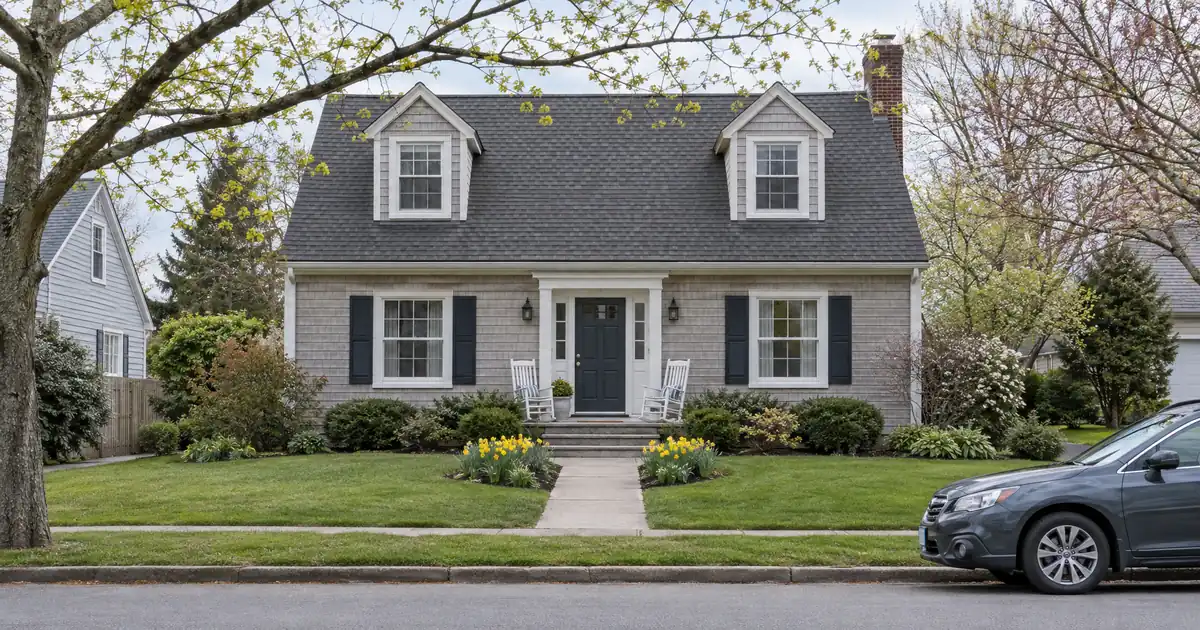
The Quick Read: Rideshare and delivery drivers count as self-employed, so a lender reviews your file on documented income under the applicable program. For a home you will live in, that usually means twelve months of bank statements. For a rental you will not occupy, the loan is reviewed primarily on property-level rental income covering the payment, subject to lender guidelines. Which path fits depends on how you plan to use the property.
- Drivers are self-employed. Underwriting looks at income after expenses, not gross app payments.
- A bank statement loan on a primary residence can reach up to 90% LTV on a purchase or rate-term refinance through select lenders.
- On a cash-out refinance, the ceiling drops: up to 80% on a primary residence, up to 75% on a second home, and around 75% on an investment property.
- A DSCR loan on a rental looks at the property’s rent, not your driving income.
- Expect reserves of around six months of the housing payment, and loan sizes from roughly $125,000 to $3,500,000. Every figure here varies by lender and program — guidelines, property type, leverage, and credit profile all apply.
Plenty of drivers clear six figures in deposits and still get a puzzled look from a big bank. The paperwork is the problem, not the income. This guide walks through how underwriting treats gig income, which structures exist, where the rules break, and how to pick a route.
What your deposits qualify you for.
Alt-doc programs read 12 months of business or personal bank deposits instead of tax returns. Enter your average monthly deposits and see the income a lender would credit you.
The expense factor is set by the lender from your business type and profit-and-loss statement; it is not a number you choose. This widget quotes no rate and no payment.
Program parameters shown update from Lendmire’s centralized guideline source.
Estimate
Illustrative estimate only — not a quote, Loan Estimate, approval, or commitment to lend. Deposit average, expense factor, and housing ratio are editable assumptions; the expense factor a lender applies is set from your business type and documentation. No interest rate or monthly payment is quoted here. Purchase capacity is a simplified illustration and does not account for taxes, insurance, HOA dues, or other debts. Alt-doc income documentation is available on consumer mortgages in the states where Lendmire is licensed for consumer lending; actual terms vary by lender, borrower, and property.
Key Terms Defined
Schedule C is the tax form a self-employed person files to report business income and deduct business expenses. Drivers file one for their gig work.
1099-K is a platform’s report of the gross payments customers made through it. It shows what passed through, not what you kept.
Bank statement loan is a mortgage that is reviewed around deposits in your bank accounts instead of tax-return income. It is one type of non-QM loan, meaning a mortgage that sits outside the standard conventional box.
Deposit averaging means the lender adds up qualifying deposits over the statement period and divides by the number of months. An expense factor is then applied to estimate your usable income.
LTV (loan-to-value) is the loan amount divided by the property’s value. A higher LTV means a smaller down payment.
Reserves are liquid funds you hold after closing, measured in months of the housing payment.
DSCR (debt service coverage ratio) is monthly rent divided by the full monthly debt obligation: principal, interest, taxes, insurance, and any HOA dues. A DSCR loan is built for rental property.
Business-purpose loan is credit taken to buy, improve, or maintain a rental you do not live in. These investor loans are reviewed differently from owner-occupied mortgages.
How Do Lenders Classify a Rideshare or Delivery Driver?
Lenders classify you as self-employed. The platform sends a 1099 form and you report earnings on Schedule C, which is the standard treatment for gig work, as Quarterly1099’s rideshare tax guide explains.
That label sets the whole file. A salaried borrower hands over a pay stub. You hand over proof that the business produces steady money after its costs.
Working several apps does not change the label. A driver on Uber, Lyft, and DoorDash typically files one Schedule C when the activities are related. The lender sees one self-employed business with several payout streams.
What Do Lenders Actually Evaluate?
Lenders evaluate five things: documented income, credit, savings and reserves, the property, and your leverage. Drivers usually fail on the first one only because of how income gets measured. The rest look like any other borrower’s file.
| Factor | What the lender checks | How it shows up for a driver |
|---|---|---|
| Income | Deposits or net profit | Payout deposits, platform summaries |
| Credit | Score and history | Same as any borrower |
| Reserves | Liquid funds after closing | Savings, often around six months |
| Property | Value and use | Home, second home, or rental |
| Leverage | LTV for the transaction | Varies by occupancy and purpose |
Across Lendmire’s wholesale network, the strongest leverage goes to files with clean statements, solid credit, and real reserves. Weak spots get priced or capped, not always declined.
Why Does a Driver’s Tax Return Look Weaker Than Real Income?
A conventional underwriter typically qualifies self-employed drivers on the net profit shown on their tax return, after deductions, which can cut qualifying income sharply below what actually moved through your account.
The mileage deduction is the main culprit. The IRS standard mileage rates page lists 72.5 cents per mile for the year. Drive tens of thousands of business miles and the deduction is large. It also is not a cash cost in the same way, so your bank balance never reflected it.
The 1099-K creates the opposite distortion. It reports gross customer payments, not what you earned, and platform fees are deductible on Schedule C. A big 1099-K number therefore overstates your income. A small Schedule C profit understates your cash flow. Neither is the figure a bank statement lender wants.
Here is the walk from app money to a conventional coverage figure:
| Step | What happens |
|---|---|
| Gross payments | Everything customers paid through the app |
| Platform fees | Deducted on Schedule C |
| Vehicle costs and mileage | Often the largest deduction |
| Other expenses | Phone, tolls, supplies |
| Net profit | The figure a conventional underwriter uses |
Legitimate write-offs are good tax planning. They just make the conventional route harder. A bank statement lender or a DSCR lender reads you differently, which the next sections cover.
What Does the Conventional Route Demand?
The conventional route demands the full paper trail: two years of traditional personal-income documentation, 1099s, a year-to-date earnings statement or contracts, and platform income reports, adding up to a 24-month income history, according to Opendoor’s proof-of-income explainer. Opendoor is a general consumer source, so read it as context.
If your returns show strong net profit, this path can work and is worth a look. Many drivers with heavy mileage deductions find the net number too thin. That is where alternative documentation comes in. Lendmire’s piece How Many Years of Tax Returns Does a Self-Employed Mortgage Need? covers the history question in detail.
How Does a Bank Statement Loan Work for a Driver?
A bank statement loan is reviewed around twelve months of bank statements, business or personal, instead of traditional personal-income documentation. The lender averages your qualifying deposits and applies its own expense factor to estimate income. That factor differs by lender, so no universal formula exists and none should be promised.
For a primary residence, select lenders in the network go up to 90% LTV on a purchase or rate-term refinance. The top of that range goes to stronger files. Another route is asset depletion, which is reviewed against liquid assets and runs to about 80% LTV on a primary residence. Loan sizes typically run from roughly $125,000 to $3,500,000, and reserves commonly sit around six months of the housing payment.
Cash-out has its own ceilings. On a primary residence, cash-out typically tops out at 80% LTV with a fixed expense ratio, or 75% when an accountant prepares the ratio. On a second home, it runs up to 75% depending on loan size and credit. On an investment property, cash-out tops out around 75%. Do not carry the 90% purchase number into a cash-out conversation. Different transaction, different ceiling.
Term length follows each lender’s program sheet. Do not assume extended or interest-only structures carry over from the investor side. Review details, expense factors, and overlays vary by lender.
Deposit hygiene that helps the file
Lenders read deposits line by line, so tidy accounts make a difference.
1. Run your platform payouts into one dedicated account.
2. Keep personal and business spending reasonably separate.
3. Label transfers between your own accounts, so they are not counted as income.
4. Document any large one-time deposit with a paper trail.
5. Track tips and cash that actually reach your account; unrecorded cash cannot be counted.
When a Driver Buys a Rental: Where DSCR Fits
A driver buying a rental can sidestep the income debate entirely. DSCR loans are designed for non-owner-occupied investment properties. Because they are business-purpose investor loans, they are reviewed differently from a standard owner-occupied mortgage, and the CFPB’s Regulation Z text deems credit to acquire or maintain non-owner-occupied rental property a business purpose.
In practice, the question shifts from how much you earn driving to whether the rent covers the payment. The loan is reviewed primarily on property-level rental income covering the payment, subject to lender guidelines. Credit, assets, and reserves still count. A credit report is pulled, and appraisal and entity paperwork still apply. What changes is that your 1099s, Schedule C, and mileage log are not the deciding documents.
Many programs are built around a coverage ratio of 1.00, where rent matches the full monthly obligation. Programs below 1.00 are available through select lenders in the network, though LTV and terms adjust. Investment purchase leverage on bank-statement documentation varies by lender, so investor-focused leverage questions belong on the DSCR side. Lendmire’s complete DSCR loans guide lays out the rental-side details.
For a purchase, the rent figure comes from the appraiser. Form 1007 is the rent schedule for a single-family home. Form 1025 is the income report for a small residential income property. That means a driver with zero landlord history can still qualify on the property’s numbers.
Driving income that swings from month to month also stops being the swing factor. Closing in an LLC is possible, subject to lender program eligibility.
Where the General Rule Breaks
The clean split between homes and rentals has edge cases. These are the ones that trip drivers up.
You will live in part of it. A house the owner occupies for part of the year is owner-occupied. The rental treatment does not apply, as Compliance Alliance’s note on investment properties points out. Small multifamily is a facts-and-circumstances call, driven by occupancy and unit count. A duplex where you live in one side belongs on the owner-occupied path, so a bank statement loan is the likelier fit.
Occupancy decides the disclosure regime. An owner-occupied file, meaning a primary residence or second home, is a consumer mortgage, so TRID disclosures apply. A bank statement loan on a non-owner-occupied rental, including a short-term rental, is business-purpose and exempt from TRID. Know which one your property is before you shop.
Short or uneven history. Lenders that average deposits are watching for a stable or rising trend. A sharp drop in recent months can weigh on the file. A short history may need explanation, and some programs are stricter than others. A few lenders in the network are flexible, while others set tighter overlays.
Several platforms. Multiple payout streams are fine if they land in an account the lender can read. Scattered accounts make the file harder to review, not harder to qualify on paper.
No formal business. Many drivers are sole proprietors with no LLC or license. The statements and platform summaries become your proof the business exists.
Which Documentation Route Fits You?
Match the route to the property and to what your returns show.
| Route | Best fit | What it relies on |
|---|---|---|
| Conventional | Strong net profit on returns | Traditional personal-income documentation, 1099s |
| Bank statement | Buying your own home | 12 months of deposits |
| Asset depletion | Large liquid balances | Verified assets |
| DSCR | Rental you will not occupy | Property rent, credit, reserves |
A short rule of thumb. If your returns show strong net profit, ask about conventional first. If deductions shrink your returns, a bank statement loan fits a home you will live in. If you are buying a rental, DSCR keeps the decision on the property. Tax treatment can depend on how the funds are used and how the property is held; borrowers should keep clear records and speak with a qualified tax professional before relying on any deduction.
Picture a driver with heavy mileage write-offs who wants a duplex to live in. A bank statement loan, with leverage governed by occupancy and credit, is the natural direction. Now picture the same driver buying a rental across town. The rent coverage carries that file.
What Delays or Sinks a Driver’s File?
Most problems are fixable before you apply.
- Messy deposits. Payouts scattered across accounts, or unexplained large deposits, slow review.
- Thin reserves. Around six months of the housing payment is common, and the stronger the leverage you want, the more it matters.
- Declining deposits. A falling trend can reduce usable income.
- Mixed-up occupancy. Applying under the wrong program for how you will use the property wastes everyone’s time.
- Low credit. Score affects both eligibility and how much leverage you can get.
Are You Ready? A Quick Checklist
- You can produce twelve clean months of statements from one or two accounts.
- You know whether the property is a home, a second home, or a rental.
- Your reserves cover roughly six months of the housing payment.
- You can explain any gap or dip in deposits.
- You have credit in order.
- You know the loan size falls in a typical program range.
Miss two or three? Fix those first. Application timing is a lever you control.
Frequently Asked Questions
Can I get a mortgage as an Uber or DoorDash driver?
Yes, though the path depends on the property. For a home you will live in, a bank statement loan is reviewed around documented income under the applicable program, subject to lender guidelines. For a rental, a DSCR loan looks at the property’s rent. Conventional loans are also possible if your traditional income documentation shows strong net profit.
Do tips and cash count as income?
Only if they show up in your documentation. Tips paid through the app land in your payouts and count like any other deposit. Cash that never reaches your account cannot be verified, so a lender cannot count it.
Do mileage deductions hurt my chances?
They hurt conventional approval, because underwriters use net profit after the deduction. A bank statement loan reads deposits, so the mileage write-off matters less. On a DSCR loan for a rental, personal-income documents are not the deciding factor.
Can I use income from more than one app?
Yes. Multiple platforms typically file under one Schedule C, and on a bank statement loan their payouts count as deposits in the same account. Keeping them in one place makes the review simpler.
Do I need an LLC or business license?
Not necessarily. Many drivers are sole proprietors, and statements plus platform summaries show the business exists. If you buy a rental in an LLC, that is possible, subject to lender program eligibility.
If you are self-employed and want to see how the numbers work, Lendmire can help you compare bank statement loan options based on your deposits, the property, credit profile, leverage, and your goals. As a broker, it arranges financing through select lenders in its wholesale network, and consumer mortgage licensing covers 16 states. This is not a commitment to lend, and every file is underwritten individually by the lender.
Once you know whether the property is a home or a rental, the documentation question mostly answers itself.
For current guidelines and terms, see Lendmire’s self-employed mortgage programs page.
About Lendmire
Lendmire is a mortgage brokerage (NMLS# 2371349) licensed for consumer mortgage lending in 16 states, arranging bank statement and other alternative-documentation mortgages — P&L-only, 1099-only and asset-based paths — through a wholesale lending network. Eligibility is determined by the lender on each file. Scotsman Guide named Lendmire a Top Mortgage Workplace in both 2025 and 2026.
Get Started
Ready to find the right loan for you?
In about 30 seconds you can review financing options available for your home or investment property. No commitment required.
Informational only. Not a Loan Estimate, approval, or commitment to lend. Program availability and eligibility are subject to lender guidelines, credit approval, property review, and underwriting.
References
1. Quarterly1099: Rideshare Driver Tax Guide
3. Opendoor: Proof of Income for a Mortgage
4. CFPB Regulation Z, Section 1026.3
5. Compliance Alliance: Regulation Z and Investment Properties
This article is part of Lendmire’s bank statement loan program — full qualification details, guidelines, and scenarios live on the program page.
Related reading: Can a Self-Employed Buyer Live in a 2-4 Unit on a Bank Statement Loan? · Jumbo Loan for a Couple With W-2 and Self-Employed Income · HELOC on an Offer Letter vs Waiting for a Self-Employed Homeowner
Brandon Miller
Founder & CEO, Mortgage Loan Originator, Lendmire LLC
- Mortgage Loan Originator · NMLS# 1129696 · Verify on NMLS Consumer Access
- North Carolina Real Estate Broker · License# 343312 · Verify on NCREC
- North Carolina Insurance Producer · License# 19053198 · Property, Casualty, Life, Health · Verify on NAIC SBS
- Lendmire LLC · Firm NMLS# 2371349 · Verify firm licensure
Disclosure information. Lendmire is a state-licensed mortgage brokerage under NMLS# 2371349. Lendmire is not a depository institution, direct lender, or financial advisor — all loans referenced are placed through wholesale lender partners and are subject to each lender's underwriting standards. This article is provided for general informational purposes and is not a commitment to lend, nor does it constitute financial, legal, or tax advice. Loan programs, terms, rates, and qualification standards change without notice and depend on borrower profile, property type, and the state in which the subject property is located. Equal Housing Opportunity provider. NMLS Consumer Access: nmlsconsumeraccess.org.