
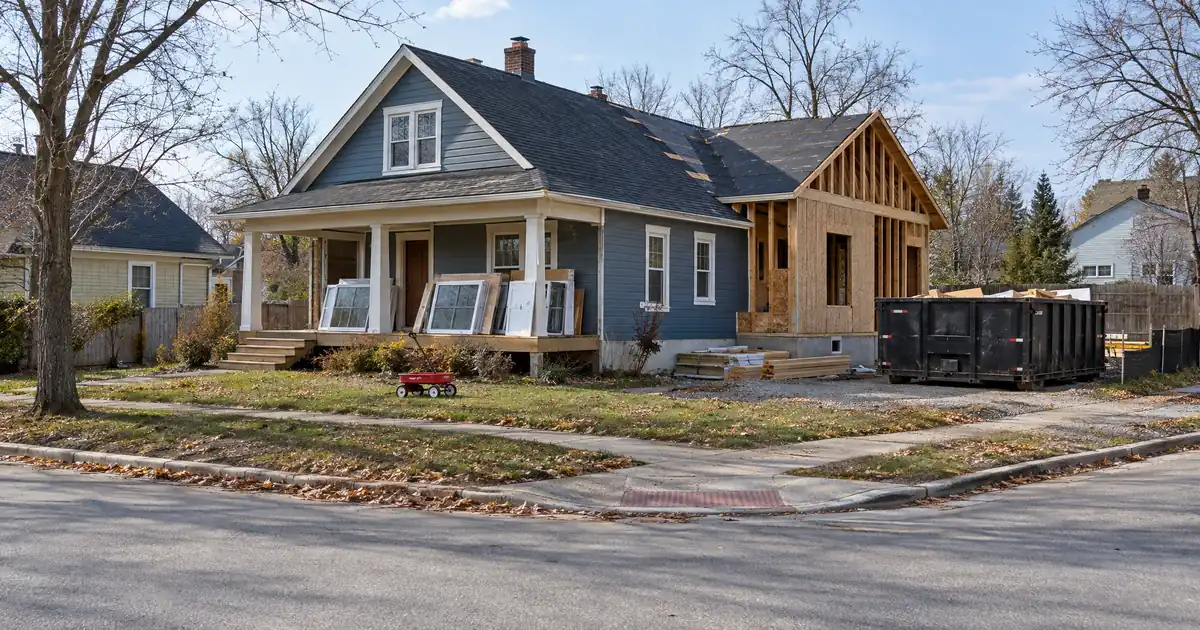
The Quick Read: Usually, yes: across Lendmire’s wholesale network, a flip loan covers a share of total project cost, and you fund the rest yourself, along with closing costs and cash reserves, so the equity gap alone typically runs about 7% to 15% of project cost, subject to lender guidelines. There is no true 100% purchase program. The closest thing is a loan that funds up to 100% of the rehab budget in draws after the work is done.
- Hard money leverage is measured against project cost (purchase plus rehab), and every tier is capped at 75% of after-repair value.
- The tiers run 85% of project cost with fewer than two completed projects, 90% with two or more, and 93% with five or more.
- The down payment is only part of the cash you bring. Closing costs, lender fees, reserves, and early rehab spending sit on top.
- Programs vary by lender, property, and experience, and nothing here is a commitment to lend.
Key Terms Defined
Down payment (equity gap): the part of the deal the loan does not cover, which you pay from your own funds.
Project cost: the purchase price plus the rehab budget. Lenders size flip loans against this number.
Loan-to-cost (LTC): the loan amount divided by project cost.
After-repair value (ARV): what the property is expected to be worth once the renovation is finished.
Draw: a release of rehab money after a stage of work is completed.
Cash to close: everything you must pay at the closing table. That means the equity gap plus closing costs and lender fees.
Reserves: liquid cash you show the lender, and keep available, to cover carrying costs and surprises.
Interest-only: payments that cover interest during the term, with the balance due at the end.
What this loan actually costs to carry.
Hard money is sized against the project and priced by time. Enter the deal and see how much the program will lend, the cash required at closing, the carry while you hold it, and what is left at the exit.
Leverage tiers on the current program: 85% with fewer than 2, 90% with 2 or more, 93% with 5 or more completed projects — every tier capped at 75% of after-repair value. Loan amounts up to $5,000,000, larger by exception; terms of 6 to 18 months, interest-only, no prepayment penalty. The rehab portion funds in draws against completed work, not at closing.
Program parameters shown update from Lendmire’s centralized guideline source. Rate, points, and months are editable assumptions, not quoted terms.
Cost cap sets the loan · positive spread
Illustrative estimate only — not a quote, Loan Estimate, approval, or commitment to lend. Rate, points, and months are editable assumptions. Hard money is business-purpose financing for real estate investors, not a consumer mortgage. Leverage on the current program tops out at 93% of project cost for investors with a documented track record, capped at 75% of after-repair value, with rehab funding up to 100% of the documented budget released in draws; actual terms vary by lender, borrower experience, property, and exit. Lendmire is a mortgage broker, not a lender.
Why Lenders Ask You to Put Money In
Hard money is short-term, collateral-based lending from private or non-bank lenders, as Corporate Finance Institute describes it. The lender is betting mainly on the property, not on your paycheck.
That asset focus is why your equity matters. If a flip goes sideways, the lender has to sell the property for enough to get repaid. Your cash in the deal is the cushion that makes that outcome safe. A borrower with money at risk also tends to finish the project.
Asset-based does not mean borrower-blind. Across the lenders in Lendmire’s network, experience, credit, and liquidity still shape how much leverage you get. A 620 score is the typical minimum, with additional conditions below 660, and first-time investors generally qualify at the lower leverage tiers.
How the Lender Calculates Your Cash Number
Your cash number comes from several limits applied at once, and the tightest one wins. The lender looks at the loan against project cost, and it also checks the loan against after-repair value. Whichever cap produces the smaller loan sets your equity gap.
Here are the tiers on a flip purchase with rehab of a non-owner-occupied 1-4 unit property. They vary by lender, property, and experience.
| Experience | Loan as % of project cost | Your equity gap |
|---|---|---|
| Fewer than 2 completed projects | 85% | About 15% |
| 2 or more completed projects | 90% | About 10% |
| 5 or more completed projects | 93% | About 7% |
Every tier is also capped at 75% of ARV. That second cap is where many new flippers get surprised. The headline cost percentage looks generous, but the ARV cap can quietly shrink the loan.
Everything You Bring Beyond the Down Payment
Plan for a cash stack, not a single check. The equity gap is the biggest piece, but it is not the only one. First-time flippers tend to budget for the gap and forget the rest.
| Cash item | When it is due | What drives it |
|---|---|---|
| Equity gap | At closing | Experience tier, ARV cap |
| Lender fees and closing costs | At closing | Loan size, title, insurance, legal |
| Early rehab spending | Before the first draw | Draw schedule, contractor terms |
| Interest-only carry | Monthly during the project | Loan balance, project length |
| Reserves | Shown before closing | Lender, property, experience |
| Overruns | During the rehab | Scope changes, surprises |
The draw structure matters more than most beginners expect. Up to 100% of the rehab budget funds in draws against completed work. That means rehab money arrives after the work is done, so you usually front the early costs and get reimbursed. Contractors who want a deposit do not wait for the lender’s schedule.
Reserves exist because interest-only payments keep coming whether or not the project is on schedule. A delayed permit or a slow contractor costs you carry. Lenders want proof you can absorb that without missing a payment. How much they want varies by lender, property, and experience.
Why a Thin Margin Costs You More Cash
A thin margin raises your cash requirement, because the ARV cap starts to bind. Run it with percentages, since the logic works at any price.
Say total project cost equals 70% of ARV, a healthy margin. A first-timer at 85% of project cost borrows 59.5% of ARV, well under the 75% cap. The equity gap stays at about 15% of cost.
Now say project cost equals 90% of ARV, a thin deal. The 75% ARV cap binds, and the loan comes out near 83% of project cost, even though the first-timer tier says 85%. The gap grows to about 17% of cost. An experienced borrower at the 93% tier feels it even harder. Cost at 85% of ARV caps the loan near 88% of cost, not 93%.
The pattern is simple. The better your purchase price relative to ARV, the more of the tier percentage you actually get. Overpay at the front end and the lender makes you cover the difference in cash.
Rehab overruns follow similar logic. The draw schedule funds the approved budget, so a cost increase lands on you. If the overrun also pushes total cost past what the ARV cap supports, you carry it dollar for dollar. Build a cushion into your own cash plan.
Does Experience Change the Answer?
Experience changes the answer more than any other factor. The top tier, 93% of project cost, is reserved for investors with five or more completed projects. Fewer than two completed projects puts you at 85%. That is a difference of eight points of leverage on the same property.
What counts as a completed project depends on documentation. Lenders in the network typically look for a track record they can verify, such as prior purchase and sale records. A first-timer is not shut out, but the first flip generally happens at the lowest leverage tier with the most cash in the deal.
Credit plays a supporting role. A higher score does not erase the experience tiers, and a larger down payment does not erase a credit floor. Lendmire’s piece A Higher Credit Tier vs a Larger Down Payment on a Hard Money Loan walks through how the two trade off.
The practical read: a first-timer should plan on the 15% gap plus a full cash stack, and treat a lower gap as something earned over two or more finished projects.
Can You Flip With Little or No Money Down?
Rarely, and never because the loan itself covers 100% of the purchase. Lendmire’s network has no true 100% purchase program. When you see a pitch that sounds like zero down, it usually means one of two things. Either the rehab is funded in draws, or someone other than the primary lender is supplying the gap.
Those other structures do exist, and they carry real trade-offs.
| Structure | What it does | Trade-off |
|---|---|---|
| Equity partner | Partner funds part or all of the gap | Shares your profit |
| Second lien or gap loan | A separate lender funds part of the gap | Stacked debt, more carry |
| Cross-collateral | You pledge another property | Puts that property at risk |
| Seller financing | Seller carries part of the price | Needs seller buy-in |
Whether a lender permits any of these varies. A primary lender may care about a second lien, borrowed down payment funds, or an equity partner, and may need to approve or restrict them. Ask before you sign a purchase contract, not after.
Even with a partner covering the gap, the fees, closing costs, and reserves do not disappear. Someone still has to show liquidity.
Where the Down Payment Can Come From
Lenders care where your cash came from, not just that it exists. Expect to document the equity gap, the closing costs, and the reserves with bank or asset statements. Money that has sat in your account is simple to document. Money that just arrived needs an explanation.
Borrowed funds and partner money are the sensitive cases. They can change the lender’s picture of how much of your own capital is at risk. Disclose them upfront and let the lender tell you what works. Lendmire also covers the retirement-account angle in its piece Can You Use 401(k) or IRA Money for a DSCR Down Payment?.
Purchases Without Rehab, and Refinances
A purchase with no renovation works differently from a flip with a rehab budget. Bridge purchases without rehab run up to 80% of purchase price on a non-owner-occupied property, so the down payment is about 20%. That is more cash than a flip’s equity gap, because there is no rehab draw and no cost-based sizing.
Refinances sit lower still. Cash-out and rate/term refinances on investment property top out at 65% of value. If you are pulling equity out of a property you already own, plan for a much thinner loan than a purchase tier would give you.
Red Flags and the Business-Purpose Context
Hard money to a flipper is business-purpose credit, and that shapes who sets the rules. The CFPB’s Truth in Lending summary explains that consumer credit rules exempt business-purpose lending. The Federal Reserve’s supervisory manual adds that mixed-purpose loans are judged by their primary purpose. The practical result is that no federal consumer rule sets a minimum down payment. The lender does.
That freedom is why you should read zero-down marketing with care. Watch for these signs:
- A promise of 100% financing with no mention of closing costs, fees, or reserves.
- A rehab budget that the lender will release up front instead of in draws.
- Pressure to stack a second loan without disclosing it to the first lender.
- No questions about your experience, credit, or liquidity.
- A loan size that only works if the ARV estimate is optimistic.
Every file is underwritten individually, and a pitch that skips that step should make you more cautious, not less.
How to Cut Your Cash Requirement Without Adding Bad Risk
Start with the price you pay. Buying well below ARV is the cleanest way to get the full tier percentage. It also gives you room if rehab costs creep.
Then work through this checklist before you bid:
- Document completed projects, since each tier jump lowers your gap.
- Keep your reserves liquid and easy to verify.
- Build a line-item rehab budget with a contingency, because draws fund the budget, not the overrun.
- Decide up front whether a partner is worth the profit split.
- Pick a smaller first project if the cash stack on a bigger one stretches you thin.
The last item is the honest trade-off. A smaller deal ties up less capital and lets you finish a project and build a track record. That record then moves you into a higher leverage tier on the next deal. Many investors find that two modest flips beat one stretched flip.
After the Flip: Holding It as a Rental
Some flippers keep the property instead of selling. Terms on hard money run 6-18 months, interest-only, with no prepayment penalty, and there are no multi-year options. Many investors refinance into long-term DSCR financing once the property is stabilized, and Lendmire brokers that path. The complete DSCR loans guide explains how that works.
Keep one distinction in mind. A DSCR loan compares rent to the full monthly housing payment, and nothing else. Clearing 1.00 is not the same as positive cash flow, because repairs, vacancy, management, and utilities sit outside the calculation. Tax treatment varies, so consult a qualified professional about how a flip or a hold is taxed.
Frequently Asked Questions
Does hard money cover rehab costs?
Often, yes. Up to 100% of the rehab budget funds in draws against completed work, subject to lender guidelines. You usually front early costs and are reimbursed as stages finish. The rehab funding is separate from the purchase leverage, so it does not erase your equity gap.
Is credit score important for a flip loan?
It matters, though the property and plan carry more weight. A 620 score is the typical minimum in the network, with additional conditions below 660. A stronger score does not replace experience tiers, and it does not promise approval.
Can I borrow the down payment?
It depends on the lender. Borrowed funds can change how a lender views your capital at risk, so disclose the source early. A primary lender may restrict or need to approve second liens, borrowed funds, or equity partners.
How much should I keep in reserves?
Reserves vary by lender, property, and experience, so there is no single number. Plan to cover interest-only payments through delays, plus early rehab costs before your first draw.
What happens if I cannot cover the gap?
The loan will not be sized to fit your cash, so the deal generally cannot proceed as structured. Your options are a lower purchase price, a partner, a gap structure the primary lender allows, or a smaller project.
Run Your Numbers Before You Bid
If you are buying, rehabbing, or refinancing an investment property and want to see how the numbers work, Lendmire can help you compare hard money options based on the project, the exit plan, leverage, and your goals. As a broker, Lendmire arranges financing through select lenders in its wholesale network across 41 markets, including Washington, D.C., and the lenders make the final credit decisions. Most flippers who run into trouble miscounted their total cash, not their down payment, so start with the whole cash stack.
About Lendmire
Lendmire (NMLS# 2371349) is a mortgage brokerage built around DSCR investor lending, with programs available in 41 markets, including Washington, D.C. DSCR lenders commonly evaluate rental-income coverage instead of personal income paperwork — a practical fit for LLC-owned and multi-property investors. Terms vary by lender, property, leverage, and program. Scotsman Guide named Lendmire a Top Mortgage Workplace in both 2025 and 2026.
Get Started
Ready to find the right loan for you?
In about 30 seconds you can review financing options available for your investment property. No commitment required.
Informational only. Not a Loan Estimate, approval, or commitment to lend. Program availability and eligibility are subject to lender guidelines, credit approval, property review, and underwriting.
References
1. Corporate Finance Institute: Hard Money Loan
3. Federal Reserve: Truth in Lending supervisory manual
This article is part of Lendmire’s hard money loan program — full qualification details, guidelines, and scenarios live on the program page.
Related reading: Hard Money Rehab Draw Inspections for a Full-Gut Rehab · Hard Money Loan Requirements to Exit Seller Financing or Subject-to · Seasoning Rules for a Two-Step DSCR Cash-Out After Hard Money
Brandon Miller
Founder & CEO, Mortgage Loan Originator, Lendmire LLC
- Mortgage Loan Originator · NMLS# 1129696 · Verify on NMLS Consumer Access
- North Carolina Real Estate Broker · License# 343312 · Verify on NCREC
- North Carolina Insurance Producer · License# 19053198 · Property, Casualty, Life, Health · Verify on NAIC SBS
- Lendmire LLC · Firm NMLS# 2371349 · Verify firm licensure
Important disclosures. Lendmire (NMLS# 2371349) is a licensed mortgage brokerage. Lendmire is not a direct lender, depository institution, or financial advisor. All loan inquiries are subject to lender underwriting; this article does not constitute a commitment to lend. Rates, terms, and program guidelines are subject to change without notice and vary by borrower profile, property type, and state. Information in this article is general in nature and is not financial, legal, or tax advice. Equal Housing Opportunity. NMLS Consumer Access: nmlsconsumeraccess.org.