
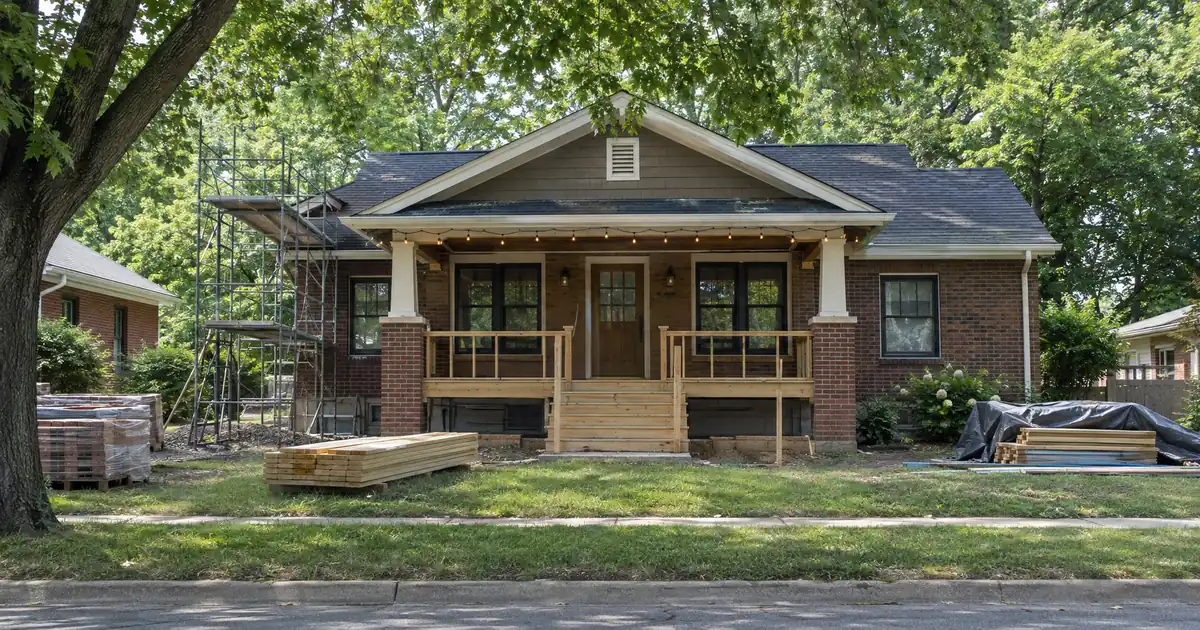
The Quick Read: Usually yes, but only if the lender agrees. No rule gives a borrower a right to an extension, so the note and the lender’s discretion decide the outcome, unless the note already contains a built-in extension option. A loan that is current, a property that still supports the balance, and a request made before maturity carry the most weight with a lender.
- The lender decides. An extension is a negotiation, not an entitlement.
- Loans that are current and show real project progress get a yes more often.
- Expect a cost: a fee, a higher rate, a paydown, or some mix of the three.
- Ask before the maturity date. After it, the conversation is about default.
- Run a backup exit while you negotiate, because an extension buys time and nothing else.
Hard money loans are short by design. Terms on the current network program run 6 to 18 months, interest-only, with no prepayment penalty, and they vary by lender, property, and experience. Rehabs slip. Permits stall. Buyers fall through. This piece covers how an extension works, what lenders weigh, what to do if the answer is no, and how to plan an exit so you rarely need to ask.
What this loan actually costs to carry.
Hard money is sized against the project and priced by time. Enter the deal and see how much the program will lend, the cash required at closing, the carry while you hold it, and what is left at the exit.
Leverage tiers on the current program: 85% with fewer than 2, 90% with 2 or more, 93% with 5 or more completed projects — every tier capped at 75% of after-repair value. Loan amounts up to $5,000,000, larger by exception; terms of 6 to 18 months, interest-only, no prepayment penalty. The rehab portion funds in draws against completed work, not at closing.
Program parameters shown update from Lendmire’s centralized guideline source. Rate, points, and months are editable assumptions, not quoted terms.
Cost cap sets the loan · positive spread
Illustrative estimate only — not a quote, Loan Estimate, approval, or commitment to lend. Rate, points, and months are editable assumptions. Hard money is business-purpose financing for real estate investors, not a consumer mortgage. Leverage on the current program tops out at 93% of project cost for investors with a documented track record, capped at 75% of after-repair value, with rehab funding up to 100% of the documented budget released in draws; actual terms vary by lender, borrower experience, property, and exit. Lendmire is a mortgage broker, not a lender.
Is an Extension a Right?
No. An extension is discretionary. The note sets the maturity date, the balloon, the default terms, and any extension option. If the note says nothing about extending, the lender has no duty to grant one.
Cole Schotz, a law firm, lists negotiating a restructuring or extension with the existing lender as the first option on a maturity default. It also notes that lenders will not welcome the request, because the borrower agreed to repay at maturity. That commentary dates from a weak market, so read it as a statement of how lenders think, not a current price list.
Business-purpose lending sits outside the consumer mortgage framework, and nothing sets a standard extension fee or a standard extension length. Terms are whatever the lender and borrower sign. That is why the same request can cost very little on one file and a lot on another.
Read the Note First
Before you call anyone, find these items in the loan documents:
- The maturity date and the balloon amount.
- Any built-in extension option, including its notice period, fee, and conditions.
- Default provisions and cure periods.
- Late charges and default interest that apply after maturity.
- Any exit or extension fee written into the note.
A pre-priced option is the best case. You know the cost and the conditions on day one, and the lender has already agreed in writing. If the note has no option, you are starting a negotiation from scratch, and the lender is under no pressure to say yes.
Silence in the note matters. A lender who has said “we’ll work with you” on a call has not given you anything. Until a signed agreement exists, you have no extension.
What Lenders Weigh
Lenders say yes when the picture looks like a delay rather than a failure. These are the factors that usually decide it.
| Factor | What the lender looks for | What you can do |
|---|---|---|
| Payment history | Every payment made on time | Keep the loan current before you ask |
| Project progress | Visible, documented work | Send photos, draw history, a contractor schedule |
| Collateral value | Value still covers the balance | Offer a current valuation if values moved up |
| Exit credibility | A real plan to repay | Show a listing agreement or a DSCR application in process |
| Track record | Past loans repaid as agreed | Reference completed projects |
| Cause of delay | A specific, fixable reason | Name it: permit hold, contractor swap, pending refinance |
A request is a fresh look at the file. Expect the lender to ask what changed. A borrower who can explain the delay in two sentences and back it with paper is in a stronger spot than one who says the market got slow.
On a second or third request, lenders get less willing. The first extension reads as a delay. The third reads as a pattern.
Ask Before Maturity, Not After
Timing changes the nature of the conversation. A request made while the loan is current and the maturity date is still ahead is a negotiation. A request made after maturity is a default conversation, with default interest and late fees on the table.
Run the clock backward. If the loan matures in a set month, start the extension conversation as soon as it is clear the exit will miss, not in the final stretch. Use the same moment to start the exit that will actually repay the loan.
How to Request an Extension
1. Read the note. Confirm the maturity date, any extension option, and the default terms.
2. Contact the lender before maturity. Put the request in writing so there is a record.
3. State the cause and the new date. Name the delay, give a revised timeline, and propose a specific new maturity date.
4. Send the exit evidence. A listing agreement, a signed contract, a DSCR refinance application, or a contractor completion schedule. Pick what fits the exit.
5. Review the proposed terms. Check the fee, any rate change, any paydown, and updated title or insurance requirements.
6. Sign a written modification. Verbal assurances do not count. The extension should be a written modification or extension agreement signed by both sides.
7. Keep working the exit. Do not treat the signature as the finish line.
A short request package usually covers a progress summary, a revised timeline, the exit evidence, and the proposed new date. Keep it short. The lender is reading it as a risk memo.
What an Extension Costs
Costs vary widely, and no regulator or neutral body sets them. Lenders commonly combine some of these:
- An extension fee, often framed as additional points on the balance.
- A higher rate for the extension period.
- A principal paydown.
- Added reserves or reaffirmed guarantees.
- Updated title, insurance, or valuation costs.
- Continued interest-only carry for every extra month.
Read your own note and your own quote.
Here is a cost method with no dollar figures. Add the extension fee, the extra months of interest, and the third-party costs. Compare that total to the alternatives: the cost of selling at a discount now, or the cost of refinancing out at the current stage. Whichever path has the smallest total cost, with the best odds of closing, usually wins.
Default charges tell the other side of the story. Once a loan is past maturity with no agreement, default interest and late fees can stack up and can run well above the cost of a negotiated extension. That is the main reason to ask early.
Extension vs. Forbearance
These are different things, and borrowers mix them up.
An extension moves the maturity date and cures the maturity default. A forbearance only holds off enforcement for a period and does not waive the default. A Modrall workout paper on commercial loan workouts explains that a forbearance agreement leaves the lender free to act when it ends. It also describes pre-negotiation letters that say no agreement exists until a written agreement is signed. The setting there is commercial lending, but the principle carries over to private loans: get the paper, and know which kind of paper it is.
Extend, Refinance, or Sell?
| Path | When it fits | Main cost |
|---|---|---|
| Extend | Loan is current, work is nearly done, exit is lined up | Fee, added interest, possible rate change |
| Refinance out | Property is stabilized and rents support long-term debt | Closing costs, seasoning limits |
| Sell | Value supports a sale and the market is open | Discount or carry until it sells |
Many investors refinance out of hard money into long-term DSCR investor loans once the property is stabilized, and Lendmire brokers that path through select lenders in its wholesale network. The numbers behind that exit matter, because the extension only helps if the takeout still works at the new date.
DSCR financing qualifies primarily on property-level rental income covering the payment, subject to lender guidelines. It compares rent to PITIA: principal, interest, taxes, insurance, and any HOA dues. Clearing 1.00 does not mean positive cash flow, because repairs, vacancy, management, utilities, and capex sit outside the calculation. Across the network, 1.00 is where select programs start, and a separate select-lender path takes coverage below 1.00 with leverage and terms adjusted. Stronger ratios open better leverage. Most programs want a score around 660, a 620 floor exists in parts of the network, and 700 or above unlocks the strongest tiers.
The Seasoning Gap
This is where extensions earn their cost, and where files break. A DSCR cash-out refinance commonly expects about six months of seasoning, and finishing a rehab or signing a lease does not start that clock. If the hard money loan matures before seasoning is done, you have three choices: pay for an extension, take a payoff-only DSCR loan with no cash back, or sell.
Weigh the extension fee against another stretch of interest-only carry and against the cash you would give up with a payoff-only loan. Cash-out on the network tops out around 75% LTV on a standard rental, and a payoff-only structure gives up the cash-out benefit entirely. For a deeper look at how that choice plays out, see Lendmire’s piece DSCR Rate-and-Term vs Cash-Out for a BRRRR Investor Exiting Hard Money. Exact terms depend on the lender’s guidelines, property type, leverage, and a full review of the borrower’s file.
One more practical point from the exit side. Whatever path you pick, keep the payoff statement current. It needs a per-diem figure and an expiry date, and an extension changes both. A stale payoff letter can stall a refinance.
The two paths compared in more depth are covered in Lendmire’s article Hard Money vs DSCR for a BRRRR Investor: Rehab Phase vs Long-Term Hold, and the complete DSCR loans guide covers the program side.
What If the Answer Is No?
A refusal is not the end, but it moves fast toward default. The lender may issue a notice of default after maturity. Most lenders treat foreclosure as a last resort, but it is a legal option and the note usually allows it.
If the answer is no, work through this list:
- Ask whether the lender will accept a partial paydown in exchange for time.
- Check whether a payoff-only refinance can replace the loan.
- Look at selling, even at a discount, against the cost of default charges.
- Ask a broker with several lenders to test a takeout on the file.
- Do not stop paying while you negotiate. A current loan keeps your options open.
A refusal is also a signal. If the lender will not extend a current loan with a solid exit, something in the file or the collateral worries them, and it is worth knowing what.
How to Avoid Needing One
The most affordable extension is the one you price at origination.
- Ask for an extension option in the note before closing, with the fee and conditions in writing.
- Choose a term with room for the real schedule. Terms here run 6 to 18 months, and the longer end suits heavier rehabs.
- Build a contingency cushion into the rehab budget and the timeline.
- Pre-vet the DSCR takeout before you close on the hard money loan, including seasoning, rent, and score.
- Start the refinance application before the extension becomes necessary.
Key Terms Defined
Balloon payment: The lump sum of unpaid principal due at maturity on an interest-only note.
Extension: A written agreement that moves the maturity date, usually for a fee.
Forbearance: A pause on enforcement that does not waive the default.
Seasoning: The time you must hold a property before a lender allows cash-out refinancing.
PITIA: Principal, interest, taxes, insurance, and any HOA dues, the monthly obligation DSCR compares to rent.
Per-diem: The daily interest figure on a payoff statement.
Frequently Asked Questions
Can a hard money lender refuse to extend my loan?
Yes. Unless the note contains a pre-priced extension option, the lender has no duty to grant one. Lenders weigh payment history, rehab progress, collateral value, and the credibility of the exit plan. A current loan with a documented delay is the strongest case.
How much does a hard money extension cost?
It varies by lender, note, and borrower. Expect some mix of a fee, a higher rate, a paydown, and extra interest-only carry, plus updated title or insurance. No neutral body publishes a standard fee, so get the terms in writing before you compare options.
Should I ask before or after the loan matures?
Before. A request made while the loan is current is a negotiation. After maturity it becomes a default conversation, with default interest and late fees in play.
Is an extension the same as a forbearance?
No. A forbearance only delays enforcement and leaves the default in place, so the lender can act when it ends.
Does an extension help my DSCR refinance?
It can, if the delay is the seasoning clock. Cash-out DSCR files commonly expect about six months of seasoning, so an extension may bridge the gap. Weigh the fee against a payoff-only loan with no cash back, subject to lender guidelines.
Next Step
If you are buying, rehabbing or refinancing an investment property on a short timeline and want to see how the numbers work, Lendmire can help you compare hard money options based on the project, the exit plan, leverage, and your goals. Fix-and-flip leverage on the network varies by lender, property, and experience, and nothing here is a commitment to lend. Tax treatment varies; consult a qualified professional.
About Lendmire
As a non-QM mortgage broker (NMLS# 2371349), Lendmire facilitates DSCR investor loans across 41 markets, including Washington, D.C. DSCR eligibility is generally reviewed around property-level rental income instead of personal income documentation, subject to lender guidelines, serving LLC-structured portfolios and self-employed borrowers who don’t fit conventional boxes. A two-time Scotsman Guide Top Mortgage Workplace (2025, 2026).
Get Started
Ready to find the right loan for you?
In about 30 seconds you can review financing options available for your investment property. No commitment required.
Informational only. Not a Loan Estimate, approval, or commitment to lend. Program availability and eligibility are subject to lender guidelines, credit approval, property review, and underwriting.
References
1. Cole Schotz – Maturity Default
2. Modrall – Commercial Real Estate Workouts and Foreclosure Issues
This article is part of Lendmire’s hard money loan program — full qualification details, guidelines, and scenarios live on the program page.
Related reading: Hard Money Loan Requirements to Buy Out a Land Contract · Hard Money Rehab Draw Inspections for a Full-Gut Rehab · Short-Term Rental DSCR Loan Terms If the Lender Sells the Loan
Brandon Miller
Founder & CEO, Mortgage Loan Originator, Lendmire LLC
- Mortgage Loan Originator · NMLS# 1129696 · Verify on NMLS Consumer Access
- North Carolina Real Estate Broker · License# 343312 · Verify on NCREC
- North Carolina Insurance Producer · License# 19053198 · Property, Casualty, Life, Health · Verify on NAIC SBS
- Lendmire LLC · Firm NMLS# 2371349 · Verify firm licensure
Disclosure information. Lendmire is a state-licensed mortgage brokerage under NMLS# 2371349. Lendmire is not a depository institution, direct lender, or financial advisor — all loans referenced are placed through wholesale lender partners and are subject to each lender's underwriting standards. This article is provided for general informational purposes and is not a commitment to lend, nor does it constitute financial, legal, or tax advice. Loan programs, terms, rates, and qualification standards change without notice and depend on borrower profile, property type, and the state in which the subject property is located. Equal Housing Opportunity provider. NMLS Consumer Access: nmlsconsumeraccess.org.